Issue
Li Yi-Fan: Error and Effigy
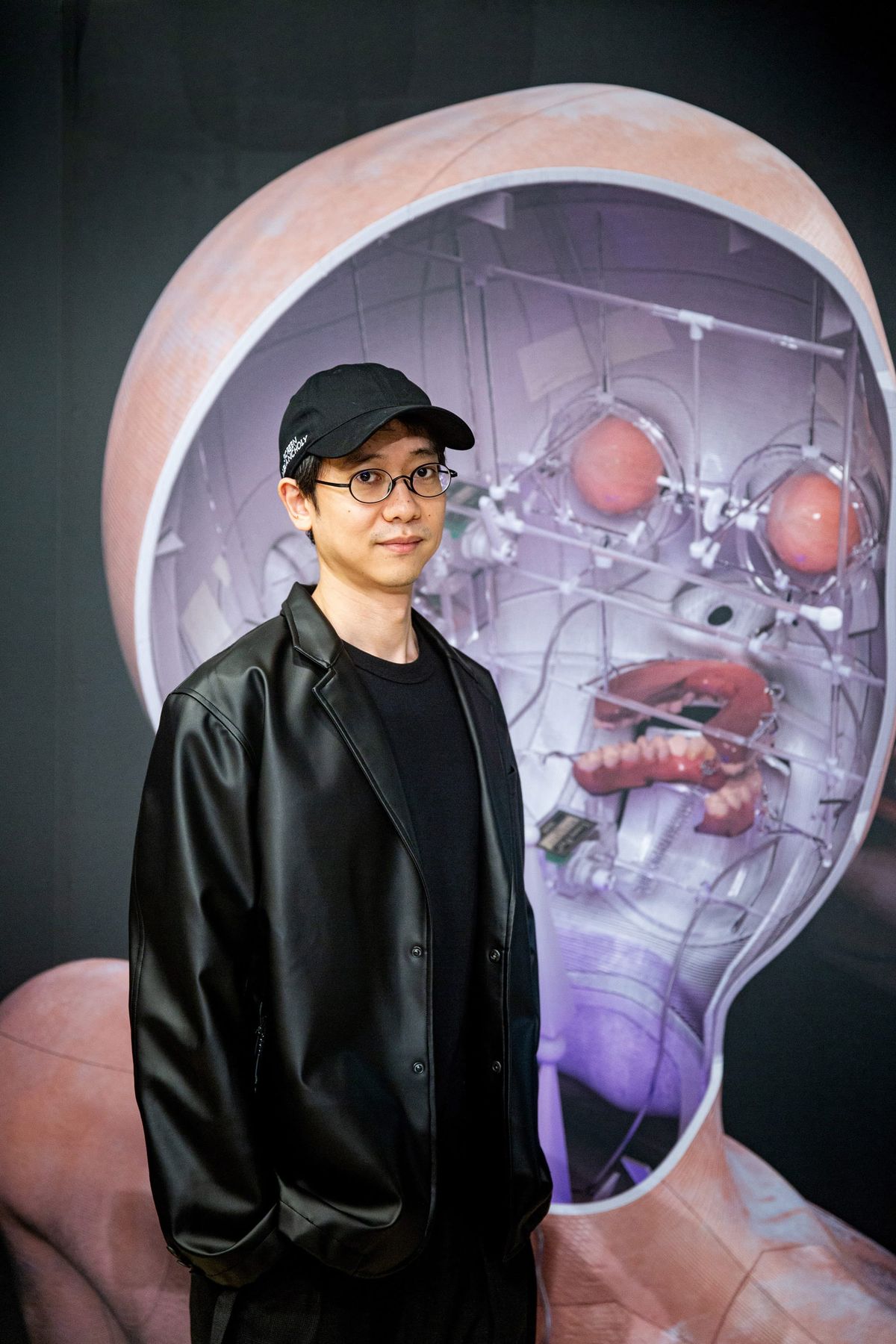
Something about the marionettes in Li Yi-Fan’s work gnaws at you. Pale, chalky, patchy-skinned, they are proportioned in a way that is uncanny—not quite wrong enough to pinpoint the unease, but something is definitely wrong. They talk about voyeurism, sexual fantasies, philosophy, memes, and computer programming. The transitions happen at the same velocity, as if the distance between these topics were negligible. Occasionally they cough. If you look long enough, you begin to notice that their faces resemble the artist’s.
When I called Li Yi-Fan on Zoom, I was expecting, if not the figures themselves, then at least their idiosyncrasies. But Li was calm, slightly timid, even. He told me almost immediately that he is a boring person—“probably the most boring artist”—and said it with the delivery of someone who has made peace with the diagnosis. He works nine-to-five, almost every day. He cooks for himself. He spends roughly 12 hours in front of a computer, between work and video games, and he has come to regard the games as research. “When I play, I start looking at the shaders, the mechanics, asking: how did they do that?”
Born in 1989, trained in painting, later converted by films, the Taiwanese artist based between Taipei and Amsterdam now works primarily through modified game engines and digital puppetry. He has built an oeuvre whose subject is the experience of the image-world from inside its machinery, using free or subscription software, the body purchased from digital assets market, the industrial avatar, to stage what it feels like to make digital art today within platform systems and corporate infrastructure. He calls this the “workaround,” referring to a slightly derogatory term in software programming for a solution that routes around a problem rather than solving it. It is his method and his metaphor. It is also, as he would argue, the only honest position currently available.