Issue
Hyeree Ro: What Bears
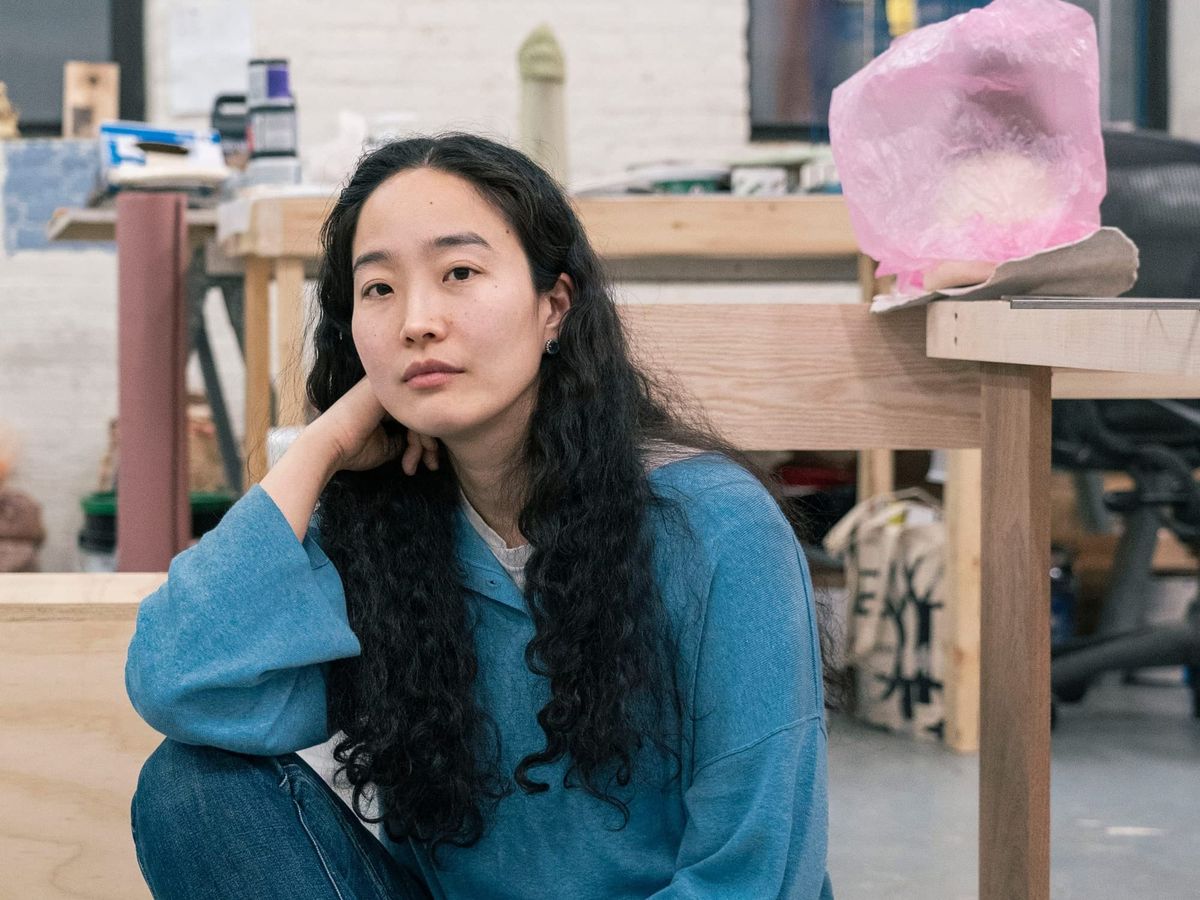
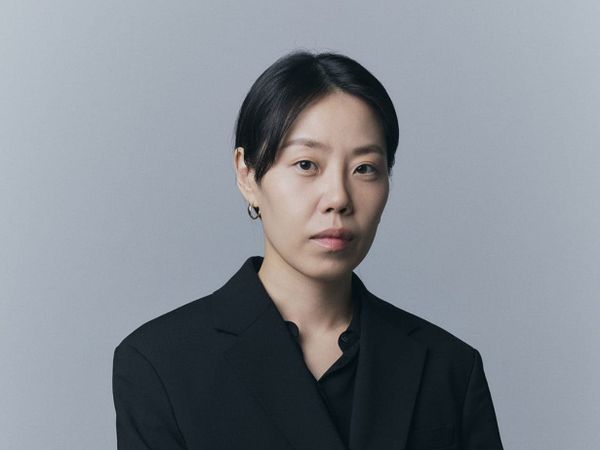
It’s late February, and the early spring sun comes in low through the windows of Hyeree Ro’s temporary studio in Brooklyn. She has been here since January 1, and will be gone by March 15. “That’s just how my life is,” she says, matter-of-factly. Before this, she spent a month at a studio in DUMBO; before that, somewhere else. The pattern is familiar: arrive, unpack, work, leave. On one side of the studio, a delicate maquette rests on a cardboard base—practically everything here is destined for this year’s Venice Biennale, where Ro will present Bearing (2026) as part of the Korean Pavilion, titled “Liberation Space: Fortress/Nest.” But the room tells a longer story than any single exhibition.
A worktable is crowded with material samples. Salvaged objects gather in clusters whose logic is not yet apparent. A large sheet of organza hangs from a metal bar, its translucent surface stitched with overlapping circles that catch the afternoon light—purchased in 2023 simply because Ro found the fabric beautiful. It sat unused for over a year before surfacing in Niro (2024), a skeletal, life-sized wooden reconstruction of her late father’s Kia Niro; then became the membrane of the tent piece Carry (2025); and is now slated to line the Pavilion’s interior as its fabric walls. “It was just sitting in the studio,” she says. “So I thought, ‘Oh, this will work.’” Nearby, a chair made for the dining table sculpture Haven (2023) is also ready to travel to Venice. This is how Ro’s material logic operates: objects enter the studio without a destination and move from work to work across years, accumulating meaning with each reappearance. The ones that never find their place are eventually released; the ones that stay become load-bearing elements of a practice built on carrying things forward.