Issue
Gayane Umerova: Uzbekistan’s Cultural Architect
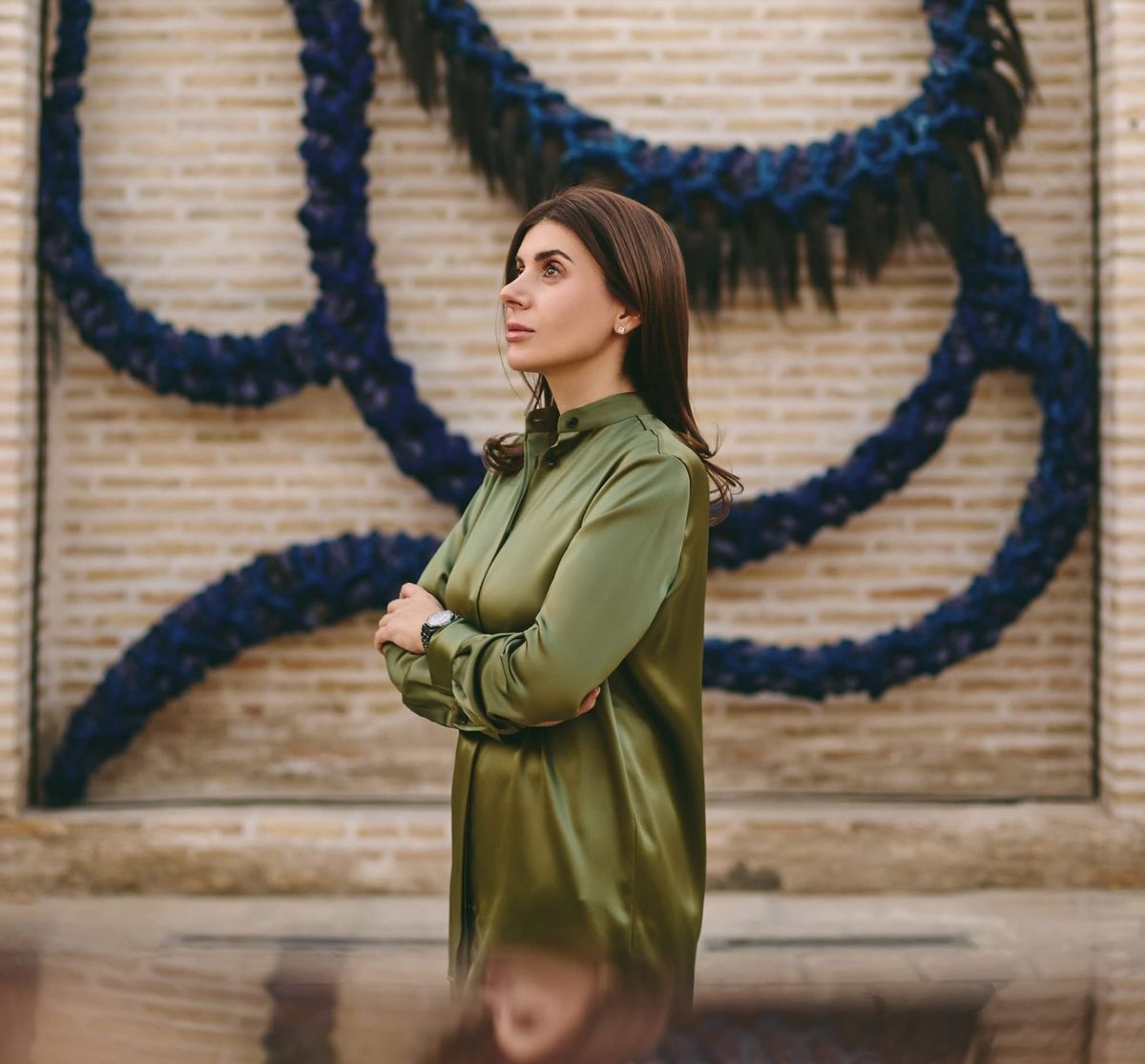
Gayane Umerova is orchestrating a cultural renaissance for Uzbekistan on the world stage. Her role as commissioner of the Uzbekistan Pavilion at the 61st Venice Biennale this year is a testament to a dual mission: to amplify Uzbek voices globally, while grounding their resonance deeply within their homeland. Since 2021, she has been the driving force behind her country’s presence in both the architecture and art exhibitions. This year, she will preside over two ambitious initiatives of Biennale Arte 2026: Uzbekistan’s national pavilion at the Arsenale, titled “The Aural Sea” and curated by a young, talented team from the Bukhara Biennial Curatorial School; and the collateral event “Instruments of the Mind,” a solo show by pioneering conceptual artist Vyacheslav Akhunov at Palazzo Franchetti. Reflecting on her search in 2018 for a permanent home for Uzbekistan’s pavilion, Umerova recalled, “It was a dream I never thought possible. All I wanted was the best for the country so the people back home could believe in what we are doing.” The “Aural Sea” project—echoing the impact of Uzbekistan’s inaugural pavilion in 2021 that examined the mahalla, an endangered form of community living in the country—plunges into mythmaking and storytelling to unpack the Aral Sea’s ecological crisis. This initiative perfectly encapsulates her strategy: forging bold international platforms that also draw directly from the nation’s pressing issues, thereby sparking meaningful transformation within its borders.
At just 40, Umerova has emerged as the unexpected architect of Uzbekistan’s revival. As deputy head of the Department of Social Development in the Presidential Administration, chairperson of the Uzbekistan Art and Culture Development Foundation (ACDF), and chairperson of the National Commission of Uzbekistan for UNESCO, she spearheads projects that would make most culture ministers pause. She is actively reshaping the self-perception of Central Asia’s most populous country—with over 37 million, a significant number of whom are younger than 14—and consequently, altering its image abroad. Yet her origins lie not in the corridors of power, but in the modest domestic rhythms of Soviet-era Tashkent.
Born in 1985 in Tashkent, Umerova grew up in a home where art was woven into quotidian life. She spent much of her time with her grandparents who collected antiques and design objects. Living with them was her aunt, an illustrator for one of the biggest state publishing houses of the time. She reminisced, “Thanks to my aunt, we had a huge library on the arts. I became fixated on those books as soon as I learned how to read. That’s how I learned about the Impressionists and Van Gogh.” Every week her mother would take her to the State Museum of Arts of Uzbekistan. “In our society, people looked to the museum as a site of education, not just admiring the work, but learning about history and the world.” With over 100,000 objects covering archaeological artifacts to Russian art as well as traditional Uzbek crafts, it planted a seed. Here, childhood functioned as an early lesson on Uzbekistan’s layered identity, long before she had the conceptual framework to articulate it.