Shows
Up Close: Shigeo Otake’s “Myco-Market Day”
Shigeo Otake
Agoraphilia
White Cube, Hong Kong
Jul 10–Aug 29, 2026
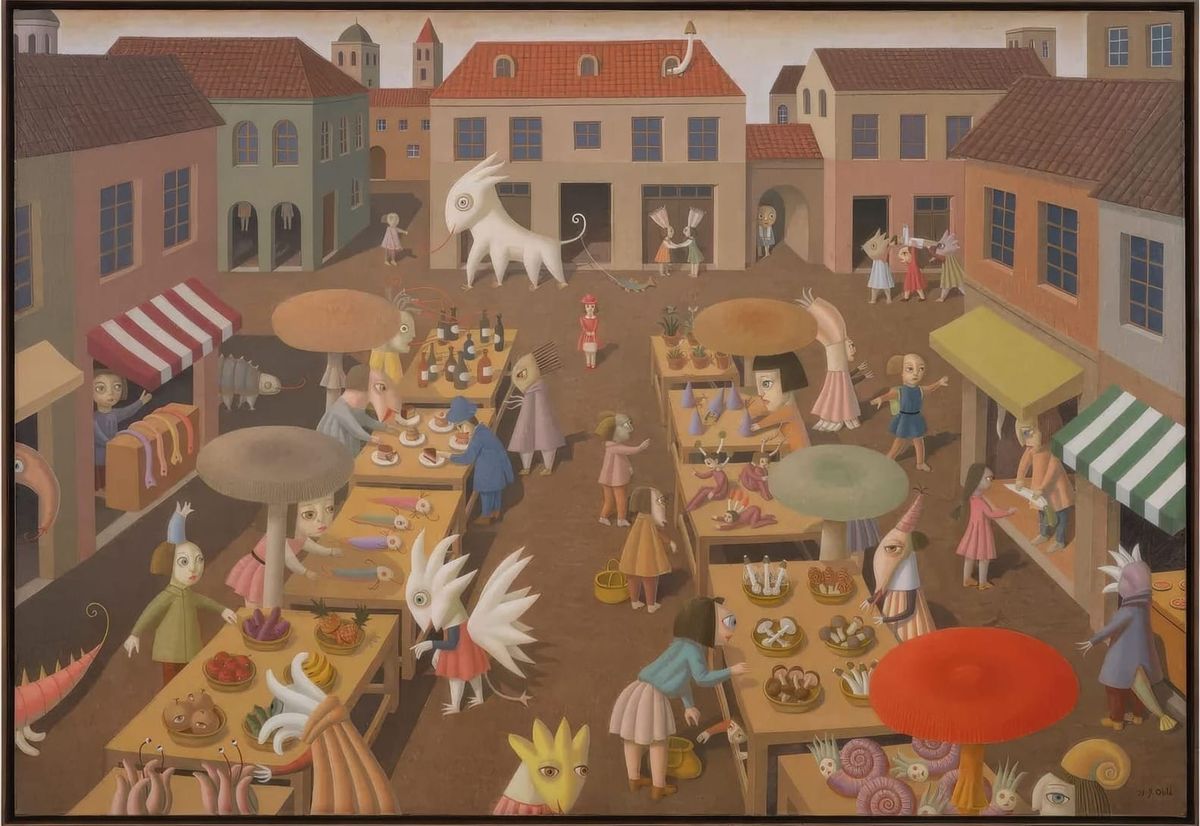
Following his discovery of a cordyceps fungus growing from the body of a cicada nymph in 1985, Shigeo Otake began developing a universe of mutant forms. Surrealist paintings such as A Miscalculation by Mycologist H.A. (1988) and The Last Days of the Mobile Fungi Garden (1993) imagined spores drifting through a city and transforming citizens who inhaled them into fungal hybrids. Since then, such beings have populated the artist’s canvases as a matter of course. No one so much as blinks at roots sprouting from a figure’s skull or oversized mushrooms parked beside a table. Myco-Market Day (2026) depicts just another day in this eerie world—a bustling bazaar lined with stalls of eye-catching species, living goods awaiting sale and use.
Rendered in tempera and oil on canvas, a Renaissance-era technique, Myco-Market Day freezes one moment within an unfolding scene, turning small incidental encounters into spectacle. The painting’s warm, earthy tones are almost cheerfully deceptive, until something more sinister creeps into view. In the upper right quadrant, three characters are carrying a body; in the upper left, two pairs of legs dangle at an unnatural distance from the floor, heads and torsos obscured. In the foreground, a child crawls out from under a table, one arm stretched toward the bag of an unsuspecting mushroom shopper. The two are bound by a mirrored gesture: one reaches to buy, the other to steal. Such signs of savagery hide in plain sight, easy to overlook at first glance.
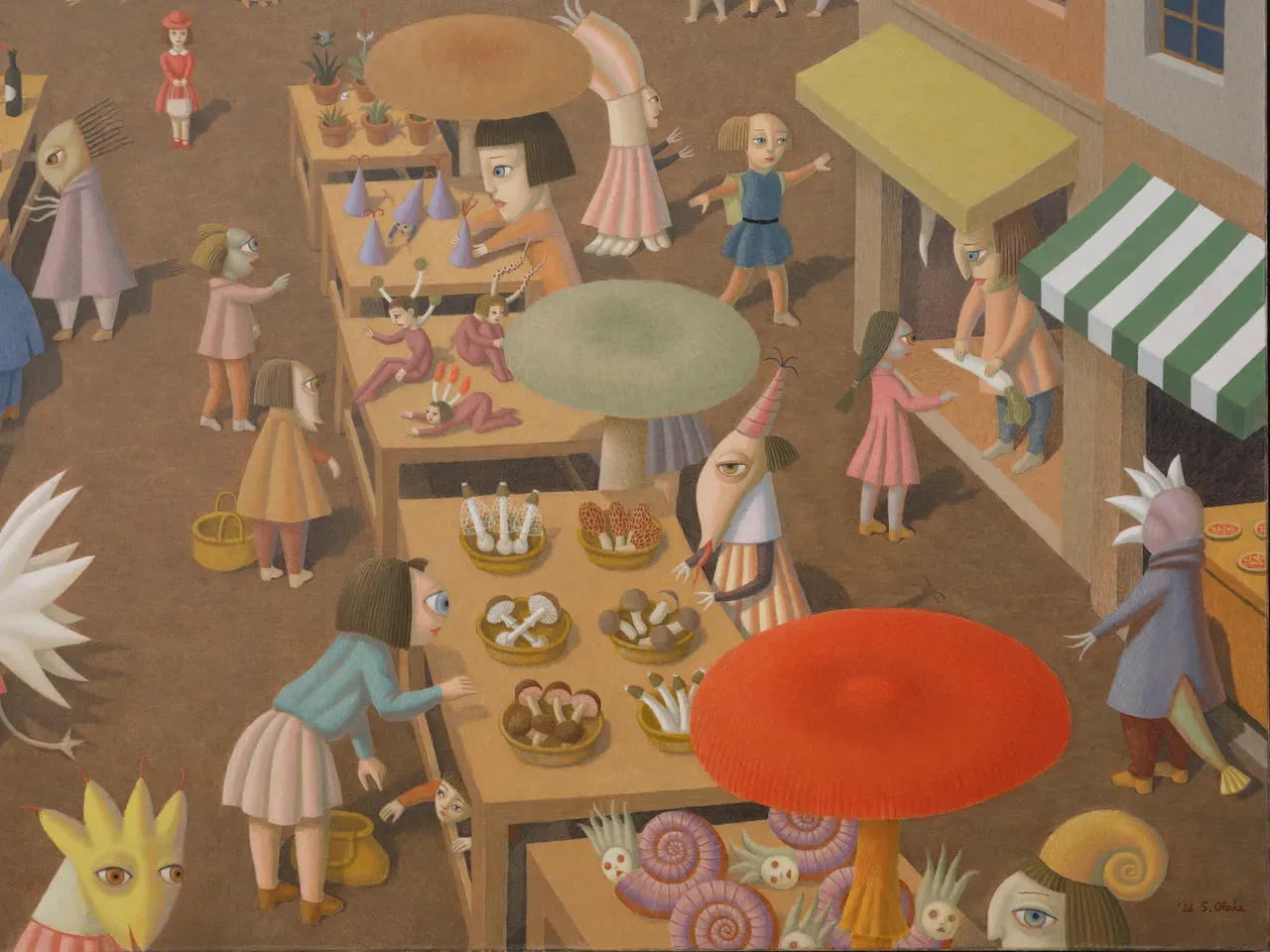
Referencing Balthus’s The Street (1933), Myco-Market Day uses the public square as a stage on which multiple actions unfurl at once. Its animated commodities further complicate what is immediately visible, while the painting’s violence remains peripheral: bodies recede into the background as if the lives lost have been converted into the goods displayed on the tables. Otake’s Ghibli-style, “kawaii” characters heighten this dissonance, rendering disorder charming enough to be consumed. The painting’s subtle horror lies in this displacement of attention, as capitalist desire obscures the brutality that sustains the market.
“Agoraphilia,” Otake’s first solo exhibition in Hong Kong, takes its title from agora, a hub of social, political, and commercial life in ancient Greece. The 71-year-old artist’s surrealist works turn the marketplace into an uncanny allegory of capitalism, moving viewers from the initial allure of otherworldly creatures to intimations of death and terror, before arriving at the unsettling recognition that abnormality has become the market’s normal condition. Like the fungal infection that spreads through Otake’s imagined world, capitalist exploitation has become so embedded in everyday exchange that it passes unnoticed. The result is less a straightforward critique of commerce than an inquiry into the entanglement of desire, power, and transaction.
Joyce Lee is an editorial intern at ArtAsiaPacific.