Shows
Up Close: Amar Kanwar’s “The Charcoal Man”
Amar Kanwar
Serpentine North Gallery
London
Sep 23, 2026–Jan 31, 2027
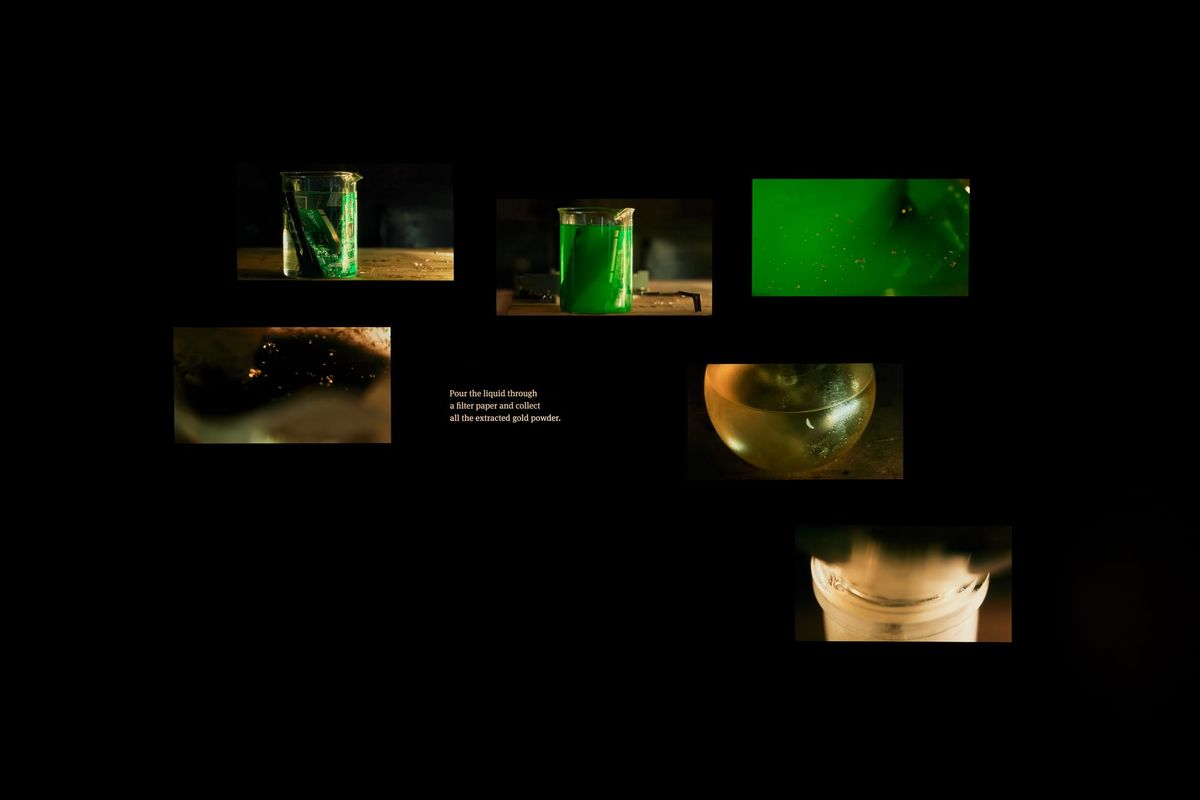
As I fall asleep, I get glimpses into strangers’ lives—disjointed scenes and non-sequiturs embellished with flashes of vivid emotion, some mine, some not. You could call them hypnagogic hallucinations. Watching Amar Kanwar’s The Charcoal Man (2026) feels like that. The video installation looks back on the attempts on Gandhi’s life before and after the 1947 Partition of India, but its 12 magical-realist stories, each centering a distinct character, seep beyond this timeline. The work distills the era’s violence, division, and forced migration into the prosaic experiences and actions of individuals, whose tales—told through text alongside found and shot footage across seven channels—abound in ambiguities and unresolved quandaries, as in dreams and waking life.
Presenting fragments without their resolution is a deliberate strategy on Kanwar’s part. He leads viewers to formulate linchpin questions, only to stymie their completion by shifting the focus. This is apparent in “The Forgetful Carpenter.” The episode stars a windowmaker whose terrible memory necessitates his constant return to the hardware store. After communal bloodshed forces the store owners to flee, the windowmaker moves into their vacated shop where their stock remains; the on-screen text concludes that his forgetfulness no longer inconveniences him. Offered this resolution, we are diverted from the thought that, contrarily, what his amnesia conveniences is his theft of his neighbor’s property. We might forget to ask: Who does amnesia serve?
“The Price of an Acquittal” offers another narrative arc cut short by detours, demanding no less of our enduring attention. Gifted with the infallible ability to tell when her husband is lying, a woman questions him—a judge—about meeting his college friends: “Did you discuss anything important? Were you close?” His deceitful answers enrage her so much that she turns into a fish and swims away. The plot is laden with mysteries, particularly when reviewed in relation to its title: a wife indicts her spouse for lying, but what was being covered up? Whose acquittal cost the judge his wife and his love of fish suppers?
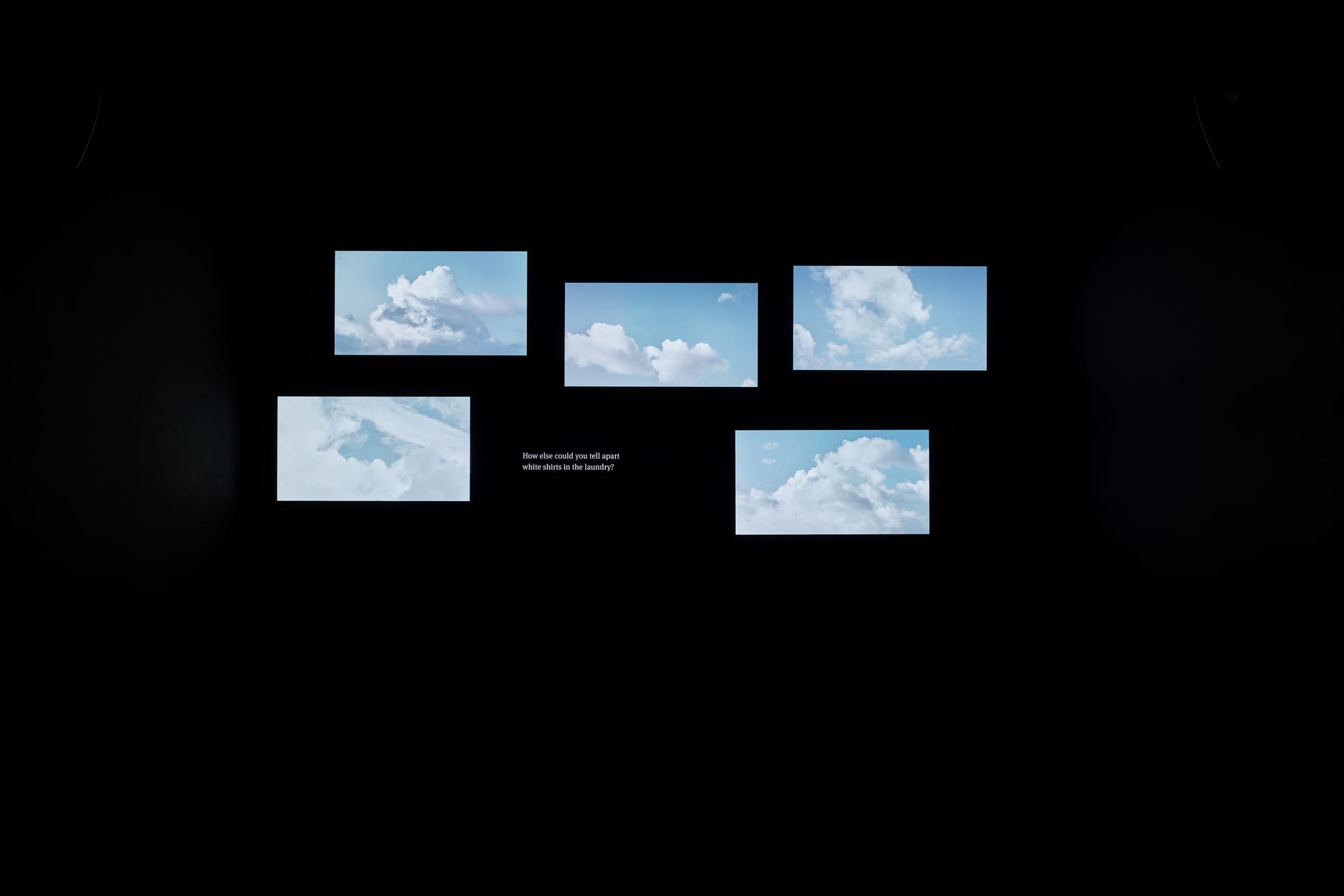
Often incongruent with the words on screen, the visuals of The Charcoal Man compel us to linger, forming wandering associations between and beyond what is in front of our eyes. At the start of “The Price of an Acquittal,” boats on water and crashing waves sporadically animate the seven channels; only after the story’s surreal twist, when the wife transforms into a fish, are the aquatic images explained. In “The Drummer Boy,” a clip of a steam train likewise foreshadows the ending, where a drummer kicks off a welcoming ceremony, unknowingly cueing assassins to launch grenades at an approaching car he had mistaken for Gandhi’s. Gandhi’s vehicle, it turns out, had been delayed by a passing train.
The images are illustrative on the surface but conceal further layers. Early in “The Drummer Boy,” we learn that the musician habitually listened to sounds no one else could hear, such as the rhythm in a horse’s gallop. Eadward Muybridge’s Horse in Motion (1878) accompanies the passage. Widely cited as the first moving image, the animation depicts a jockey whose obfuscated features have prompted speculations about his race. He could be the work’s titular character: a silhouetted figure refusing to be identified yet susceptible to our projections. In this way, The Charcoal Man confronts us with unknowns, distractions, and shadowy figments, past and present. From there, it asks us where we want to go, and nothing could be more freeing.
Chloe Chu is an art writer and editor based in London.