Shows
There and Back Again: “Revisiting the Jade Terrace” at Alisan Atelier
Revisiting the Jade Terrace
Alisan Atelier
Hong Kong
Sep 5–Dec 5, 2026
In 2014, Alisan brought together Zhang Yirong, Chu Chu, and Wang Mengsha in “Beyond the Jade Terrace,” an exhibition examining contemporary Chinese ink through the work of emerging female artists. In the years since, these women have established themselves as prominent figures in contemporary ink art, with aesthetically distinct practices rooted in tradition. Twelve years later, in celebration of the gallery’s 45th anniversary, these artists return, alongside fellow ink practitioner Zhang Ying, in “Revisiting the Jade Terrace,” which considers how their practices have evolved.
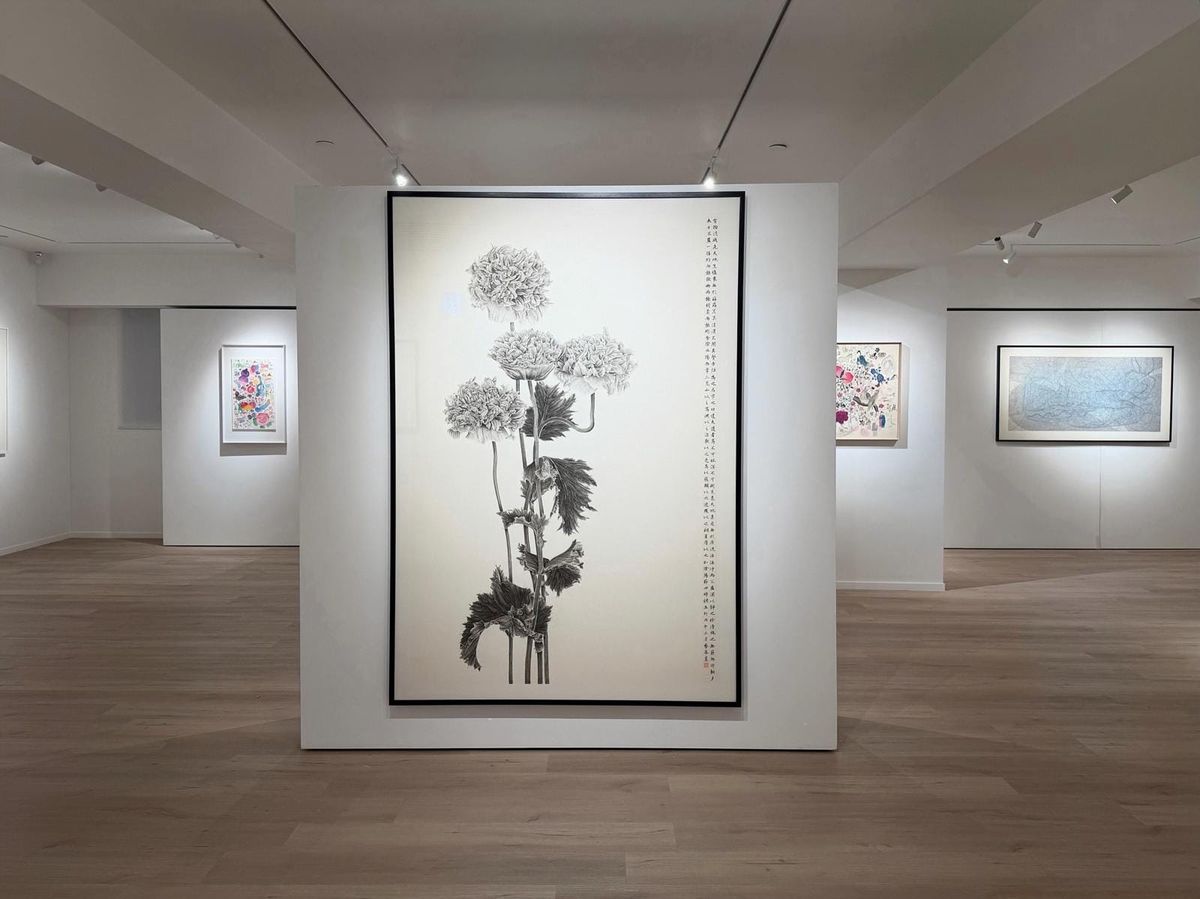
The exhibition opens with Zhang Yirong’s meticulously detailed gongbi paintings. Shimmering with a Jade Glow (2026) depicts delicate chrysanthemums against a blank field, their withering stalks and leaves a gentle reminder of life’s inevitable transience. Hung among the blossoms, Zhang’s butterfly—the motif for which she is best known—reappears in the aptly titled A Guest of Jade Terrace (2025), the veins and patterns of its splayed wings not unlike the fronds and petals of its floral counterparts. Compared to those she presented 12 years ago, these paintings exude a pronounced boldness: the ink richer, the details finer, the shading more vivid. Each element is executed with a precision that borders on scrupulosity, demonstrating the maturity of Zhang’s practice.
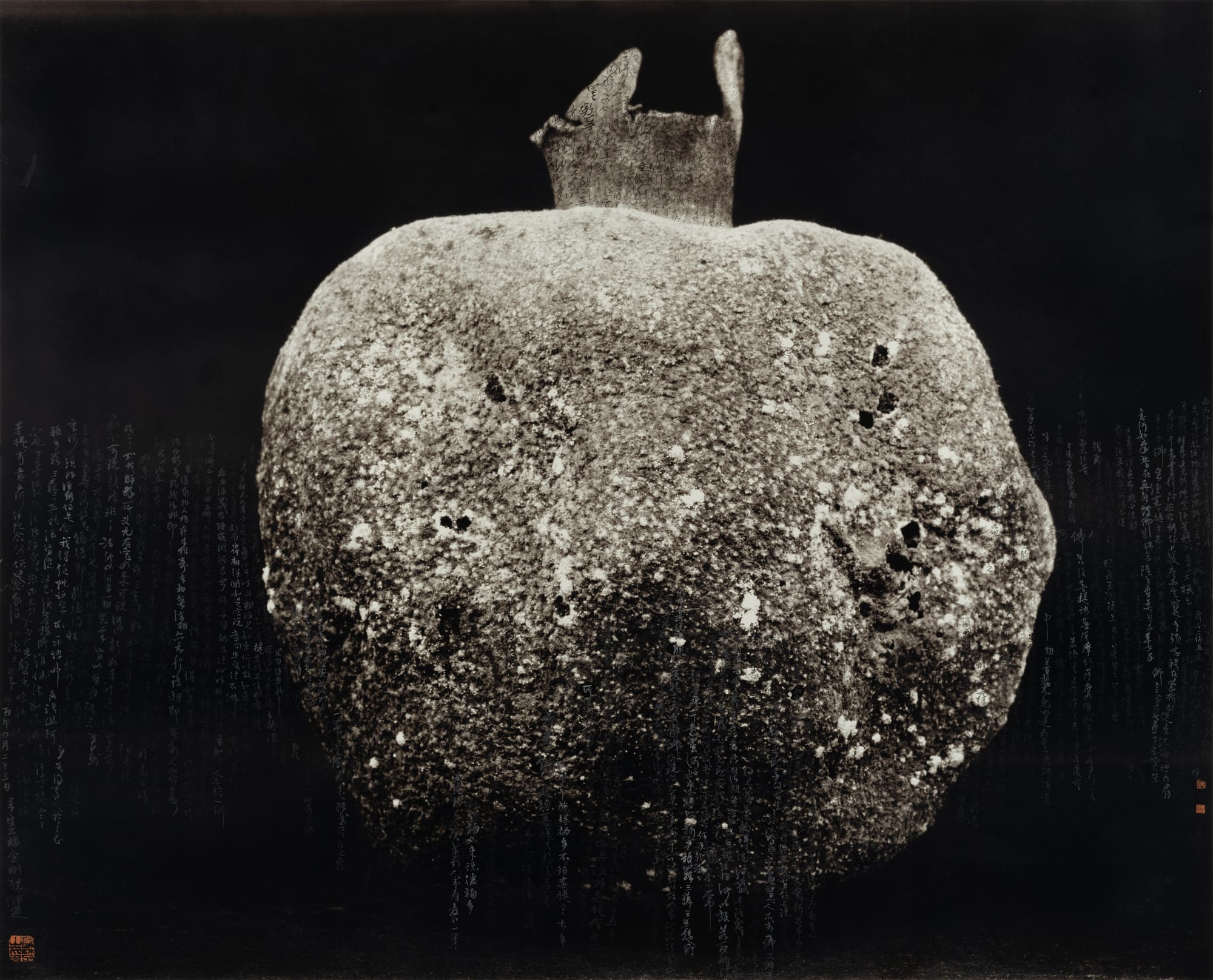
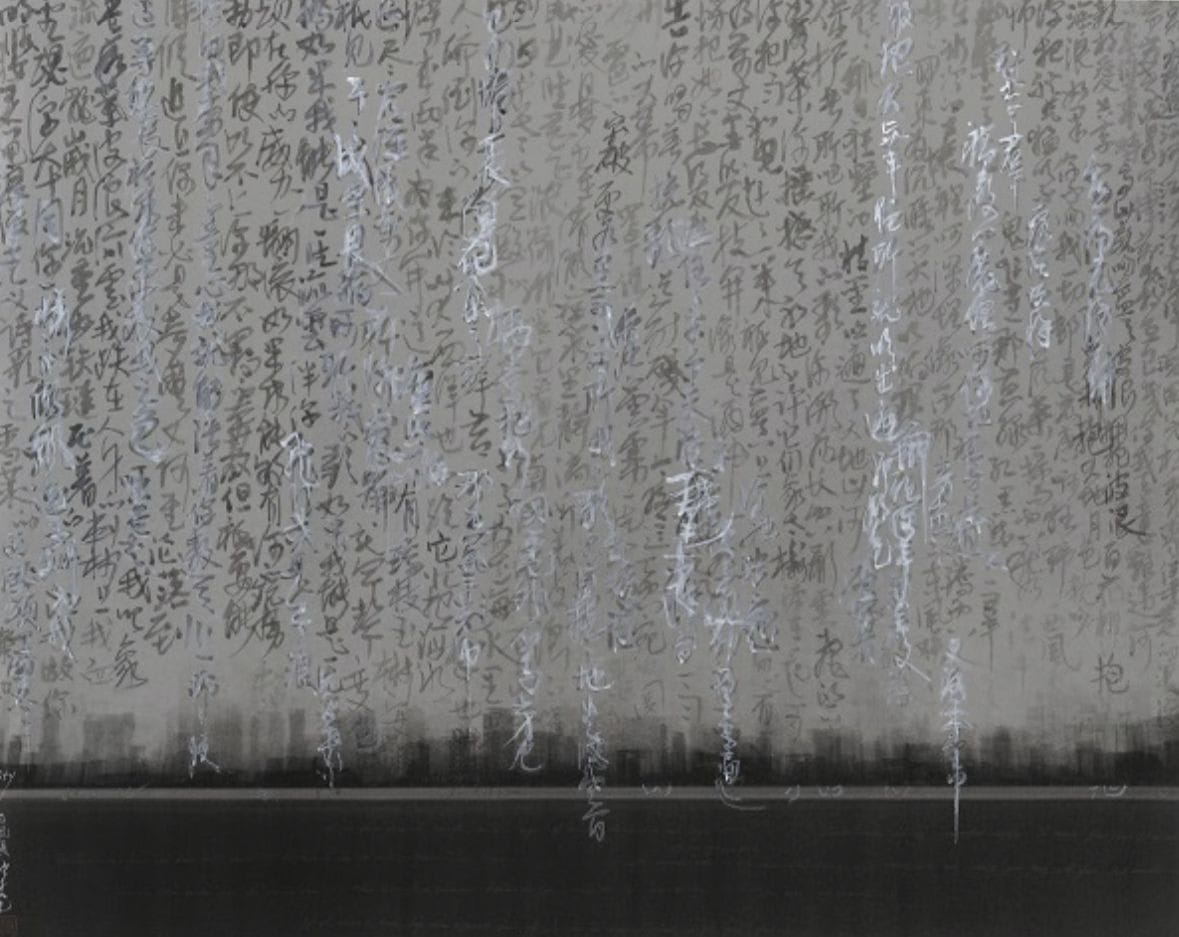
CHU CHU, Fruits-The Diamond Sutra, 2011–26, photography, calligraphy, ink and acrylic on paper, 145 x 117 cm (left); and City-Gusty Wind, 2010–18, photography, calligraphy, ink and acrylic on paper, 80 x 100 cm (right). Courtesy the artist and Alisan Fine Arts, Hong Kong/New York.
Chu Chu’s approach stands in marked contrast. Fruits-The Diamond Sutra (2011–26) reflects her longstanding interest in Eastern philosophies, expressed through her multidisciplinary practice of photography and calligraphy. A black-and-white photograph of a rotting pomegranate sits within a featureless void, almost uncomfortably up close, every spore of mold grotesquely blooming into the foreground. Lines from the Diamond Sutra, a Buddhist scripture exploring the reality of impermanence, deface the image. Elsewhere, City-Gusty Wind (2010–18) depicts an indeterminate cityscape clouded by cursive calligraphy, Chu’s free-spirited hand deftly transcribing characters into a turbulent current. The timelines of these pieces—completed over several years—showcase the patient development of the artist’s practice.
Departing from these somber reflections, Wang Mengsha’s brightly colored works offer a breath of fresh air. In 2014, her ink compositions followed more traditional arrangements of figures and forms. In Boundless Happiness (2025), she exchanges that sparseness for vibrant maximalism, populating the picture with court maidens, birds, butterflies, fruits, and mountain terraces in a rainbow menagerie. True to its title, the work is infused with a lightheartedness and signature humor that asks us not to take things too seriously, and makes Wang’s wider body of work so distinctive among her contemporaries.
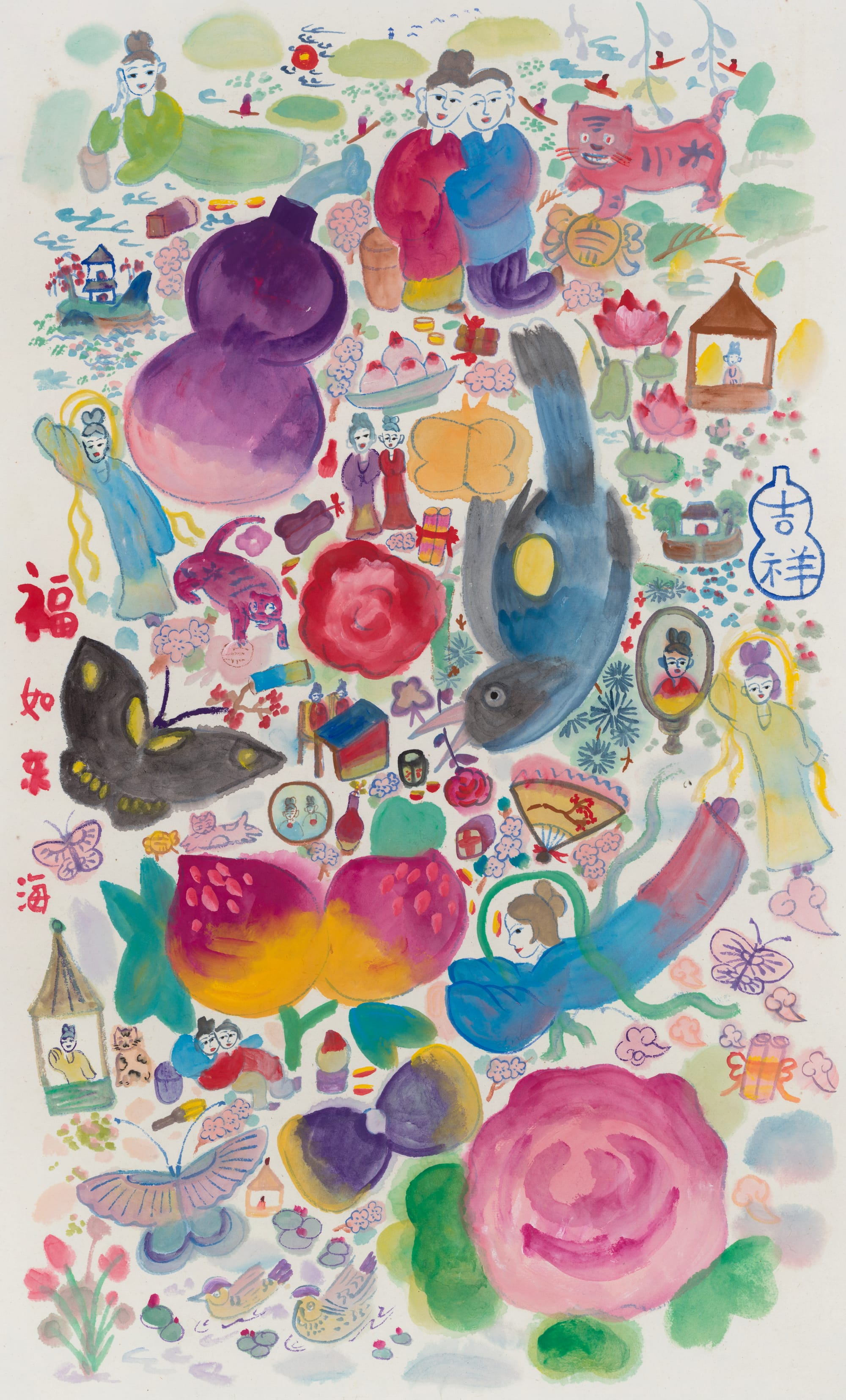
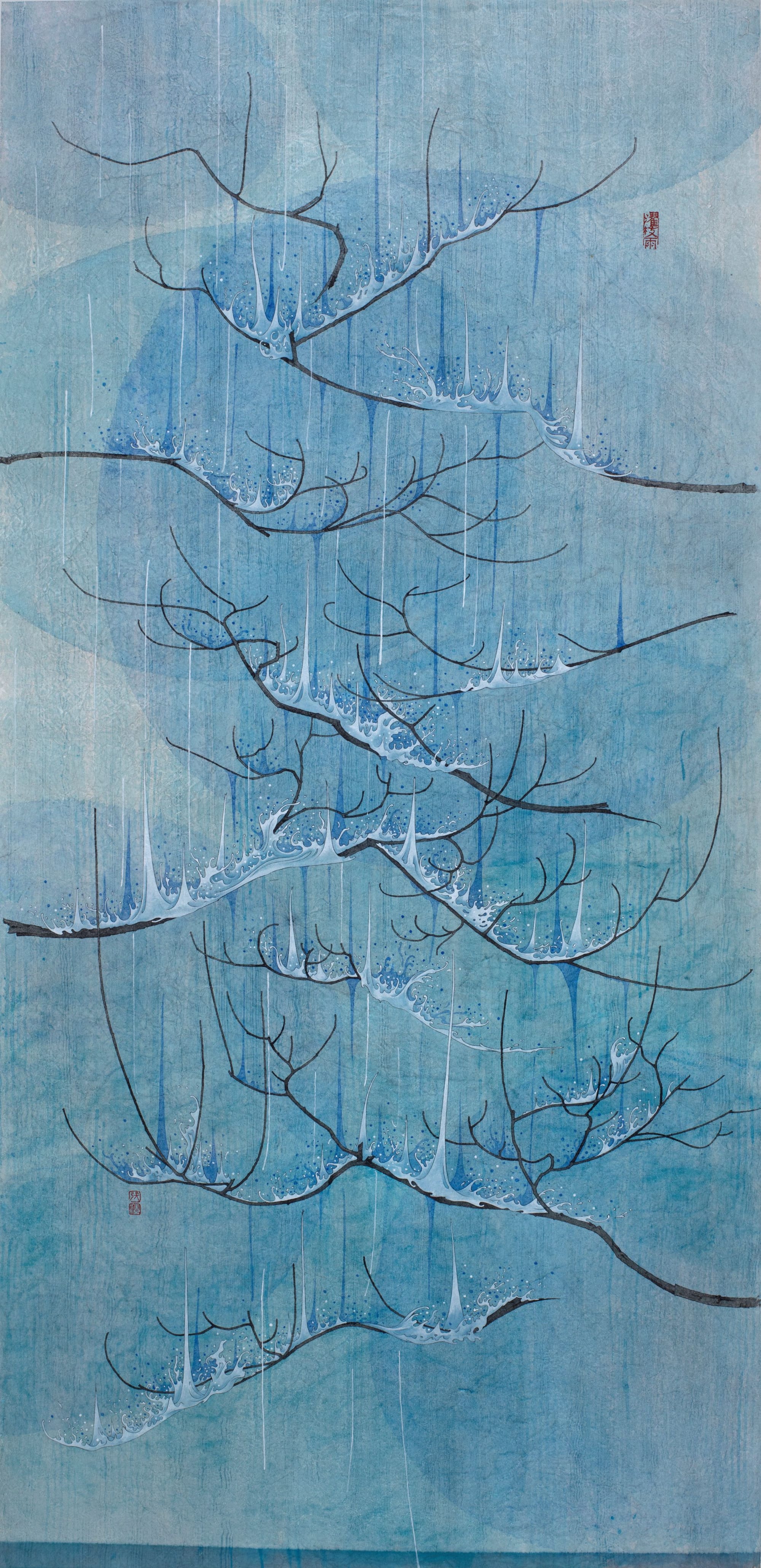
WANG MENGSHA, Boundless Happiness, 2025, Chinese ink and acrylic on rice paper, 66 x 40 cm (left); and ZHANG YING, Heavy Summer Rain-Orchid, 2024, Chinese ink and color on rice paper, 154.5 x 74.5 cm (right). Courtesy the artists and Alisan Fine Arts, Hong Kong/New York.
Rounding out the exhibition is Zhang Ying, whose Heavy Summer Rain-Rainbow (2023) and Heavy Summer Rain-Orchid (2024) capture fleeting moments of rainfall filtering through trees. An otherworldly temporality arrests these scenes: long threads of cascading water paradoxically seem poised to ascend back upward, their splashes rippling across dark, twisted branches suspended in empty space. Drawing on the ethereal qualities of traditional Chinese landscape painting, Zhang invites contemplation of the forces that animate nature, imbuing even its most overlooked moments with movement and spirit.
Together, these works connect contemporary ink art to notions of transience and transformation at the core of human experience. They remind us that things can be changed, built upon, and transfigured—that nothing is set in stone. With this in mind, “Revisiting the Jade Terrace” is less a reprise of the exhibition held 12 years ago than a reinvention, embracing both the medium and ideals that remain ever ancient and ever new.
Harison Butler is an editorial intern at ArtAsiaPacific.