Shows
There is a Crack in Everything: “Breaking Through a Dam” at Salt Beyoğlu
Breaking Through a Dam
Salt Beyoğlu
Istanbul
Apr 22–Aug 23, 2026
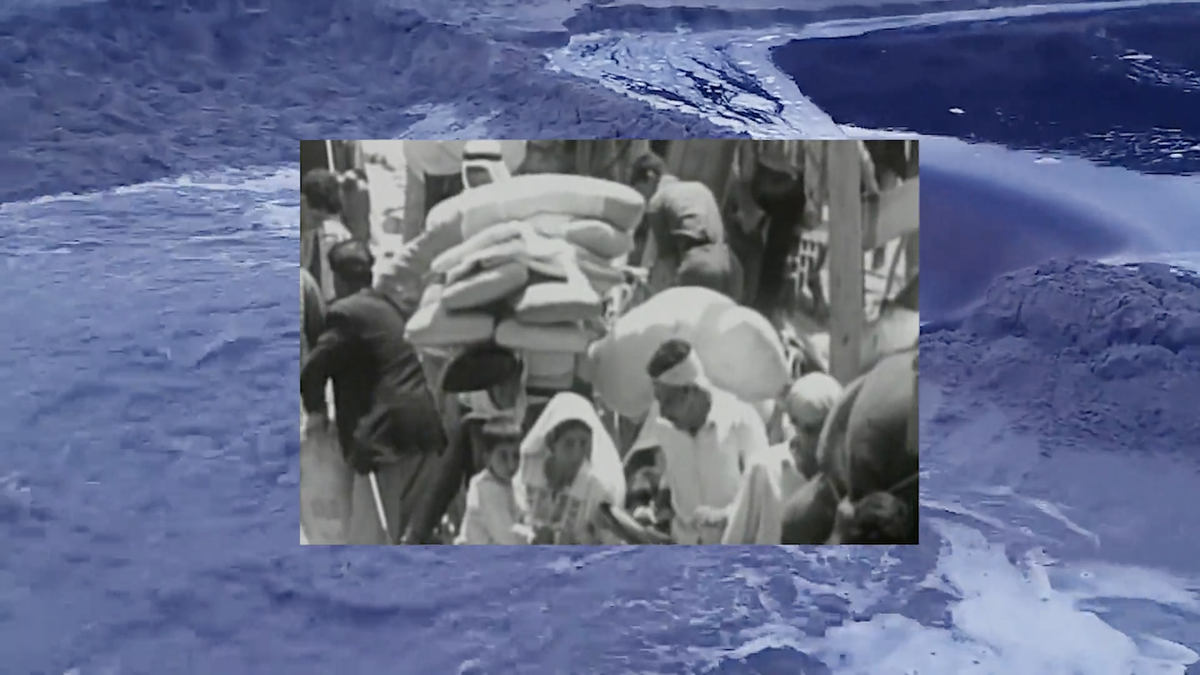
A white bathtub is filled to the brim—not with liquid, but with luminous moving-image projections of water gushing through a crevice in an earthen dam. The visual is overlaid with archival black-and-white footage of the 1948 Nakba, the mass expulsion of Palestinians, partially played in reverse so as to effect a ghostly homecoming. A solemn jazz instrumental resounds through the darkened space; the piece was written in 1988 by Carla Bley after she witnessed a public protest in Oslo against a dam project in northern Norway that threatened Indigenous Sámi territory. As the grainy, projection-mapped videos flicker across the concave surface, Dima Srouji’s A Crack in the Water Followed by Return (2023) evokes the traumatized consciousness of our world.
Programmed by Gülce Özkara with editor Ezgi Yurteri and translator Çağla Özbek, “Breaking Through a Dam” at Salt Beyoğlu conceptually draws on the Turkish word yerdeşlik (“being-with-place”). The term signifies having a visceral bond with the environment we live in—a relationship rooted in interdependence and respect, which counters the aggressive principles of industrialization and Western capitalism that have come to define national business models far and wide. The show’s title is based on a catalyzing declaration by the Palestinian American human rights attorney Noura Erakat, “We are breaking through a dam—keep pushing,” foregrounding durational resistance against colonialist systems of exploitation that, however imposing, can still fracture under pressure. Through interdisciplinary multimedia works that cover regions from the Eastern Mediterranean to the Gulf, the exhibition probes how the violence of colonial extractivism is embedded within the land.
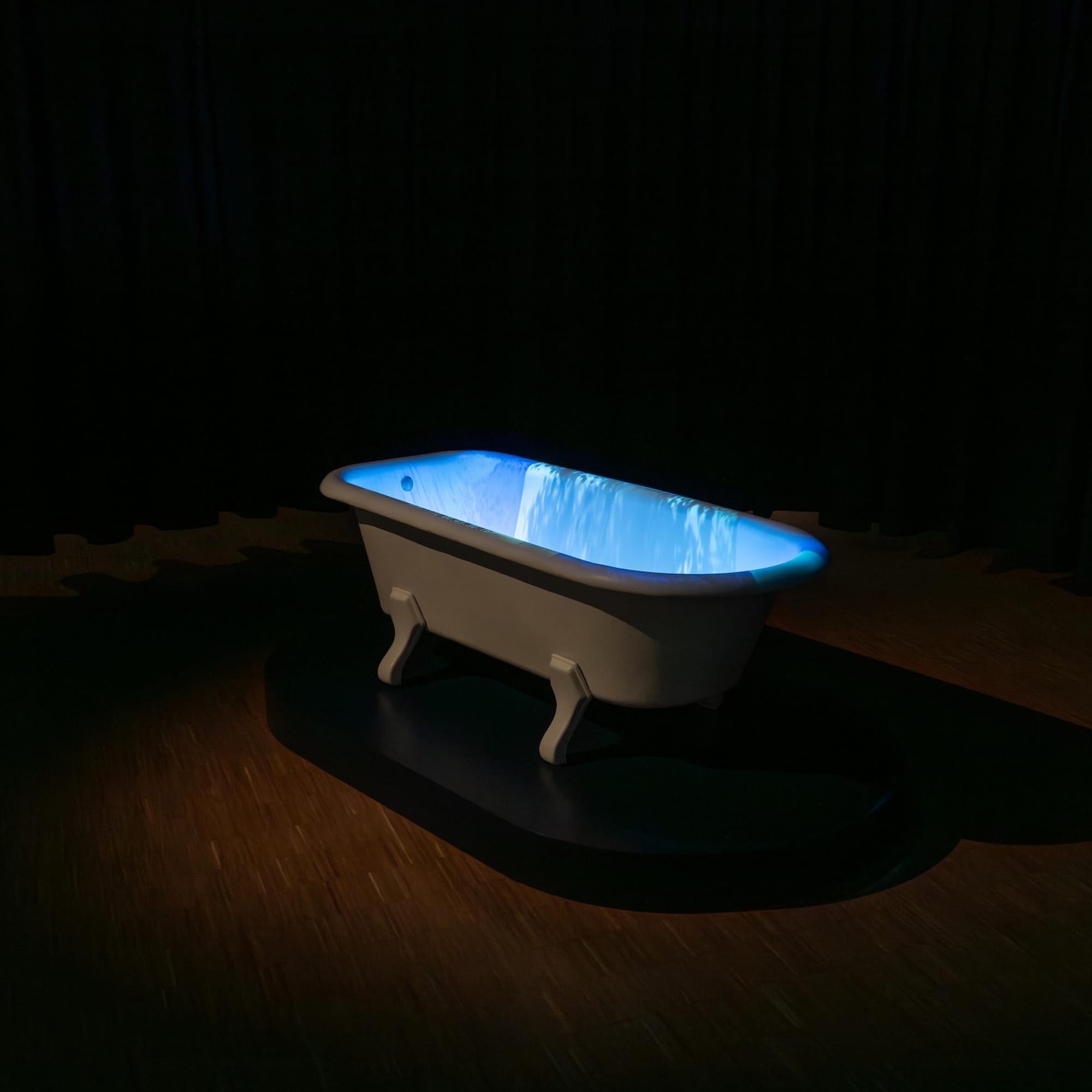
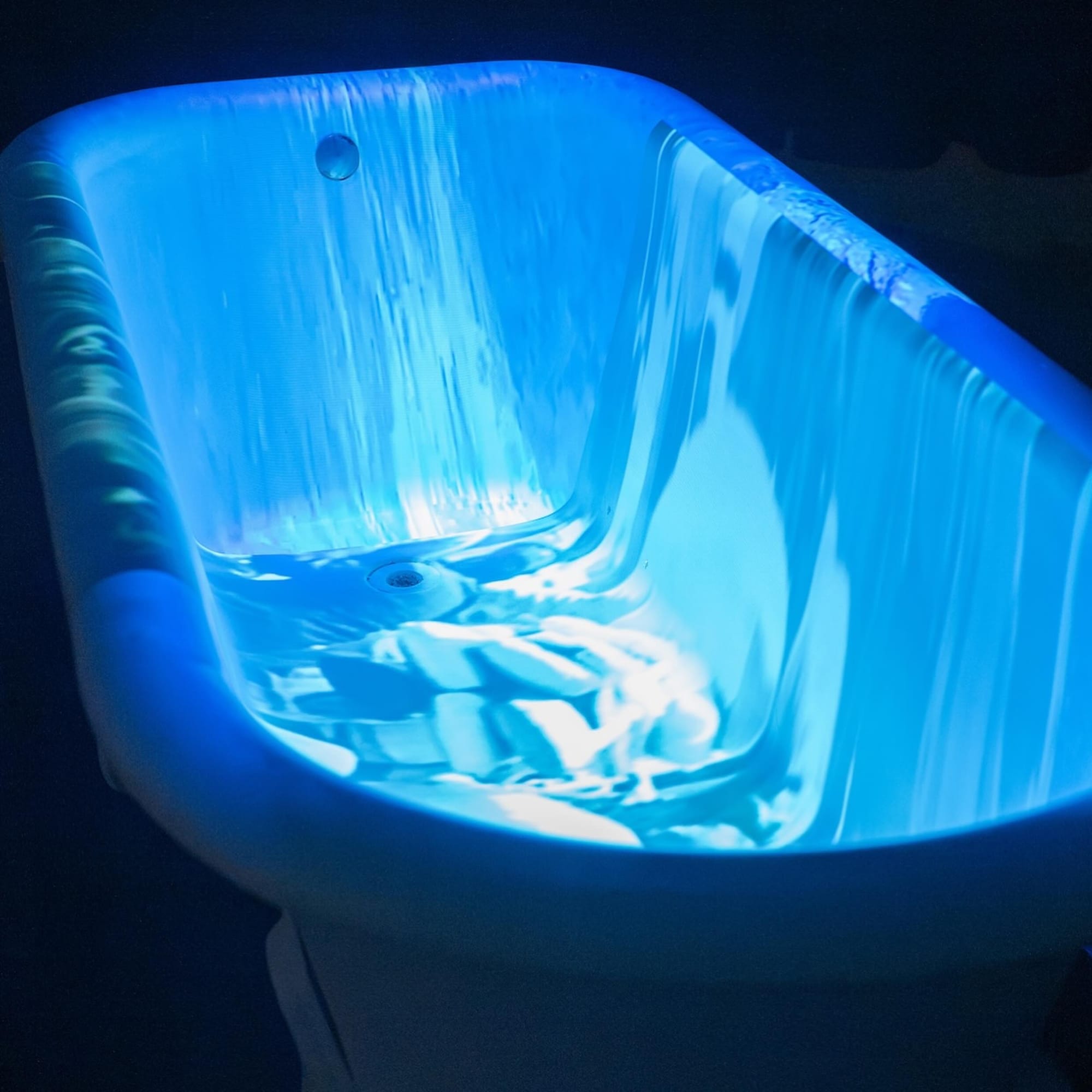
Installation views of DIMA SROUJI’s A Crack in the Water Followed by Return, 2023, video installation: 2 min, projection layered inside an acrylic bathtub, dimensions variable, at “Breaking Through a Dam,” Salt Beyoğlu, Istanbul, 2026. Photo by Metean Bars. Courtesy Salt Beyoğlu.
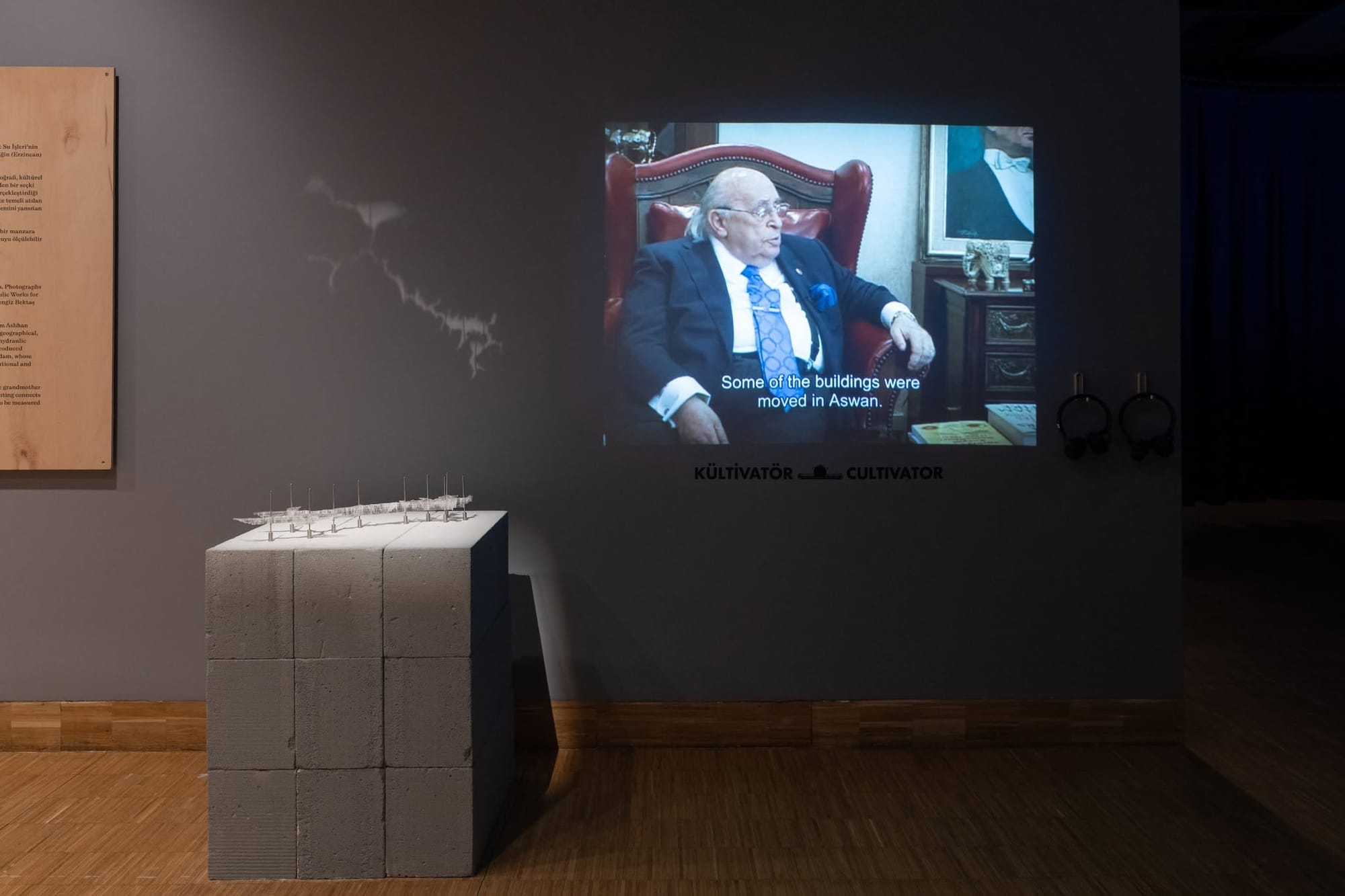
In her research-driven oeuvre, Aslıhan Demirtaş investigates the social and geographic repercussions of hydraulic dam-building in Türkiye. A video projection on the wall screens the artist’s 2012 interview with Süleyman Demirel, the former president of Türkiye who became known as the “king of the dams” after spearheading a nationwide dam-building program, which he considered as vital to the country’s economic development. One of the major endeavors he oversaw was the Keban Dam on the Euphrates River, whose construction began in 1965 and was completed in 1974—initially glorified as a monument of progress, the reservoir became mired in controversy for submerging countless villages and agricultural settlements, displacing thousands of local villagers, and sparking regional tensions with downstream neighbors Syria and Iraq over restricted water flow. Demirtaş contextualizes these mega-projects, tracing their history back to unscrupulous politicians. During their conversation, Demirel gestures excitedly with his hands while telling the artist, “These [structures] were beyond us, in terms of our mindframe. They were too big . . . the Keban Dam was a dream.” As he harps on about the supposed grandeur of industrialization, passing over the human and ecological costs, the interview lays bare a profit-driven aspiration fueled by anthropocentric hubris.
The impact of such civil engineering ventures, which continue to mar Turkish landscapes—from the cleared forests of Akbelen to the flooded valleys of Hasankeyf—are further conveyed in Evrim Kaya’s cinematographic See! (2026). The film features clips of people in a remote mountain village from Erden Kıral’s 1983 movie A Season in Hakkari, carefully interspersed with contemporary scenes of snow-plowing operations in the area, captured by the artist herself, revealing how these modernization efforts disrupt the serenity of this wintry mountainous terrain and the lives of those who inhabit it.
Elsewhere, Yelta Köm looks at the parallels between past and present networks of communication in Istanbul’s Pera region, from coded messaging practices during the Ottoman empire to modern-day cellular technology. His installation I was always with you (2026) comprises twin vertical structures: one bears old phones, copper coils, and motherboards, while the other has black screens projecting encrypted messages from the Lettres Muettes (“Wordless Letters”), a 17th-century manuscript detailing discreet methods of correspondence that were often used by the Ottomans in diplomatic circles, and also in love letters. The structures flank a metal sculpture that resembles a cell tower, representing contemporary forms of communication as well as surveillance. Through a media archaeological lens, Köm examines how private human interactions have been monitored through the ages—whether by cultural, political, or technological forces—while confronting the rampant construction of mobile towers across the Turkish city, which have paved the way for today’s more intrusive cyber-infrastructure.
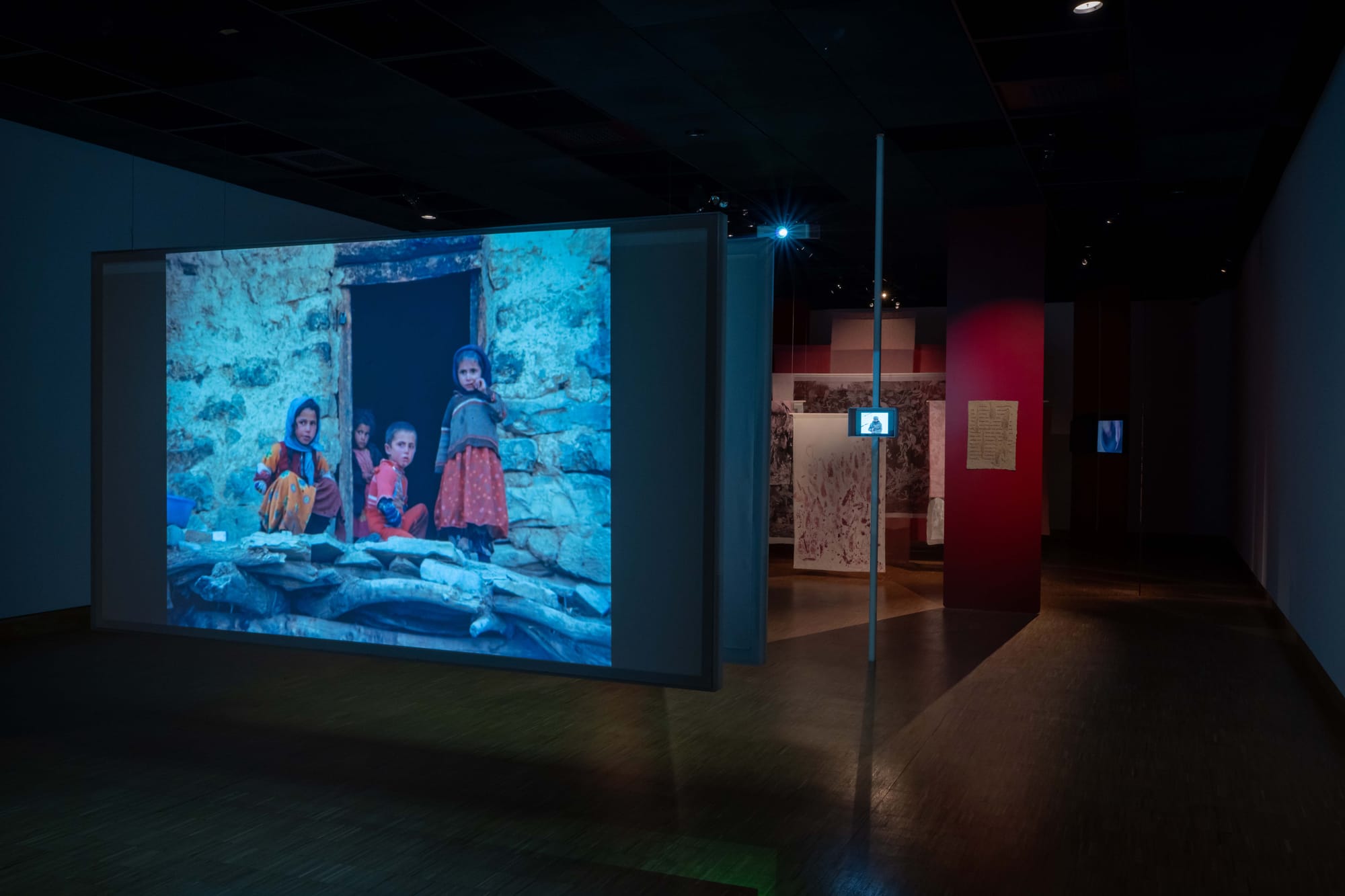
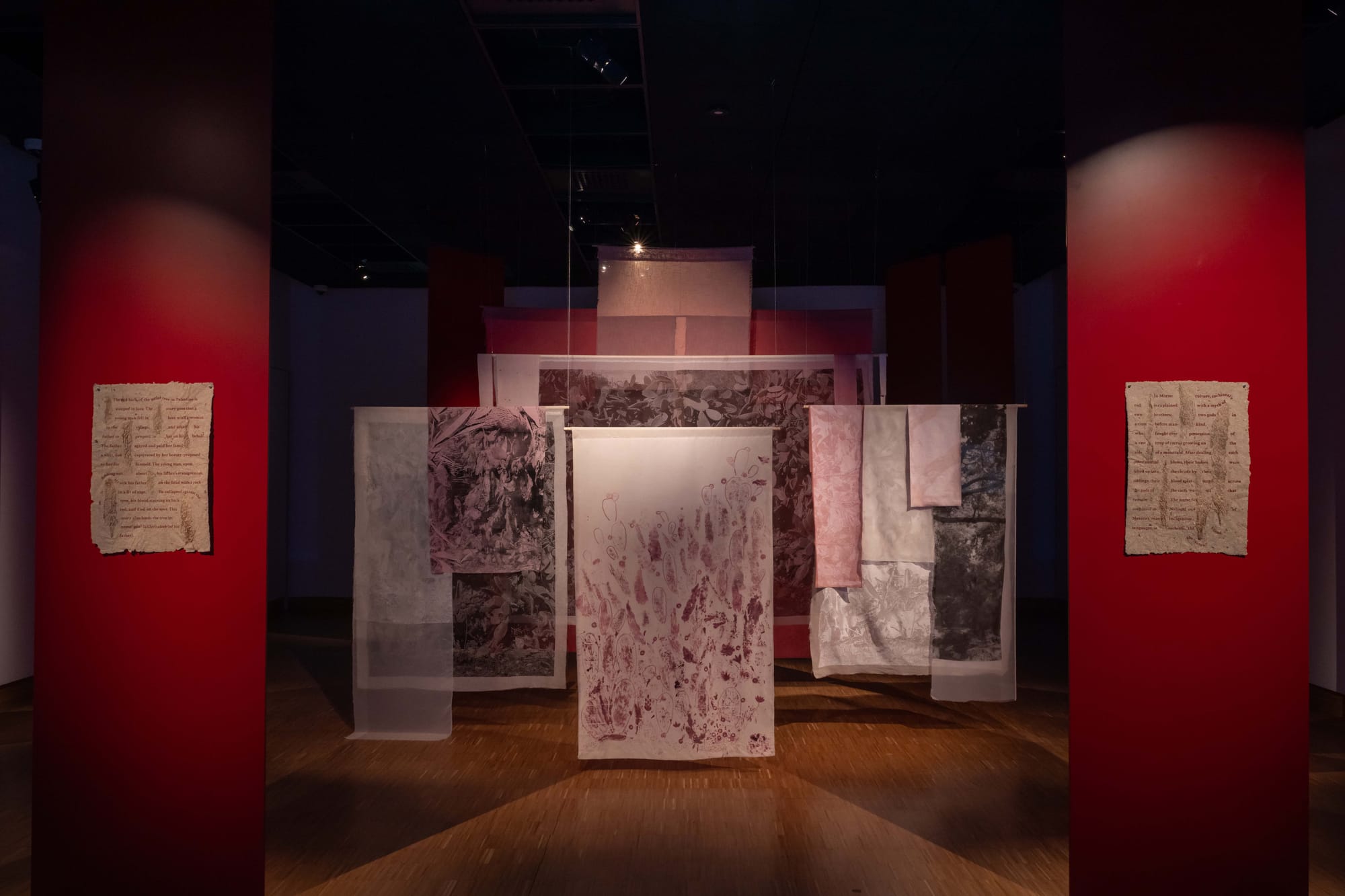
Meanwhile, the Al-Wah’at Collective leans into the age-old, tactile realm of crafts—not as a kind of reactionary activism against towering power plants and state surveillance, but as a means to cultivate planetary thinking. Dyed textiles and ecoprints from their ongoing Wild Hedges series (2023– ) demonstrate the material potential of cactus paper and cochineal ink, gathered from the prickly pear cacti and cochineal beetles. These particular plants and insects were historically exploited by empires for commercial farming or to exterminate unwelcome species, and now thrive across Mexico, Spain, and Palestine. Interrogating the native-alien paradigm inherent to colonial thought, the series reimagines the translocal organisms as symbols of change and resilience.
The separation of “being” from “place” is a morbid symptom of colonialism and industrialization that frames land and its resources as mere commodities to be plundered for economic growth. “Breaking Through a Dam” exposes how these narratives of expansionism continue to influence our nominally postcolonial world, underlining the urgency to recalibrate our relationship with nature and resist ecocidal forms of statecraft across the globe.
Matt A. Hanson is an art writer based in Istanbul and ArtAsiaPacific’s Istanbul desk editor.