Shows
“Orion in Sight: A View of Collective Work” at Ateneo Art Gallery
Orion in Sight: A View of Collective Work
Ateneo Art Gallery
Manila
Jun 28–Oct 18, 2026
Philippine social realism is a conscious aesthetic movement born directly from a politicized Filipino consciousness. Emerging in the 1970s as a force of dissent against the Marcos martial law dictatorship (1972–86), the genre turned art into a vehicle for exposing oppression, labor exploitation, and class struggle. In today’s volatile political climate, that legacy remains urgent. “Orion in Sight: A View of Collective Work (Tanaw ang Balátik: Sipat sa Kolektibong Paggawa)” at the Ateneo Art Gallery traces the roots of that history while connecting it to contemporary social and political concerns.
Curated by Lisa Ito-Tapang, a member of the Concerned Artists of the Philippines, the exhibition reflects her longstanding focus on the intersections of artistic practice, grassroots engagement, activism, and environmental ecology. The showcase highlights TalaAnyo, a collective of seven Philippine artist-led initiatives founded between 2005 and 2022, featuring collaborative and community-engaged works alongside pieces by their founders, including social realists Renato Habulan, Alfredo Esquillo Jr., Emmanuel Garibay, Charlie Co, Elmer Borlongan, Leslie de Chavez, and Mark Justiniani.
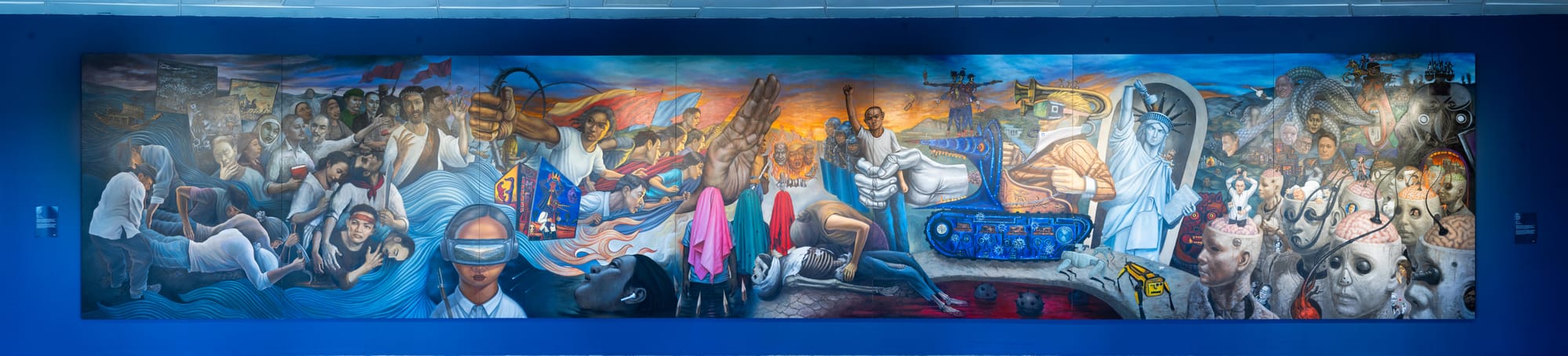
The anchor piece is a monumental mural titled Habang Tanaw (“While Gazing From a Distance”) (2026). Mounted at the entrance of the main gallery, this collaborative work by the collectives’ founders echoes the sociopolitical struggles of the 1970s. However, it also reflects a far more intricate modern landscape, weaving a complex narrative of political power, systemic corruption, and trauma that registers [1] a painful collective consciousness. The mural draws the viewer’s eye toward a dramatic focal point: a monumental hand confronting the perceived forces that suppress society’s freedom and peace. Its composition is divided symmetrically, with historical figures on the left and contemporary realities on the right. Monochromatic shades of blue unify the panoramic canvas, projecting an overarching atmosphere of coldness, vulnerability, and collective alienation.
The exhibition also highlights the regional reach of these seven collectives and their founders, further illuminated by archival materials. They include Renato Habulan’s Agos Studio, founded in 2020; Alfredo Esquillo Jr.’s Eskinita Art Farm, established in 2017 and currently based in Tanauan, Batangas; Emmanuel Garibay’s Linangan Art Residency, which inaugurated in 2018 in Alfonso, Cavite; and the Visayas-based Orange Project, co-founded in 2005 by Charlie Co in Bacolod City. Also featured are Pasilyo Press, established in 2020 by Elmer Borlongan and Plet Bolipata to champion printmaking in San Antonio, Zambales; Leslie de Chavez’s Project Space Pilipinas, founded in 2007 in Lucban, Quezon; and the Tungtung Alon Art Foundation, established by Mark Justiniani and Joy Mallari in 2022.
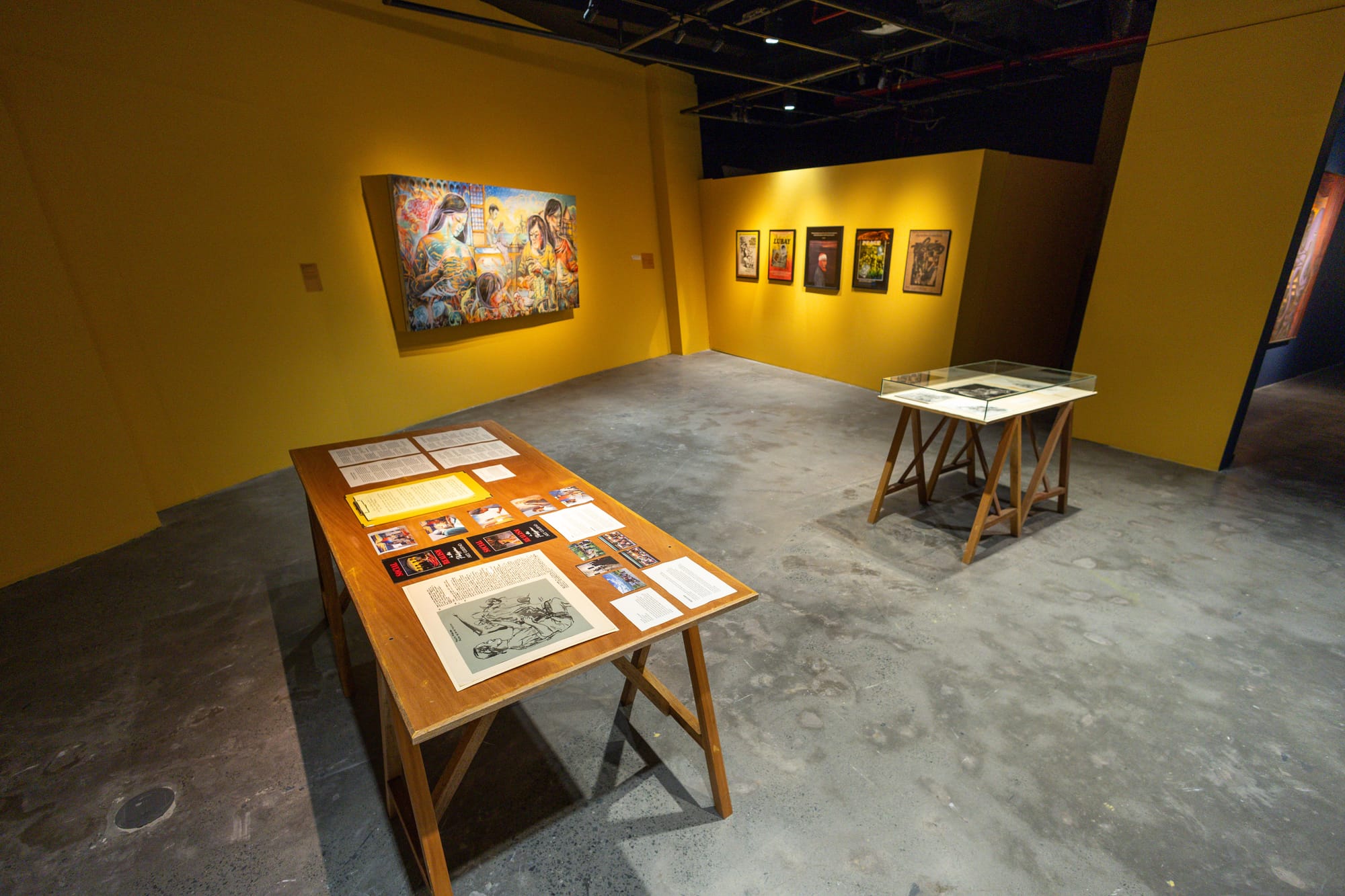
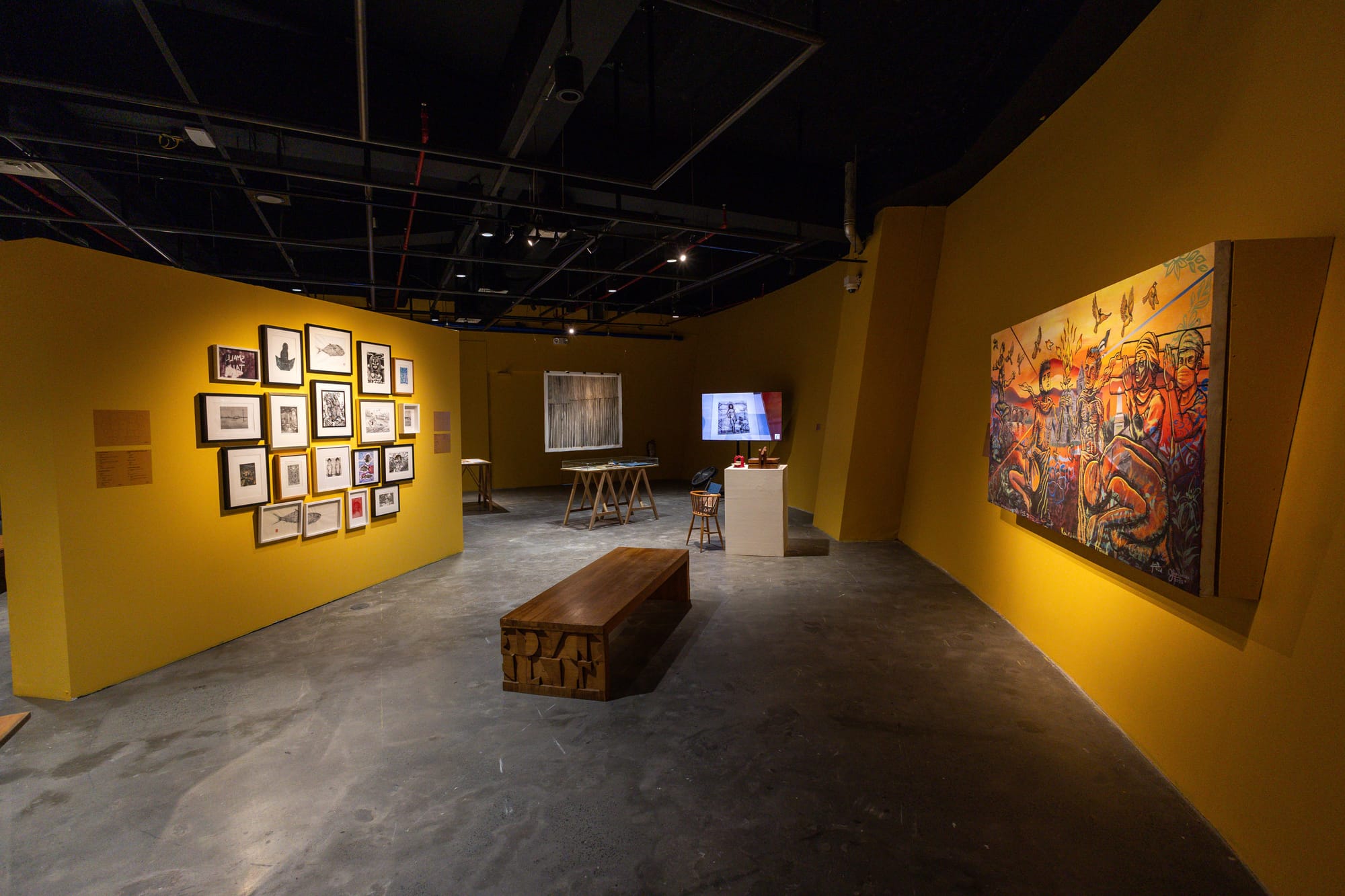
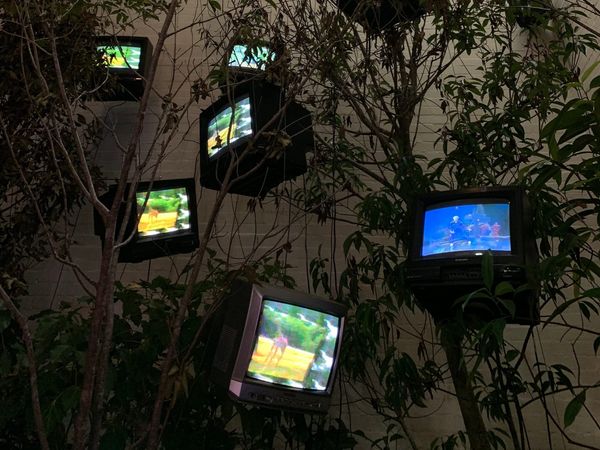
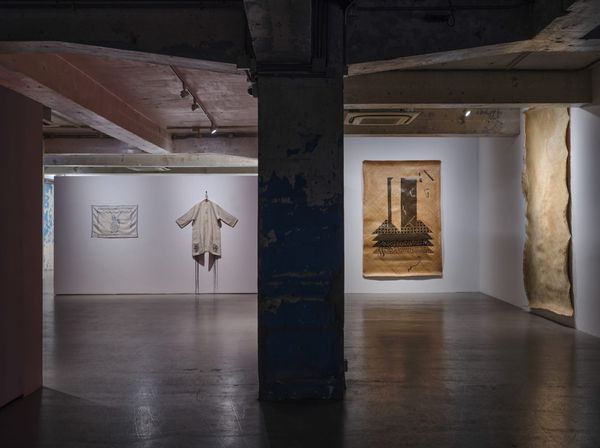
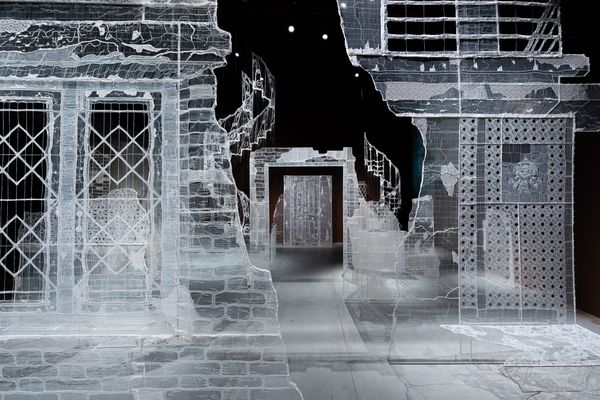
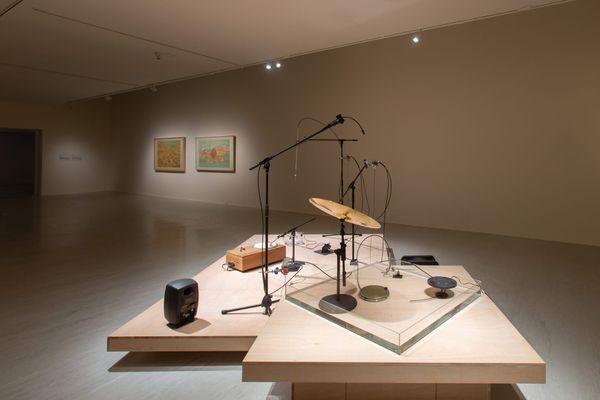
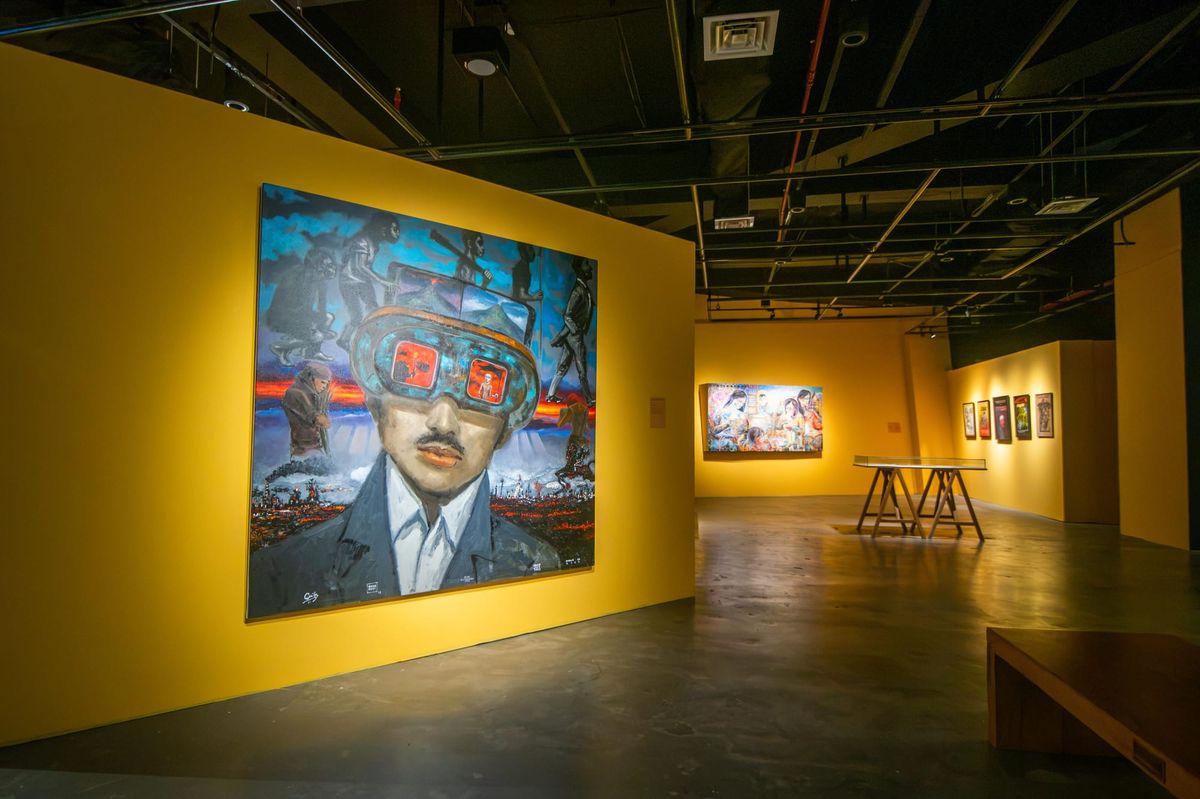
Installation views of “Orion in Sight: A View of Collective Work” at Ateneo Art Gallery, Manila, 2026. Photo by Reeltime Photography. Courtesy Ateneo Art Gallery, Ateneo de Manila University.
It is worth noting, however, that the exhibition omits a few significant collectives and artists, among them the highly influential, politically conscious Visayan social realist painter Nunelucio “Nune” Alvarado. Throughout his career, Alvarado spearheaded numerous community-centered art initiatives in Negros Occidental including Pamilya Pintura, Black Artists in Asia, and Pintor Kulapol, as well as the Concerned Artists of the Philippines-Negros Chapter and Syano Artlink.
The title’s reference to Orion, the constellation often associated with guidance and orientation, is apt: “Orion in Sight” ultimately holds up a mirror to our shared history. The exhibition—and its glaring omission of pioneers—reminds us that Philippine social realism is not merely political critique, but a vital confrontation with the unresolved silences and blind spots that continue to shape and mar the nation. To gaze upon Habang Tanaw is to realize that the monumental hand at its center speaks directly to a collective consciousness wrestling against pressures that constrain its liberties. In a society fractured by systemic trauma, the work of these collectives bring buried realities into light, insisting on a reckoning necessary for healing.
Rachel Mayo is a freelance art critic, journalist, and researcher based in Manila.