People
Research and Dialogue: Notes from Spain
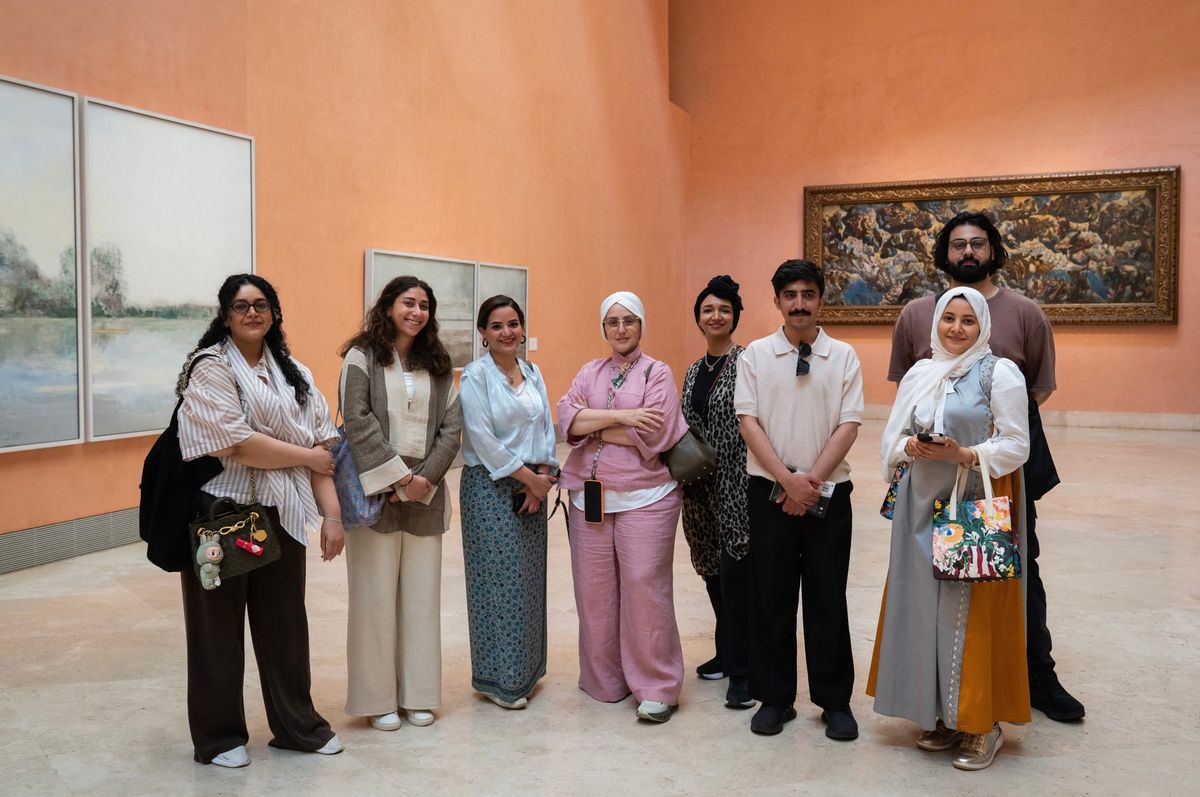
In June 2026, Saudi Arabia’s Visual Arts Commission sent a delegation of artists and cultural practitioners to Spain as part of Art Bridges, a professional development program connecting participants with international peers. Visits to Madrid’s cultural institutions and artists’ studios prompted discussions about artistic research, education’s role in curatorial practice, and the sustained support needed to develop ideas beyond immediate exhibition outcomes.
Below, Maisa Shaldan, Sara AlBunayan, and Seema Alabdulhai reflect on the exchange and the possibilities it opened for Saudi Arabia’s growing visual arts sector.
MAISA SHALDAN
Maisa Shaldan is a Saudi visual artist of Palestinian origin whose practice explores memory, cultural heritage, and belonging through experimentation with natural materials. She received the Misk Art Grant in 2023.
Can you describe a specific moment during the program when a conversation or interaction changed the way you think about the role of visual arts in society?
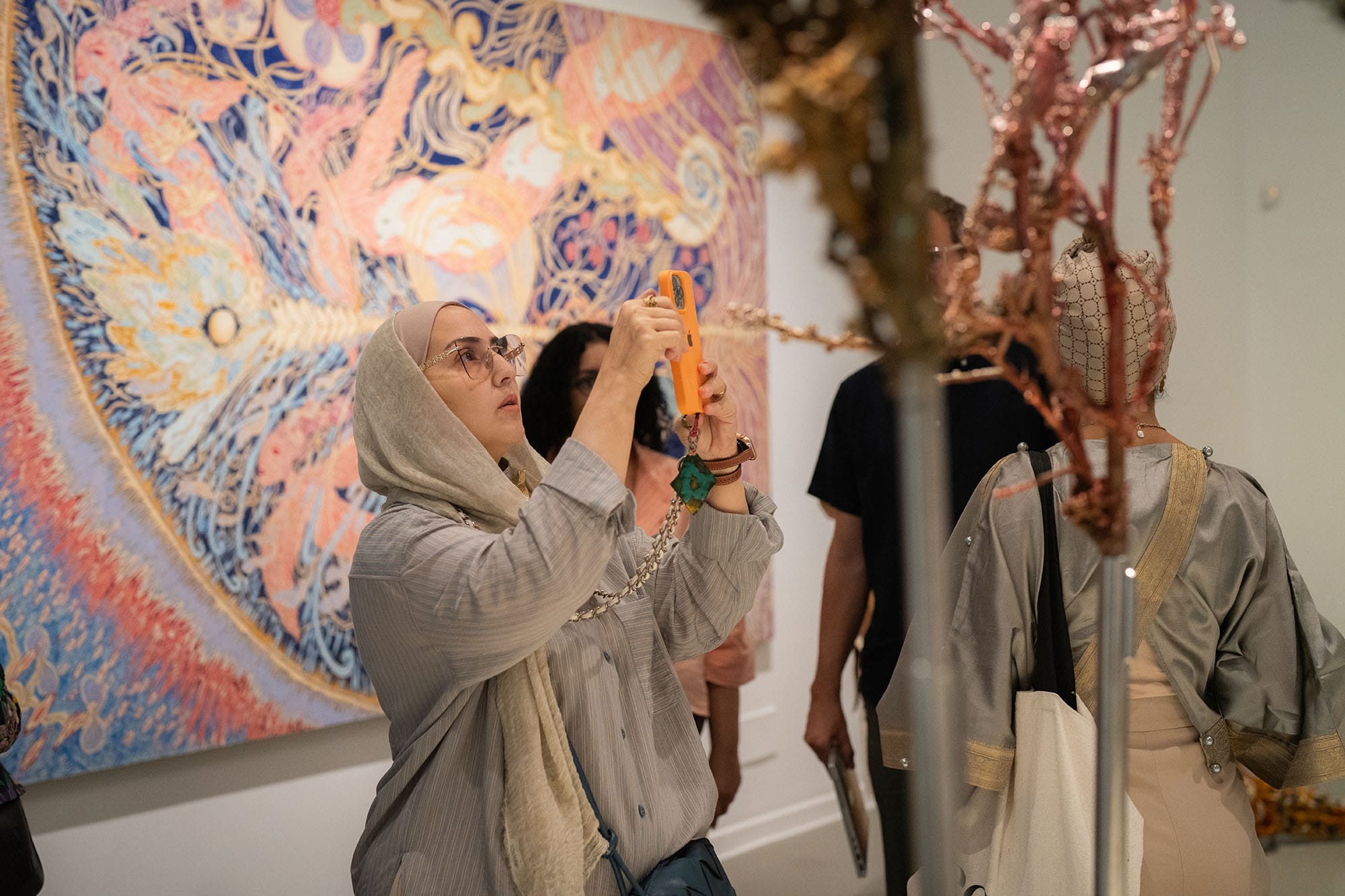
The most impactful moments came during our visits to institutions such as Casa Árabe, Casa de Velázquez, Matadero Madrid, TBA21 Thyssen-Bornemisza Art Contemporary, and SOLO Collection. Across these institutions, curators, gallery directors, and artists described artistic practice as long-term research rather than simply the production of artworks. Hearing this articulated so clearly resonated deeply with me because it reflected the methodology that I have been developing intuitively in my own work.
My practice begins with research into material culture, oral history, and collective memory. The artwork is not the starting point—it is the outcome of a much longer investigation. During the Art Bridges program, I took clay impressions from the surfaces of the historic stone walls near the Madrid city walls. I was not collecting stones, but preserving the traces embedded in their surfaces. For me, stone is a living carrier of memory, and these impressions became the beginning of an ongoing investigation into how materials preserve time, place, and human presence.
Seeing institutions in Spain value research—not only the final artwork—reinforced my confidence in continuing this approach. The insights gave me a stronger language to describe my practice and reminded me that visual art can function as a form of cultural research and public dialogue.
How did the program’s structure foster genuine exchange or collaboration, rather than a one-way presentation of ideas?
The program encouraged conversation instead of presentation. We were not simply introduced to institutions; we were invited into artists’ studios, research spaces, and informal discussions where questions flowed in both directions.
I found that many of our Spanish counterparts were genuinely curious about Saudi Arabia’s art ecosystem, while we were equally interested in learning from their institutional experience. This mutual curiosity created an atmosphere of exchange rather than comparison.
As artists, we discovered shared concerns—memory, identity, materiality, and community—even though our cultural contexts differ. I also found myself sharing aspects of my own research-based practice. Those conversations transformed the program into the beginning of professional relationships that I believe can continue through future collaborations.
What most surprised you about the similarities or differences between the contemporary art ecosystems in Saudi Arabia and Spain?
I expected to find differences, but was surprised by the shared concerns among artists that I observed. Across both contexts, they are increasingly working through research, archives, local histories, and community engagement. The program gave us access to Madrid’s institutional ecosystem, which is built to support and sustain research, through residencies, public funding, and close collaboration with museums and cultural organizations. Saudi Arabia is experiencing remarkable growth, and what excites me most is that we are responding to our own cultural context. Rather than replicating existing models, we have developed approaches rooted in our own histories, communities, and cultural narratives.
Did any aspect of the Spanish art scene prompt you to reconsider how similar structures might evolve or be adapted within the growing Saudi visual arts context?
One aspect that stayed with me was the close relationship between artists, institutions, and the public. I was particularly interested in organizations that support long-term artistic research, experimentation, and dialogue—not only exhibitions. This encouraged me to think about how Saudi Arabia’s rapidly growing cultural sector can continue investing in spaces where artists have time to develop ideas before producing outcomes. Research, mentorship, and sustained collaboration are just as important as exhibition opportunities.
What do you see as the potential long-term impacts of the program?
I think the most valuable outcome of Art Bridges cannot be measured only in the number of contacts exchanged. It is the trust that began to develop through conversations and studio visits. Long after the program, I believe these relationships will continue—through collaborations, exhibitions, research projects, and ongoing dialogue. Equally important is the subtle shift in perspective that happens when artists from different cultures realize they are asking many of the same questions. In that sense, Art Bridges created something more lasting than a professional network. It established a foundation for continued exchange built on mutual respect, curiosity, and the understanding that meaningful artistic dialogue grows over time.
Reflecting on your experience, what is one question you wish to pose to the organizers, the hosts, or even to yourself about the future possibilities opened by programs like Art Bridges?
The question I continue to ask myself is: How do we ensure that these conversations continue once the journey ends? Programs like Art Bridges create meaningful connections in a short period of time, but their greatest potential lies in what happens afterward. How can these encounters develop into long-term collaborations, shared research, artist residencies, or co-curated projects? For me, the future of cultural exchange is not simply about mobility between countries; it is about building sustained relationships that allow artists to think together over time. If we can achieve that, then Art Bridges becomes more than a program—it becomes an ongoing platform for dialogue, research, and collective growth.
SARA ALBUNAYAN
Sara AlBunayan is a Saudi arts educator whose work focuses on developing educational programs and supporting emerging artists. She holds a master’s degree in community arts and education from Lesley University.
Can you describe a specific moment during the program when a conversation or interaction changed the way you think about the role of visual arts in society?
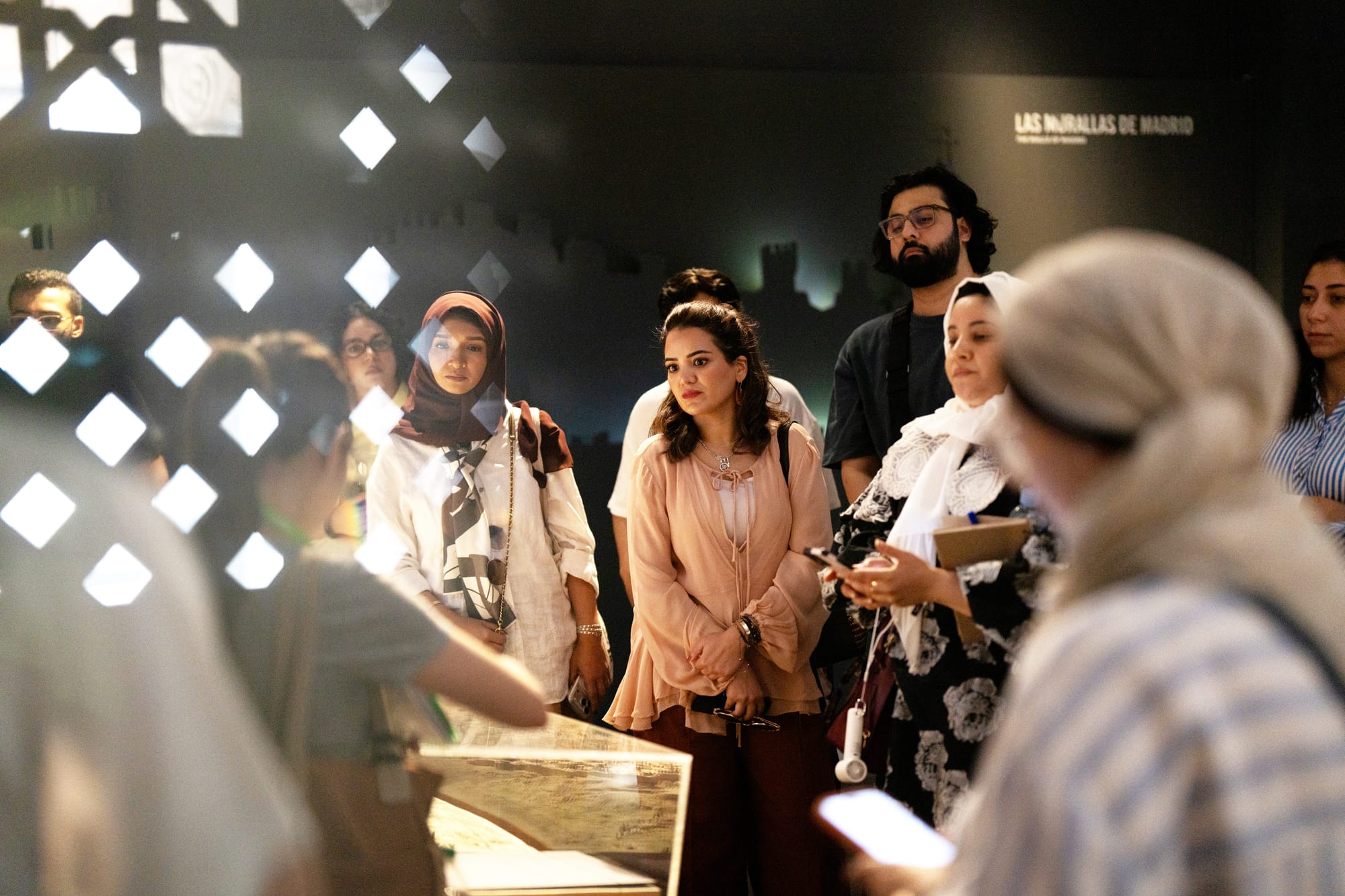
One of the most transformative moments came through two interconnected experiences: our conversation with Daniel H. Rey from the Institute of Postnatural Studies and our visit to TBA21. Daniel challenged the assumption that artistic practice must always culminate in a tangible artwork or exhibition. Instead, he spoke about research, dialogue, experimentation, and long-term collaboration as meaningful creative outcomes in their own right. His perspective shifted my thinking from viewing art primarily as a finished product to understanding it as an ongoing process of inquiry. As a Saudi arts educator, this experience was particularly meaningful. Saudi Arabia’s cultural sector is evolving at an unprecedented pace, creating opportunities not only to produce new artistic work but also to build new ways of thinking, researching, and collaborating. The conversations in Spain reinforced the importance of investing in research-led artistic practice and interdisciplinary exchange as essential parts of a healthy cultural ecosystem.
This idea was further reinforced during our tour of TBA21, where I was particularly impacted by the role of the education team within the curatorial process. I had always viewed education as something that follows an exhibition, developing programs once the curatorial vision has been finalized. However, at TBA21, educators were involved from the earliest stages of research and exhibition development, contributing to conceptual discussions, audience engagement strategies, and interpretation. Seeing educators working alongside curators throughout the entire process demonstrated how education can actively shape knowledge production rather than simply communicate it.
This made me reflect on how education could go beyond simply a supporting program that accompanies an exhibition, to becoming a core element that shapes its development from the very beginning. How can educators, artists, and curators collaborate to create exhibitions where learning is embedded throughout the entire process? And how can museums and cultural institutions design experiences that encourage visitors to participate actively in knowledge-making instead of passively consuming information? I came away convinced that artists, educators, curators, and communities all play equally essential roles in shaping cultural narratives and generating new ways of seeing, questioning, and understanding the world.
How did the program’s structure foster genuine exchange or collaboration, rather than a one-way presentation of ideas?
What made the Art Bridges program particularly valuable was that it was intentionally designed around dialogue rather than observation. Each institutional exchange created opportunities for discussion with curators, educators, and practitioners who were equally interested in learning about the rapidly evolving Saudi cultural landscape. The program’s objectives themselves emphasized mutual exchange, positioning participants as both learners and contributors.
The community dinners were significant. Outside formal institutional settings, conversations became more personal, allowing us to discuss artistic challenges, funding models, education, and cultural policy in an informal atmosphere. These evenings created genuine relationships rather than professional introductions. We learned about Spain’s art ecosystem, shared experiences from Saudi Arabia, and exchanged perspectives on future collaborations, discovering common concerns despite our different cultural contexts. These conversations made the program feel like the beginning of an ongoing exchange rather than a short educational visit.
What most surprised you about the similarities or differences between the contemporary art ecosystems in Saudi Arabia and Spain?
The biggest surprise was discovering that many of the conversations taking place within Spain’s contemporary art institutions are remarkably similar to those emerging in Saudi Arabia. Despite operating within very different historical and institutional contexts, artists in both countries are increasingly concerned with questions of collective memory, social responsibility, and the relationship between cultural institutions and the communities they serve.
Did any aspect of the Spanish art scene prompt you to reconsider how similar structures might evolve or be adapted within the growing Saudi visual arts context?
What stood out to me most was the culture of collaboration that exists across Spain’s visual arts ecosystem. Rather than seeing museums, galleries, independent organizations, artists, and collectors operating in separate spheres, I observed a strong network of partnerships where each stakeholder contributes to a shared cultural landscape. Institutions were open to collaborating with one another, sharing knowledge, resources, and expertise to support artists and public engagement. This collaborative mindset was evident throughout the program, from conversations with museum professionals at Casa Árabe to meetings with independent organizations such as Factum Arte, and private collections such as Inelcom Collection.
It made me reflect on the tremendous opportunity and advantages that Saudi Arabia has. Many of our institutions are young, giving us the ability to establish collaborative models from the outset. I believe there is great potential to create stronger connections between museums, universities, artist-led initiatives, private collections, and creative organizations.
Another important takeaway was the emphasis on long-term relationships rather than one-off projects. A number of the institutions we engaged with during the program invested in sustained partnerships with artists and communities, creating an ecosystem built on trust and continuity. I believe this long-term approach would not only strengthen the visual arts sector but also contribute to building a more resilient, connected, and internationally engaged cultural community.
What do you see as the potential long-term impacts of the program?
Looking back, I think the most valuable outcome is the relationships and conversations that continue beyond the program. Every visit introduced us to people working within different parts of Spain’s cultural ecosystem, from museum professionals and curators to artists, educators, and independent practitioners. Those encounters created a network built on genuine curiosity and mutual respect.
I also believe we created something less tangible but equally significant: a shared language for discussing contemporary art across cultures. The program challenged many preconceived ideas about artistic practice, collaboration, and institutional work while encouraging us to contribute our own perspectives from Saudi Arabia. Rather than simply bringing knowledge back home, I feel we established the foundations for future collaborations.
Reflecting on your experience, what is one question you wish to pose to the organizers, the hosts, or even to yourself about the future possibilities opened by programs like Art Bridges?
The question I wish to pose is: How can we ensure that the conversations initiated through Art Bridges evolve into sustained collaborations rather than remaining memorable but temporary exchanges? On a personal level, I am asking myself how I can contribute to maintaining these relationships. As someone working within Saudi Arabia’s rapidly evolving cultural sector, I see a responsibility to transform inspiration into action by creating opportunities for continued exchange between Saudi and Spanish practitioners. Programs like Art Bridges should not be viewed as isolated international initiatives but as the beginning of long-term cultural partnerships. The strongest bridges are built not during a single week abroad, but through the collaborations that follow.
SEEMA ALABDULHAI
Seema Alabdulhai is a Saudi visual artist with a background in interior architectural design. Working across painting and conceptual installation, she explores human contradictions, emotional experience, and transformation.
Can you describe a specific moment during the program when a conversation or interaction changed the way you think about the role of visual arts in society?
It wasn’t a single moment that changed my perspective, but a series of moments. One idea kept returning: questions. My practice has always explored human contradictions and behavior, but during this program I noticed that every conversation came back to the same point: What questions drive your work? What questions remain unanswered?
That made me realize that art is not always about providing answers—it is about asking better, deeper questions. This shifted how I see my own practice. I now think the value of an artwork lies not only in the message it conveys, but also in its ability to spark curiosity, invite dialogue, and encourage reflection. Sometimes, a meaningful question can have a greater impact than a definitive answer because it encourages people to reflect on themselves rather than simply accept an idea.
My work is inspired by human contradictions, human behavior, and the emotions that shape our lives. I am drawn less to comfort than to the questions that emerge from misunderstanding or difficult experiences, because I believe opposites give life its meaning. During my time on the program, I realized that the artworks and conversations that stayed with me were not those that explained everything, but those that continued to provoke questions long after each visit had ended. Their strength lay in creating space for dialogue, and that is the kind of experience I hope my own work creates.
How did the program’s structure foster genuine exchange or collaboration, rather than a one-way presentation of ideas?
Throughout the program, cultural exchange was not limited to the visits—it was woven into the everyday. Almost every morning, we spent about 30 minutes on a reflective discussion related to the previous day’s visits. These conversations encouraged us to exchange perspectives. At every institution, we also met artists, curators, and cultural professionals who introduced their work and welcomed open discussion.
The most memorable moment for me was the farewell dinner, where each table included participants and a representative from one of the cultural institutions we had visited. We discussed our practices, the Saudi art scene, and exchanged ideas and questions. Later, the guests moved between tables. It felt like genuine dialogue built on mutual curiosity rather than a one-way presentation of ideas.
What most surprised you about the similarities or differences between the contemporary art ecosystems in Saudi Arabia and Spain?
What surprised me most was how the similarities outweighed the differences. Artists in both Saudi Arabia and Spain share the same ambition: to engage with communities and collaborate with cultural institutions. The main difference is the stage of development. Spain has built its ecosystem over decades, while Saudi Arabia is experiencing an accelerated transformation. I was particularly impressed by Spain’s long-term residency programs, which give artists the time and support to research, experiment, and create.
The experience also made me even more optimistic about Saudi Arabia’s future. Programs like Art Bridges, led by the Visual Arts Commission, demonstrate that the Kingdom is not only creating opportunities for artists but also building a vibrant cultural ecosystem connected to the world.
Did any aspect of the Spanish art scene prompt you to reconsider how similar structures might evolve or be adapted within the growing Saudi visual arts context?
What changed my perspective most was a shifting of focus from the outcome to the process of research. Throughout the program, I was motivated by how artists were given one or even three years to experiment and develop ideas before producing a final work. It reflected a deep institutional belief that meaningful ideas need time to mature.
I was also fascinated to learn about an artwork designed to last for a thousand years. Longplayer by the artist Jem Finer is a musical composition that began on December 31, 1999 and designed to continue until December 31, 2999 without ever repeating in exactly the same way. It challenged me to think beyond immediate results and consider art as a long-term commitment.
Equally important was the ongoing relationship between artists and institutions, built on dialogue, trust, and continuous support. This experience completely reshaped how I understand artist residencies: research is not simply a step before making art—it is part of the artwork itself. I believe this mindset can meaningfully enrich Saudi Arabia’s rapidly evolving visual arts ecosystem.
What do you see as the potential long-term impacts of the program?
If I think about what we created together, I believe it is far more than a professional network. The most valuable thing we created was a bridge that will continue carrying ideas in both directions long after the program has ended.
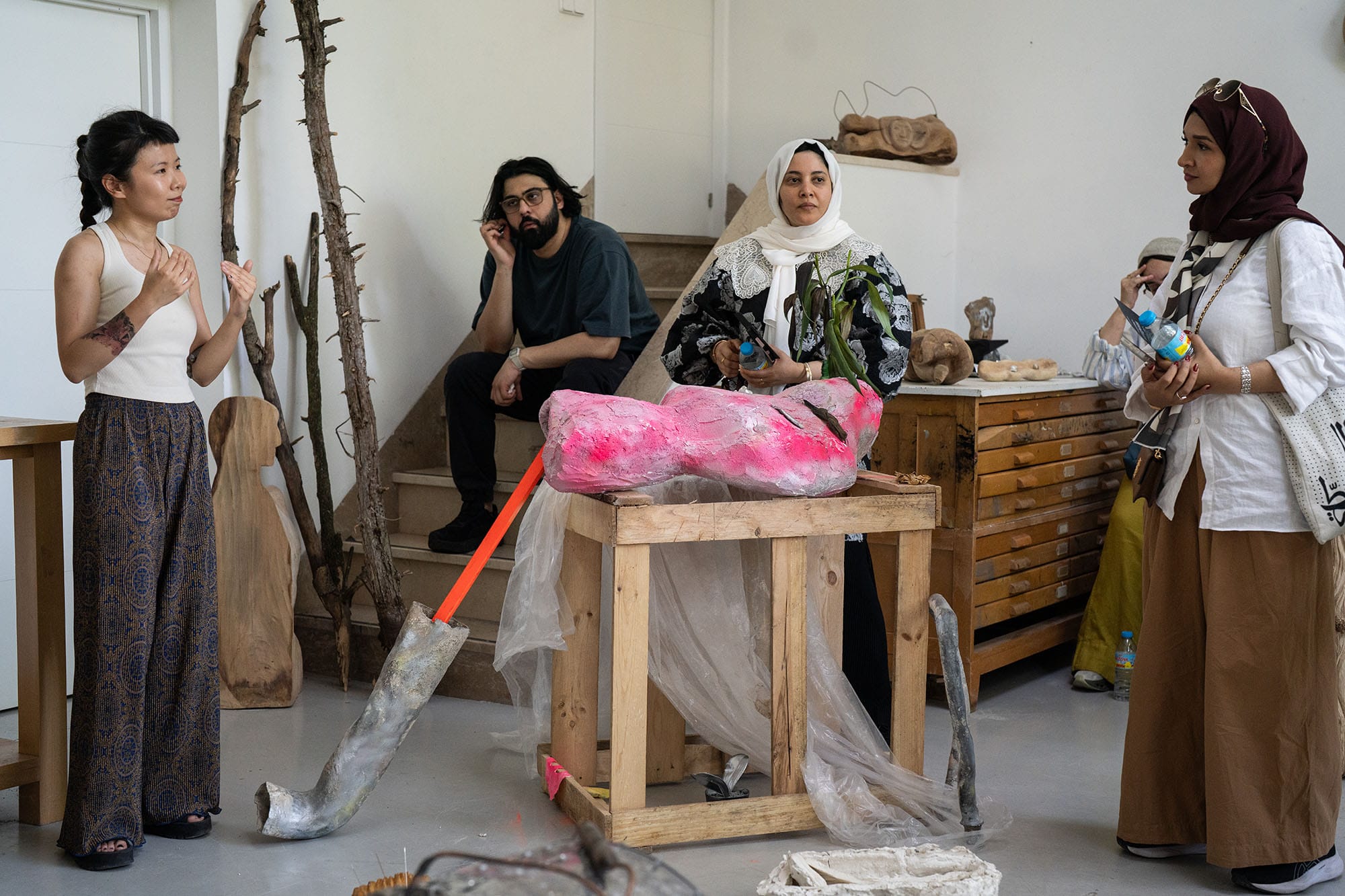
I am still in contact with several artists and participants. We visited the studio of the Spanish artist Carlos Aires at Mala Fama Studios within Nave Oporto. Having encountered his work during an earlier visit to Art Dubai, meeting him in person was a memorable experience. At the end of our visit, his team collected our email addresses and later reached out to us, allowing the dialogue to continue.
What made this program unique was the opportunity to engage directly with artists, curators, and institutional leaders in ways that would not be possible as an ordinary visitor. We also learned how to articulate our practices across cultures, exchange different perspectives, and reflect on how we communicate our ideas.
Reuniting with the rest of the participants at the program’s closing event was extremely valuable. It gave us the opportunity to reflect, exchange ideas and insights, and continue to discuss what we had learned. It reaffirmed that what we created during the program did not end with it but continued through ongoing dialogue and connection.
Reflecting on your experience, what is one question you wish to pose to the organizers, the hosts, or even to yourself about the future possibilities opened by programs like Art Bridges?
If I could leave this experience with one question, it would be: How can the bridge we built together become a lasting pathway for collaboration, where artists, curators, and institutions continue exchanging ideas and creating together long after the program ends? For me, the true value of this experience will not be measured by what happened during the journey, but by what continues afterward. Perhaps this is a question we should keep asking together, because Art Bridges did not simply give us answers—it taught us how to ask better questions.
This article is part of a special series exploring Art Bridges, the Visual Arts Commission’s international exchange program connecting Saudi and Saudi-based artists and cultural practitioners with peers in Scotland, South Korea, Japan, and Spain.