People
New Currents: Liu Bin’s Luminous Mycologies
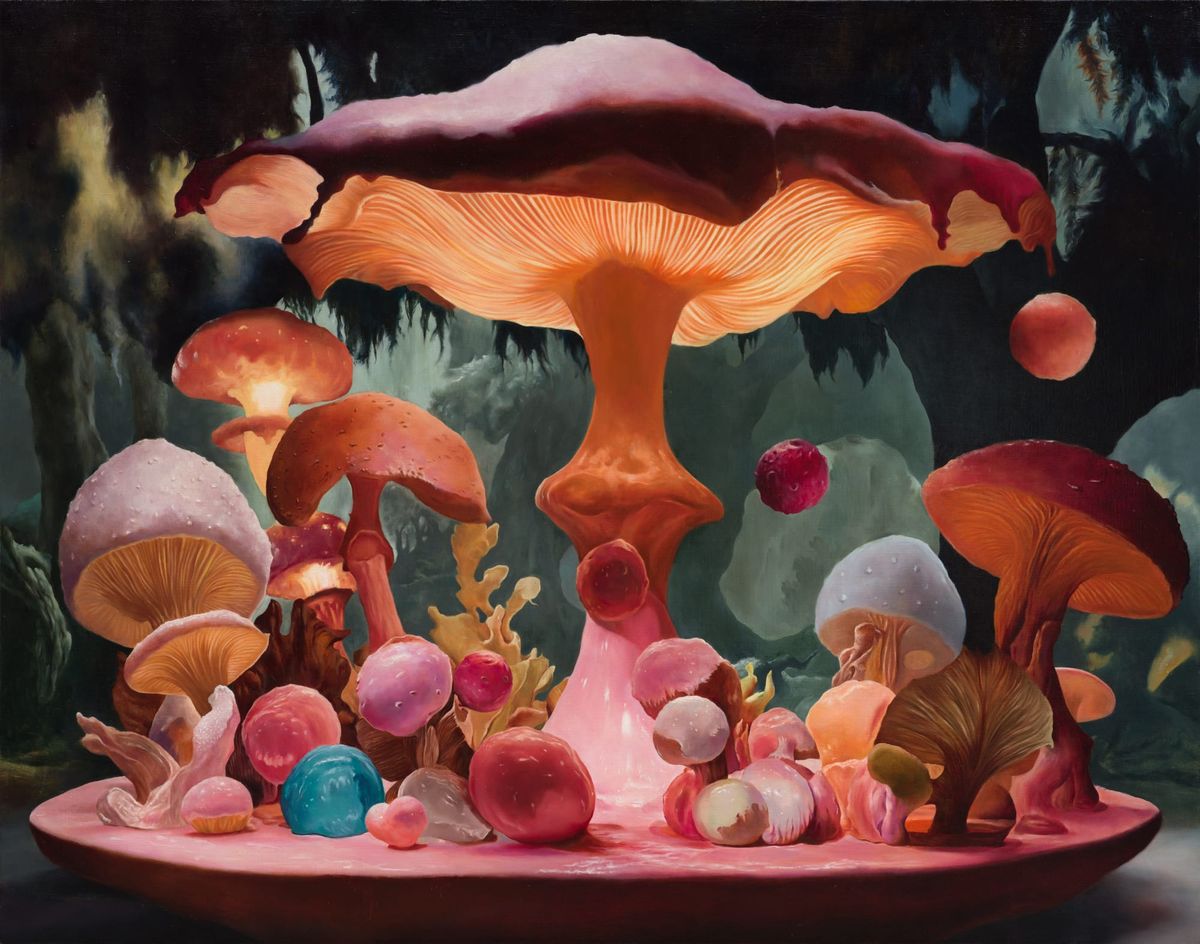
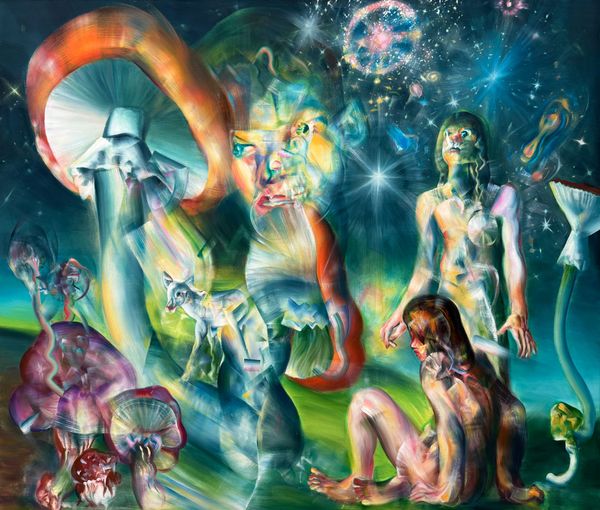
Elasticity is governed by time and touch; it lives in the beat between prod and rebound, which makes it a hard quality to capture in a painting. Liu Bin achieves this feat. In his tableaux, mushrooms rise in regal ensembles, their turgid forms resilient, rubbery, resplendent. Exquisite and alive, their ribbed gills and sinewy skins communicate a mute, surreptitious vitality, each cap rendered with a jewel-like precision that borders on the predatory. Liu’s magical realism does not offer an escape from reality but a celebration of its most elegant horrors.
Liu Bin, a native of Heilongjiang, China’s northern frontier with Russia, is drawn to an organism most at home in the margins. Mushrooms thrive in the shadows: some gorge on the dead, others prey on living hosts, or trade with the roots of trees. Their particular allure, and repulsiveness, lie in an invertebrate fleshiness alien to the human body: with no internal armature, they stand through the turgor pressure in their threads and tissues, taut yet yielding. Blurring the line between organism and earth, they spread stealthily, mocking the mammalian convention of a body commanded by a head and braced by a spine, along with the social structures modeled on that standard.
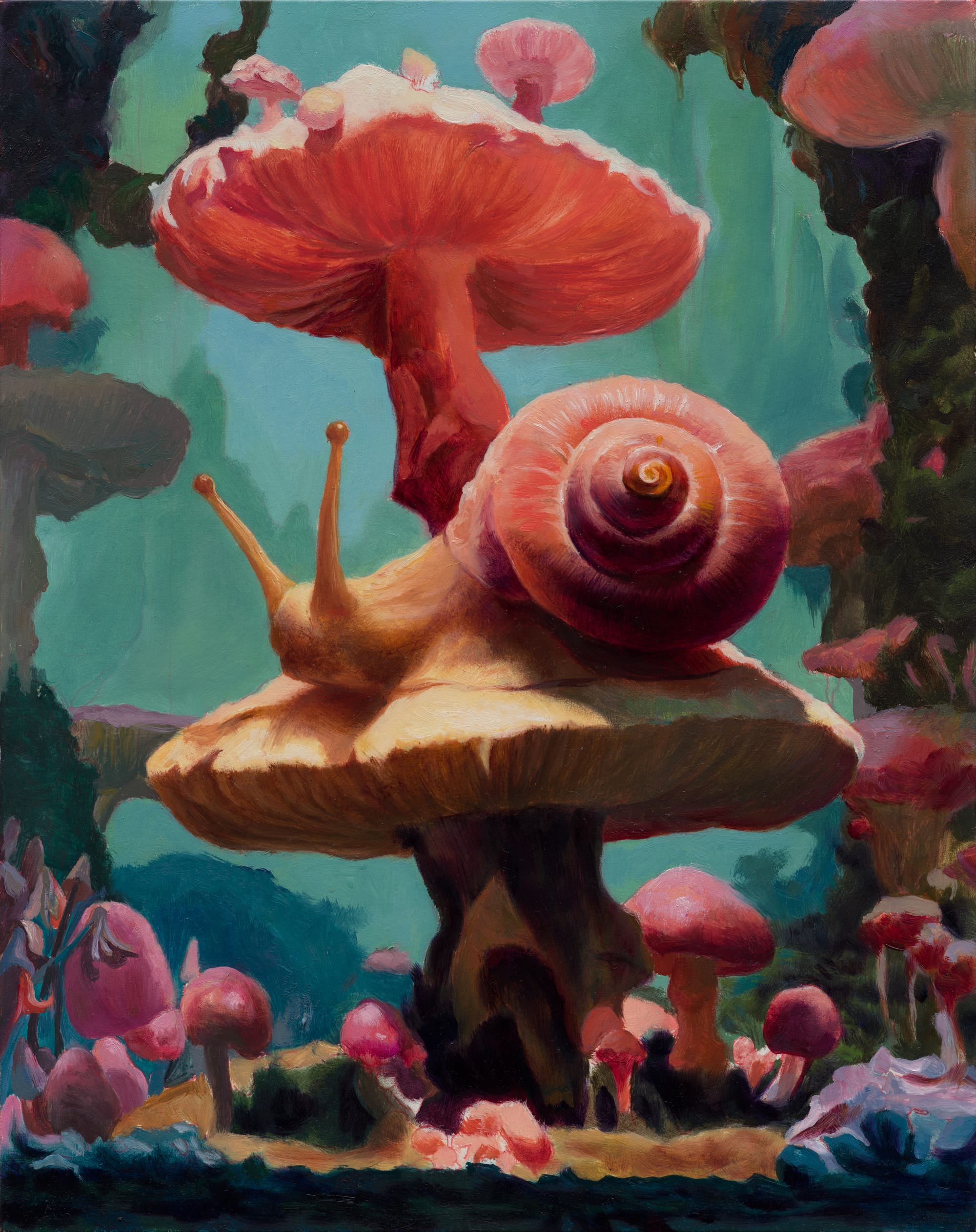
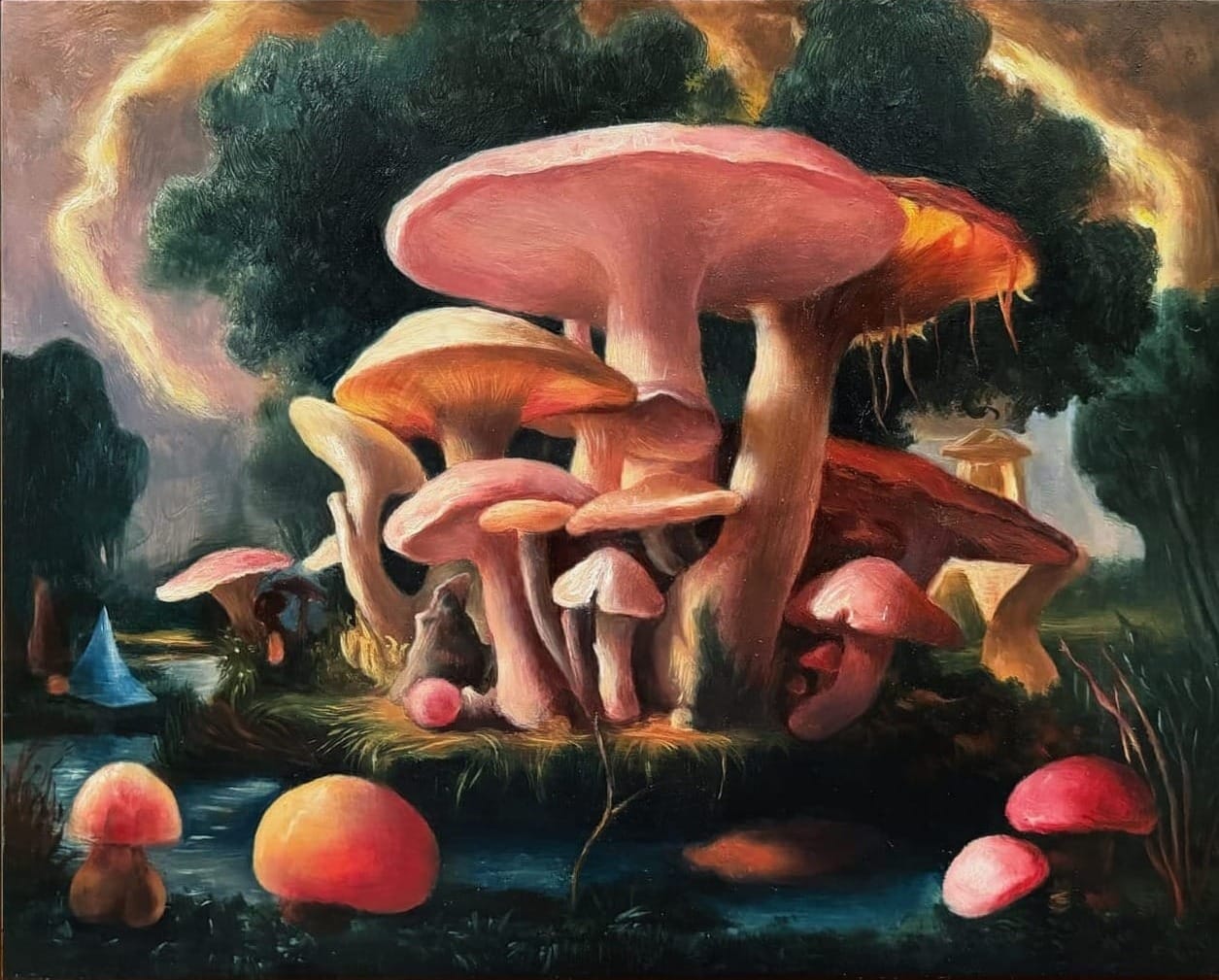
LIU BIN, Ascent Through the Pink Canopy, 2026, oil on board, 30 x 24 cm (left); and Halo Over the Soft Kingdom, 2026, oil on board, 24 x 30 cm. Courtesy the artist.
This unruly anatomy finds an unlikely precedent in Liu’s earlier paintings featuring recurring Pinocchian figures. Like the mushroom stem, their noses elongate unbidden and share a certain springiness, poised to quiver and bounce back when pinched and released. In The Outsiders (2020), four friends blowing bubbles are framed by stage curtains like some puerile performance of commedia dell’arte; Liu stretches their noses to suggest conspiracy and trickery. In Pinocchio’s Dream (2021), a boy lounges in reverie, his lengthened snout jutting upward. The nose breaches the body’s proportions as a visible sign of deceit, yet Liu complicates its role as an ethical barometer: Pinocchio wants only to become a “real” boy, with goodness merely a means to that end. “He answered to his nose,” the artist writes, “not to an independent morality.”
Liu Bin’s carnivalesque fungal congregations emerge from mud yet are crowned in glorious, almost treacherous richness, seeming to carry an intelligence of their own. Signaling an agency operating outside human ethics, they are ominous not because they are evil but because they are utterly indifferent: luminous monuments to a world that will effortlessly outlast us.
Michele Chan is managing editor at ArtAsiaPacific.