Issue
Up Close: Lotus L. Kang
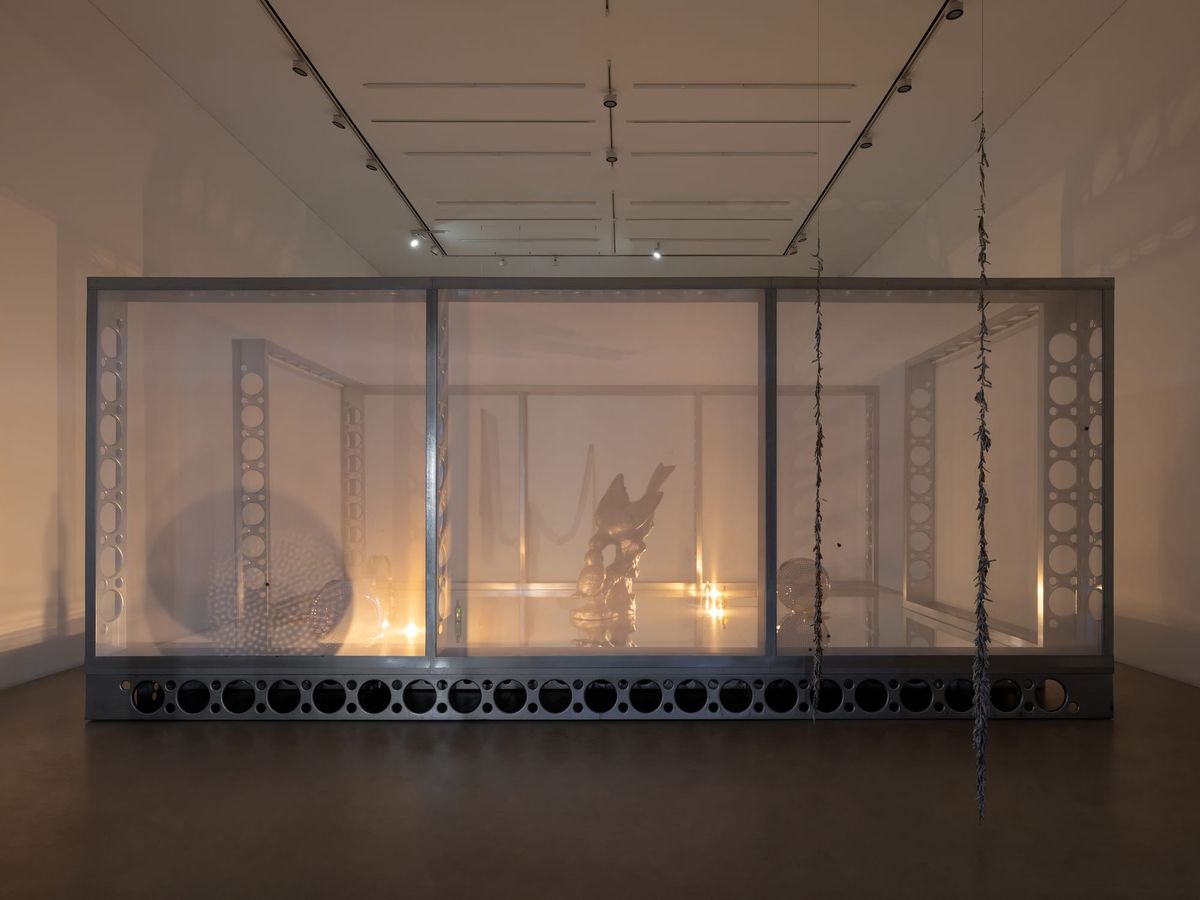
The diasporic condition has long been one of suspension, an in-betweenness that refuses to be fixed in a single place or time. More precisely, it is a structure organized around absence: a language half-spoken, a home half-remembered, an inheritance that feels at once remote and estranged. For years, Lotus L. Kang has worked within this territory, and “Chora,” her first solo exhibition in Korea at Seoul’s Kukje Gallery, draws on Julia Kristeva’s concept of chora—a primordial space that precedes meaning.
The exhibition unfolds across two spaces of Kukje: the Hanok, a traditional Korean house built around a garden, and the adjacent K3 gallery. In the Hanok, Kang presents her Mesoderm series (2022– ) alongside her Synapse works (2023– ), which rely on luminograms—photographic film “tanned” through prolonged exposure to light and atmosphere. At the heart of the Hanok’s courtyard, the madang, Kang installs a solitary cast bronze sculpture of a crying baby bird.