Issue
149 Dispatch: Jakarta
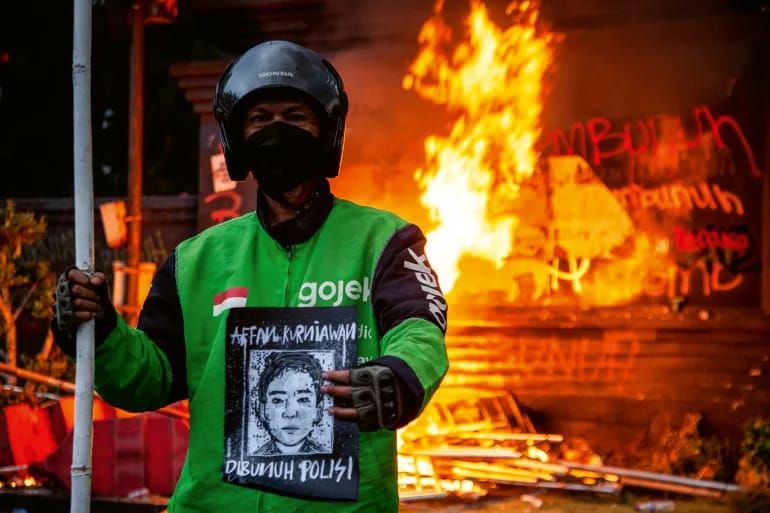
On June 22, 2027, Jakarta will celebrate its 500th anniversary, commemorating the historic moment when Islamic commander Fatahillah captured the settlement from Portuguese forces. What started out as a humble port called Sunda Kelapa has since transformed into a metropolis that serves as Indonesia’s economic, political, and artistic hub.
As the quincentenary approaches, Jakarta is also preparing to relinquish its status as the country’s capital in 2028: the construction of Nusantara—a new national core in Kalimantan—is currently underway, intended to ease the pressures of overpopulation and land sinking in Jakarta. To maintain the latter’s international competitiveness, the provincial government is striving to push Jakarta into the top 50 cohort of the Global Cities Index.
“How global?,” we might wonder. Indonesian writer Afrizal Malna raised this question during his 2025 Cultural Speech, asking what remains of a city’s identity after it is revamped to meet external parameters for progress. Organized by the Jakarta Arts Council, the civic lecture takes place annually at Taman Ismail Marzuki, a mixed-use center that has borne several art-canonical milestones—including the 1974 Great Indonesian Painting Exhibition, which laid the groundwork for the Jakarta Biennale, and the Indonesian New Art Movement in 1975. For his speech, Malna invited representatives from Pramuka Island and the nonprofit Urban Poor Consortium to speak about the local community’s ongoing struggles with economic inequality and gentrification, emphasizing the importance of including marginalized voices in the city’s branding efforts.