Issue
Refik Anadol: From Data to Dreams
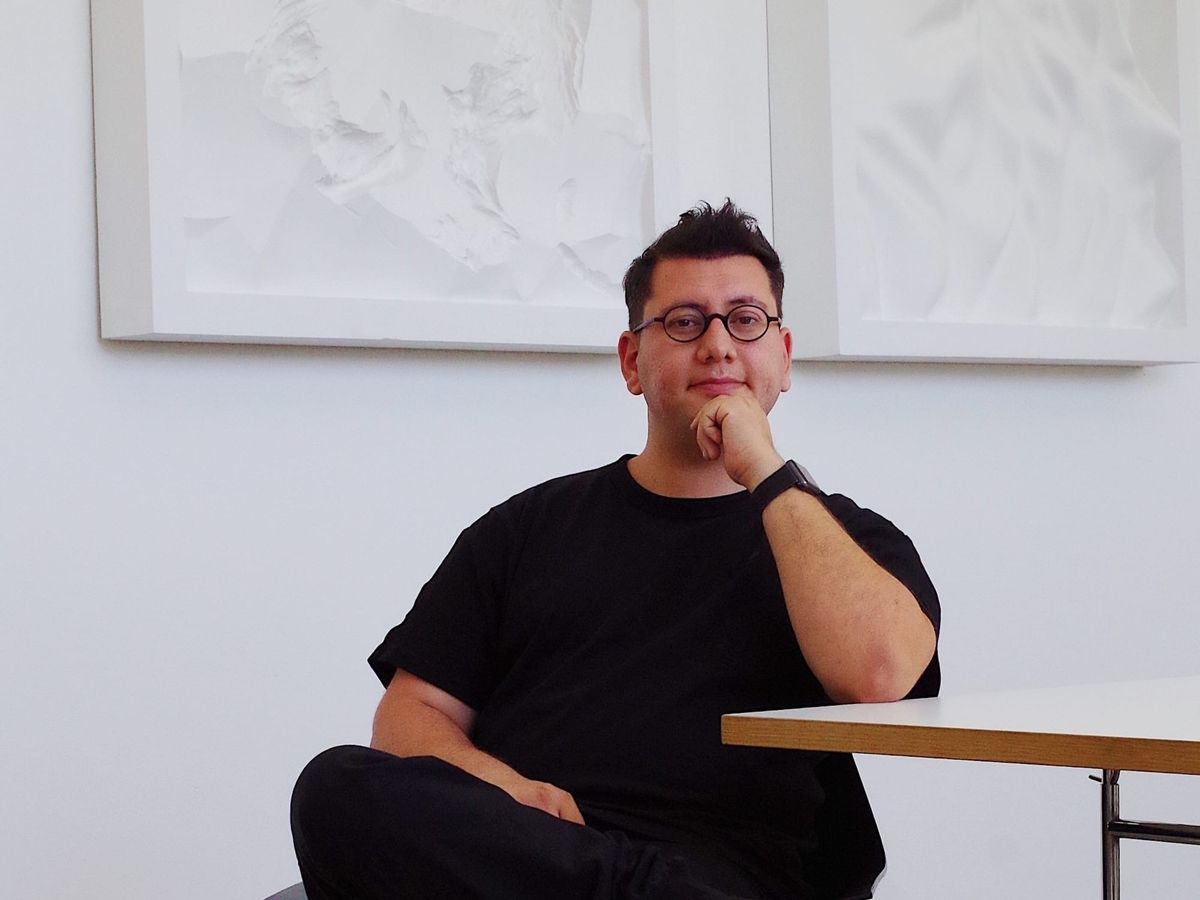
Refik Anadol and his team of 20-plus people—including architects, engineers, data scientists, designers, animators, researchers, and other experts and collaborators—work out of an industrial warehouse complex on a quiet residential street in Los Angeles bordering the LA River. Notably, the studio is in a former window factory. One of the great technological and theoretical innovations of the Renaissance was Leon Battista Alberti’s 15th-century conception of painting as a window: a framed aperture through which the painter illusionistically and spatially renders the world. In Anadol’s oeuvre, this metaphor extends to the computer window. He calls his own practice “data-painting,” mining and culling existing data and images, and devising machines and software to generate new imagery from this information. About a dozen or so different types of screens populate the studio, demonstrating Anadol’s AI-powered Large Nature Model, which, paired with what the Turkish artist calls the “thinking brush,” transforms datasets of the world’s flora, fauna, fungi, coral reefs, and other ecosystems into imagined imagery.
On the day I visited, the studio was abuzz and bustling, a precursor to the maelstrom of activity about to descend upon Refik Anadol Studio as the team fine-tuned details for the June 20 opening of DATALAND, the world’s first museum of AI-generated art. A few of the team members employed by the studio were outside taking convivial coffee or smoke breaks on a picnic bench. Visitors from Google, with whom the artist has had a longstanding relationship since his Google Artists + Machine Intelligence residency in 2016—the first of its kind—had set up cameras to film material for a future project. Anadol was in and out of the conference room, being interviewed by members of the press in anticipation of DATALAND’s launch. Other members of the studio continued working diligently at their computer stations amid the din, mining data, delving into research, and supervising the “data-painting” occurring in the computers. Anadol walked me over to a separate building next door, where the team constructs their own proprietary computers. A table in the center of the crowded space held stacks of glossy, physical prints of the digital data-paintings, waiting to be mailed to the collectors who had acquired them in NFT form.
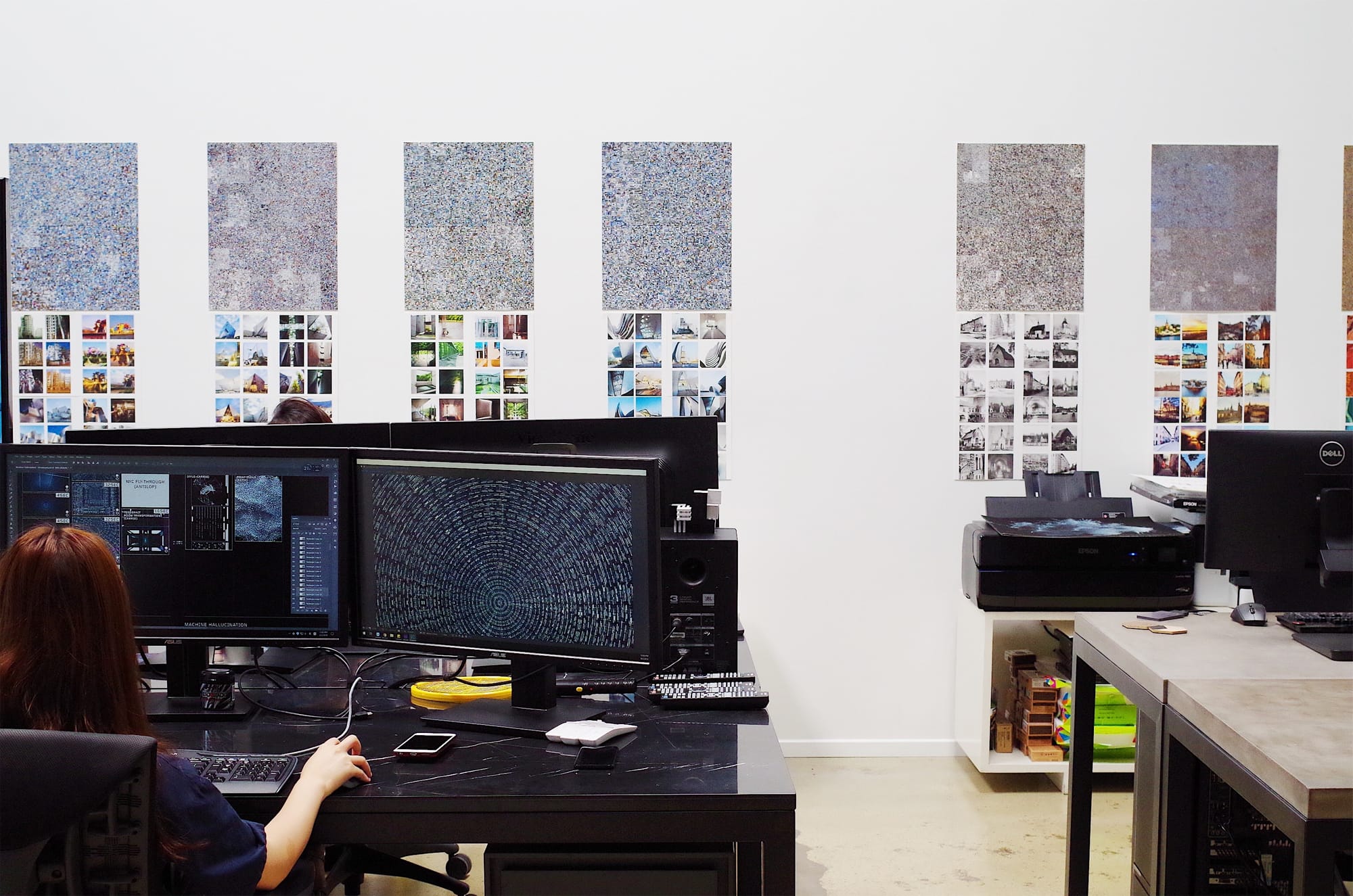
In between showing me around, Anadol stopped to observe a data/AI researcher’s work. Her screen fluctuated between code and vivid images of landscapes and plant life. Not unlike the unplaceable hypercolored landscapes in computer screensavers of yore, these highly detailed visuals periodically flashed across the monitor. Anadol was impressed and gushed exuberantly, congratulating his colleague. He explained that the computer has been programmed with real-life data of millions of species from nature, and that the system is now “dreaming” and creating its own fantastical botany and scenery.