Issue
Editor’s Letter: Shifting Visions
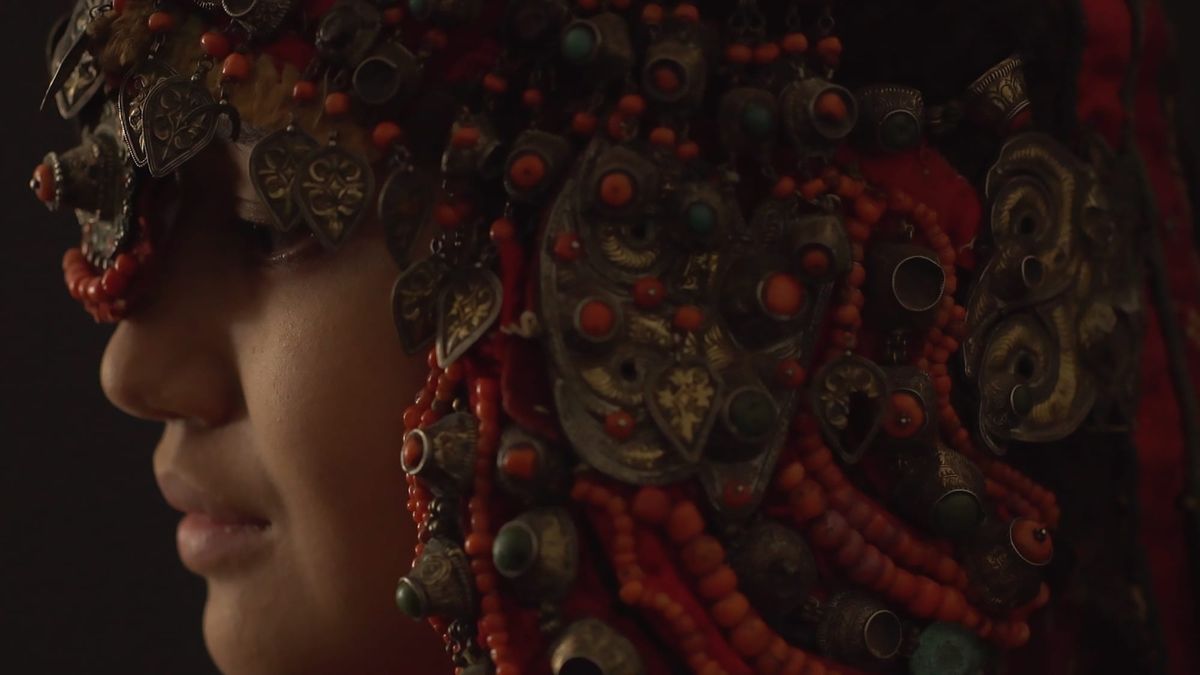
There is a quality of light particular to projection rooms and to galleries given over to the moving image, where time is momentarily suspended, expectant, and charged with the possibility that something otherwise lost might be retrieved. ArtAsiaPacific’s July/August issue dwells in that flickering space where memory, place, and technology—whether analog or digital—intertwine.
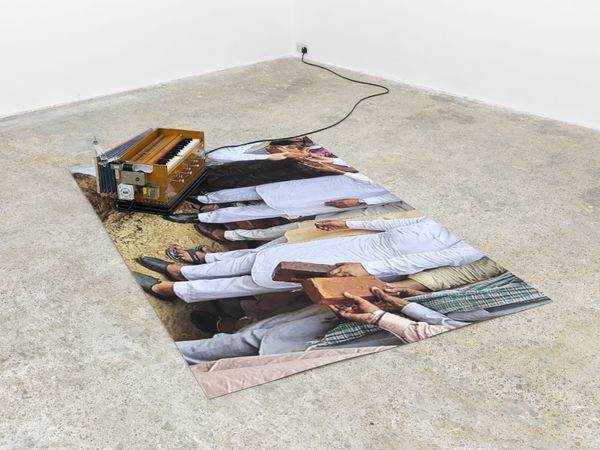
Our cover Feature highlights Saodat Ismailova, the Uzbek filmmaker whose work floats between the archive and the dream. On the eve of her solo exhibition at the Smithsonian’s National Museum of Asian Art in Washington, DC, Ismailova spoke with Marcella Lista, chief curator at Centre Pompidou, about cinema’s capacity to summon other histories: mythical voices, spectral figures, conversations between the living and the ancestral. Their dialogue offers rare insight into Ismailova’s influences and the poetics of presence and absence that infuses her films.
The infrastructure of memory is found in the work of Ellen Pau and the legacy of Videotage, a pivotal media art organization that she co-founded in Hong Kong in 1986, when experimental video was scarcely recognized as art. Four decades later, her long-overdue midcareer retrospective at New York’s SculptureCenter coincides with Videotage’s 40th anniversary, affirming her and the organization’s foundational place in the history of media art. In our second Feature, we trace Pau’s artistic career and her indispensable role in nurturing lens-based practitioners amid the city’s rapid social and political shifts.
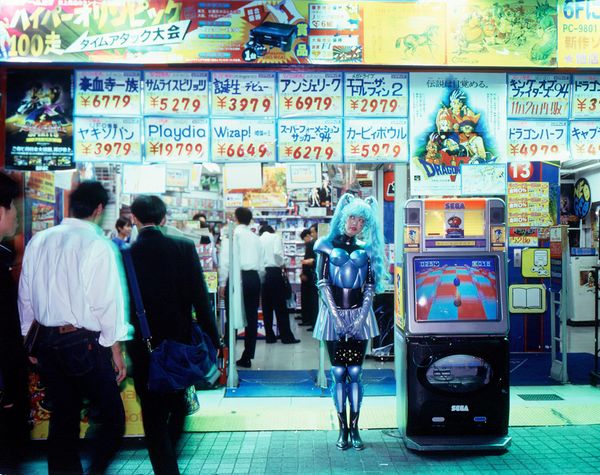
For Inside Burger Collection, Anna-Catharina Gebbers, curator at Berlin’s Hamburger Bahnhof, considers the intimately scaled self-portraits by Sang Woo Kim, discovering in them a meditation on the gaze itself—who looks, who is looked upon, and the power that accumulates in the process. In our Up Close column, we track new works by Lotus L. Kang, Jen Liu, and Simon Liu—three artists extending this attention to consciousness, embodiment, and place.
The present intrudes elsewhere in the issue. For our Essay section, Sunny Cheung, curator of design and architecture at Hong Kong’s M+, examines the work of Yuma Kishi, Memo Akten, and Lee Bul to ask whether we might conceive of AI not as a cold replacement but as a revelation—machines that register pain, desire, and other sensations adjacent to our own. For Where I Work, AAP’s Los Angeles desk editor Jennifer S. Li gained access to Refik Anadol’s studio days before the inauguration of his DATALAND, the world’s first museum dedicated entirely to AI-generated art. There, just blocks away from the new institution, Li was taken on a personal tour to understand Anadol’s operation, which treats information as malleable as clay.
In Profiles, ahead of Ding Yi’s solo debut in Venice at the Fondazione Querini Stampalia, AAP associate editor Louis Lu sat down with the Shanghainese artist to chart the evolution of his cross-hatched rhythms of urban and cosmic transformation. From Hong Kong, AAP managing editor Michele Chan met with Brian Yue and Claire Bi, the young couple spearheading the Cheng-Lan Foundation, whose targeted support for artists from the “global majority” represents a deliberate alternative to the market’s usual hierarchies—an ecosystem-oriented model that treats patronage as infrastructure rather than mere acquisition.
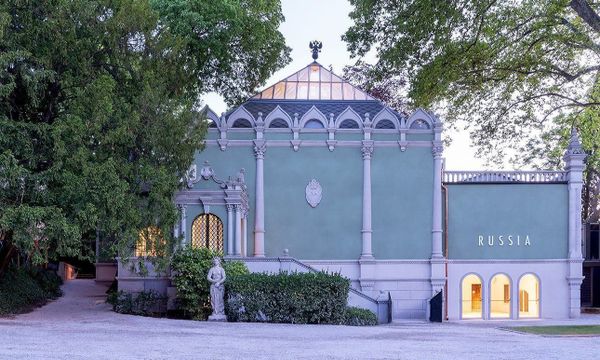
Our Dispatch is filed from Jakarta by Indonesian curator and researcher Ibrahim Soetomo, while our Reviews include the Venice Biennale’s central exhibition, “In Minor Keys,” along with shows across various cities, from Manila and Dubai to Milan and New York. Finally, for The Point, Ute Meta Bauer—who has helmed important exhibitions worldwide, including Germany’s Documenta, the Istanbul Biennial, and the US and Singapore pavilions at the Venice Biennale—wonders whether recent controversies that overshadowed the preview of this year’s Venice Biennale points to something larger coming undone. As ever, AAP does not seek to pronounce verdicts. What we offer is simply a space where disparate voices and practices might speak to one another across distances—between mediums, continents, or contested histories—and find in that exchange something worth holding onto.
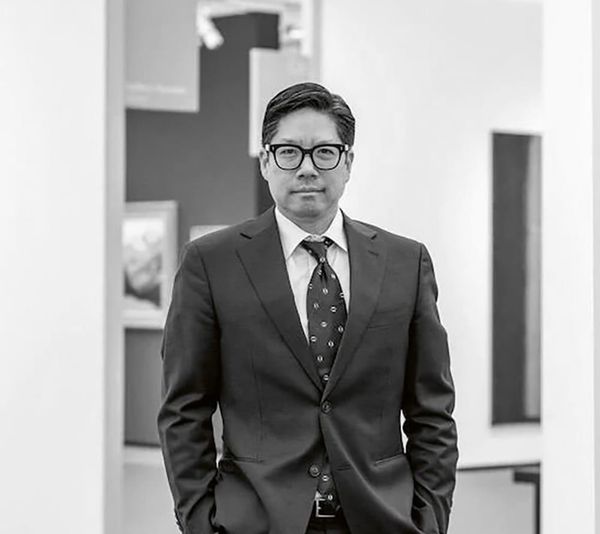
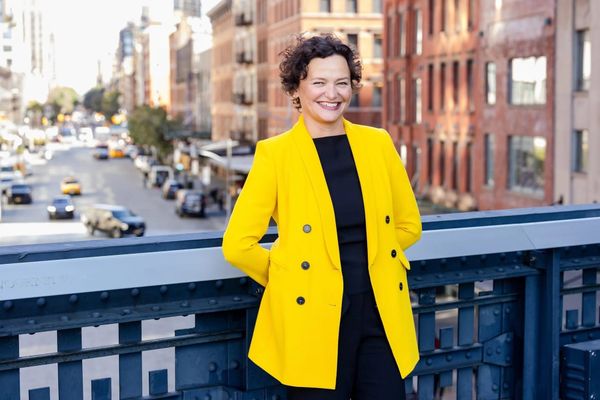
Elaine W. Ng is editor and publisher of ArtAsiaPacific.