Issue
Saodat Ismailova: Ancestral Futures
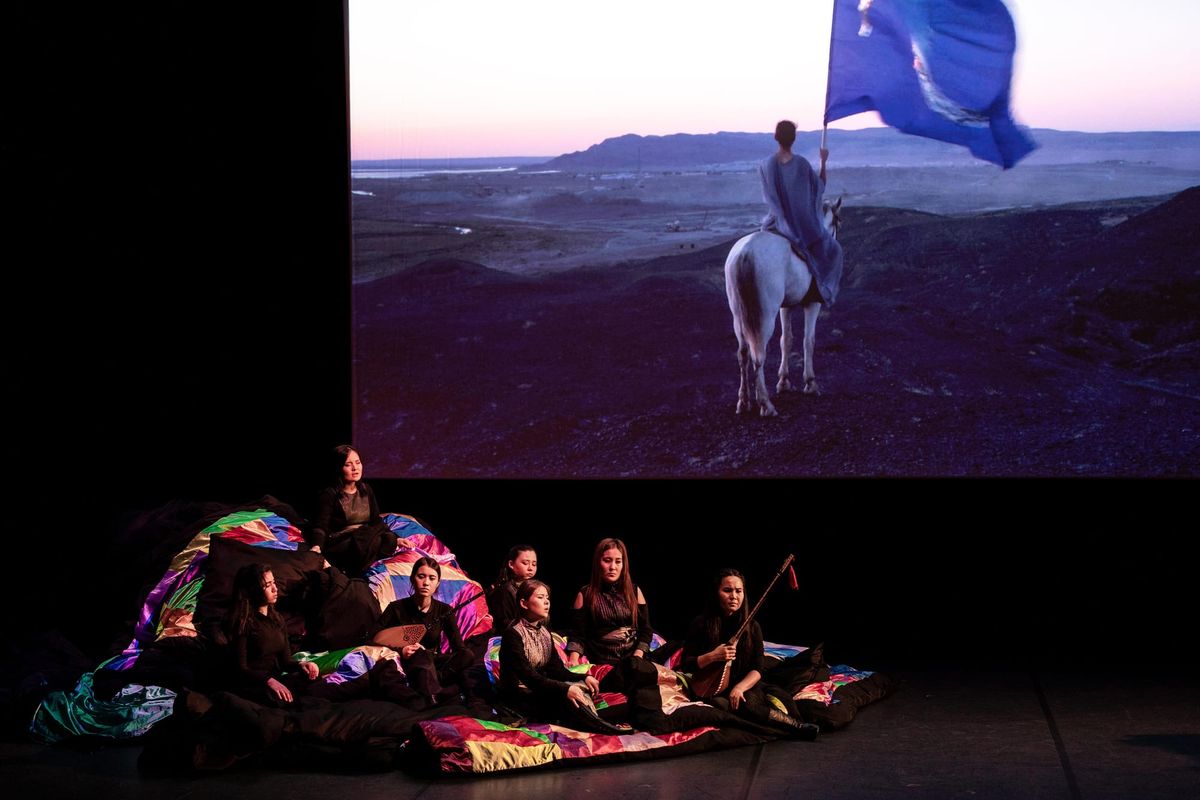
Born in 1981 in Tashkent, Saodat Ismailova belongs to a generation of Central Asian artists who came of age during the fractured yet transformative post-Soviet era. Her works—spanning film, sculpture, installation, and sound—document the political and environmental ruptures of this period, weaving archival footage and matriarchal narratives into dreamlike elegies for a region in constant flux.
Having concluded her solo shows at the Swiss Institute in New York and Frankfurt’s Portikus earlier this year along with her inclusion at Parasol unit’s group exhibition “TURANDOT: To the Daughters of the East” in Venice this summer, the Uzbek artist-filmmaker is holding a major institutional survey at the Smithsonian’s National Museum of Asian Art in Washington, DC, titled “Melted into the Sun.” Ahead of the presentation, Marcella Lista, art historian and chief curator at the Centre Pompidou, sat down with Ismailova to discuss her life and creative practice, which began with the impulse to unravel the layers of ancestral resilience in Central Asian history and mythology.
I would like to start by talking about history, which is hard to ignore. You were born in the early 1980s in Tashkent and grew up in a deeply transformative moment. The very creation of Uzbekistan in 1924 came from a strategic charting of Central Asian territory after the Soviet Union took over from the Russian Empire. Uzbekistan then gained its independence in 1991, at the same time as the other former Soviet republics. How did you experience this political and social transition?
I was 10 when independence was declared, then shortly afterward, the Soviet Union collapsed. At that age, I couldn’t understand it, but neither could my parents. Still, there was a feeling of tremendous hope—I remember the excitement, the fireworks, the sense that history was turning.
But the collapse began earlier, in the mid-1980s. I knew no other childhood than one shaped by ideology crumbling, though I didn’t have the words for it then. A void opened, and people rushed to fill it. There was a surge of irrationality, a race toward whatever felt true when the old truths dissolved. That period marked me—watching people build new meanings to survive the metamorphosis. The rational system could fail, and we saw that happen.
It took years to understand this. At the time, I simply watched things disappear while others rose. I grew up across from Uzbek film studios—once home to laboratories, animation departments, a vinyl press. Most of it is gone now, or transformed, sometimes upsettingly so.
Yet we gained something essential: connection to the outside world and the freedom to reshape ourselves. We had been so detached. My brother, Babur Ismailov, who is eight years older than me and a painter, would often bring home VHS tapes that traveled from hand to hand. Music moved through whispers and copies. After 1991, the gates opened. I don’t think you can truly weigh these losses and gains in the moment of transition. You simply live inside it, with all its contradictions. That is what makes it intense and interesting.
Talking about your training in film and TV realization at the Uzbekistan State Institute of Arts and Culture in Tashkent—could you share which filmmakers shaped the curriculum at that time? And how did you build your own visual culture?
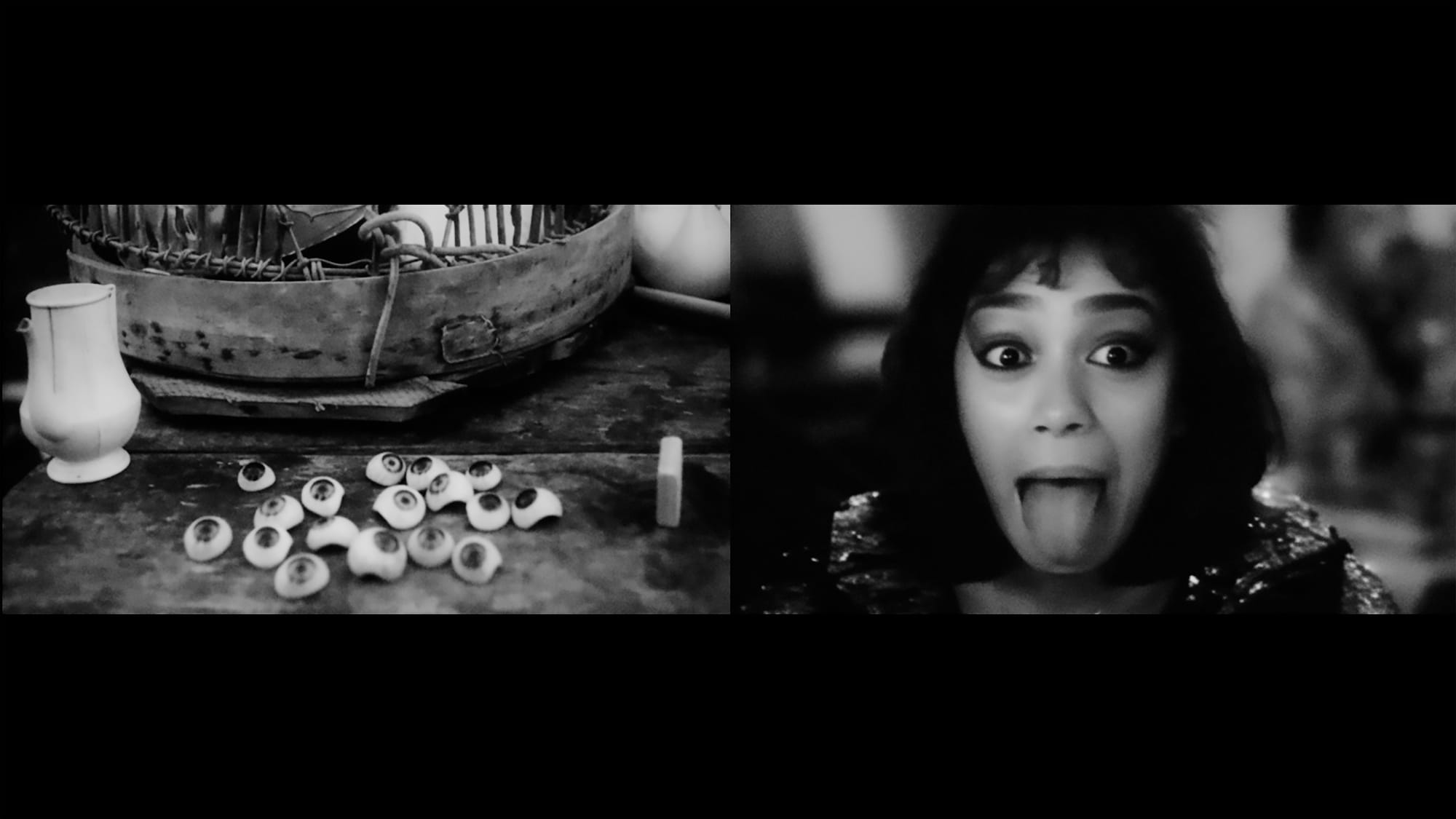
I grew up in a film environment. There were Soviet-era filmmakers like Shuhrat Abbosov, who worked with my father making state-approved cinema. At the time, that was our horizon. Then VHS tapes arrived, and we discovered filmmakers who had barely survived the system: Andrei Tarkovsky, Sergei Parajanov. Even Ali Khamraev had been inaccessible for years. Through those tapes, his cinema re-emerged for us, and his visual language—double exposures, multiplied characters—profoundly inspired me. He is still alive, and I hope he will receive the recognition he deserves in his homeland.
Meanwhile, Tarkovsky created immersive, intangible worlds that were hard to grasp or explain, yet nonetheless hypnotic and deeply touching. In the Soviet Union, there was skepticism toward him; many saw his work as unreasonably strange. Parajanov drew on traditional epics and tales, shifting their temporality. Back then, we couldn’t analyze these aspects; we only knew we were haunted.
These three were my points of inspiration as a student, but none of them were taught at the State Institute. During those years, we were left to exchange and discover. We had a cinema club where we rented VHS tapes. Later, when Yusup Razykov became general director of Uzbekfilm Studios, he screened forgotten Uzbek films for us on 35mm. There were perhaps 10 in total, and each one stayed with me. When I recently made Swan Lake (2025), they returned. Sometimes the smallest gestures may mark someone for life.