Issue
One on One: Tanat Teeradakorn on Hito Steyerl
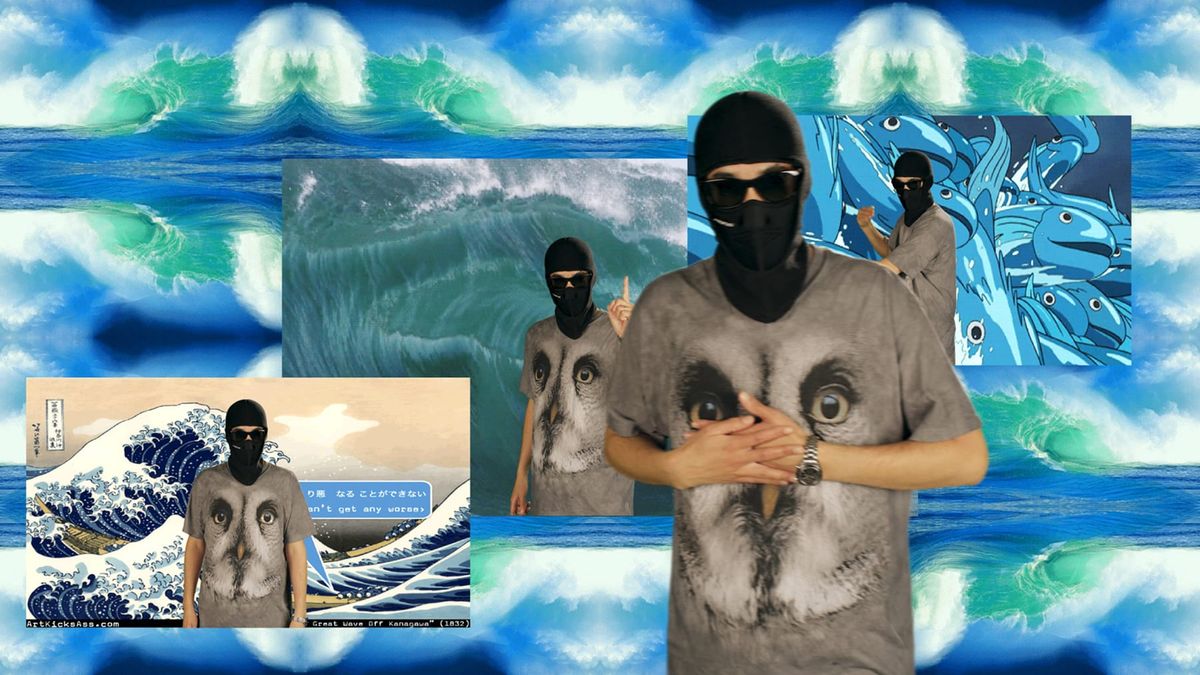
I first encountered the work of Hito Steyerl around 2016 through her essay In Free Fall: A Thought Experiment on Vertical Perspective (2011), published on e-flux. What fascinated me immediately was the way Steyerl mapped the structural relationships between technology, politics, perception, and power, revealing how contemporary imaging systems fundamentally reshape our experience of space, time, and historical reality itself.
Western art and philosophy, as Steyerl argues, were built upon the logic of linear perspective: a stable horizon line viewed by a fixed observer standing firmly on the ground. This arrangement produced the illusion of order, objectivity, and rational control. The horizon became both a visual and ideological structure—a stable orientation through which the world could be understood.
However, contemporary technologies such as drones, satellites, surveillance, and digital mapping have shattered this model. The stable horizon disappears, replaced by a vertical, top-down perspective: what Steyerl describes as a “God’s-eye view.” We no longer see from within the world but down upon it. This shift produces a condition of “groundlessness,” in which distinctions between top and bottom, orientation and disorientation, stability and collapse become increasingly uncertain—a state of permanent free fall.