Issue
Tales of the Unexpected: Artists, Technology, and Emotional Intelligence
At a time when AI is discussed through intelligence, authorship, and automation, what might it mean to approach technology through feeling? Taking Roald Dahl’s fantasy of a machine that hears plants scream as its point of departure, this essay considers artists who treat machines not as cold replacements for human creativity, but as instruments that reveal pain, desire, and perception—forces that were always present, only difficult to sense.
Klausner, the story’s central character, imagines “a whole world of sound” surrounding us at all times. Extreme pitches lurk at the inaudible ends of the sonic spectrum—vibrations capable of overwhelming us, if only our ears were tuned to receive them. He calls these the sounds “beyond the star,” and longs to hear them.
Growing up in the UK in the mid-to-late ’80s, I first encountered Tales of the Unexpected (1979–88), a TV show much like The Twilight Zone (1959–64); each episode a self-contained, unsettling narrative.
Most people know of Roald Dahl for children’s humor and rambunctiousness, not as a writer of eerie, haunting short stories. He published The Sound Machine in 1949, later adapting it for the aforementioned TV series. The story follows Klausner, a 1935 inventor who builds a device to tune into specific frequencies—a black box connected to an amplification dish, transmitting sound through a set of headphones. In his garden, he hears roses scream as his neighbor cuts them. Convinced that suffering pervades nature at pitches we cannot hear, he takes an axe to a tree in the forest to confirm his theory. When he brings a doctor to witness the phenomenon, the doctor listens through the machine, then turns pale and abruptly orders the cutting to stop. Distraught, Klausner eventually breaks down and is accompanied home by the doctor.
The story offers a parable for the way technologies reveal what has always surrounded us but remained beyond ordinary perception. Could technology be shaped to alter not just what we perceive, but how we care about it?
Yuma Kishi
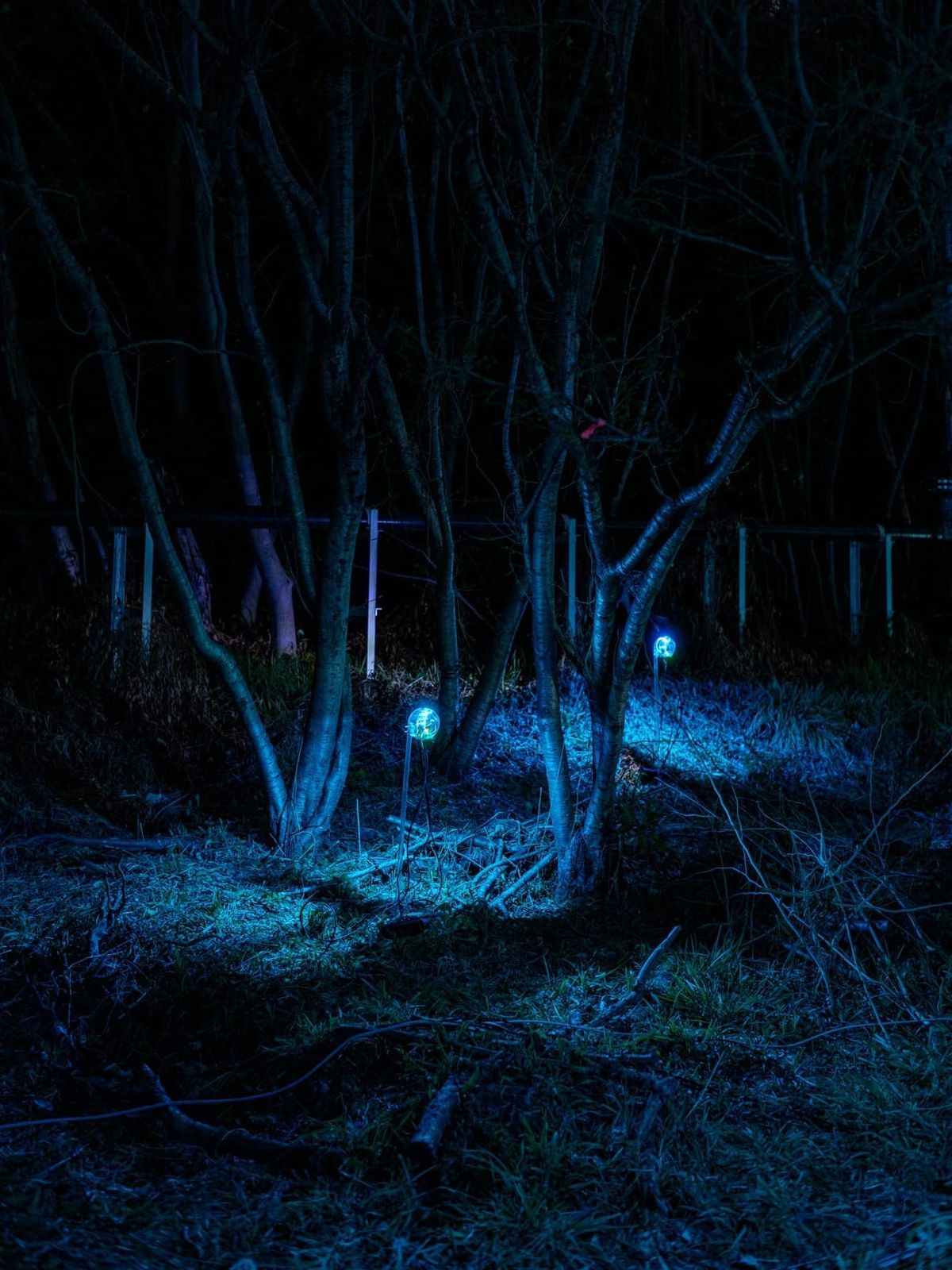
In Yuma Kishi’s Botanical Intelligence (2026), we encounter the possibilities of a “Third Intelligence”—a mediating layer between us and the world. A network of devices captures biometric data from surrounding forests and plants, converting it into audible sound. Each unit operates locally, yet is linked to nearby units in a rhizomatic network that pools data to collaboratively generate audio.
Kishi explores unknown forms of existence that might emerge at the intersection of human and nonhuman, reframing AI as “Alien Intelligence” in a quest to pursue co-creative practices between the two. Central to this is MaryGPT, a model of his own design. Developed since 2019 through original AI builds and proprietary training datasets, it has, by his account, curated nearly every project he has made since 2023.
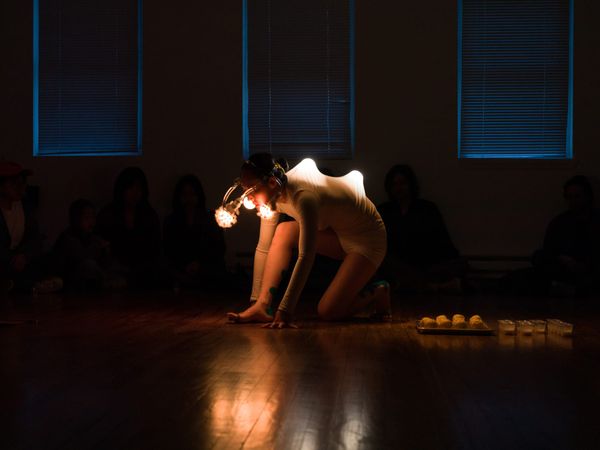
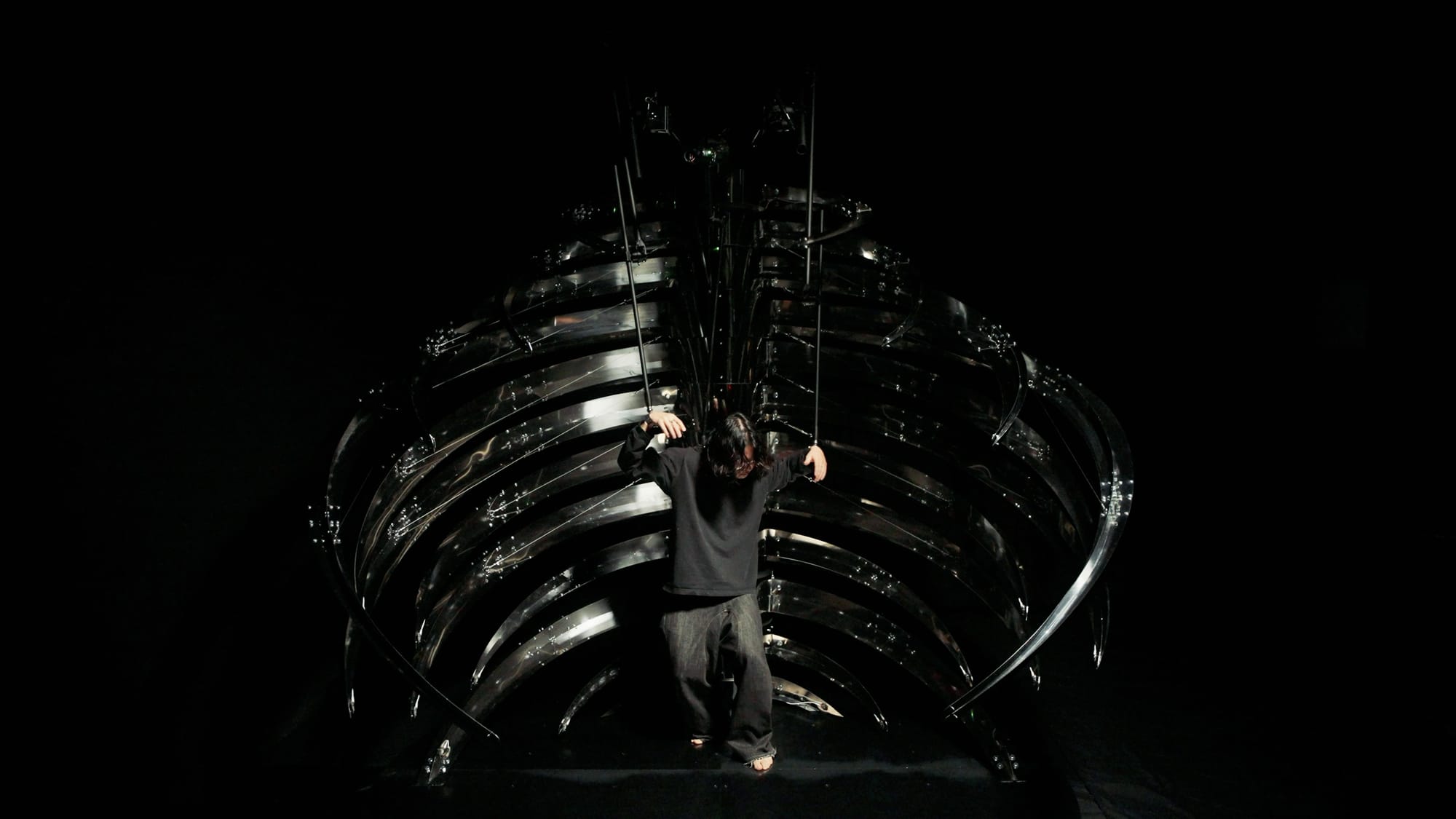
Across paintings, sculptures, and installations, Kishi’s work blurs the boundary between the human and the other to create a space of co-existence. His recent works center bodily experience approached in less anthropocentric ways. In xoxo-skeleton (2026), the artist surrenders his body entirely, inverting the logic of human-machine: the body becomes a site of what he calls “post-linguistic AI communication.”
What makes Kishi’s work compelling is its refusal to treat technology as an instrument for dominating nature. Instead, he frames it as a device for eroding certainty about where human intelligence ends. His systems do not simply translate plant data into sound; they stage the possibility of a Third Intelligence emerging between the human body, machine interface, and the natural world.