Issue
Seoul: “Spectrosynthesis Seoul”
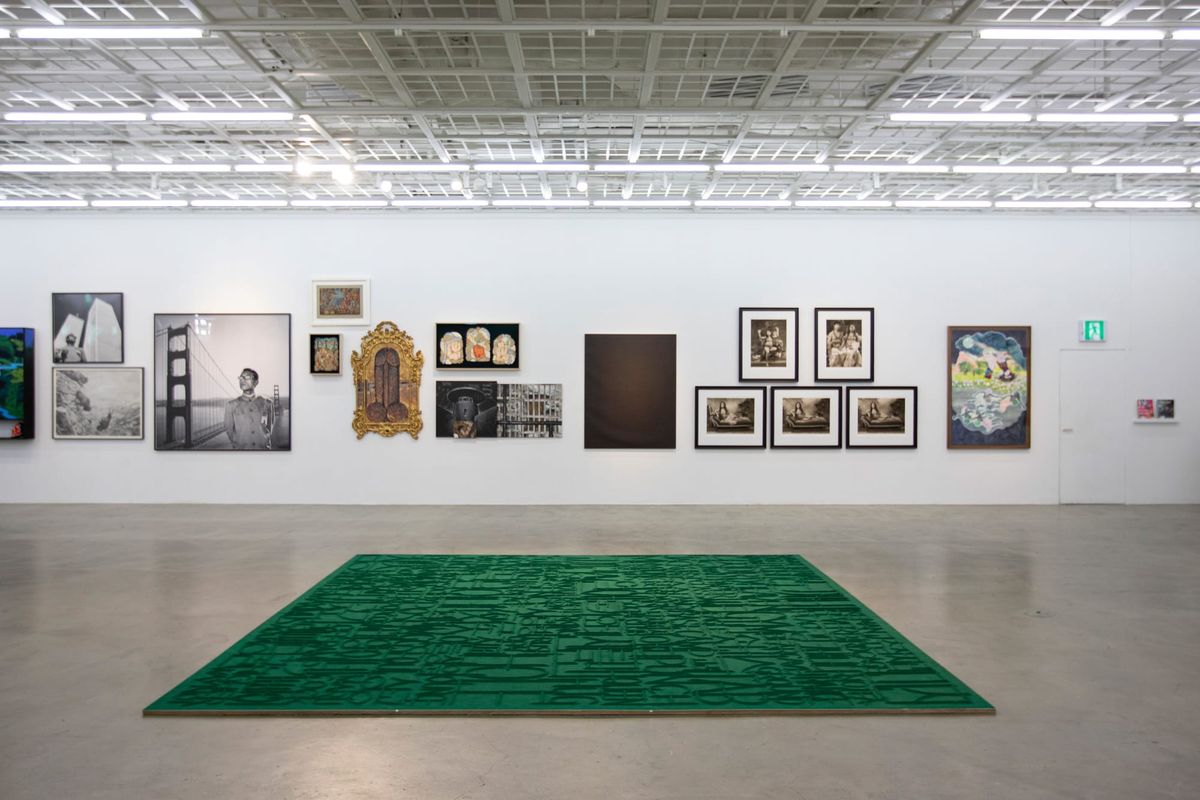
Spectrosynthesis Seoul
Art Sonje Center, Seoul
In Cruising Utopia (2009), queer theorist José Esteban Muñoz proposed that queerness belongs to the realm of the “not yet here,” a horizon of potentiality that survives the normative present while insisting on the existence of another world. And queerness is most alive in forms of aesthetic production that hold open what hegemonic culture conspires to foreclose. At Art Sonje Center, the fourth edition of “Spectrosynthesis,” Sunpride Foundation’s exhibition series dedicated to LGBTQ+ art and practices in Asia, opens with this question of the horizon.
What does it mean to mount an exhibition of LGBTQ+ art in Seoul, a city shaped by compressed modernity, military dictatorship, violent democratization, and a digital revolution? “Spectrosynthesis Seoul” takes this condition seriously, and it assembles enough voices, forms, and histories to make the discussion urgently felt.
Before entering Art Sonje Center, visitors encounter a large billboard on the museum’s façade carrying Sin Wai Kin’s ESSENCE (2024– ) project slogan “Your true self awaits” in luxury brand typography. At the blocked main entrance, a giant LED screen plays a men’s cologne advertisement in which the artist’s hypermasculine persona, Wai Kin, rides a horse through a cinematic landscape. Sin Wai Kin’s performance of virility inverts the logic of advertising, so that the hollow promise at its center—that identity can be purchased—immediately becomes a farce.
In the basement is Derek Jarman’s Landscape (1991), painted during the years that the artist spent tending to his garden at Prospect Cottage in Dungeness. The chromatically saturated work marks a formal departure from the dark, grief-laden canvases that immediately followed his HIV diagnosis. Jarman’s sanctuary was cultivated in the shadow of nuclear power stations, evoking what Édouard Glissant theorized as the “creolized garden”: a space where disparate elements establish unexpected kinship through proximity and the shared experience of survival. If “Spectrosynthesis Seoul” as a whole constitutes such a garden, then Jarman’s tableau here serves as its structural metaphor.