Issue
Inside Burger Collection: Sang Woo Kim: Painting Double Consciousness
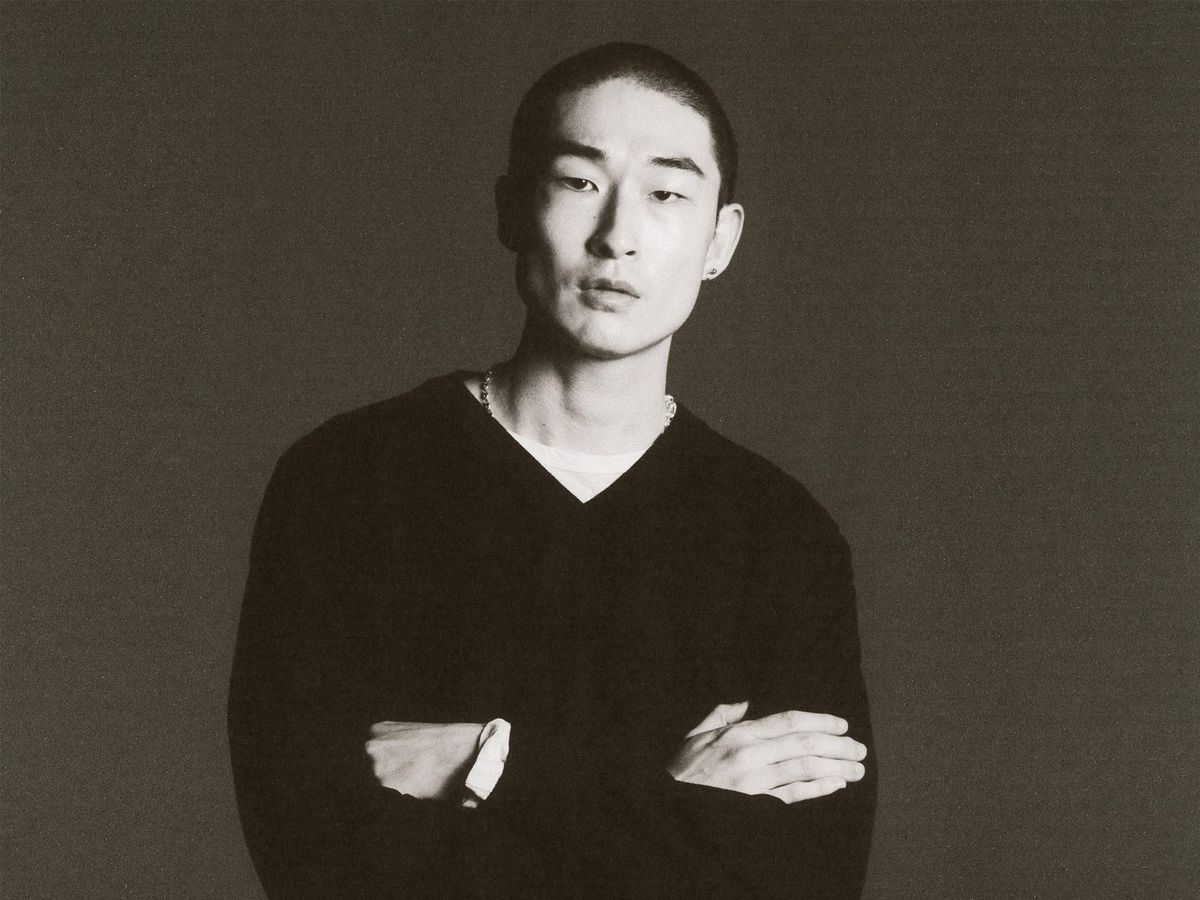
this sense of always looking at one’s self through the eyes of others
I reach Sang Woo Kim on a video call at his studio in Hackney, London, where works destined for his solo booth with Herald St at Art Basel Hong Kong—his first solo presentation in Asia—still line the walls, awaiting collection in the coming days. It is an opportune moment to ask him about his choices of motifs, media, and materials.
Kim’s practice encompasses painting, installation, and pigment dye transfers that translate photographic imagery into painterly surfaces. His transmedial approach remains consistently figurative, placing him alongside a generation of artists whose work—in response to digital, social, and cultural upheavals—repoliticizes the figure and renders complex identities and societal tensions visible.
Eyes have become a central recurring element. Kim first became known for his self-portraits; in recent works, his own eyes appear alongside fragments of skin, isolated and cropped in condensed compositions. They look out and yet hold back at the same time; within them resides a presence that never fully reveals itself—a form of seeing that remains aware it is also always being seen.
Interspersed among these new pieces are pigment dye transfer works. As he did for his first solo exhibition “The Seer, The Seen” at Herald St in 2024, Kim is planning to bring this photograph-based series into dialogue with his self-portraits. Based on composite images sourced from magazines, films, and friends’ phone libraries, these works are likewise dominated by eyes—either casual or openly appraising, with surprised, curious, or seductive gazes.
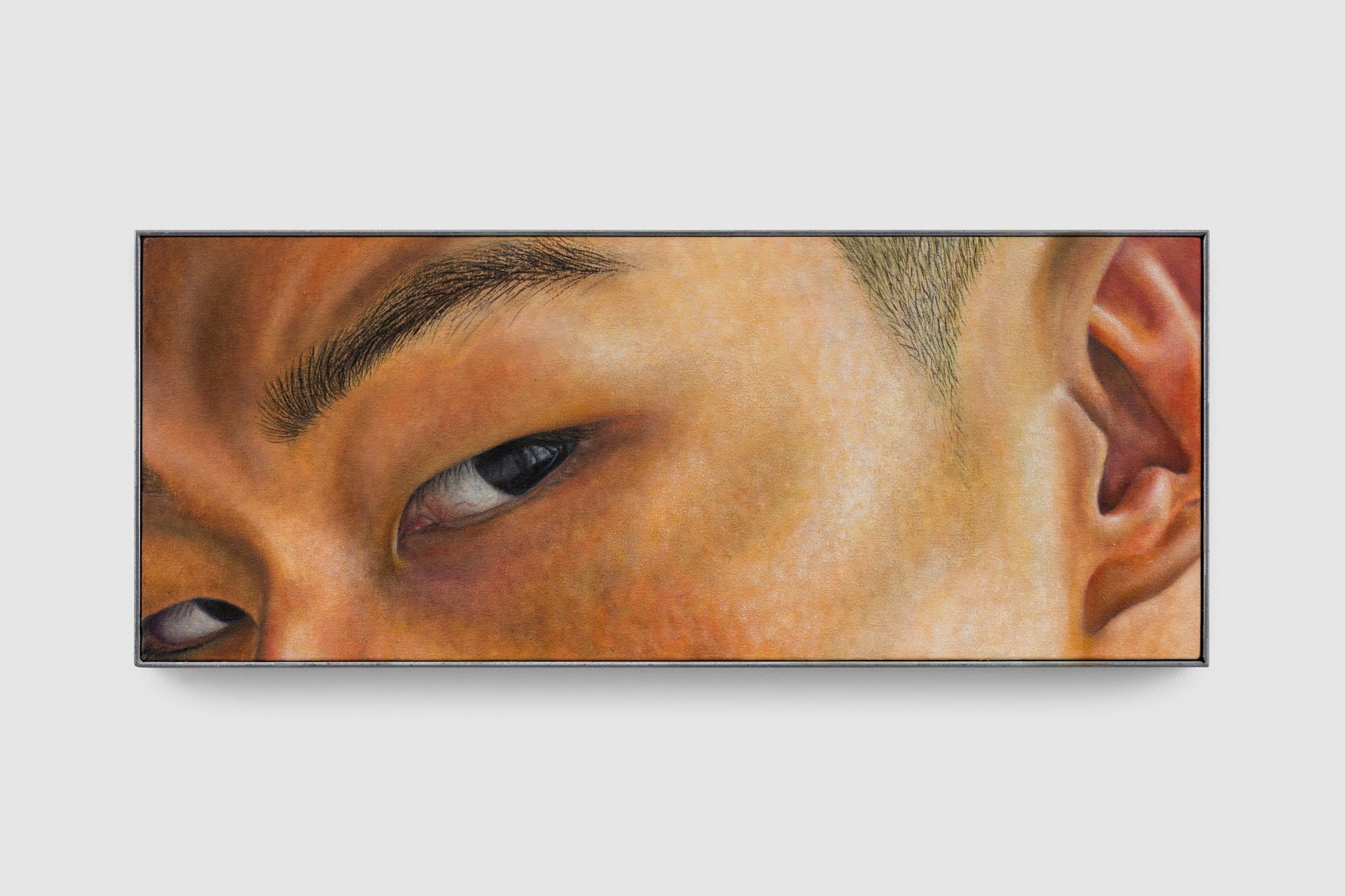
The Gaze
In Kim’s work, the gaze is not neutral but an event in which perception, projection, and power overlap. Born in Seoul and raised in a Korean household in London, he has contended with a racializing gaze that has marked his everyday life since childhood. Layered onto this are fetishizing gazes that have made him a sought-after model. Painting—and especially painting oneself—intensifies this exposure. He notes: “The most embarrassing idea, the one tied to your deepest insecurity, is often the most vulnerable; and therefore the most honest and pure.”
When his eyes look out from the canvas in recent works, they do so in a gesture of self-empowerment—a steadfast gaze that withstands those who render him Other. White viewers in London, Kim observes, often read this as a confident or even intimidating expression of identity—pride, sovereignty, defiance. By contrast, people of other races feel seen through his paintings. Kim explains: “They recognize someone like themselves—someone who had the same experiences of otherness growing up. They sense that there is someone speaking to what they’ve been living through.”
Korea, which he describes as his motherland, is where he most wants to exhibit next. “I’m really interested in how people of different backgrounds experience my work,” he says. “In Korea my works will likely be read completely differently.” And yet he suspects that something universal may underlie these varied readings: “The reclamation of my own image through the act of painting is also a kind of interrogation of the self in general. I want my work to challenge and unsettle viewers—like looking into a mirror and seeing themselves through the lens of another’s fractured gaze.”
His own gaze, as a Korean raised in London and working as a model, is shaped by a “double consciousness,” which W. E. B. Du Bois described in 1903 as the feeling of “always looking at one’s self through the eyes of others, of measuring one’s soul by the tape of a world that looks on in amused contempt and pity.”1 This internalization of racialized attributions imposed by others, with whiteness as norm and belonging denied, also resonates with Frantz Fanon’s 1952 account of the racialized body. For Fanon, the body is not merely fixed by the paralyzing, petrifying gaze of the Other, as in Sartre, but “pathologized” to the point that it loses its sense of direction and orientation, producing an experience of fragmentation, disorientation, and non-belonging.2