Issue
Editor’s Letter: Building Equitable Spaces
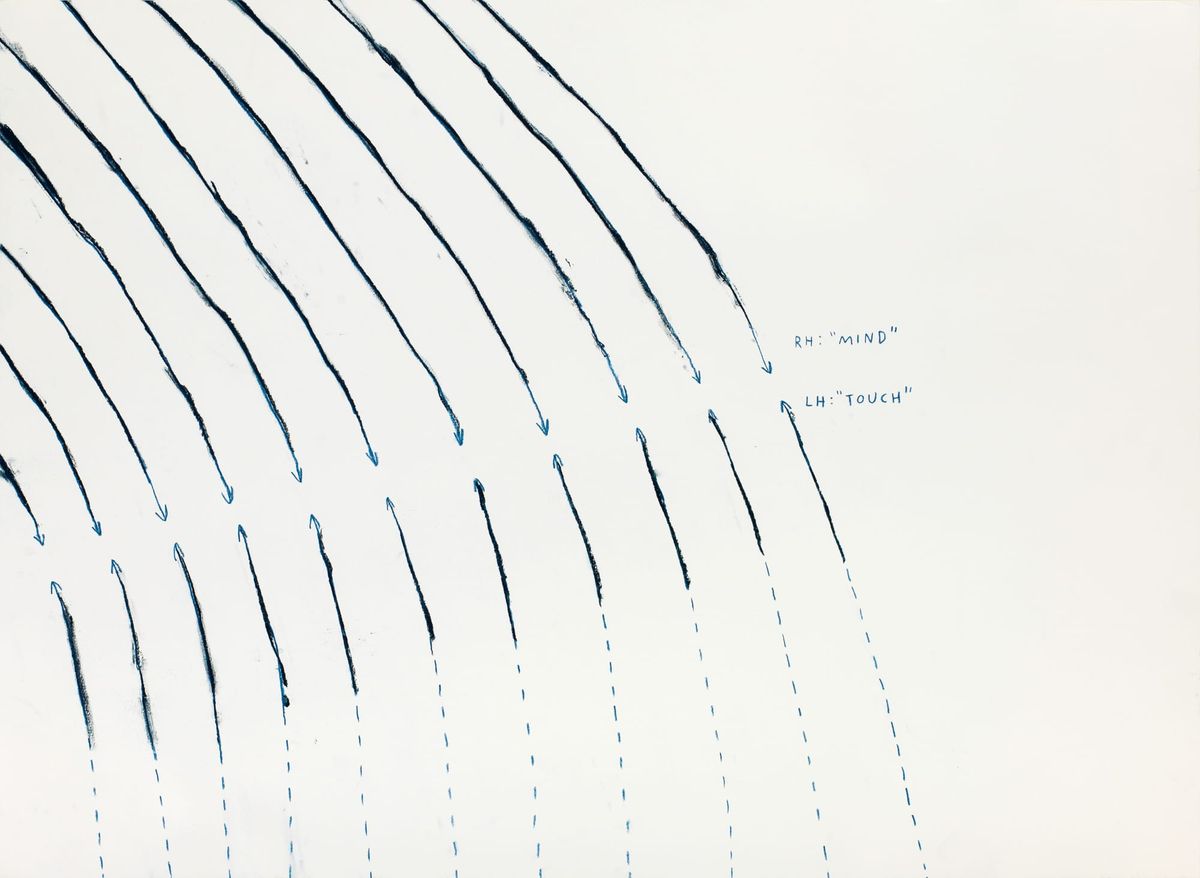
In our fraught global political landscape, where conservative policy proposals like Washington’s Project 2025 are not only being embraced, but also realized by populist regimes, this issue highlights artists whose practice mirrors key issues of power, access, and inclusion.
American artist Christine Sun Kim challenges conventional notions of sound and language, positioning her work at the intersection of conceptual art and lived experience. In our cover Feature, Xintian Tina Wang shares her encounter of interviewing Kim during her midcareer survey at New York’s Whitney Museum of American Art earlier this year. As Wang writes: “Her work doesn’t just point out what is missing, it demands that the gaps be filled—laying claim to what should have been available from the start.” Kim inhabits sound not as a given, but as a contested space—a terrain of power where access is not granted but taken. Her work is not about Deafness; it is about the politics of communication, and the invisible barriers that determine who participates in the conversation and who is excluded.
In our second Feature, ArtAsiaPacific’s contributing editor Ryan Su looks at the ambiguity of artistic output, especially in the age of artificial intelligence. During Art Basel Hong Kong in March, I met up with Su, a practicing arts lawyer, and told him about Mak2’s new multimedia series Home Sweet Home Backyard: Golden House, created, in part, by painters for hire on Taobao, China’s answer to Amazon.com. This inspired Su to explore ideas around intellectual property—how power operates through this practice, and how artists, through the examples of Mak2, Ming Wong, and Yee I-Lann, might navigate ethical boundaries of authorship and creative labor.
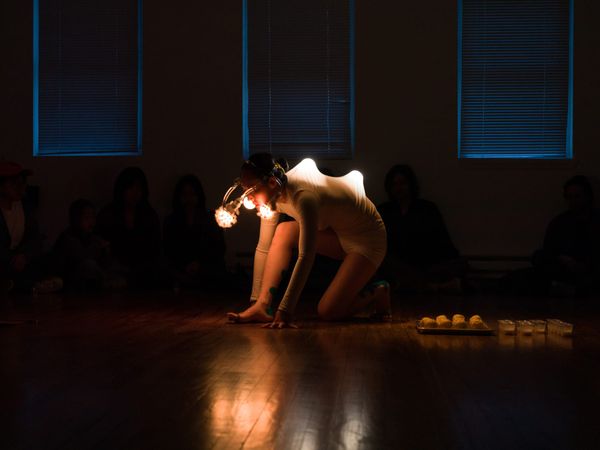
In Up Close, AAP editors draw attention to three recently debuted works: the haunting figurative sculpture Head of a Dancer by Richard Hawkins; Taiwanese artist group Xindian Boys’ poetic site-specific projection, Don’t Worry, Baby, which runs on game engine technology and was commissioned for the grand opening of the New Taipei City Art Museum; and Sopheap Pich’s Silent Restraint, which revisits his first-ever rattan work of a human lung, made upon his return to Cambodia, but this time incorporating handblown glass.
For Inside Burger Collection, Larissa Kikol discusses ceramicist Ranti Bam’s unique alchemy of transforming earthy terracotta into vessels for healing and empathy. Bam explains: “My sculptures are connected to birth in the sense that my practice reflects on how we deal with ourselves as fragile, fluid beings, born into the world anew each day. Born into new ideas, more expansive concepts of ourselves, or versions of ourselves that are ever so slightly gentler and kinder.”
In Profiles, AAP’s new managing editor Michele Chan traveled to New York in May to visit Kiang Malingue’s first US outpost in the vibrant Lower East Side. She met up with the gallerists back home in their Wan Chai flagship, where they described their way of working as “stepping out,” and what they aim to achieve beyond Hong Kong and the Greater China region. From Korea, AAP Seoul desk editor Andy St. Louis chronicles the life experience of Hyun Nahm, who grew up witnessing the ruthless urban development in the commuter town of Ilsan, which has informed his aesthetic influences that ooze out of his tactile sculptures. From Turkey, AAP’s Istanbul desk editor Matt A. Hanson spoke with Paris-based filmmaker Ali Kazma on the eve of his opening at the Istanbul Modern to discuss his career-long fascination with human activity across economic, industrial, and cultural fields.
Elsewhere in the issue, inspired by the recent exhibition “Re-Stor(y)ing Oceania,”—curated by Taloi Havini for Ocean Space in Italy and at Artspace in Australia—AAP Sydney desk editor Johanna Bear penned an essay about environmental justice in one of the regions most impacted by climate change. For Dispatch, we hear from independent curator Manuela Lietti about the cultural regeneration taking place in Milan. We also travel to Riyadh to visit the vast studio of Nasser Al Salem, who is redefining traditional Arabic calligraphy by experimenting with the ancient art form. In Reviews, among shows covered from Mumbai to Houston, AAP’s San Francisco desk editor Arthur Solway reviews the much-overdue retrospective of the late Ruth Asawa, now celebrated for her delicate, loopy wire sculptures. Her experience in a post-World War II Japanese internment camp in the US helped shape her resilience as an artist who was continually passed over due to the sexist bias that downplayed her practice as craft, and merely decorative.
Finally, for One on One, Beijing’s Lin Jingjing—known for her fictitious artist identity “Lov-Lov”—reflects on first seeing Wael Shawky’s video Drama 1882 at the 2024 Venice Biennale, writing: “It forces us to pause, to enter an uncomfortable, unfamiliar, yet irresistible experiment, hovering between inevitability and agency.” Like many of the artists in this issue, Shawky’s work compels us to embrace a more expansive, inclusive vision of creative practice.