Current Issue
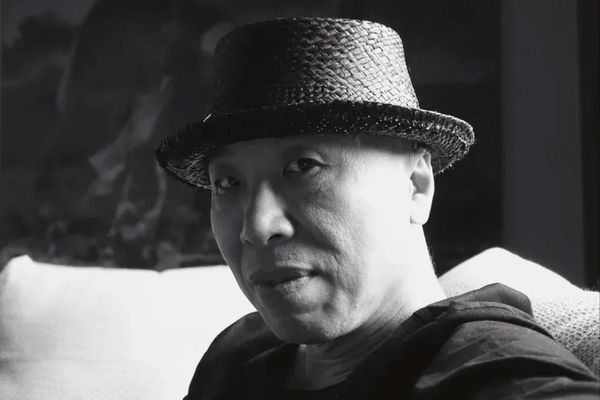
Mariko Mori: Oneness in the Machine Age

On the eve of her midcareer retrospective “All That Shines” at Tokyo’s Mori Art Museum (MAM) this October, ArtAsiaPacific spoke with Mariko Mori about her practice, which has long negotiated the thresholds between technology, spirituality, and the body. Emerging in the 1990s with her iconic Cyborg series, Mori staged herself as hyperstylized female figures that simultaneously critiqued the constrained status of women in Japan and constructed a dazzling simulacrum of reality for otaku—a Japanese subculture steeped in anime, video games, and other forms of popular culture. These early works established her methodology: using the framework of science and advanced technology become not ends in themselves, but vehicles for making Buddhist notions of interconnectedness accessible and dissolving the rigid distinctions between self and other, human and machine, present and infinite.
Across installations, sculptures, and participatory environments, Mori has continued to explore what becomes of the self after death—recasting mortality as a journey within larger cosmic cycles rather than a definitive end. Co-curated by Alexandra Munroe of the Solomon R. Guggenheim Museum and MAM director Mami Kataoka, “All That Shines” brings these concerns together across three decades of formal and philosophical evolution. In the following conversation, Mori discusses the enduring relevance of her Cyborg performative photography, the strategic use of scientific language as a pathway to spiritual enlightenment, and the persistent inquiry into posthumous continuity that informs her work.
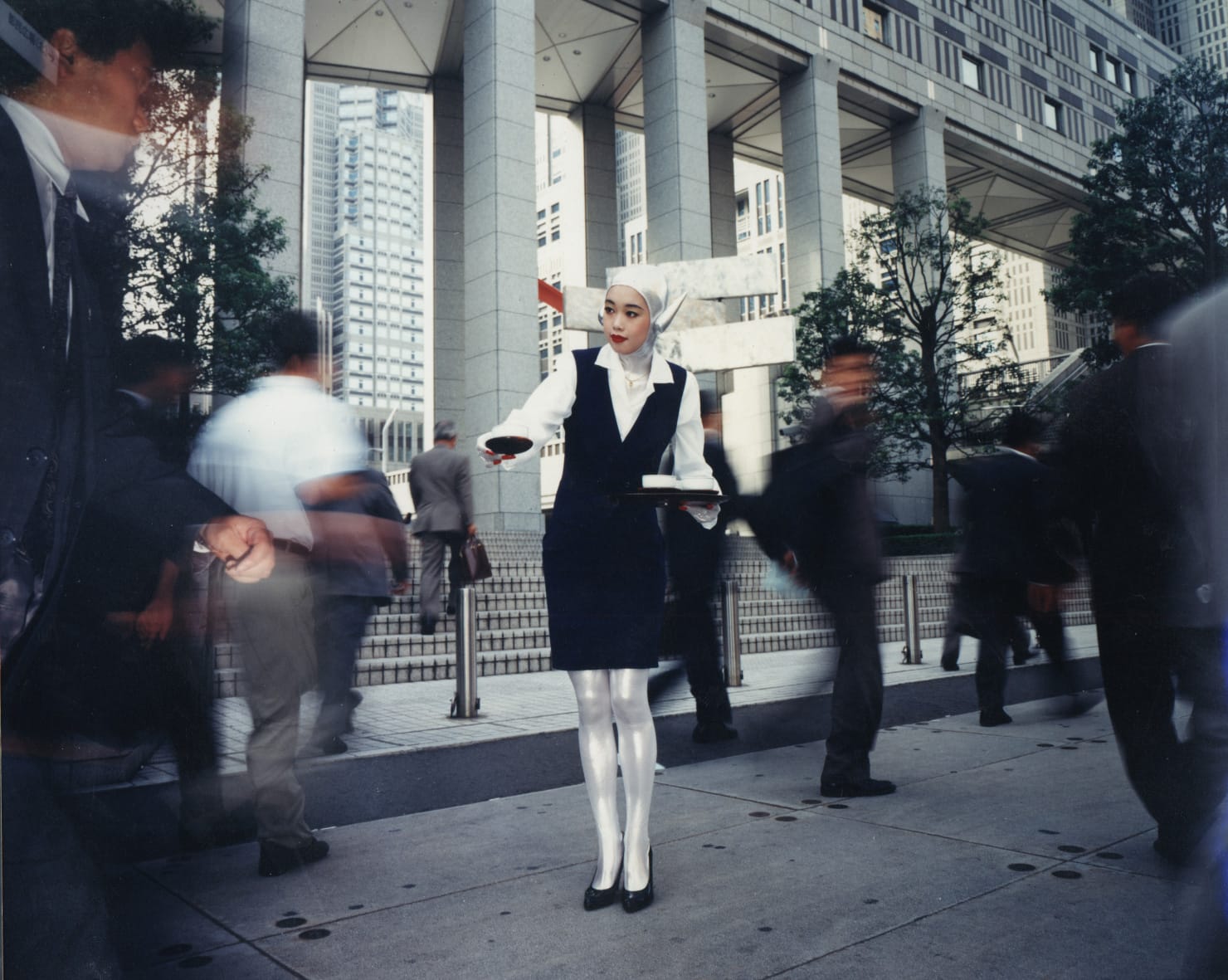
In the mid-1990s, in works like the Tea Ceremony series (1995), you cast yourself as a kind of futuristic, almost alien office lady, serving tea to businessmen who barely notice you. Those cyborg figures fused femininity with the techno-scientific. How has your thinking about embodiment and female agency shifted since then?
Well, we now have our first female prime minister, so things have really changed. A lot of progress has been made, but compared to the West, I think there is still room for reconsideration. Having studied abroad—first in London, then New York—I observed how professional women were recognized, their talents embraced. While I was abroad, I had the opportunity to exhibit my works, to use my voice. But in the early to mid-1990s in Japan, it was very challenging—equality was not truly respected. My early work focused on this social criticism; the cyborg served as a metaphor for raising women’s status in society.
In so much of your early performative work, you used your body as both subject and medium. What did it mean—politically and personally—to insert your body into various situations, from Japanese consumer culture and anime to the corporate environment of that specific moment?
Using my own body in my work is the performative element. Rather than just directing and photographing the scenery,
I wanted to use my body to produce those images, because my actions are like an extension of the performance itself. The work has a few sides to it: for one, there is the completed image, but there is also the documentation of my performance.
The performances—the businessmen around you, for instance—weren’t staged?
No, none of the people in my photographs were told to pose or act in any way. For instance, in Empty Dream (1995), everyone that you see in the photomontage was just on the beach. My first video work, Miko No Inori (1996), also wasn’t staged. It captured how people genuinely reacted to my performance. This is one aspect of the work—it has an imaginative quality to it while containing elements of reality. It’s a juxtaposition between an existing reality and a reality being created. Especially in Akihabara, with the game shops and arcades…
It’s like a simulated reality.
Yes.
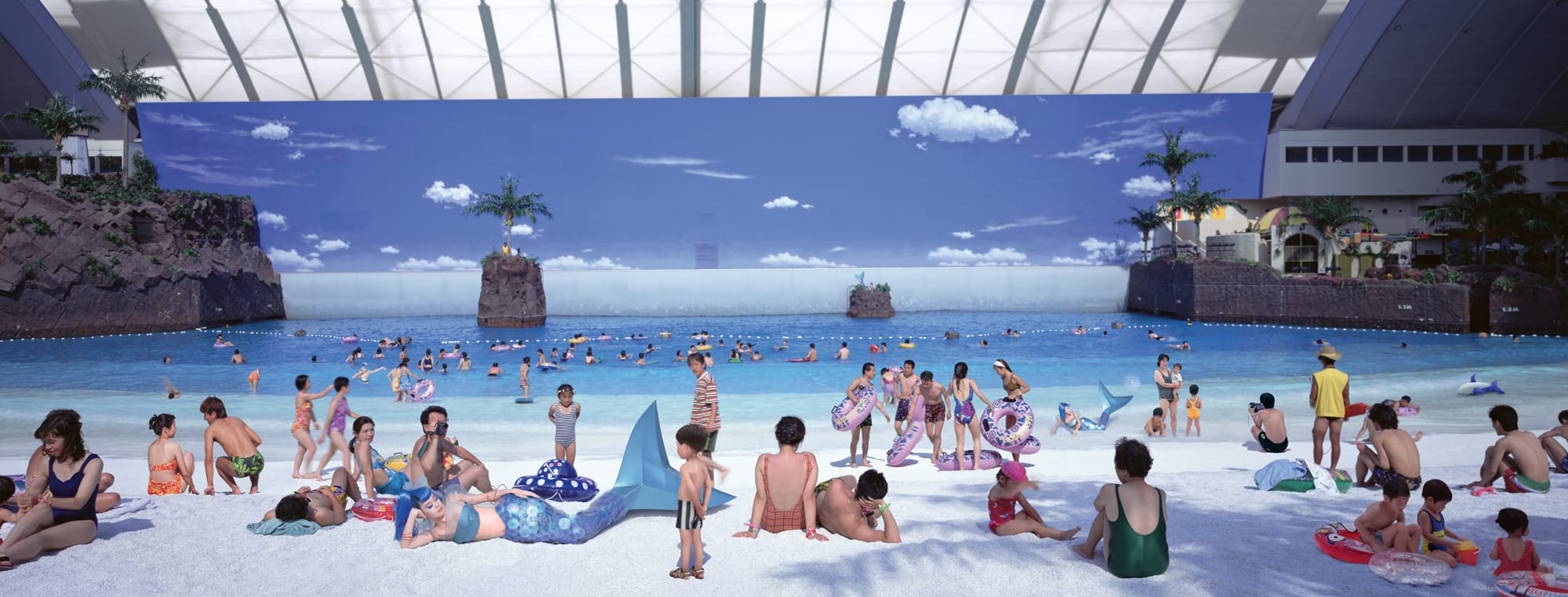
When you were in those situations—such as serving tea or on the fake beach at the amusement park—
what were the reactions to you performing as a cyborg or mermaid?
The subway scenes represent the clichéd Japanese response of noticing but not looking, and then ignoring your existence and pretending everything is completely normal. Maybe that’s not the case anymore nowadays, but in the early to mid-1990s, I experienced that when I went out in those costumes. It might be an ordinary sight for people today, but at the time it was quite shocking. Yet everyone just pretended nothing strange was happening.