Issue
Up Close: Rachel Youn
In the mid-19th century, Swedish physician Gustav Zander invented the vibrating belt machine, a “passive exercise” contraption designed to rehabilitate the injured or disabled through tremulous mechanotherapy. The instructions were simple—step onto the base plate, wrap the fabric belt around a target area (waist, thighs, hips), and switch it on. It was later rebranded as an at-home weight-loss tool that you could use to burn your fat without breaking a sweat, heralding an era of quick-fix fads and wellness capitalism, wherein the body itself is the ultimate economic project.
Today, the ideology of self-improvement governs our psyche: maximize your time after hours, and extract your own surplus value by splurging on products to pamper and optimize yourself more efficiently. For Rachel Youn, this seemingly beneficial, even gratifying endeavor is less an act of personal betterment than a form of disciplinary violence turned inward. If our worth relies on productivity and wellness becomes a moral imperative, what happens when we falter?
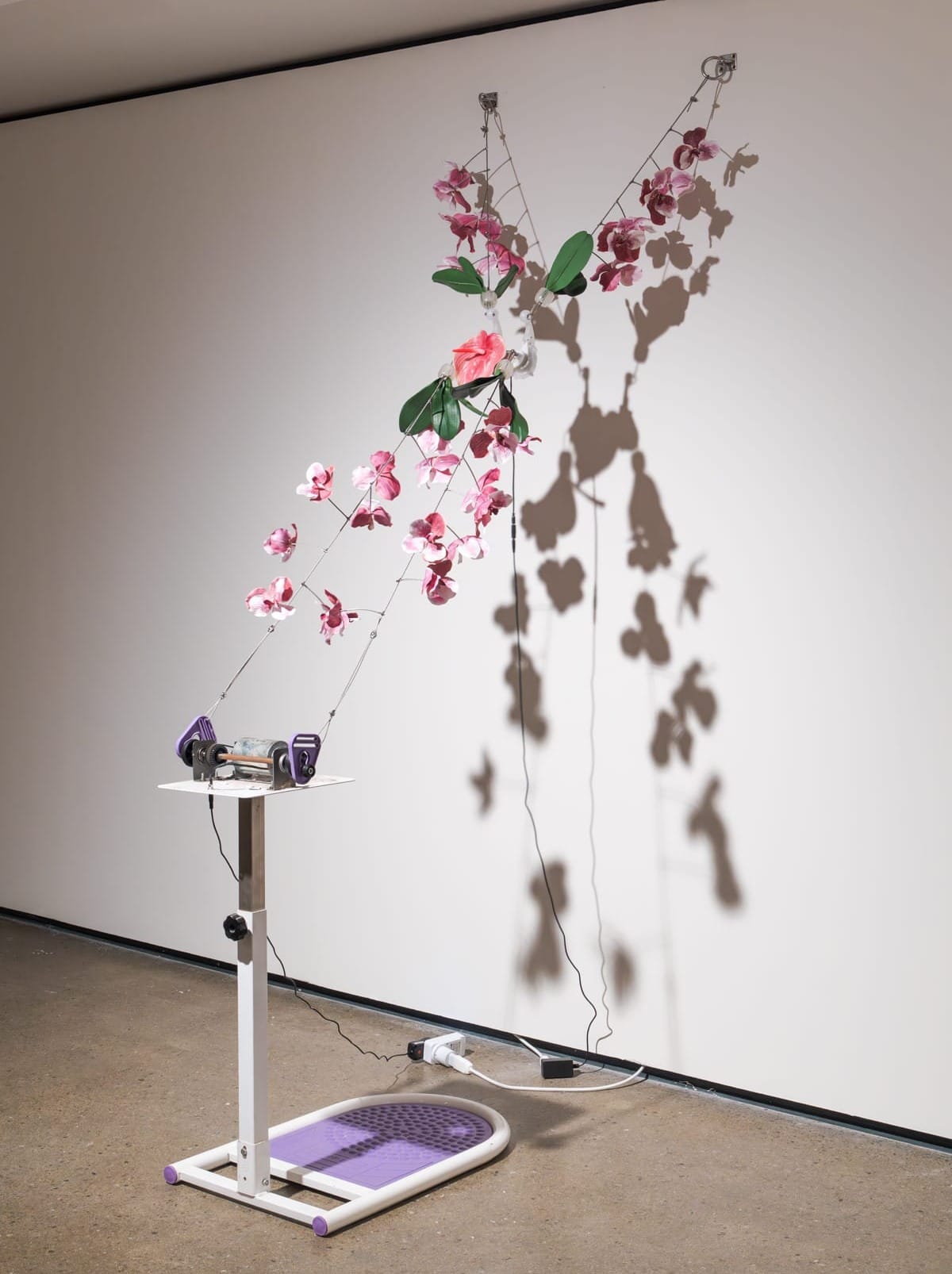
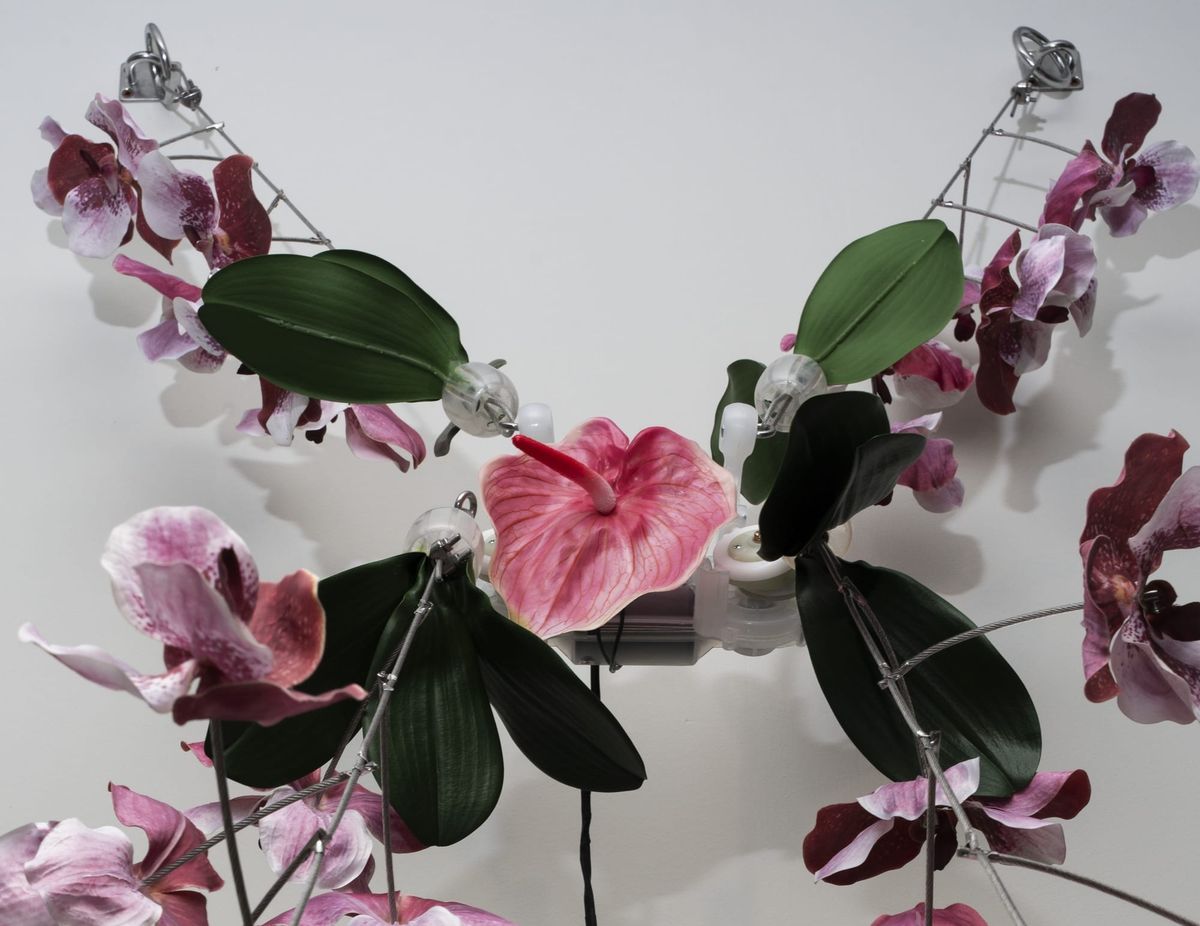
At the Scuola Piccola Zattere in Venice, the Korean American artist probes this question through automated installations made of old appliances, decked out with lush, synthetic flora that twitches and sways along with the motorized structure. In I chastise my body (2026), an X-shaped steel-cable awning is rigged between the gallery wall and a retro vibrating belt machine, which Youn fitted with a modified neck massager. The taut cords bear magenta orchids and leaves, while a salmon-pink anthurium crowns the junction. With a ritualistic, almost compulsive vigor, the faux plants shudder as the apparatus jostles in place, seeking a release that is woefully out of reach, relentlessly expending energy that amounts to nothing but its own gradual destruction. What was once a serviceable instrument of care is now condemned to perform a Sisyphean task estranged from any purpose at all.