Issue
Pixy Liao: Through a Lens of Obsession
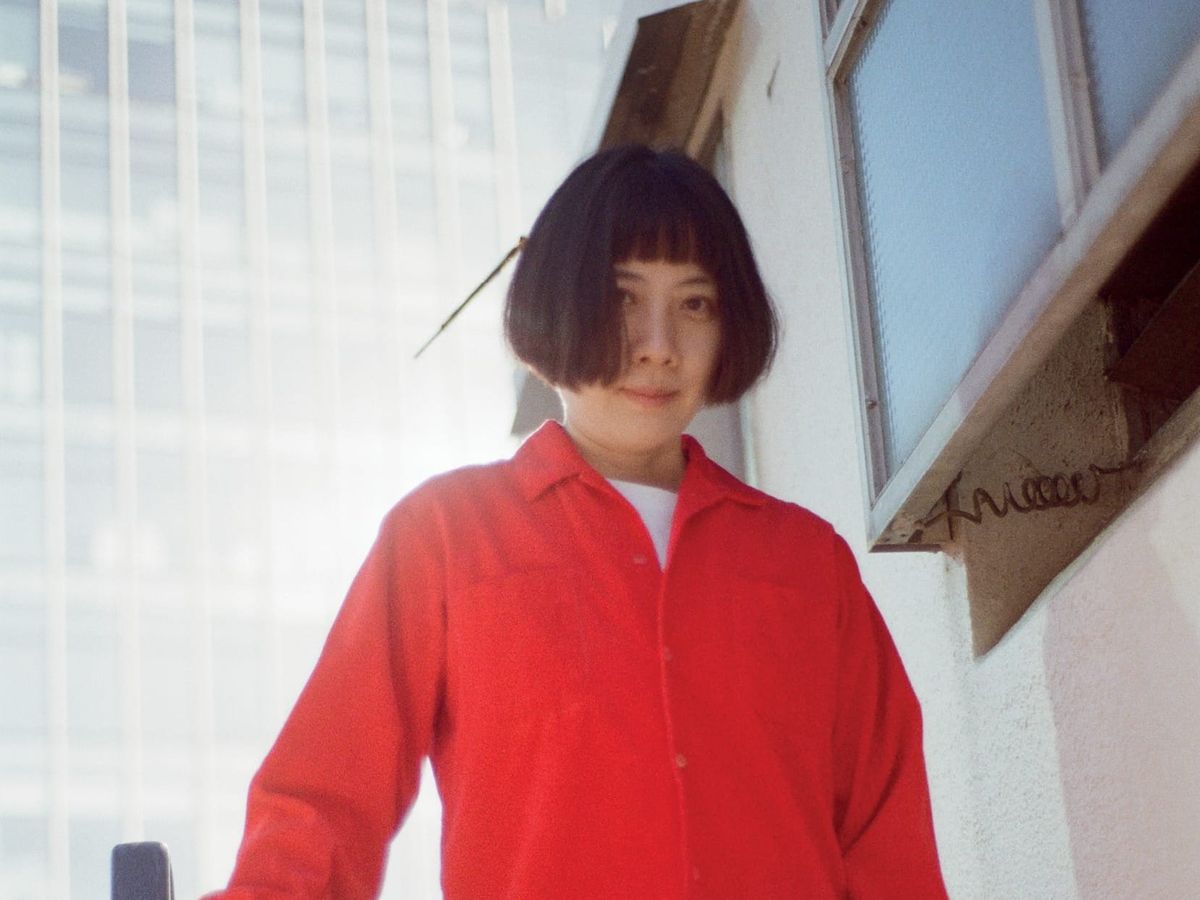
For Diane Arbus, it was secretive and perverse. Walker Evans argued that to do it well one has to stare, pry, listen, eavesdrop. For the writer Susan Sontag, it was an aggressive tool of power, a predatory act of appropriation. Photography is, by its very nature, an obsessive medium. Even its vernacular echoes something clandestine, almost shameful, akin to espionage: one shoots, frames, captures, exposes; to photograph is to work with triggers, mirrors, hoods, wires, curtains, shutters, darkrooms, and chemical baths. It is an endless list, a relentless index of image-capturing apparatus that also happens to form the machinery that lies at the very heart of our surveillance technology—first as celluloid film; later, as digital video. Art-making is about obsession, too: with a story, an idea, a memory, a place, an object. For Pixy Liao, it is an obsession at once ethereal (love) and tangible (a person), a fixation marked by the slow passage of time, manifested and mechanically reproduced through the cold black box of the camera; more specifically still, as a collection of staged, performative tableaux of her career-defining series Experimental Relationship (2007– ).
Born in Shanghai in 1979, Liao studied foreign languages at university while teaching herself graphic design, then freelanced for three years before growing to despise the work and the clients who never tired of changing her designs and thwarting her artistic ambition. She wanted to be like David Hemmings’s character, a fashion photographer who unwittingly captures a murder, in Michelangelo Antonioni’s 1966 film Blow Up (all that free-wheeling glamor and sex and intrigue), and so in the early 2000s she enrolled in a photography MFA at the University of Memphis. It was a strange choice, all things considered: a storied but troubled Southern music town on the western edge of Tennessee. But she was afraid of major cities following the terror attacks of 9/11, and besides, she was obsessed with Elvis Presley and the birthplace of rock ‘n’ roll. There she began to experiment with the commonly accepted modes, types, and genres of the medium, trying to see what fit, what worked, where the vision lay, where the “truth” resided: landscapes, documentary, portraits, interiors, still lives, diaristic snapshots, the vagaries of existence, the flotsam and jetsam of the environment. But it wasn’t until she met Moro, a younger Japanese student and aspiring musician, that she embarked on a radical new direction, a new mode, a new route from which she has rarely strayed, nor disowned, nor disrupted. Gifted a workhorse camera by a professor (a compact Bronica 645, which she still uses), she built a solid framework that suited her practice: minimal equipment, natural light, a handful of exposures per scenario, and, for good measure, “a lot of prayer.”
Liao has since achieved what few photographers do: a recognizable body of work that teases out the power dynamics between artist and muse and the sexual dynamics between men and women, all through fleeting moments in time, mere fractions of a second, somewhere, as TS Eliot once wrote, “at the still point of the turning world.” But her practice is almost exclusively, some might say compulsively, fixated on her and Moro. Her more recent photographs, which seem infused, even haunted, with the claustrophobia brought about by successive lockdowns, have taken a darker turn, especially Intertwined (2023), of her and Moro trapped, or so it appears, in an empty bath, in the near dark, ensnared in the camera’s release cable, their fate sealed by her obsessive lens. And then there are other series, For Your Eyes Only (2012– ) and Men as Bags (2016), for example, minor works that are harder to take as seriously; mischievous and humorous, certainly, but also less revealing, less universally communicative. Even some of the setups from Space Girl Met Earth Boy (2022– ), with their knowing sci-fi, B-movie influences and wider cinematic scope, while still pictorially inventive, lack the emotional resonance or provocation of her earlier works, or the tender, bucolic rapture and quiet majesty of a photograph like Hug by the Pond (2010), one of her most striking and original works. Perhaps we only see what we want to see.