Issue
Editor’s Letter: When Lives Become History
As storytellers, artists are often fascinated with the personal lives and creative output of others. But how can (or should) artists transform these stories into their own work? And as these artworks enter public circulation, what responsibilities do artists have to these individuals and their communities, especially marginal ones? In other words, how might artists best represent the historical transformations and cultural movements that these stories signify and embody?
These pertinent questions are central to the practices of two artists featured in this issue of ArtAsiaPacific and whose works are prominently featured at the 60th Venice Biennale. For our cover feature, deputy editor HG Masters spoke with Los Angeles-based Kang Seung Lee about his practice of investigating cultural figures whose lives were neglected by the mainstream narratives of history. Building on his research over the past decade, Kang explains how for Adriano Pedrosa’s Biennale, where “foreignness” is a central theme, he created an intergenerational constellation of artistic figures who died of AIDS in the 1980s and ’90s. In his work at large, Lee explores what it means for the queer community to “take care of our caretakers.” In our second feature, assistant editor Anna Lentchner interviewed Manal AlDowayan about her long history of working with the collective memory of women in Saudi Arabia, and her recent participatory workshops in the run-up to her representation of the kingdom in the exhibition “Shifting Sands, A Battle Song.” For AlDowayan, who is concurrently working on a permanent commission for Wadi AlFann in AlUla, connecting to audiences is a responsibility she feels toward the people who see and live with her artworks.
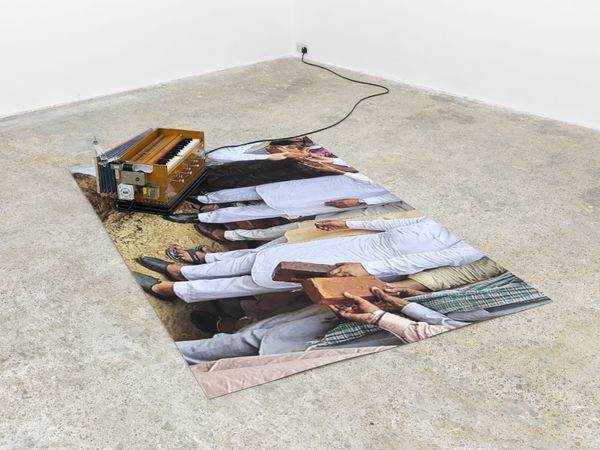
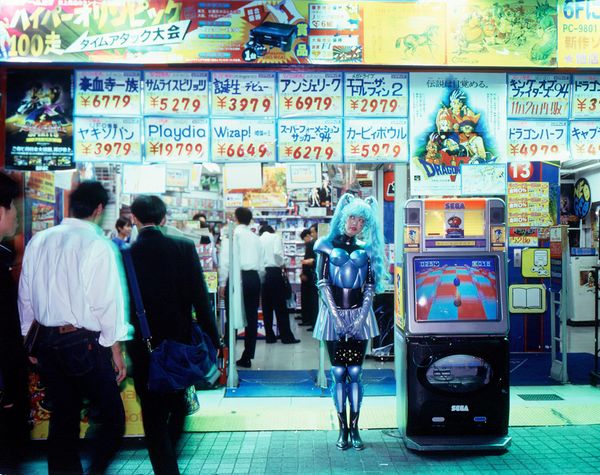
In our third feature, Philippe Parreno discusses the complex phenomenon underpinning his exhibition at the Leeum Museum of Art in Seoul and his construction of a 13.6-meter tower that houses a virtual, bodiless character in the process of developing its own language. For Parreno, “data and algorithms . . . are like wild creatures unleashed into the world.” Inside Burger Collection looks at the practice of Tosh Basco, which has evolved from the performative space of the nightclub to working in various other media, including photography and drawing. For Up Close, we spotlight the recent film installation by Amar Kanwar, The Peacock’s Graveyard (2023), which was commissioned for Sharjah Biennial 15 and is now part of M+ collection exhibition “Shanshui: Echoes and Signals,” in Hong Kong. AAP also visited a remote village in the emirate of Sharjah to see Sandi Hilal and Alessandro Petti’s Concrete Tent (2015/23) as it is gradually submerged in a sea of sand; and we reflect on Abiding Nowhere (2024), the latest feature film directed by Tsai Ming-liang, which follows a monk, based on the seventh-century sage and scholar Xuanzang, as he wanders the streets of Washington, DC.
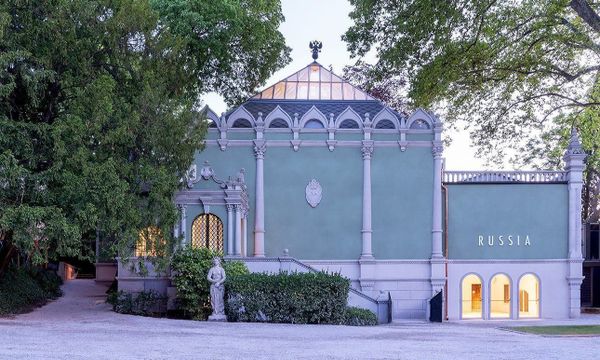
Our Profiles this issue look at two artists representing their countries in Venice. Matt A. Hanson interviewed veteran artist Gülsün Karamustafa about her decades-long practice and her newly created works with Venetian glassmakers for the official Türkiye Pavilion that excavates the current state of global conflict. From Manila, Sam Del Castillo caught up with Mark Salvatus to discuss his projects around Lucban, his home city in the Philippines. In New Currents we explore the emerging video-based practice of two Venice Biennale participants, Charmaine Poh from Singapore, and Aziza Kadyri, whose collective, Qizlar, is representing Uzbekistan. Additionally, we discover new paintings by the Indonesian artist Roby Dwi Antono.
In Essays, Hutch Wilco recounts his experiences of embarking on a preparatory visit with fellow curators to the desiccated Aral Sea for the still-pending Aral Culture Summit in Uzbekistan. And in our report from March Meeting 2024, organized by the Sharjah Art Foundation, we hear from the many participants about collective modes of working that respond to the dire crises facing art communities from Palestine to Haiti.
Elsewhere, we preview six collateral exhibitions at the Venice Biennale by leading artists from Asia—including Chinese painter Yu Hong, Korean artists Lee Bae and the late Yoo Youngkuk, and American-Pakistani artist Shahzia Sikander. In One on One, Chitra Ganesh shares her personal and artistic affinities with the late Rummana Hussain. From Mumbai, critic Zeenat Nagree recounts the booming art trade and the influx of new galleries into the city.
Our Reviews span from the 24th Biennale of Sydney to Los Angeles, covering major exhibitions in Tokyo and London, as well as solo showcases of leading artists in Hong Kong, Singapore, Mumbai, and New York. Finally, for Where I Work, assistant editor Anna Lentchner visited the plant-filled Hong Kong studio of IV Chan, whose fabric sculptures and performance works explore themes of motherhood, interfamily relationships, and corporeality. Like many artists featured in this issue, Chan draws on her personal experiences and the stories of people around her to find forms that resonate with lived history.