Issue
Editor’s Letter: Close to the Frame
In the opening sentence of her essay collection The White Album (1979), Joan Didion wrote: “We tell ourselves stories in order to live.” These days, we take photographs of ourselves in order to live. We also photograph the people we know and the strangers we don’t, the food we eat and the places we visit. For artists who use photography as their primary medium, this may be the best of times and the worst of times—a time of abundant imagery, versatile technology, and globally connected audiences. To have a distinctive voice, to tell unique and captivating stories, to stand out from the madding crowd, remains as challenging as ever, as the two photographers featured in this issue reveal.
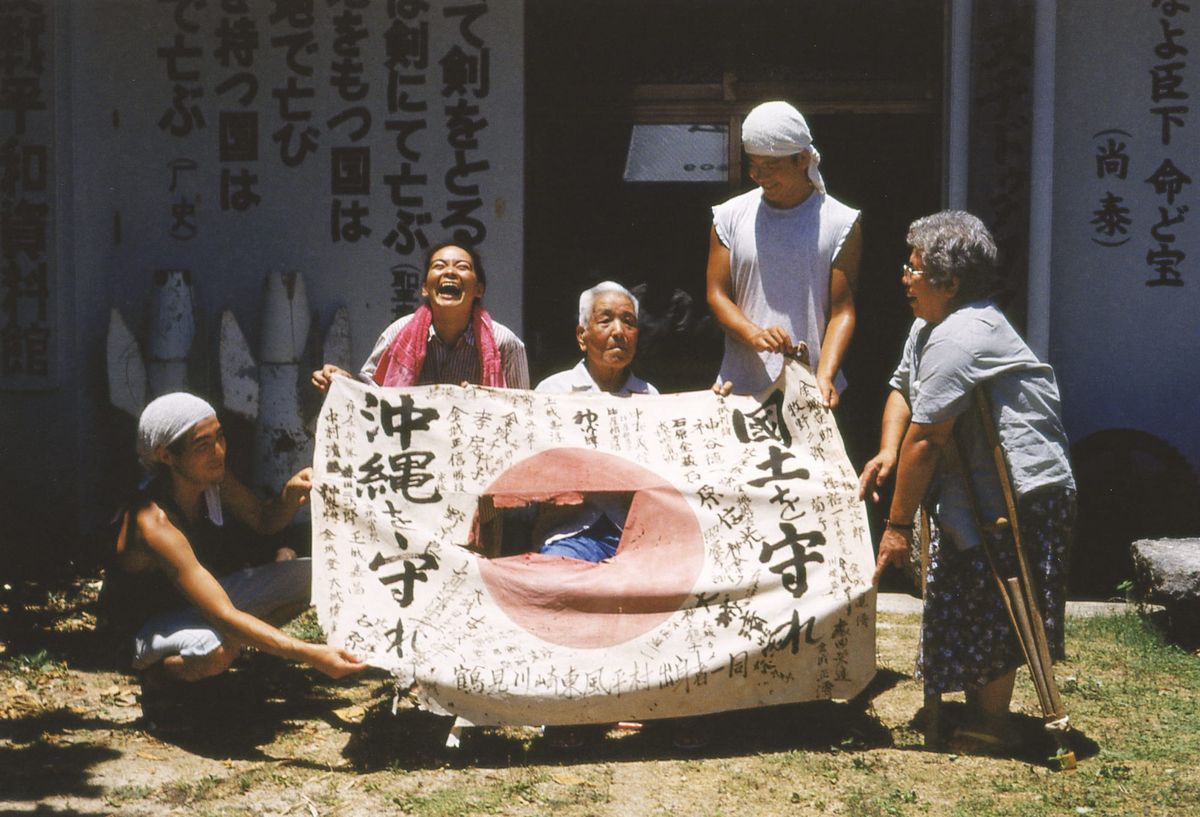
ArtAsiaPacific’s July/August cover feature examines the photographic practice of Mao Ishikawa, who since the 1970s has documented life on Okinawa, where she was born. Contributing writer Johanna Bear dives into the 50-year career of the artist who once worked at a bar that catered mostly to Black American military service members stationed on the island. After Ishikawa became part of this community and spent time in Philadelphia, she began an extensive (and ongoing) reenactment of the region’s history, the island’s fraught relationship with Japanese national identity, its postwar occupation, and contemporary socioeconomic tensions. Bear reveals how Ishikawa has used her camera to bring us into the lives of her subjects to reveal what she calls her “Okinawan soul.”
While Ishikawa moves through the world documenting those she meets, Pixy Liao is a far more inward-looking photographer, widely recognized for the images of herself and her partner Moro, often in various states of undress. Interviewed and photographed by AAP managing editor Oliver Clasper, Liao reveals the origin story of her highly staged photographs that nonetheless portray the vulnerability and emotional intertwining in what she calls her and Moro’s “experimental relationship.” In performatively revealing themselves to the mysteries of the camera, Liao finds ways of keeping herself and her partner close.
For Inside Burger Collection, curator Jeppe Ugelvig deconstructs the practice of Young-jun Tak, an artist from South Korea whose relocation to Europe has sparked reflections on the social expectations and norms created by physical environments and within cultures. Meanwhile, for Up Close, we spotlight a recent work by Ala Younis about a notorious Baghdad hotel, a panoramic Hong Kong painting by Stephen Wong Chun Hei, and Archie Moore’s installation, a poignant monument to Indigenous history and kinship within the Australia Pavilion at this year’s Venice Biennale.
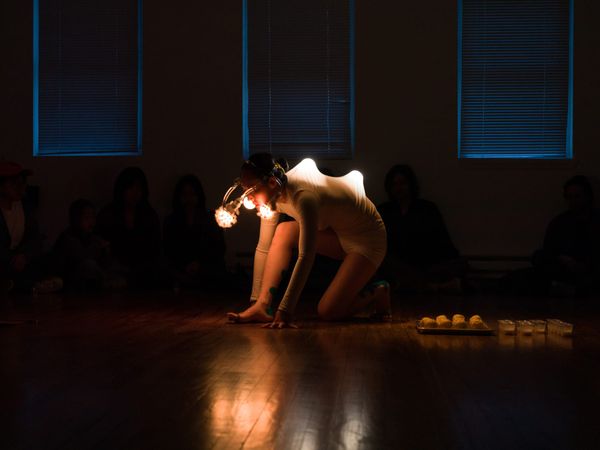
Continuing our look at Venice, we profile Lap-See Lam who debuted a multimedia installation and live performance, The Altersea Opera, in the Nordic Pavilion at the Biennale, and learn about her research into the half-fish, half-human mythological character of Lo Ting. A Tribute written by Ly Hoàng Ly reflects on the life and legacy of Dinh Q. Lê (1968–2024), the Vietnamese artist and cofounder of the independent nonprofit Sàn Art, which has been foundational for artists and curators working in Ho Chi Minh City and the wider region. In Essays, Leung Chi Wo recounts exploring the library of the Venice Biennale with Sara Wong while they were on a residency in 2023, searching the archive for traces of artists with ties to Hong Kong back to the event’s 19th-century origins. From Australia, Michaela Bear recounts the history of Bundanon, a museum in the countryside of New South Wales established on the former estate of the modernist artist Arthur Boyd.
Elsewhere in this issue, the Japanese landscape photographer Takeshi Shikama expresses his affection for the minimal, pathos-laden forms of Matsuo Basho’s poetry in One on One. In Dispatch, Ling Gu, writing about the art scene in Shenzhen, finds creative dynamism returning to the Chinese city known for innovation and global trade. The Point looks at funding questions sparked by Oman’s participation in the Venice Biennale while their domestic art scene is sorely neglected. In New Currents, our editors spotlight the emerging talents of Samo Shalaby, whose paintings explore theatricality; digital photographer Starry Kong; and Keita Shirayama’s examination of childhood. Our Previews look ahead to surveys of architect IM Pei at M+ in Hong Kong, artist-designer Keiichi Tanaami in Tokyo, and the Busan Biennale in August.
Our reviews span Adriano Pedrosa’s central exhibition “Foreigners Everywhere – Stranieri Ovunque” at the 60th Venice Biennale to solo showcases in Shanghai, Hong Kong, Sharjah, Mumbai, London, New York, and Houston, along with a curated group exhibition in Manila. Finally, for Where I Work, curator Valentina Buzzi drove out of Seoul to visit the studio of Yunchul Kim to witness his highly sophisticated use of technology in complex multimedia works, only to find an upright (analogue) piano at the heart of his work space and daily routine. Buzzi’s encounter leads her to reflect that Kim’s workplace embodies both “creativity and reason, two aspects of our duality,” affirming that the relentless drive for innovation remains one that is rooted in finding new ways of sharing our reality with those around us.