Current Issue
Editor’s Letter: Reading the Signals
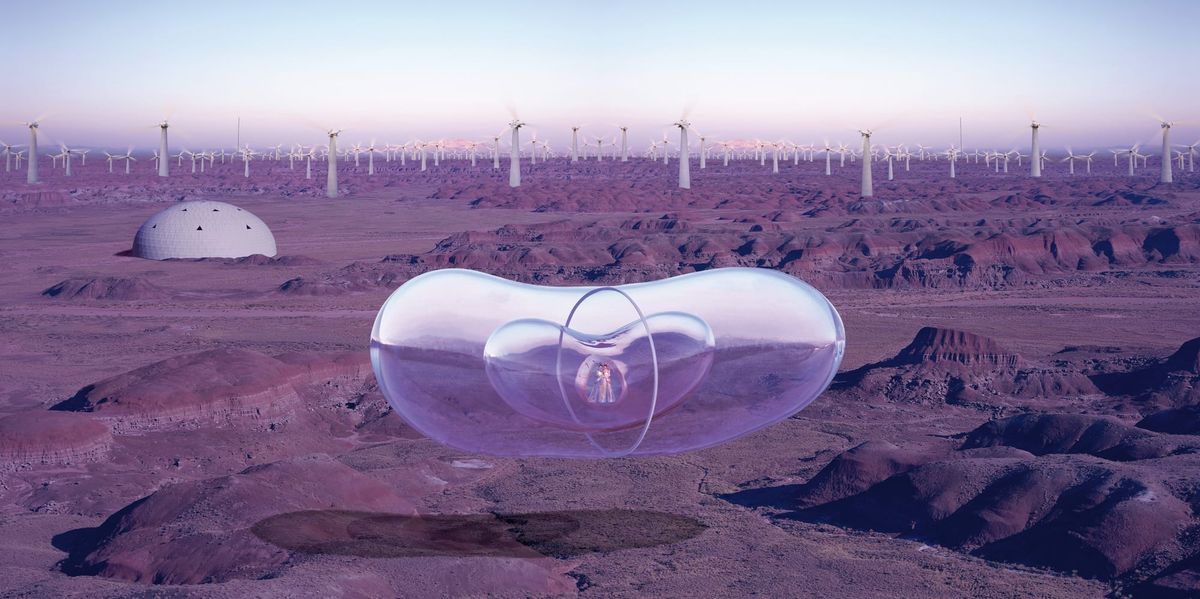
The future doesn’t arrive all at once. It seeps in through interfaces, algorithms, and the quiet decisions of artists who treat technology not just as a tool but as an extension of consciousness, perhaps even as a new nervous system. Thinking about the present has become nearly impossible without being inundated by both anxiety and excitement about what comes next. Runaway superintelligence, mega-scale server farms, and industrial humanoids occupy every scroll, headline, and corner of our imaginations. We live inside the feedback loop: apprehension that advances will outpace our understanding, paired with the thrill of possibilities still taking shape. ArtAsiaPacific’s November/December issue tracks that dual current.
Our cover Feature spotlights Tishan Hsu, who has spent decades asking what happens to the body when it becomes continuous with the screen. AAP managing editor Michele Chan considers the New York-based artist’s surfaces, which mimic skin, wounds, circuitry, and medical imaging, collapsing them onto a single plane to reveal humankind’s deepening entanglements with screens and systems. Hsu started mapping this phenomenon in the late 1980s, long before researchers and governments began questioning the psychological impact of constant digital mediation.
From there we turn to Tokyo, where AAP caught up with Mariko Mori ahead of her retrospective “All That Shines” at the Mori Art Museum. The exhibition reframes three decades of work that once appeared to be science fiction but now feels strikingly prescient. From her performative photography series, where the artist staged herself in a simulacrum of reality shaped by otaku culture, to her brainwave-response installations and neutrino-triggered light sculptures, Mori has spent her career treating consciousness as a force that can be measured, shared, and expanded.
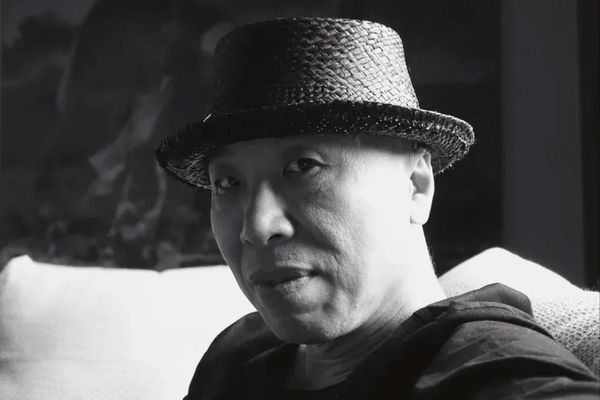
Meanwhile, Nanjing-based painter Mao Yan resists the accelerated tempos of the present in favor of something more enduring and intimate, approaching the figurative and the abstract through patient, unremitting accumulation. AAP associate editor Louis Lu interviewed Mao to discuss his rejection of the overt symbols and cultural gestures that many of his peers embraced in the 1990s, and his treatment of art as an inward process.
The works of Rachel Youn, Payne Zhu, and Timur Si-Qin, featured in our Up Close section, echo the call to probe systems—whether mechanical, social, or ecological—as living materials. For Inside Burger Collection, Mebrak Tareke spoke with Felipe Baeza about his commitment to creating “queer and migratory futures.”
In Profiles, AAP assistant editor Annette Meier zoomed with poet and novelist Ocean Vuong to discuss his photographic practice, which predates his literary career. In Shanghai, AAP talked with Cherry Xu, founder of CHERUBY, about the nonprofit’s hybrid residency and exhibition program.
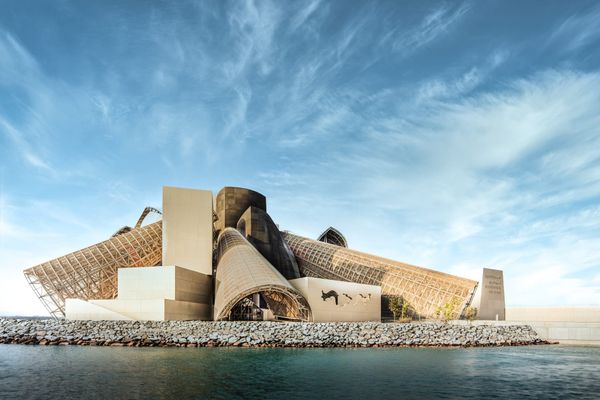
For Where I Work, AAP visited Shi Guowei in his Beijing studio as he prepared for his show at Fotografiska Shenzhen. Shi begins with photographs of ordinary scenes in China, then meticulously hand-paints color in translucent layers, creating a slow negotiation between mechanical record and subjective intensity. In Essays, Donya Abdulhadi of the Diriyah Biennale Foundation in Riyadh examines how the contemporary art world, long organized around a small number of international cities, is undergoing a transformation that challenges assumptions about how art should be exhibited, understood, and connected to society. In Dispatch, Razmig Bedirian traces the trajectory of Abu Dhabi and the master plan for Saadiyat Island, originally unveiled in 2007. Nearly two decades later, much of the plan has been realized, with its jewel in the crown, the Guggenheim Abu Dhabi, set to open this December. Questions of change and adaptation continue in The Point, where gallerist Pascal de Sarthe reflects on why this cyclical downturn feels different from those that came before, arguing that it is time to recalibrate: “Technology is going to change what art is, not merely how it is distributed. . . . It will produce work that our existing vocabulary is not equipped to describe.”
Finally, in One on One, Kimsooja recalls how John Cage informed her understanding of what art could be. Describing her first encounter with his work in 1985, she explains “the world does not wait for the artist to make it exist, the artists simply create conditions through which we become attentive to it.” Across these pages, artists and guest contributors remind us that the future is not only something to predict, but something we can already perceive if we are open to what is taking shape.
Elaine W. Ng is editor and publisher of ArtAsiaPacific.