People
The Permanence of Refusal: Interview with Ding Yi
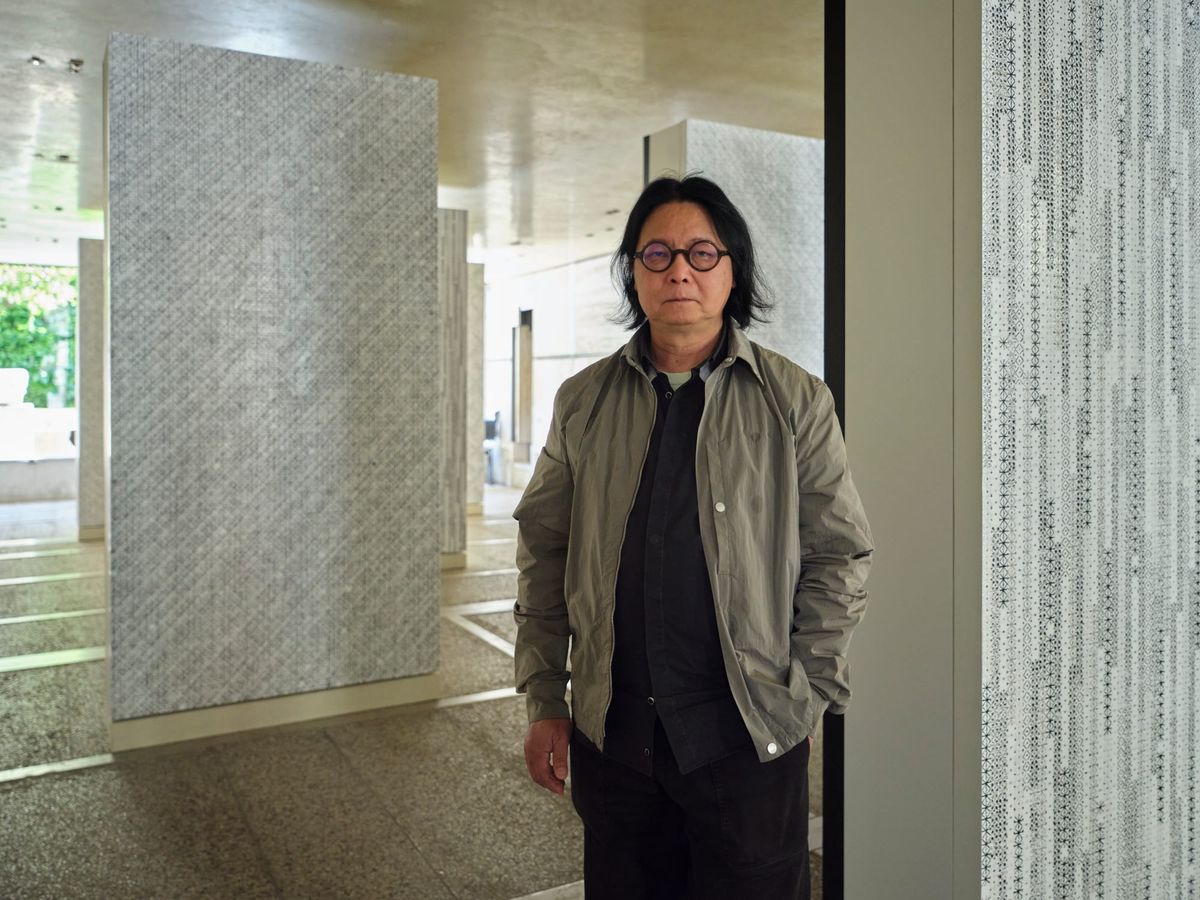
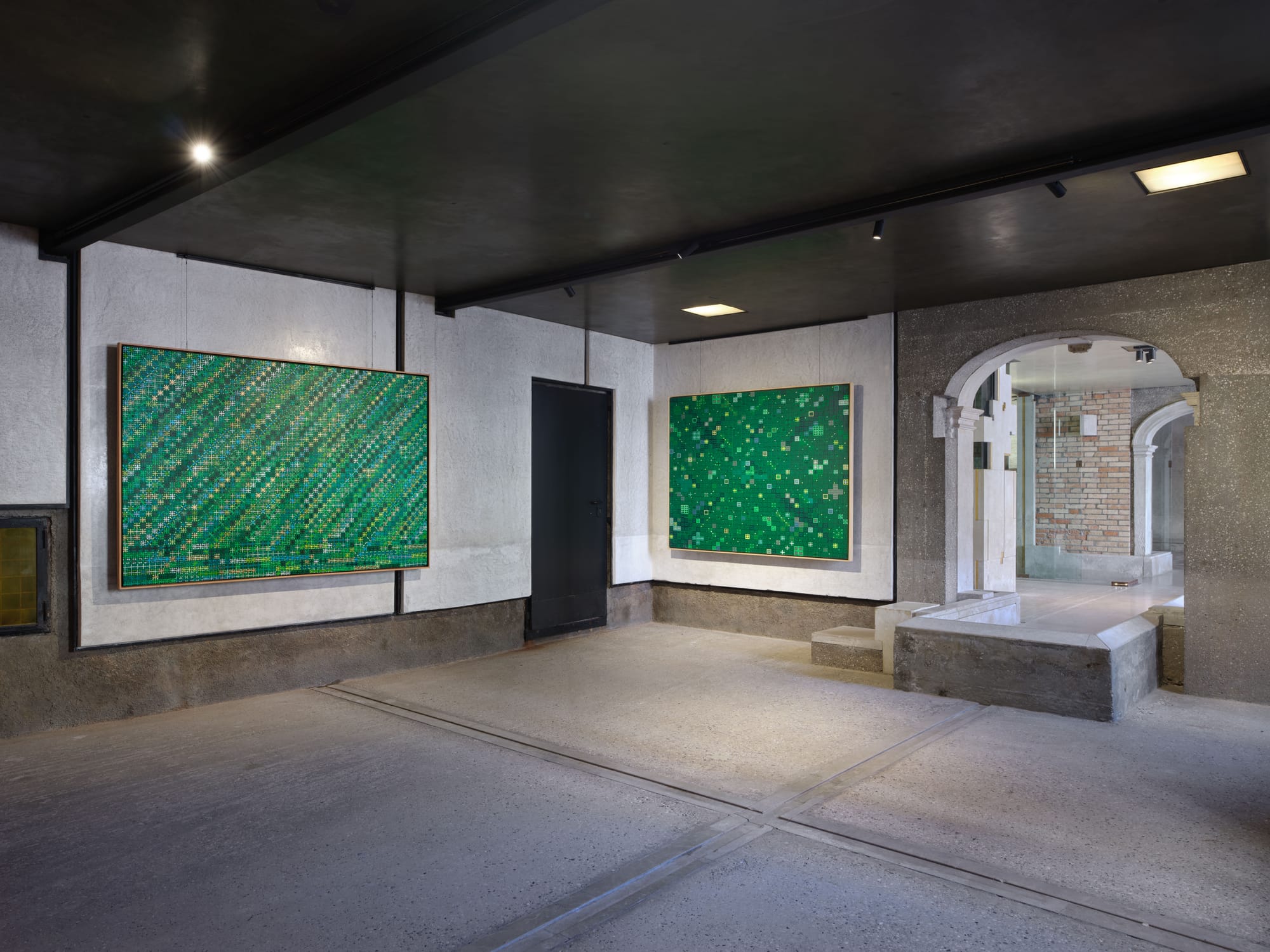
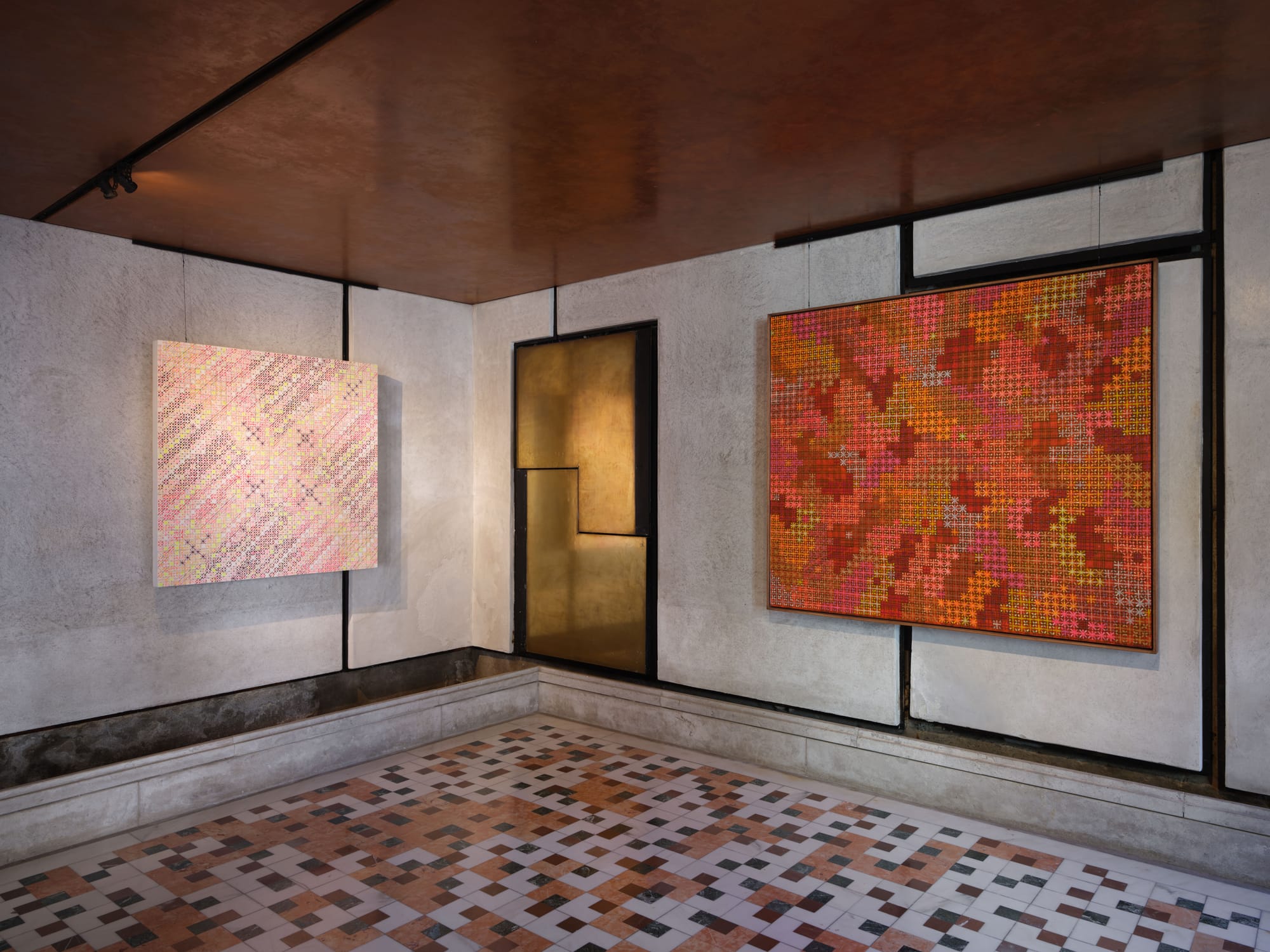
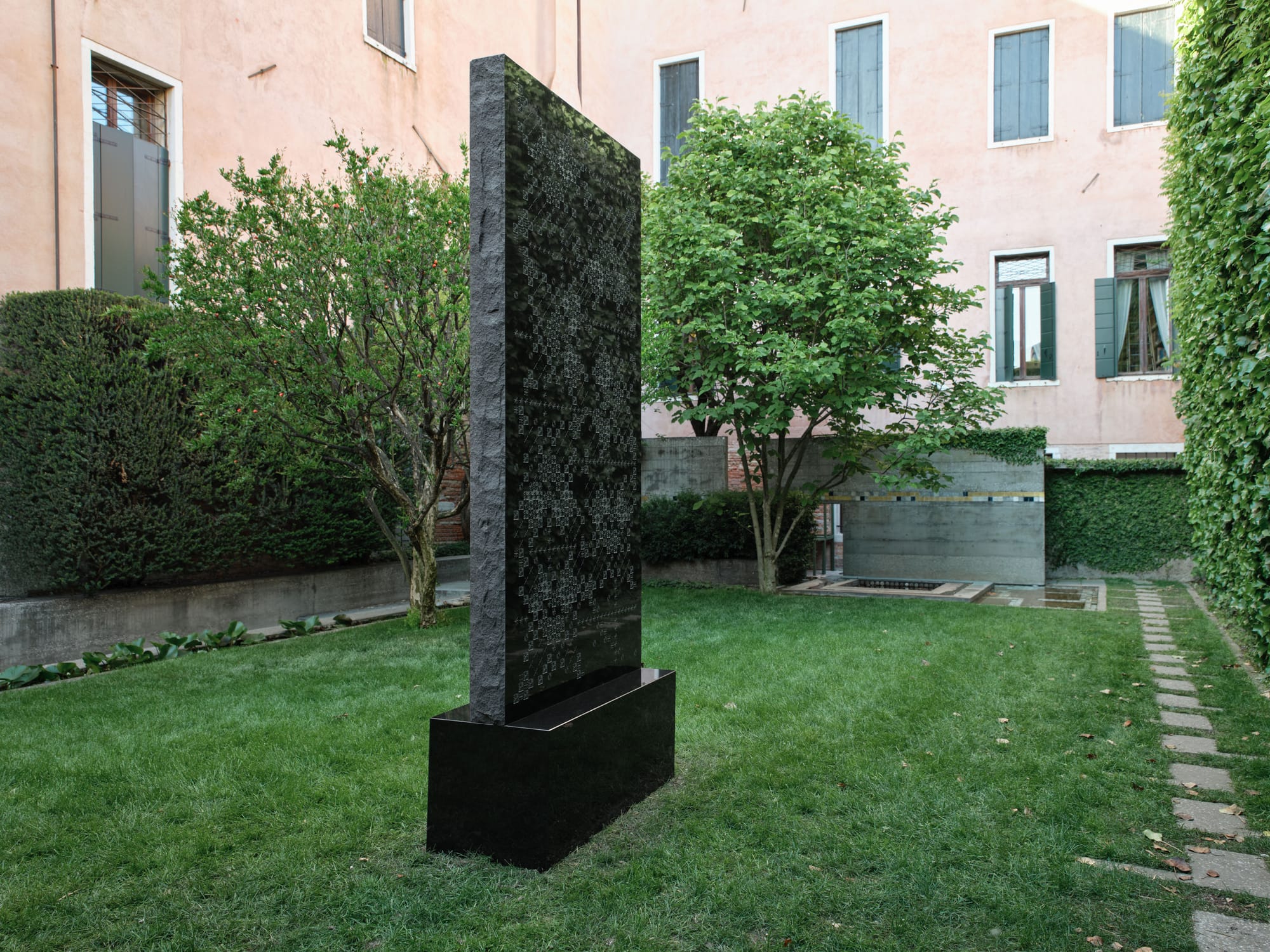
More than three decades after participating in the first major exhibition of Chinese art abroad, Ding Yi is making his solo debut in Venice at Fondazione Querini Stampalia. Titled “Cosmotechnics”—in reference to philosopher Yuk Hui’s notion that the universe and age-old value systems are shaped by technical dynamics of artmaking—the presentation traces the Shanghai-based artist’s visual language since the 1980s, gathering new and historic works that probe the generative logic of abstraction while interacting with the Carlo Scarpa-designed modernist architecture of the Fondazione. The show is anchored by an array of stone steles in the Area Scarpa garden, synthesizing the different cultural meanings of the monument to contemplate broader ideas of time, space, and observation.
During the preview week of the 61st Venice Biennale, ArtAsiaPacific sat down with Ding Yi to discuss the spiritual evolution of his artistic approach, and how his practice is informed by his travels and the deep-seated perceptual frameworks of ancient civilizations.
Your work was included in the very first presentation of Chinese art at the Venice Biennale in 1993. Now, more than 30 years later, you’ve returned with a major solo exhibition. What has changed in your own sense of where your work stands in Venice, and in the global art world?
30 years is long enough that I can reflect on it with more clarity. In 1993, we were selected by Achille Bonito Oliva for the 45th Venice Biennale, and looking back, there was something essentially accidental about China’s presence there. Chinese contemporary art had only really begun around 1979, so we arrived in Venice with barely a decade of history behind us, and almost none of it had been translated into the kind of self-knowledge that makes genuine exchange possible. There was real excitement, but also a fundamental opacity in our relationship to what we were encountering. I spent nearly three months in Italy on that trip, moving through more than 20 cities from north to south and visiting every museum I could. I discovered original works by old masters and antiquities—things I had only ever seen as reproductions. Many of us were standing in front of these pieces for the very first time.
What has really changed over the past three decades is the quality of judgment. In 1993, we took everything in without fully evaluating it. Today, this mentality is no longer possible, and it’s probably not desirable either. I now know what I want, and what I can refuse. This, I think, is the real measure of how Chinese contemporary art has matured. So when I say that being selected in 1993 was accidental, I mean we were caught in a current we didn’t understand at the time. But mounting a solo show at Fondazione Querini Stampalia today feels necessary, not in a triumphant sense, but more in how the body of work has reached a point where it demands a certain kind of encounter—if not here, then a setting of comparable weight. In the past 40 years, Chinese contemporary art has moved from incomprehension to familiarity to something increasingly parallel with—rather than derivative of—Western practice, in terms of conceptual logic, artistic philosophy, and intellectual ambition. That’s the labor of a generation. We came to Venice in the ’90s without real confidence, because we knew how little we understood. Today I think we can hold a more substantial dialogue, including on questions of politics, philosophy, and what it means to be contemporary on our own terms.
Your exhibition is named after Yuk Hui’s concept of “cosmotechnics.” When did you come across his thinking, and what about it drew you in? I wonder if adopting a concept like this is also a way of saying that these works are something more than abstract painting—that there’s an underlying philosophical and almost cosmological system at play.
About six or seven years ago, Alexandra Munroe interviewed me, and in the course of that conversation she mentioned Yuk Hui. It was the first time I had a Western colleague from the art world mention an Asian philosopher’s name. After that, I found Hui’s books and started reading. The title for this show was proposed by the curator, Alfredo Cramerotti, who brought Hui’s framework in as a conceptual structure. When he first raised the idea, it immediately resonated with me.
The reason it felt right links back to a shift in my practice around 2000, when I veered away from the more direct engagement with Shanghai’s urbanization, which had defined my earlier work, and started incorporating other civilizational worldviews. I began traveling to ancient sites, looking for what those cultures might still offer as raw material for thinking differently about the future.
What I find in Hui is a philosophical version of something I had already been doing by instinct. We spent close to four decades following Western art’s historical trajectory, from modernism to whatever we call the contemporary. Once you’ve absorbed that deeply enough, you also understand its genealogy: 500 years of expansion since the Renaissance has produced the international value system we all operate inside. That system has produced extraordinary things, but it has also excluded others. Hui’s cosmotechnics names what was closed off—a plurality of technologies and cosmologies, each with its own logic for relating thought to the world. The idea that other civilizational traditions might still bear generative possibilities for art was something I was already working toward empirically, through travel and sustained observation; reading Hui gave that a theoretical framework. It confirmed that my travels to Tibet, to Yunnan—to look at the Naxi and their cosmological systems—were not merely rooted in nostalgia. It is a serious attempt to push at the edges of what abstraction can hold.
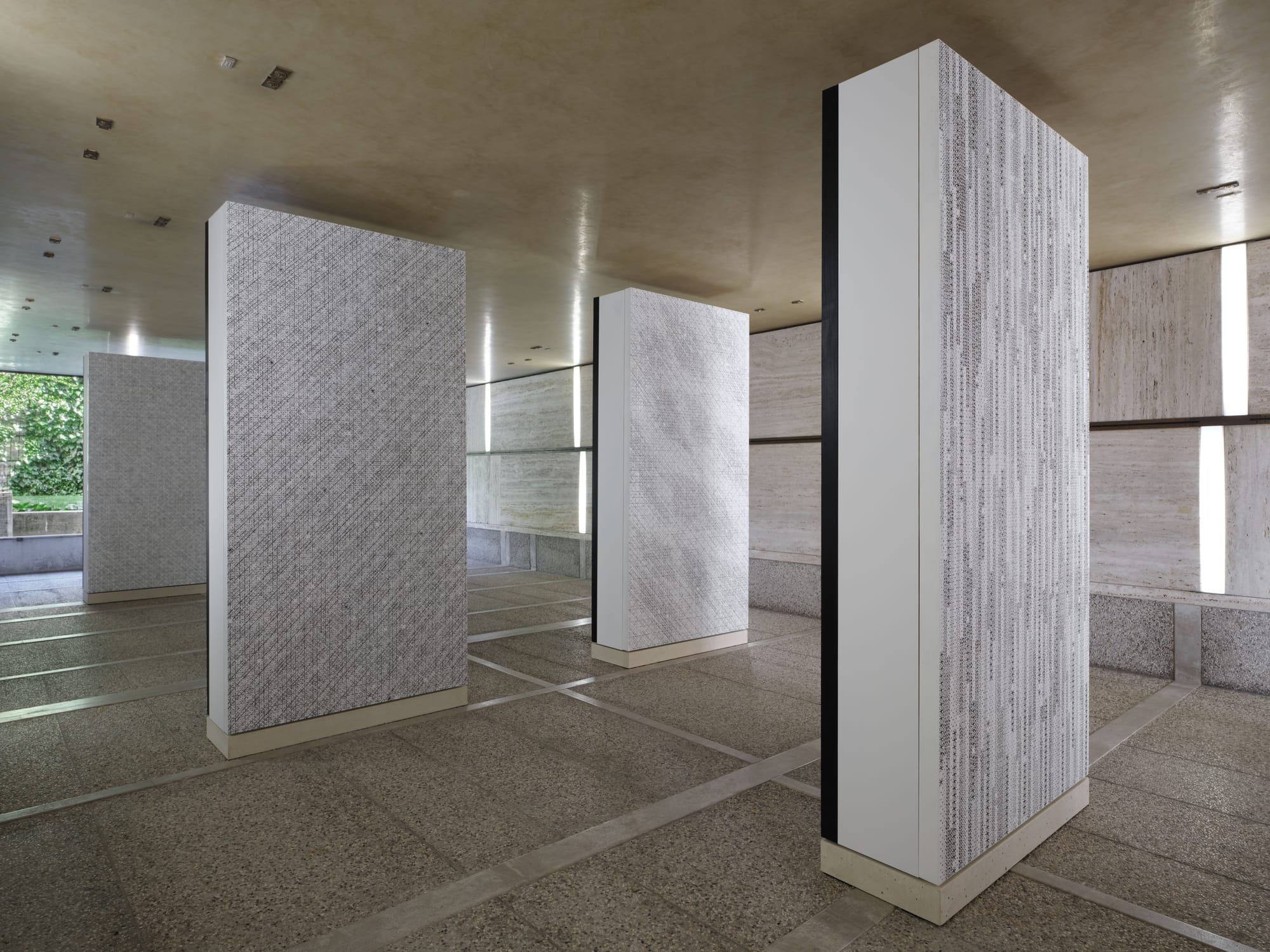
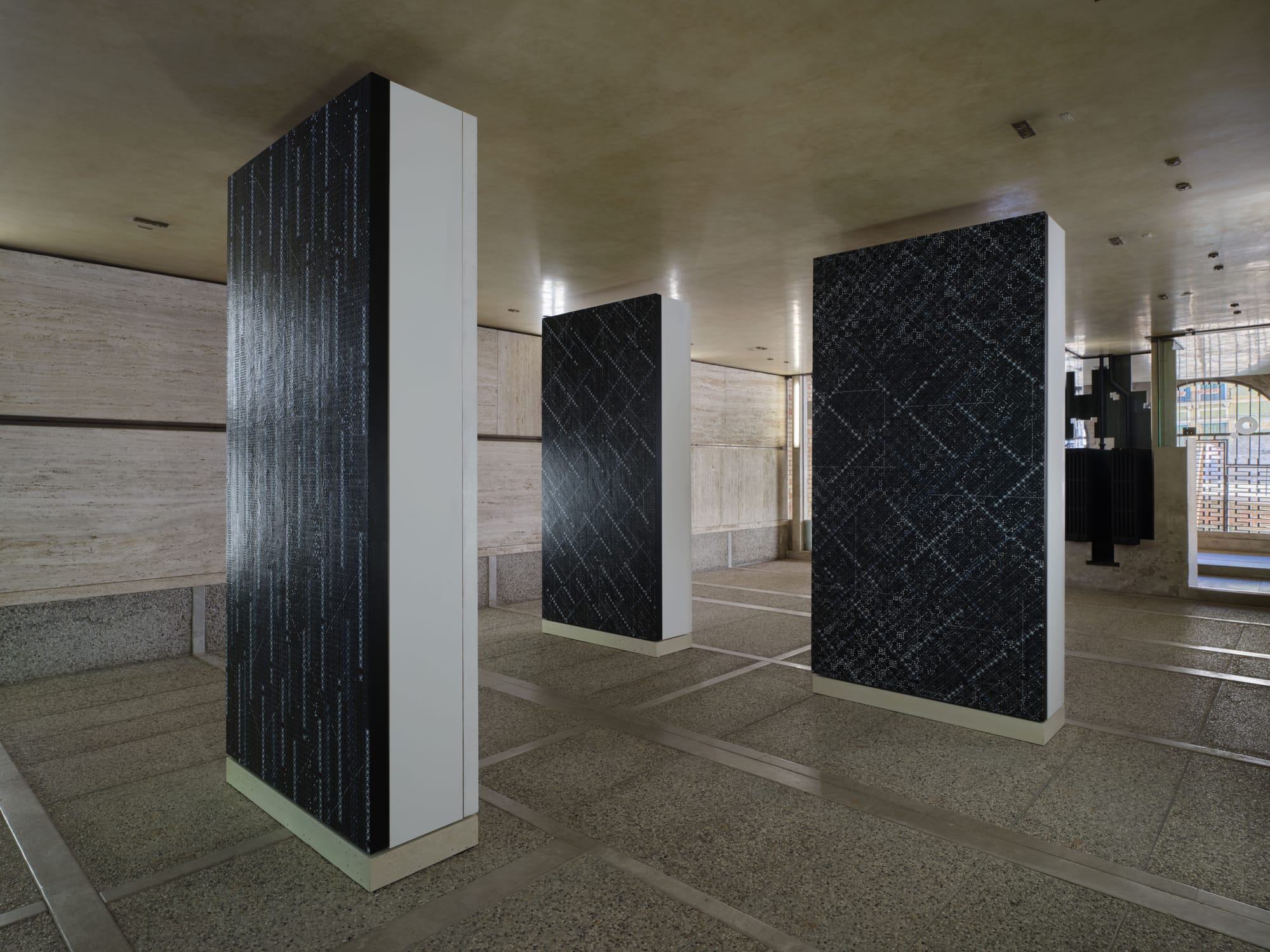
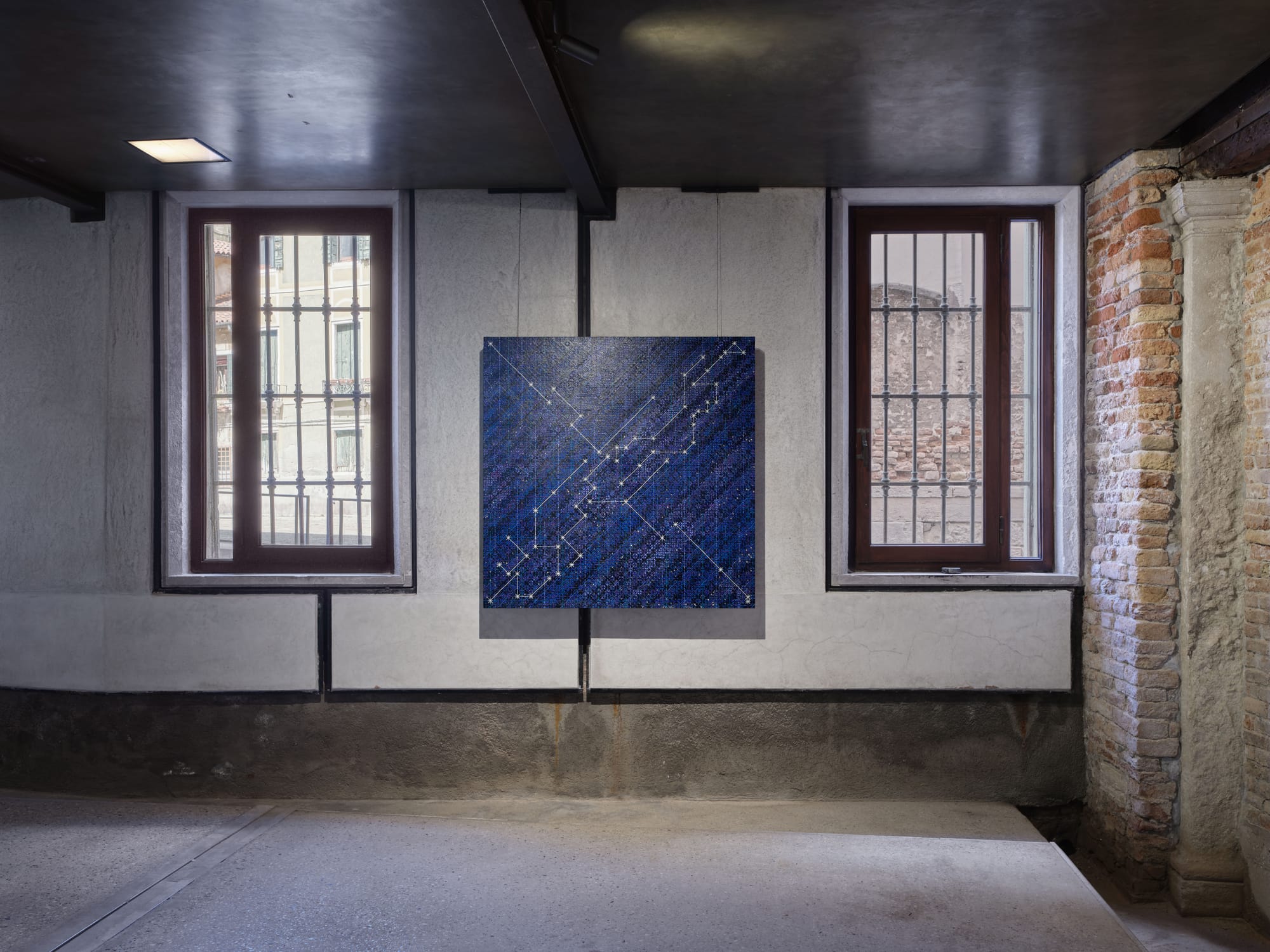
Installation views of DING YI’s “Cosmotechnics: Ding Yi as a Planetary Code” at Fondazione Querini Stampalia, Venice, 2026. Copyright the artist. Photo by George Darrell. Courtesy Lisson Gallery and ShanghART Gallery.
After more than a decade of using fluorescent colors, which capture the energy and visual overload of Shanghai, you turned to a strictly black-and-white palette for Venice. The Biennale’s theme this year, “In Minor Keys,” calls for exactly this kind of retreat from spectacle. Did the monochrome come out of that, or was there something else—other artists, traditions, or experiences—feeding into this shift?
Both, inseparably. Everything I’ve described is ultimately in service of one question: what is the spiritual dimension of abstraction, and where does it come from for me specifically? My experience is that each era generates its own spiritual zeitgeist, and that every artist arrives at something particular through their personal conditions. Rothko’s spirituality is inextricable from his era, his temperament, his moment in American painting. Mine naturally has to come from somewhere else. It’s a long journey, and each exhibition denotes a partial finding.
The black and white here aligns with a specific proposition, and yes, it is also in conversation with the Biennale’s theme this year. What stayed with me from the curatorial statement was one image: breathing. Deep breathing. I wanted to build a space that was quiet but traversable. The installation is arranged like a stele forest, culminating in the garden with two carved stones—one horizontal, one vertical. Painting and sculptural work together construct a scene of contemplative suspension that is also in dialogue with Carlo Scarpa’s design, his materials, and his understanding of threshold and interval. The columns in his garden and main hall feel like a correspondence across time to me.
Looking at these black-and-white panels, I can’t help but draw a connection to the ongoing wars in the world right now. There is something solemn, almost mournful, about monochrome. Is that gravitas intentional?
That register has always been present for me, and I think it comes from somewhere structural rather than topical. I grew up inside a set of social, political, and historical contradictions. Rather than being resolved, they have persisted as the medium through which I formed myself and my practice. I’m drawn to force, to intensity, and I believe intensity is generated by contradiction and sustained irresolution. For a Chinese artist, political awareness is almost involuntary. Both domestic conditions and global ones feed into a basic anxiety about whether the work can reach where you’re aiming, or whether it will be interrupted.
The atmosphere of mourning you sensed also came through the formal logic of the stele itself. What I found in my research of various civilizations is that funerary and votive functions are among the stele’s most archaic uses—across Tibetan, Naxi, Mayan, and Egyptian cultures alike. The stele is one of the earliest technologies for holding the threshold between the living and the dead. When I brought this form into the work, those associations weren’t incidental.
You’ve mentioned art historian Wu Hung’s writing on fragmented steles, and the Chinese tradition of “reading stones.” What drew you to the stele specifically? And what changes when you bring that form to Venice?
The stele came to me as a solution to a problem I had been circling for years: how to make sculpture that has a direct, necessary relationship to the painting. I call these works “image steles” (tuxiang bei). Most steles are textual; images, when they appear, tend toward cartographic or ritual illustration. The stele as a vehicle for pure image isn’t well established, which is partly what drew me to it.
What I also found in my research is that the stele isn’t a Chinese invention or specialty. It’s one of the most widely distributed formal solutions in human culture. From the Egyptians and the Mayans to ancient Rome and Arabia, every civilization with a need to hold something permanent against time arrives, independently, at something like a stele. The specific cultural meanings differ enormously, but the underlying impulse—to set something in stone, to resist erasure—is universal.
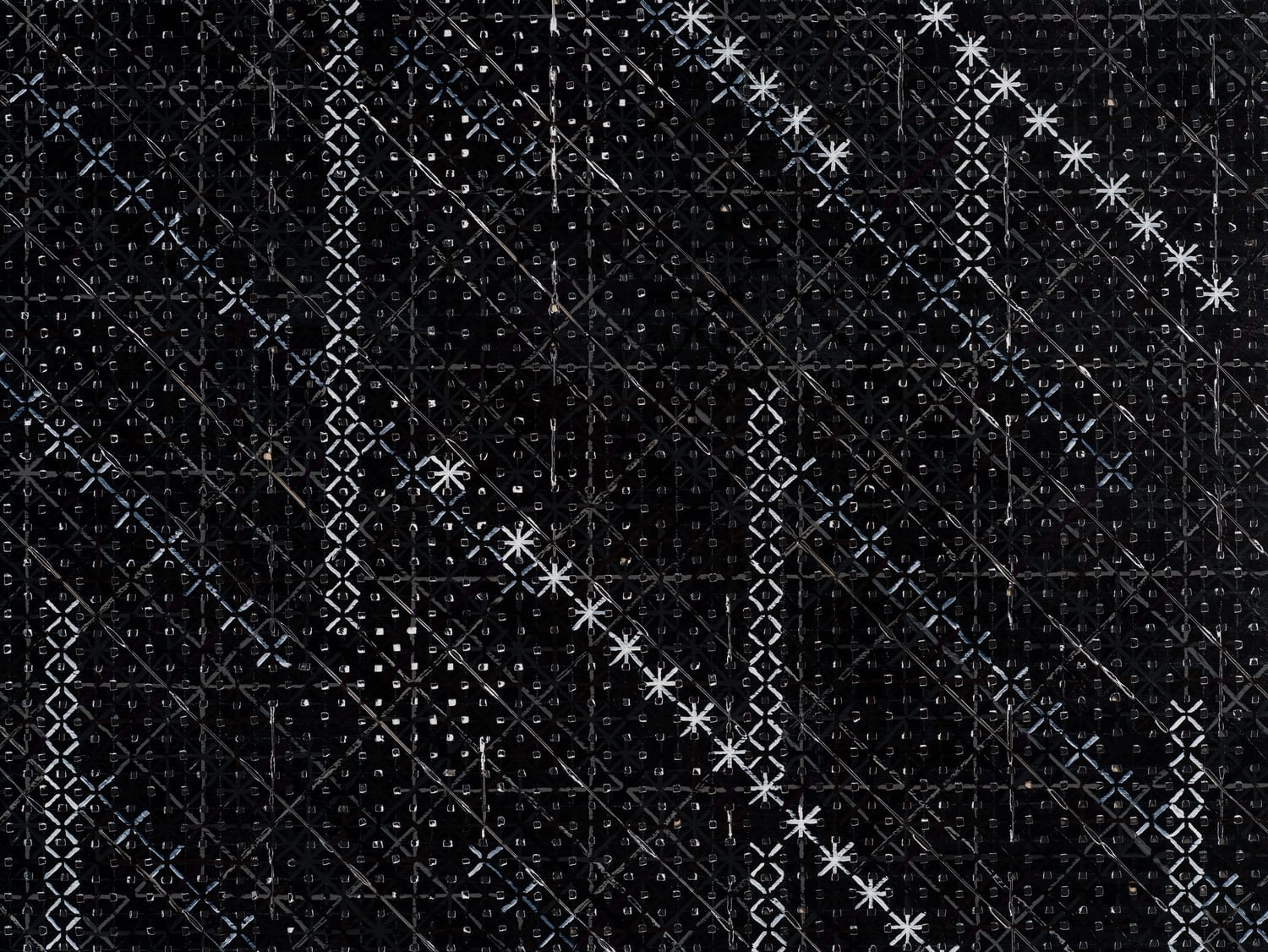
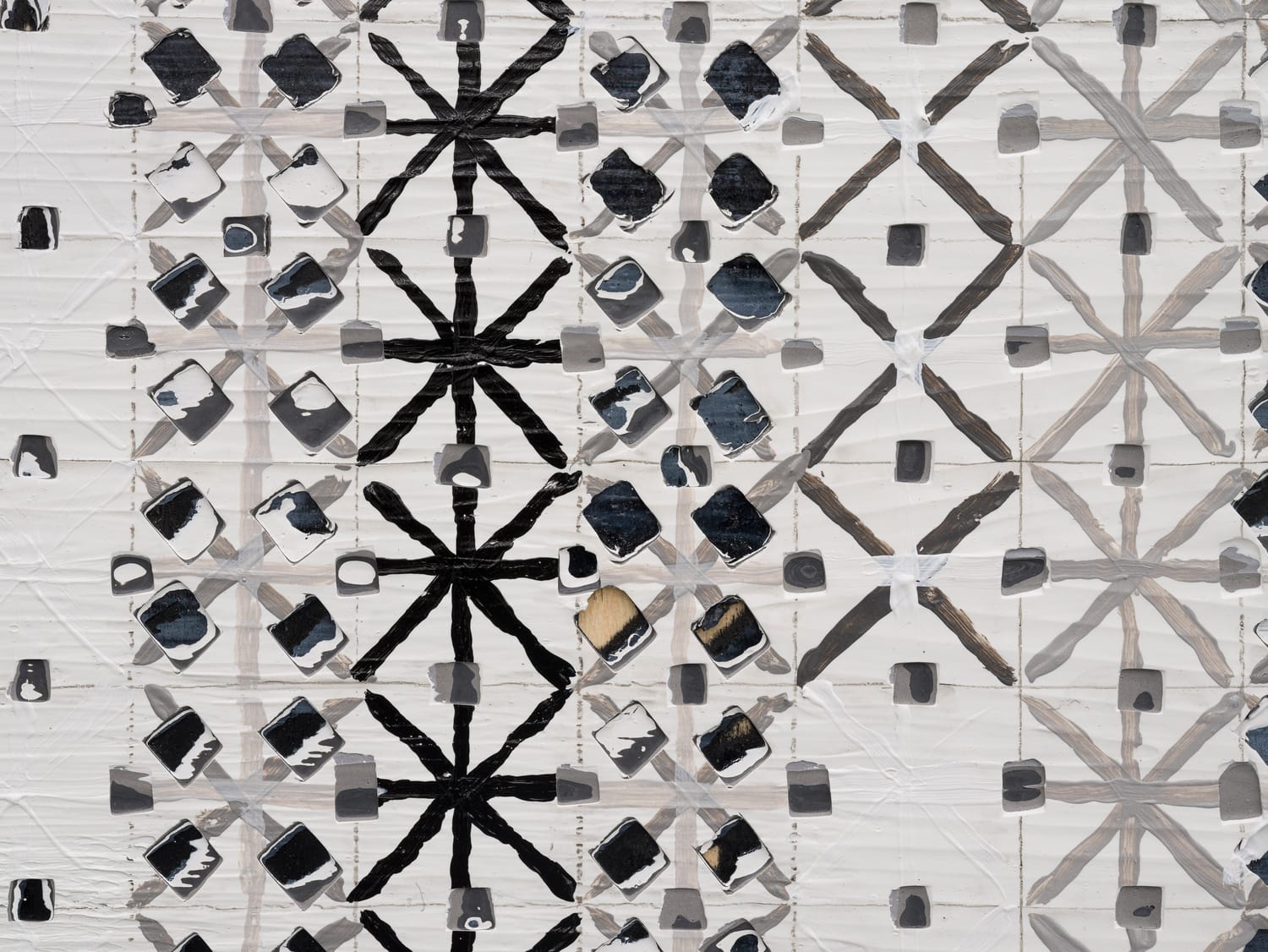
In 1988, you started the Appearance of Crosses series. The cross motif has always been about resisting grand narratives, stripping away ideology, and refusing to be pinned down by history or meaning. The stele works in exactly the opposite direction. It’s a form that has always evoked history and commemoration. What do you think about that contrast?
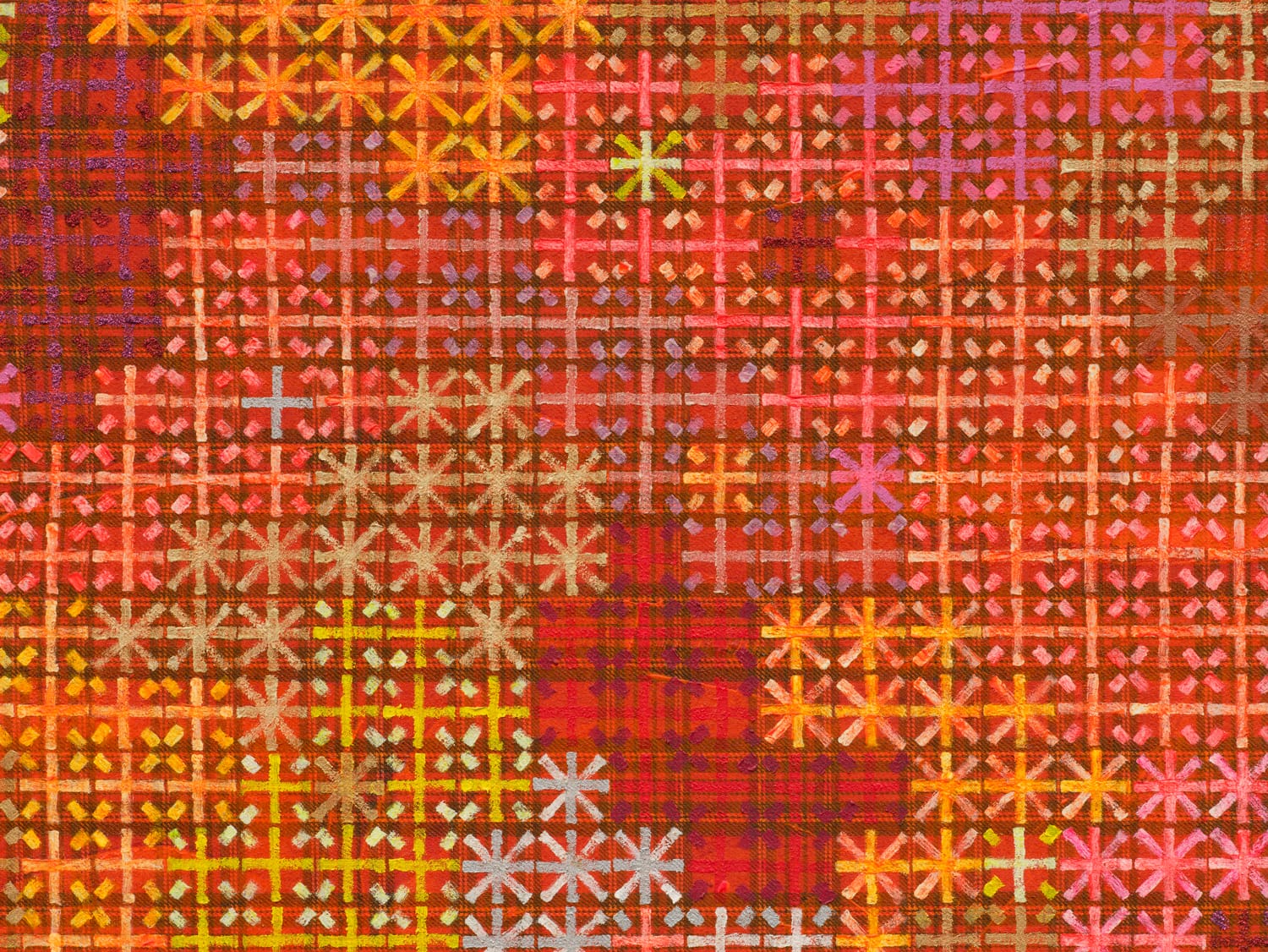
This contradiction you identify is precisely the subject. In the 1980s, inside a cultural atmosphere where all art was expected to carry explicit ideological content, the rejection of meaning was a form of resistance. The titles of the works only include a year and a sequence number to block interpretive scaffolding. Today, the particular pressure that motivated this objection has dissolved, but when you take an image constructed to mean nothing and carve it into stone, something shifts. Carving is deliberate; it requires craft, time, precision. So the question becomes: what does it mean to invest that effort and permanence in an image designed to be empty? Is the expenditure of labor and material an unconscious admission that we cannot stop seeking meaning, even when we’ve decided to refuse it? The stele functions as a kind of anti-monument to the question of the monument.
This connects to the broader logic of how I work. People often ask why I’ve spent 40 years on a single mark, and why I don’t just use a computer. The answer is that the tactile exertion and the time embedded in the process is, in a way, an act of resistance. It creates something that can’t be replicated otherwise. I work without preparatory drawings; the painting in progress induces the next one. The thinking is continuous. If the work were delegated to a machine, that continuity would break.
Over the past decade, your work has moved away from the urban rationalism of your earlier years toward something more explicitly cosmological and spiritual. You’ve also traveled to Tibet and Yunnan, where you explored Naxi culture and traditions. What draws you to these communities? And how do these experiences feed into your work when you return to the studio?
Each of my projects involved roughly a year of preparation, and I went to different places without knowing where I’d come out. The method starts with scholarship: I sought out specialists in each culture and asked them specific questions—what is essential here, what is the core? For the Naxi work I found two scholars who became ongoing interlocutors. I traveled to the Naxi region three times for this project; I went to Tibet four times in total. I collected every available publication, catalog, and archive of images, and visited every museum with significant holdings in these cultures. I try to identify a few threads that can actually be woven into the practice.
For example, for Tibet I found two primary themes. The first was religion and cultural form, which produced the abstract vajra-inspired paintings, which are built around a persistent inquiry into what energy is and how it might be rendered without iconographic reference. So in some of my works, you can see diagonal tensions, extreme chromatic opposition, a compositional logic of collision. Another factor is my personal recollection of my travels. I had arrived at the base camp at dusk, and the total darkness was the most overwhelming moment of the entire journey. Those black paintings hold the weight of the whole landscape in that single compressed memory.
An additional example that I want to talk about is the Naxi works. The Naxi dongba tradition includes a funerary scroll—the Shenlu Tu, or Spirit Path—that can span up to 10 meters or more and is read aloud at the moment of someone’s death. Its four chapters describe the soul’s passage: through nine black mountains and nine black rivers to the underworld, where a lifetime’s sins are purged; back to the human realm; and for those who have earned it, to the realm of the ancestors, located in Naxi cosmology to the north. The community faces north to perform the rite. This was among the most profound encounters in my travels.
The second direction came from astronomy. I’ve been working with star charts for some time, and I found that the Naxi have their own constellation system of 28 lunar mansions. It’s entirely distinct from the Han Chinese system in terms of imagery, nomenclature, and cosmological logic. The Dongba script, with its 1400-year pictographic tradition, transmits all of this through hand-copied manuscripts, and there is a roughly 30% variation between scholars’ interpretations of the same constellation system. No canonical version exists. This instability interested me. I placed these 28 mansions within a spatial field designed to carry a sense of temporal flow, of the cosmos in motion.
The third thread was the Hengduan Mountains. I drove all of these routes myself with a car I rented at the airport, so my experience of the landscape was always from the road, from the switchback, from the river gorge. The zigzagging highways, the shifts in vegetation between snowfield and grassland, the density of color in local minority textiles—these all entered the paintings as chromatic and gestural memory. There is also, I should say, something slightly hallucinatory in the Yunnan landscape, in more than a metaphorical sense: some local boletus mushrooms, when consumed, produce visions. That quality, the sense that perception itself is being reorganized, is somewhere in the color too. What you see in the paintings is my distillation of everything I have encountered: responsive to a specific geography, inflected by a specific culture, but in a language that belongs to me.
Ding Yi’s solo exhibition “Cosmotechnics” is on view at Fondazione Querini Stampalia, Venice, from May 9 to November 22, 2026.
Louis Lu is associate editor at ArtAsiaPacific.