News
Shahrnush Parsipur, 1946–2026
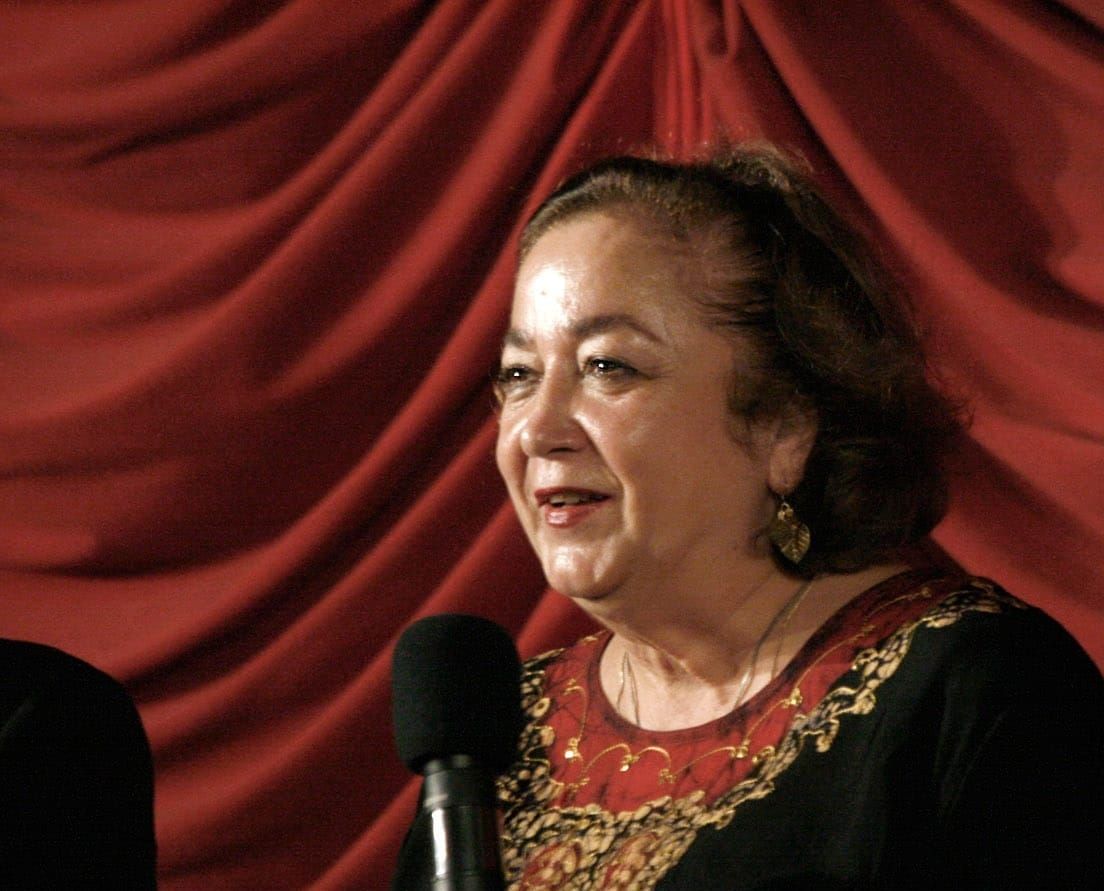
On July 3, Iranian novelist and activist Shahrnush Parsipur, widely celebrated for blending Islamic mysticism and magical realism in her politically charged writings about gendered violence in Iran, passed away from a heart attack in San Francisco. She was 80 years old.
Born in 1946 in Tehran, Parsipur knew early on that she wanted to be a writer. She made her literary debut in 1974 with Dog and the Long Winter, becoming the second female Iranian author to publish a novel, following Simin Daneshvar. Parsipur’s works often explore themes of female sexuality and patriarchal oppression, challenging the severe societal constraints imposed on women in Iran.
Throughout her life, Parsipur was imprisoned a total of four times for her subversive feminist fiction and political dissent against the theocratic regime. She was first arrested in 1974 after resigning from her role as a producer at National Iranian Radio and Television, Iran’s first state broadcaster, to protest the execution of two poets by SAVAK (the Shah’s secret police). In 1981, despite never receiving formal charges, she was incarcerated again; after serving a nearly five-year sentence, she wrote Kissing the Sword: A Prison Memoir (1996), whose full English translation will be published by Penguin in the UK in 2027. Just a few years after her release in 1986, Parsipur was detained immediately following the publication of her globally acclaimed novella Women Without Men (1989), which is set in Tehran in the aftermath of the 1953 coup d’état and explores female autonomy through the interconnected lives of five women. Although the book was banned by the government, its success in Iran endured through underground circulation. She was re-arrested in 1991 after a copy of Women Without Men landed in the hands of an Islamic Republic official’s wife, who deemed it blasphemous.
Parsipur relocated to the US in 1994 as a political refugee and settled down in California, where she continued to advocate for artistic freedom and women’s rights in her homeland. Over the course of her career, she received various accolades for her oeuvre, including the Lillian Hellman–Dashiell Hammett Award (1994) from the Fund for Free Expression and Stanford University’s Bita Prize for Persian Arts (2016). This year, Parsipur’s Women Without Men (translated into English by Faridoun Farrokh) was longlisted for the International Booker Prize.
In 2009, Women Without Men was adapted into a feature film by New York-based Iranian photographer and visual artist Shirin Neshat, which won the best director award at the Venice Film Festival that year. To this day, the film and all of Parsipur’s books remain banned in Iran.
Speaking with The Guardian earlier this year, Parsipur reflected on the nationwide demonstrations and ongoing struggle for women’s liberation in her country: “The women of Iran have changed so much, so many without hijab. . . . The women of Iran will cause the fall of the Islamic Republic.”
Sabrina Hau is an editorial intern at ArtAsiaPacific.