News
Bae Young-whan, 1969–2026
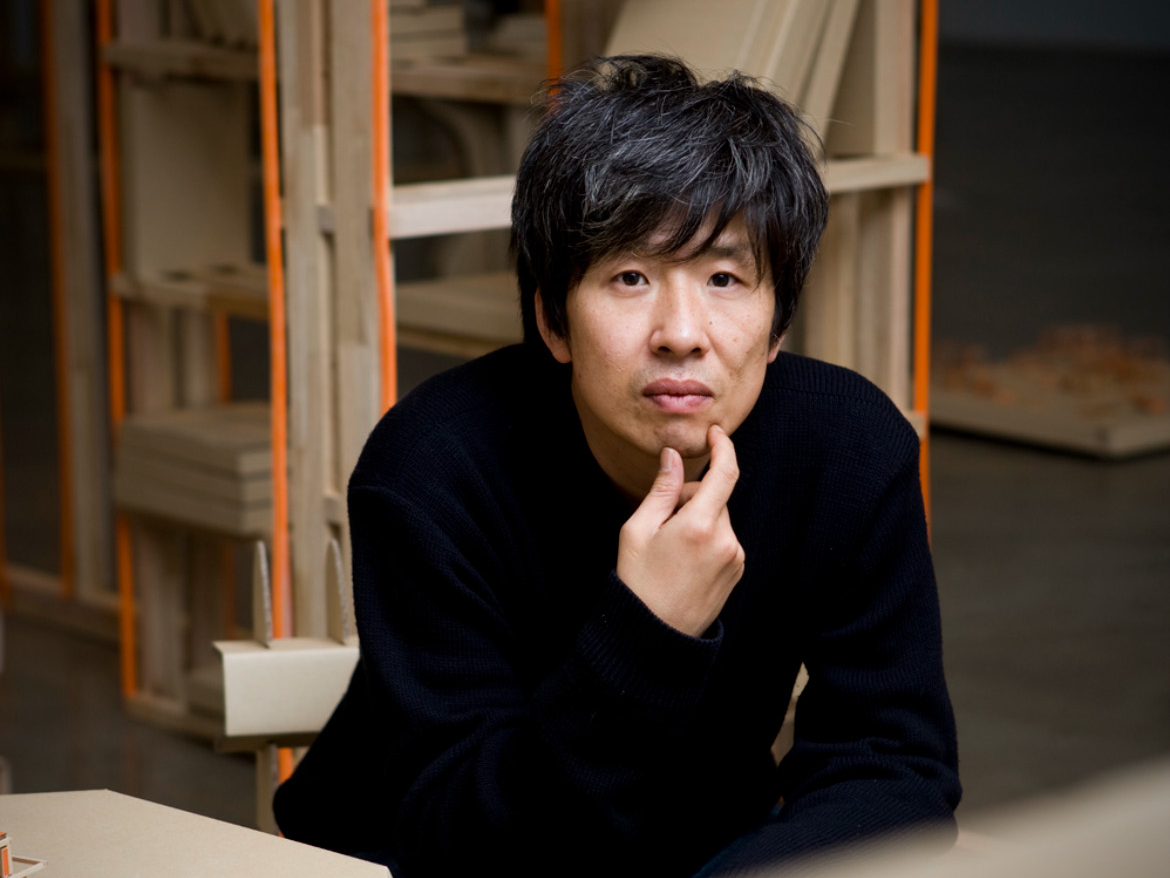
South Korean artist Bae Young-whan, a key figure associated with the emergence of “Post-Minjung Art” in the 1990s, died on June 19 at the age of 57. His passing was announced the following day by Seoul-based gallery BB&M.
Born in Seoul in 1969, Bae studied oriental painting at Hongik University, receiving his BFA in 1990. He later departed from traditional media, developing a materially driven practice that employed everyday discarded objects—broken bottles, construction site debris, cotton, pills—often in tandem with song lyrics, evoking collective memory and social experience. In Youth (1999), he arranged medical cotton and pills to spell out lyrics from Kim Chang-wan’s pop song Youth (1981), reflecting on generational consciousness shaped by South Korea’s rapid sociopolitical transformation. Pop Song-Crazy Love (2006), composed of glass beer and soju bottle fragments assembled as musical staves and notes over salvaged wood, extended this approach, channeling themes of marginalization and emotional resilience.
Bae’s engagement with music and lived experience also informed his socially oriented projects. Inspired by Kim Kwang-seok’s song On the Street (1993), he produced Pocketbook for the Homeless – On the Street (2001), a guidebook recording the locations of support facilities for unhoused individuals, based on research that included his own time living on the streets. In 2009, he initiated Library Project – Tomorrow, a public art installation that converted abandoned shipping containers into small mobile libraries for culturally underserved communities, an endeavor that earned him the Grand Prize for Public Design of Korea in 2013.
His practice gained international visibility through major exhibitions, including the fourth Gwangju Biennale (2002), where his audiovideo installation Pop Song 3: Gwangju Sangmudae—combining footage of the 1980 Gwangju Uprising with banned songs—received the Site Award. In 2005, he was among 15 artists representing Korea at the 51st Venice Biennale. His work is held in prominent public collections, including the National Museum of Modern and Contemporary Art in Gwacheon, the Mori Art Museum in Tokyo, the Art Sonje Center and the Leeum Museum of Art in Seoul, the May 18 Memorial Foundation in Gwangju, and the Gyeonggi Museum of Modern Art in Ansan.
In a statement honoring Bae’s life and career, BB&M observed: “Across painting, sculpture, and public interventions, he created a body of work deeply attuned to an authentic vernacular of the Korean experience.”
Kalani Ko is an editorial intern at ArtAsiaPacific.