News
Paola Dindo, 1954–2026
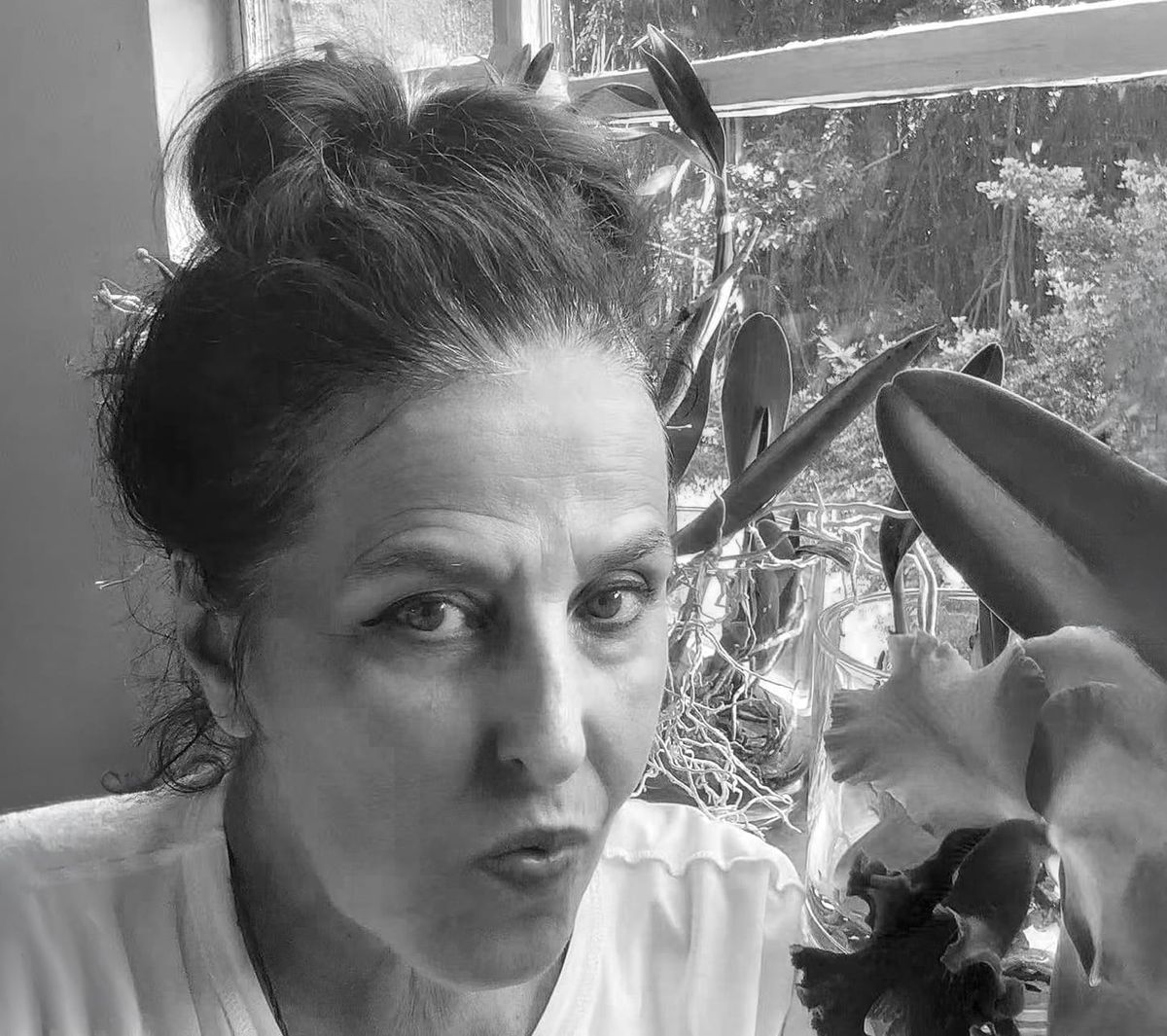
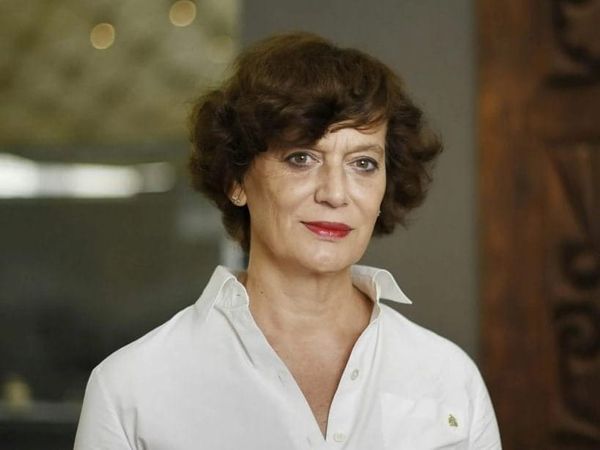
Paola Dindo, Hong Kong-based restorer and designer—an animal lover, environmentalist, and fiercely original soul—died at her home in Pokfulam on August 4.
Born in Lugano, Switzerland, to an Italian family, Paola trained in painting, mural, and polychrome sculpture, specializing in European Renaissance art. Over years of conservation work in Asia, she developed further expertise in Chinese paper techniques, Chinese and Japanese lacquer, and the restoration of modern and contemporary Chinese painting.
In 1988, she established a conservation and interior design studio, Paola Dindo & Associates, in Hong Kong. She was appointed by the University of Hong Kong in 1991 to teach a certificate course in gilding and conservation. In 2000, she worked on the murals and polychrome elements of Hung Shing Temple on Kau Sai Chau; the broader restoration endeavor received that year’s UNESCO Asia-Pacific Outstanding Project Award for Cultural Heritage Conservation.
Over the next decades, Paola’s practice grew alongside the city’s emergence as an international art center. Her counsel and conservation skills were sought after across Asia’s major collections and the wider art world—by institutions, galleries, and auction houses—as well as by clients abroad.
Paola always arrived with a presence: severe, formidable, yet ultimately reassuring. Paola’s here. The painting will be alright. She brought to every project an authoritative understanding of pigments, surfaces, and supports, and the long effects of climate and time. Her approach joined traditional techniques with innovative solutions, combining an art historian’s astute eye with the precise, practical labor required to secure an object’s future.
The sight of Paola at work—goggles on, hair in a bun—has long been a familiar fixture behind the scenes of Hong Kong’s art industry. She was respected by gallerists, auction specialists, art handlers, and framers. She could be fiery; inadequate illumination or poor storage conditions would instantly darken her mood. But her spirits could just as quickly be lifted—by an incandescent ecology of pigment discovered in a Kazuo Shiraga under UV light, or the revelation of an underdrawing on a Yoshitomo Nara portrait.
Over the years, innumerable masterpieces passed through her hands. She was among the region’s first points of call; for many, the only one. She consolidated cracks, stabilized lifting pigment, mended tears, brought works back to life. The art of restoration demands an exacting negotiation: how to intervene without disturbing the original. Paola was adamant, to a point of intransigence, when a work should not be touched. If a problem could not be resolved without compromising the piece’s integrity, she insisted that it not be “fixed” at all.
Paola looked closely, and bade others do the same. I once spent an entire weekend with her in a storage room as she treated a single painting. She wanted to show me what she could see; I tried my best, but could not. Over 48 hours, she attended to minute fungal traces embedded in the canvas. By the end, the work was several shades more luminous.
In Hong Kong’s humid climate, mould is a persistent conservation challenge. Paola grew and studied fungi at home. For her, nurture was a way of learning how things take form, how they change, what they endure, and how best they might be cared for.
Her labor of attention extends beyond art, to trees, animals, and wildlife. She was enraged when old trees were cut down, and troubled by the treatment of wild boars in the city. She rescued countless cats from the streets and took in birds during storms; when adopting dogs from shelters, she chose the oldest ones. Once, on a taxi ride from a warehouse back into the city, she told me about a duck that had followed her down a street in Central. Of course, she brought it home and looked after it too.
Her loss is felt by all who knew her. Reflecting on their longtime collaboration and friendship, Johnson Chang of Hanart TZ Gallery recalled how “she was gregarious and generous, and had the gentle, loving touch of the consummate conservator that she personified. Her legacy will continue to live with many of us through the art we have on our walls.”
Paola leaves behind restored artworks and transformed interiors, and a vivid example of how to move through the world: with rigor, curiosity, and conviction.
Michele Chan is managing editor at ArtAsiaPacific.