News
Nasirun, 1965–2026
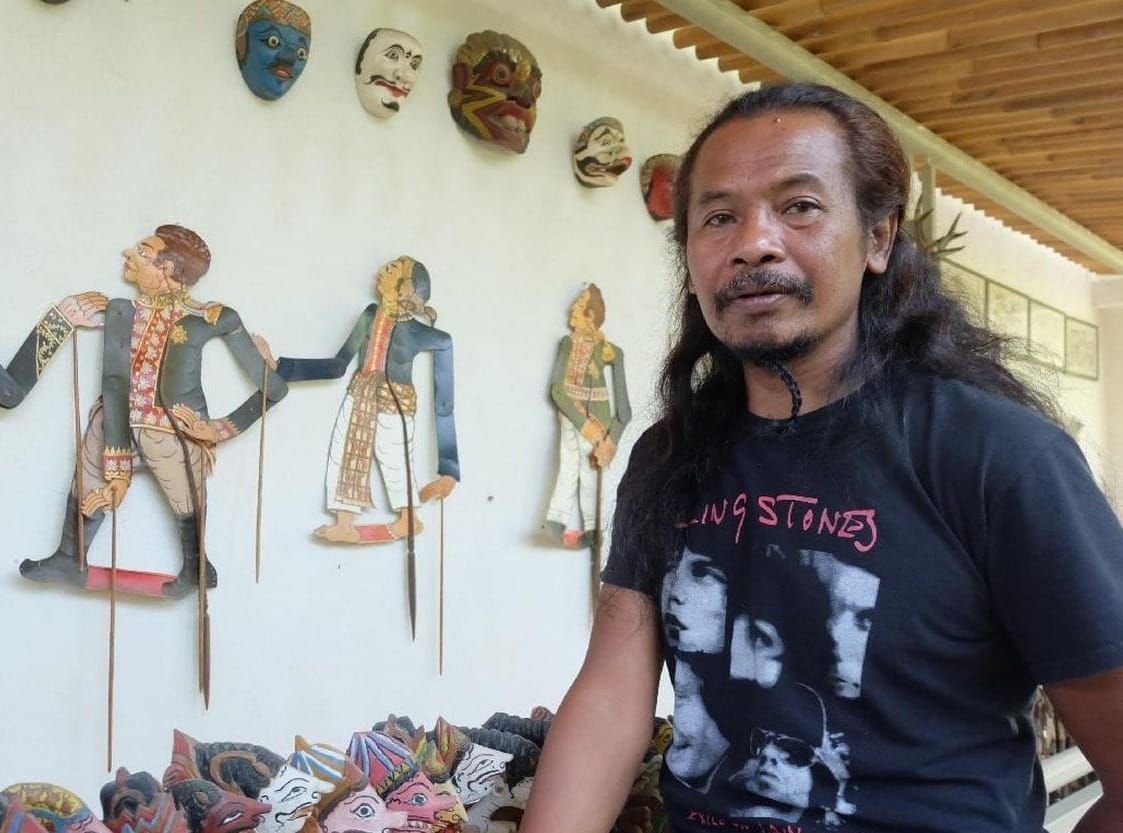
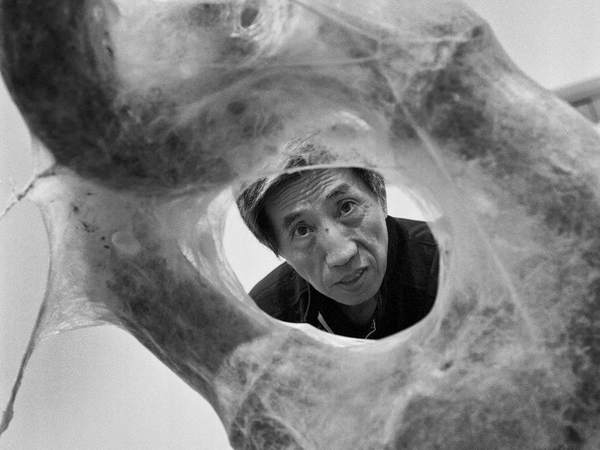
Indonesian artist Nasirun, renowned for his vibrant, large-scale tableaux that blend Javanese and Islamic iconography, passed away on August 1 in Yogyakarta. He was 60 years old.
Born in 1965 in Cilacap, Central Java, into a family of farmers, Nasirun graduated from the Indonesian Institute of the Arts Yogyakarta (ISI Yogyakarta) in 1994. Though his practice spanned various mediums—including ceramics, wood carvings, and readymade installations—he became known for the bold impasto, vivid pigments, and intricate batik-inspired detailing in his paintings, which fuse elements from the ancient Javanese tradition of wayang kulit (shadow puppetry), Sufism, and Indonesian mythology. Nasirun often compared his creative process to a holy ritual, connecting it to his religious upbringing: “My father used to pray intently (zikir) to forge a close relationship with God, but I use the brush and canvas.” For him, painting was both a devotional and aesthetic endeavor.
Beyond paying homage to Javanese traditions, Nasirun’s oeuvre often responded to political events in his homeland. Sultan Seni Rupa (2014), for example, references a controversial government-backed bill proposed in 2010, which aimed to revoke the special autonomy of Yogyakarta and its Sultanate. Indonesia’s central administration, helmed by then-President Yudhoyono, argued that the Javanese monarchy system clashed with the country’s representative democracy, but was met with backlash from Yogyakartans, who defended the Sultan’s historic role. The canvas is a violent haze of muddied crimsons and bruised scarlets, brimming with lines of Javanese script denouncing the bill; a lone figure on the right depicts Nasirun himself clad in Sultanic regalia, proclaiming that he is Yogyakarta’s Sultan of art, while a stylized wayang-like creature cowers in the corner. Evocative yet subtly playful, the self-portrait explores the tensions between cultural heritage and contemporary politics.
Following a series of successful solo shows at local galleries and art spaces in the mid-1990s, Nasirun gained wider recognition across Asia. Among his accolades, he clinched the McDonald’s Award in 1996 and ranked among the 10 best artists in the 1997 Philip Morris Indonesia Art Awards. He participated in several major art exhibitions worldwide, including the 10th Biennale Jogja in 2009, the fourth Singapore Biennale in 2013, and the seventh Beijing International Art Biennale in 2017, where he was part of the Indonesian pavilion.
Despite gaining prominence abroad, he remained humble and never forgot his roots. Reflecting on Nasurin’s legacy, Mikke Susanto, a curator and faculty member at ISI Yogyakarta told Kompas: “[F]or me, he is a figure who convinced us that living as an artist is possible. And it turns out that it really is.”
Ruby Lee is an editorial intern at ArtAsiaPacific.