News
Jogen Chowdhury, 1939–2026
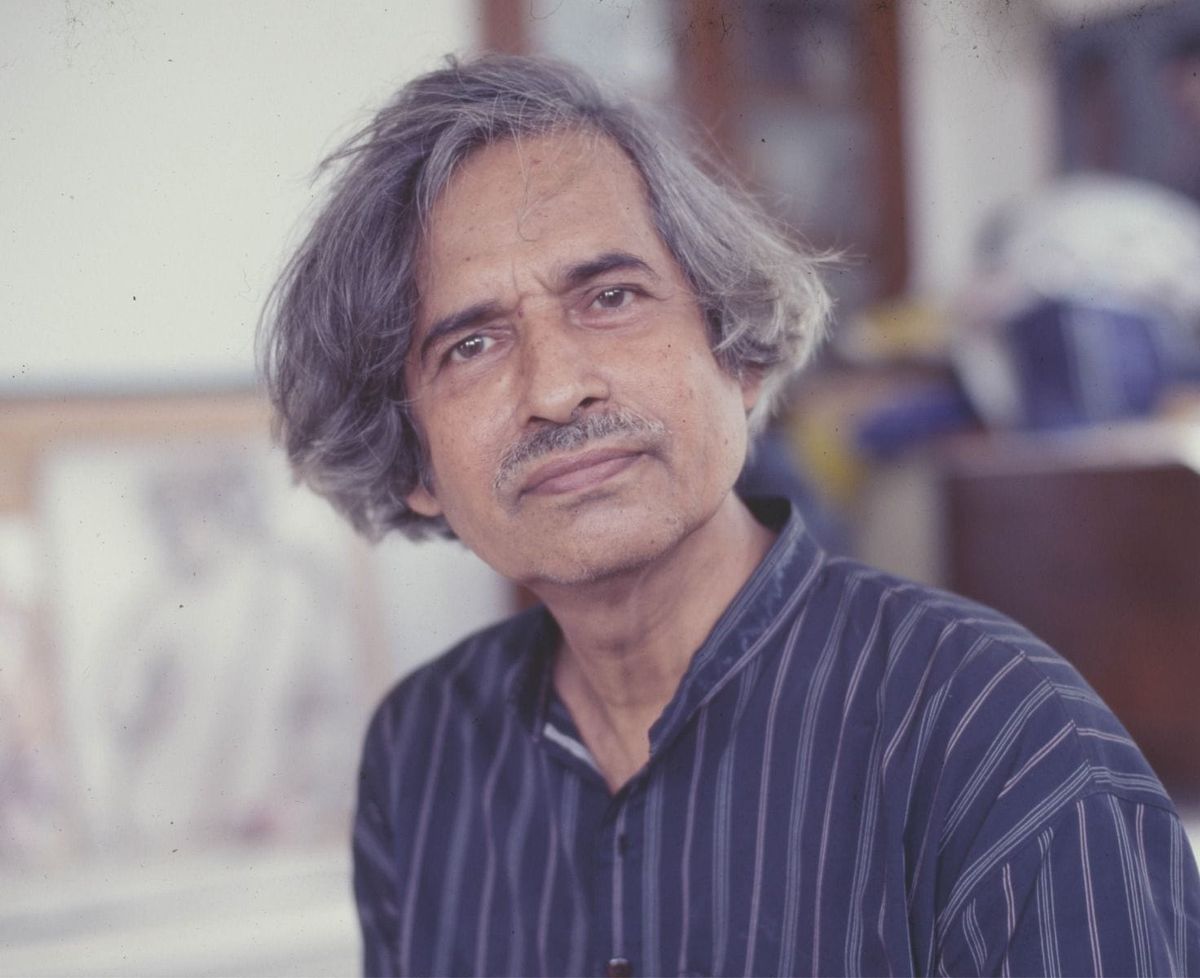
Jogen Chowdhury, the painter and teacher who helped shape Indian modern art for more than half a century, passed away in Kolkata on October 25 after a long battle with blood cancer. He was 87 years old.
Chowdhury was born in 1939 in Faridpur, then in undivided Bengal and now in Bangladesh. From childhood, he was surrounded by art; his mother often practiced alpana, the Bengali folk tradition of decorating floors and walls with intricate line work. Following the upheaval of Partition, he moved to Kolkata and in 1960 graduated from the Government College of Arts and Craft. In 1965, he went to Paris on a two-year government scholarship to study at the École Nationale Supérieure des Beaux-Arts. Influenced by modernist European movements and his own upbringing, Chowdhury developed a style of intricate crosshatching and gangly, amoeboid figures. He exhibited widely in India and in Seoul, Amsterdam, Singapore, New York, and London, returning to themes of displacement, power, and human frailty.
Chowdhury’s influence extended beyond painting. From 1972 to 1987, he was keeper of art at Rashtrapati Bhavan, the official residence of the president of India. In 1987, he joined Visva-Bharati University in West Bengal as professor of painting at Kala Bhavana, where he inspired many young artists-in-training. Chowdhury also helped found the Santiniketan Society of Visual Art and Design, a nonprofit offering workshops, residencies, and art fairs, in 2003. From 2014 to 2020, he sat in the Rajya Sabha, India’s upper house of parliament, as a member of the Trinamool Congress, advocating for institutional support for young artists.
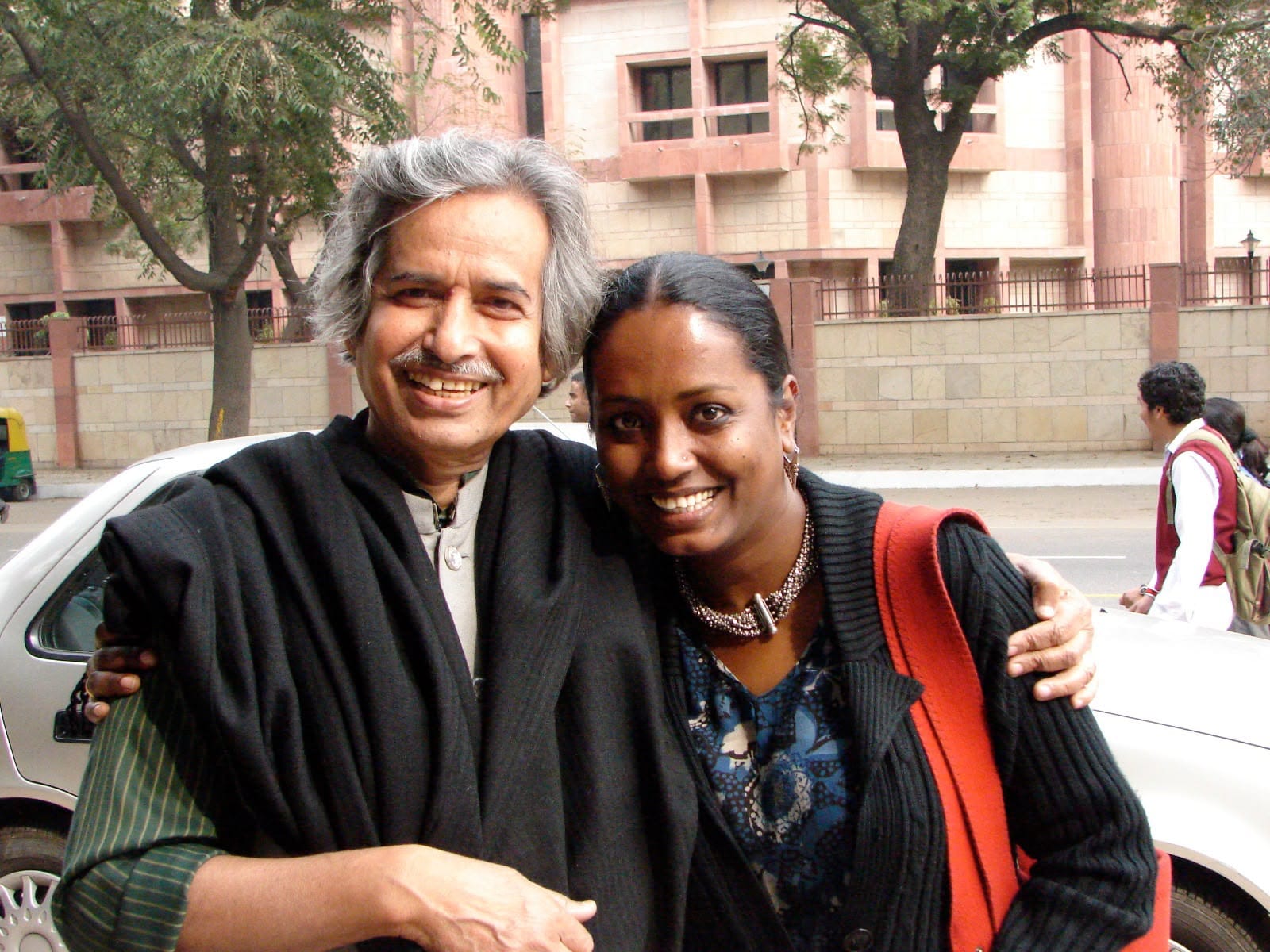
Reflecting on her teacher’s legacy after his death, artist Mithu Sen observed to ArtAsiaPacific that an intrinsic political quality ran through his work. “He exposed moral decay and corruption with rare tenderness and a mischievous sense of humor. His work could be fierce without being loud, critical without becoming preachy, and deeply disturbing without losing its humanity. He did not merely depict the violence, contradictions, and vulnerabilities of human crises; he made us confront them.”
Harison Butler is an editorial intern at ArtAsiaPacific.