News
Peter Nagy, 1959–2026: A Remembrance
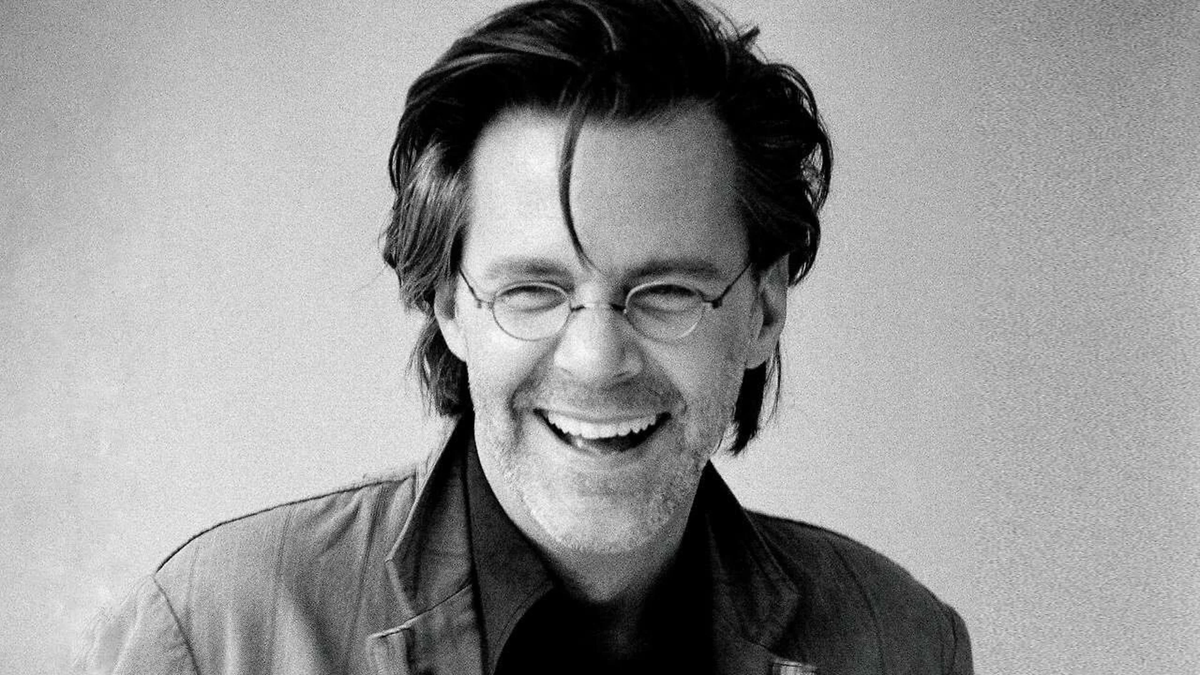
The outpouring on social media following the death of artist and gallerist Peter Nagy, at age 66, was heartbreaking. It felt even more distressing by how instantaneously it appeared. Bad news, it seems, travels fast. He died at home on October 13 in New Delhi, where he had lived for the past 30 years. The cause was cancer.
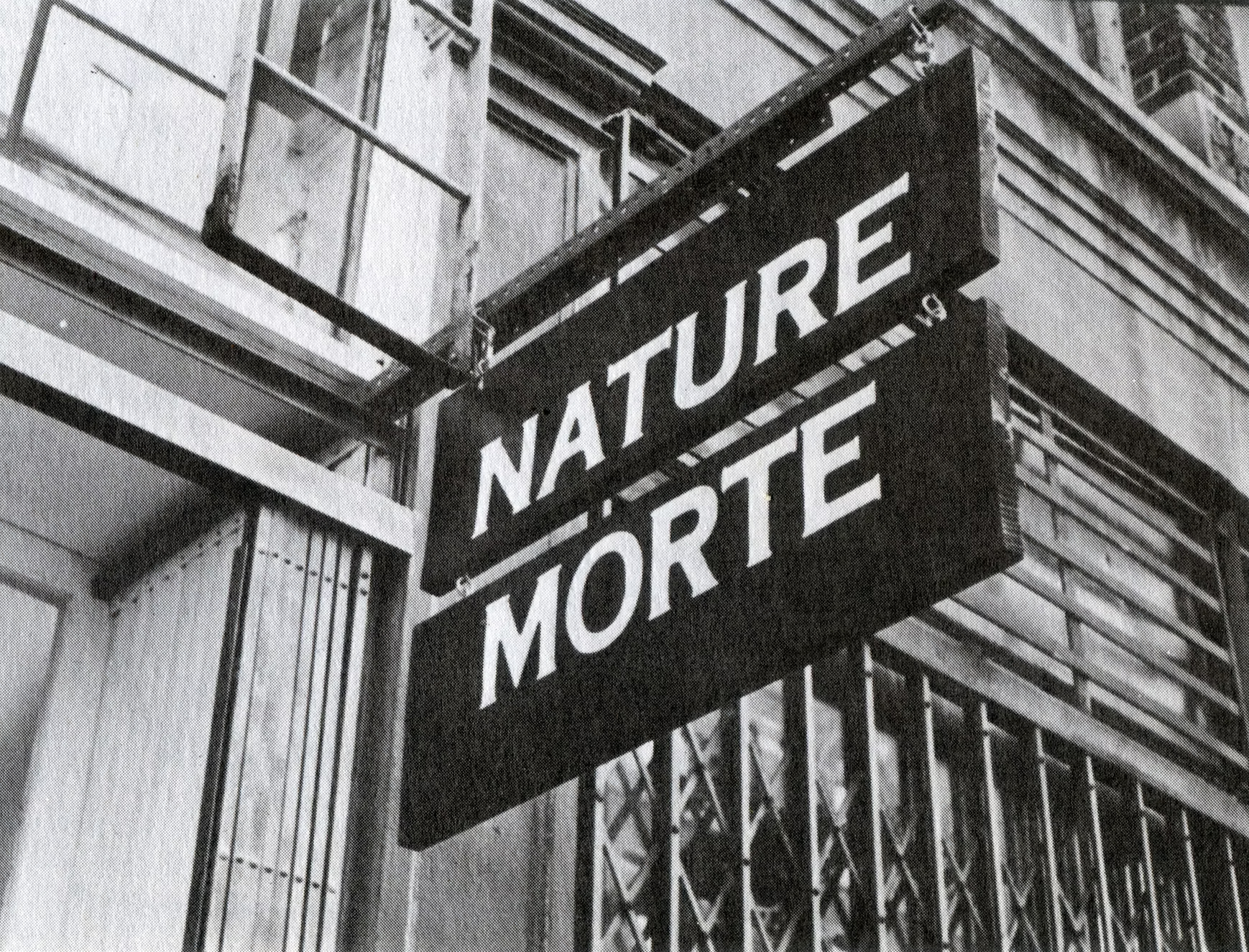
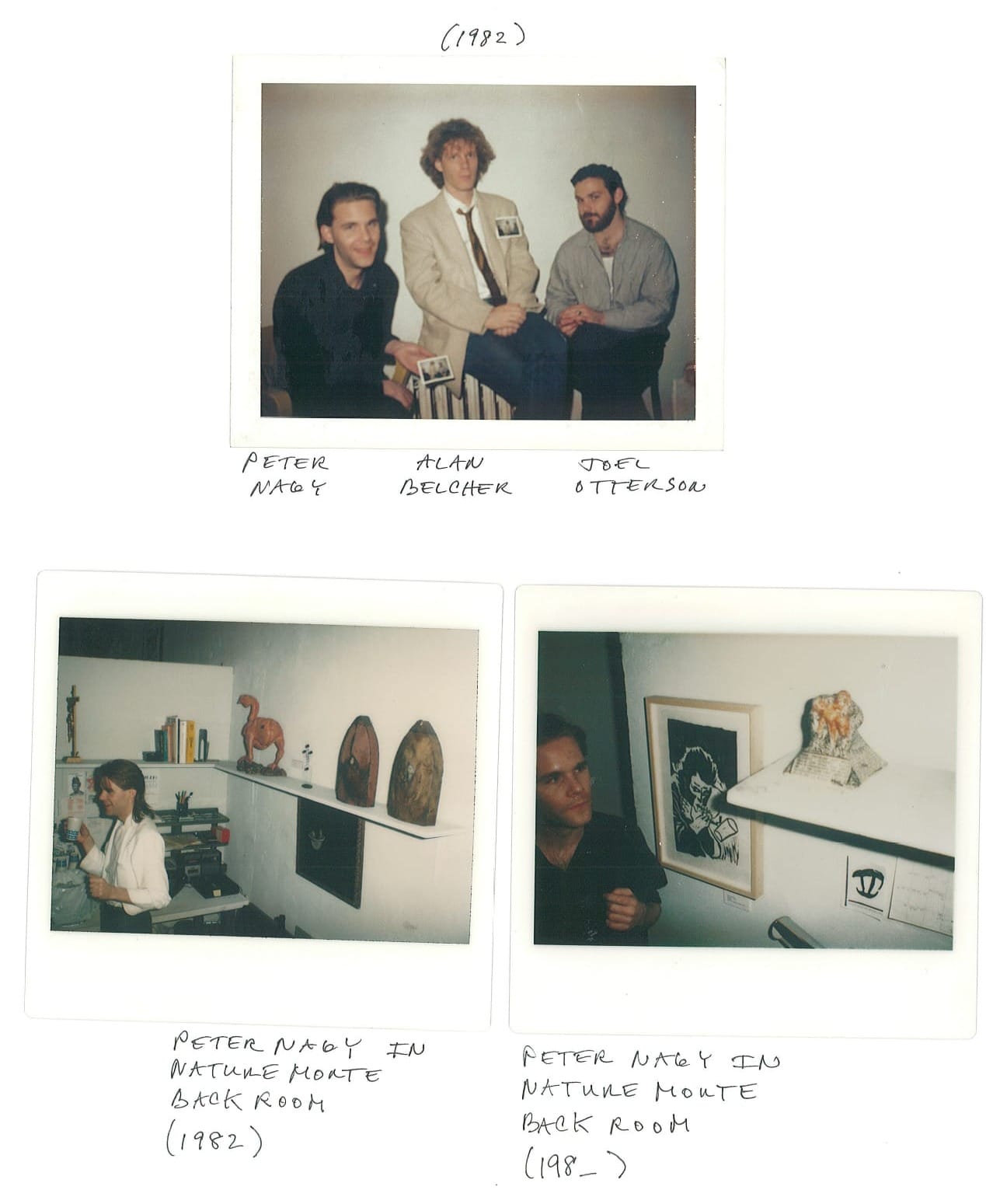
My memories of Peter go back to 1983 in New York, when I first met him and Canadian artist Alan Belcher. They had just co-founded Nature Morte the year before: the gallery occupied a narrow and slightly shabby East Village storefront on East 10th Street, off of Second Avenue. The East Village scene was establishing itself as the ultra-trendy outpost for new art and artists. Jeff Koons, Peter Halley, and Peter Nagy were then represented by the gallery International With Monument, another artist-run space with a mandate for the conceptual, founded by artists Meyer Vaisman and Liz Koury. Other neighborhood galleries, too, were cropping up. Radical and vibrant, the downtown scene was an exciting alternative to gentrified SoHo or old guard 57th Street and the stuffy uptown galleries, co-existing in a kind of post-bohemian haze of a bygone era. Soon, the collectors and art advisors in double-parked limos idled outside the East Village galleries on sunny weekend afternoons.
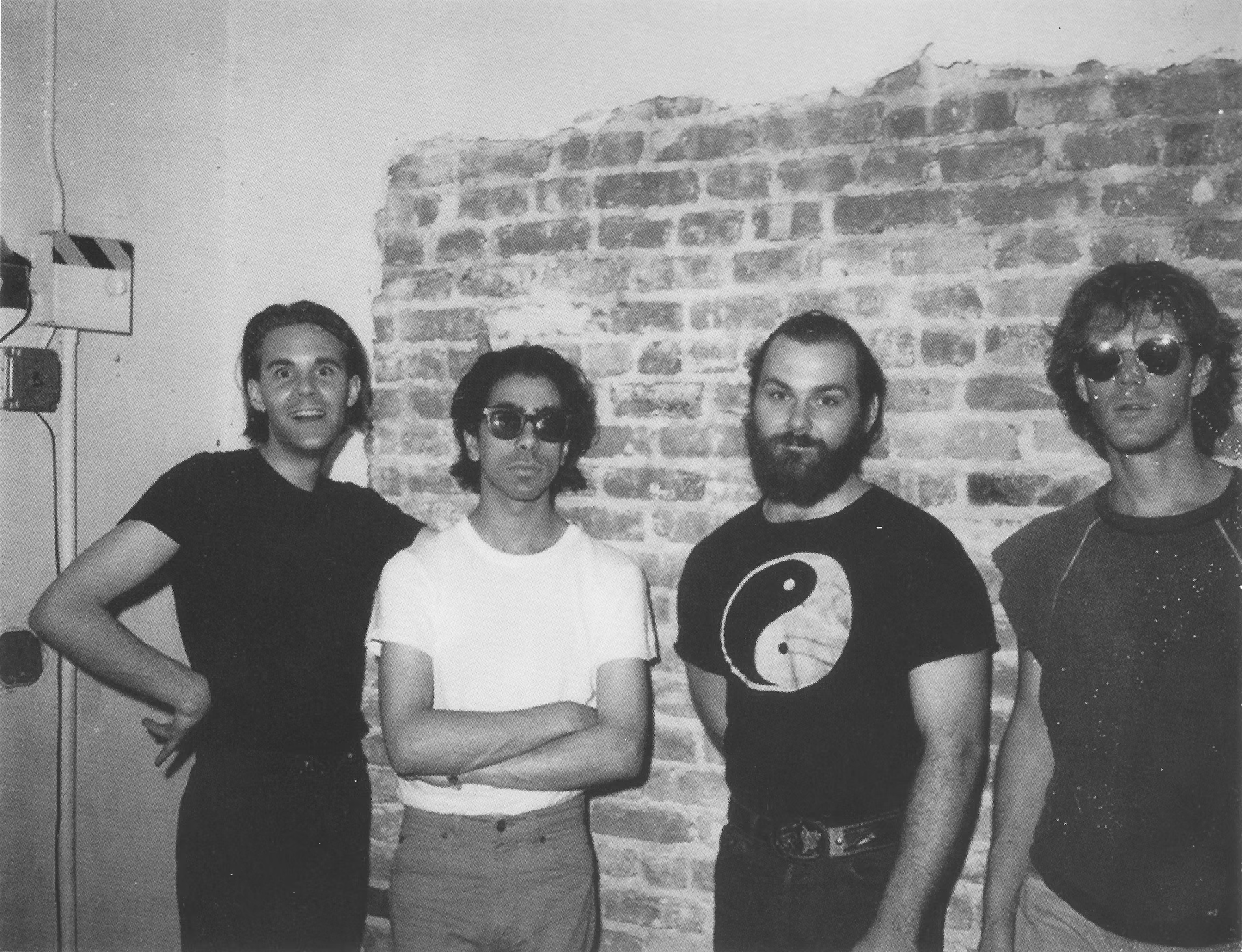
Born in 1959 in Bridgeport, Connecticut, Peter graduated from New York’s Parsons School of Design in 1981 with a degree in communication design. He wasn’t particularly interested in the sloppy, emotionally driven painting that was market dominant during the early 1980s. The artists at Nature Morte, among them fellow Parsons classmates Joel Otterson and Steven Parrino, favored a more conceptual approach, looking to the Pictures Generation that included artists Louise Lawler, Richard Prince, Sherrie Levine, and Barbara Kruger as role models. Like the Pictures Generation, the artists of Nature Morte were keenly interested in media, corporate and consumer culture, mass communication, packaging, and advertising—the barrage of information while scrutinizing assumptions about authenticity, originality, and its impact on society at large. Peter’s own work as a practicing artist—primarily consisting of black-and-white collages, laminated Xeroxes of diagrammatic compositions—was rooted in these imperatives, always engaged by an insatiable critique on the transmission of information, matched only by his profound knowledge of art and art history. And to the question itself: What is history?
He was represented by Magenta Plains in New York and, in 2020, was the subject of a comprehensive survey titled “Entertainment Erases History,” featuring works made between 1982 and 1992. The exhibition, presented in collaboration with Deitch Projects, received great acclaim and renewed interest in Peter’s output. His works were collected by the Metropolitan Museum of Art, the Whitney Museum of American Art, the Brooklyn Museum, as well as the Menil Collection in Houston and the Buffalo AKG Art Museum (formerly the Albright-Knox Art Gallery) in Buffalo, New York. He had an international presence as well, frequently holding institutional shows in London, Paris, and Cologne, among other European cities.
Painter Julia Wachtel, who exhibited at Nature Morte, commented: “His life really was devoted to looking at art, and I mean across continents and time periods. His love of art was unmatched by anyone. He remembered everything. I have never met anyone with the same voracious drive and memory retention as Peter. We’d go to museums and he could practically regurgitate the wall labels verbatim, and he had the uncanny ability of total recall, never forgetting any information he had absorbed. He was quite amazing that way, one of a kind. Prickly at times, and taking no prisoners, but completely loyal to those he loved and cared about.”
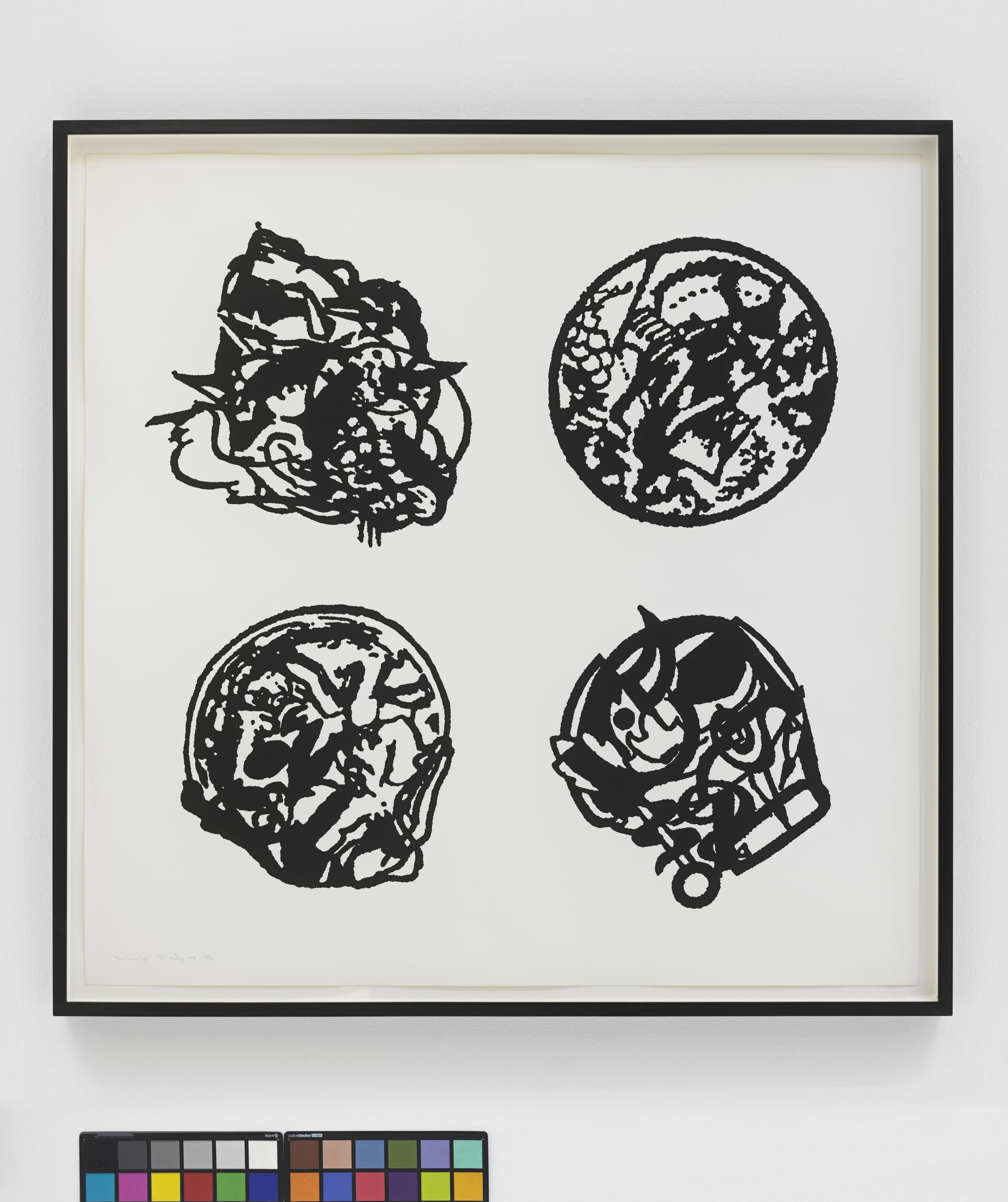
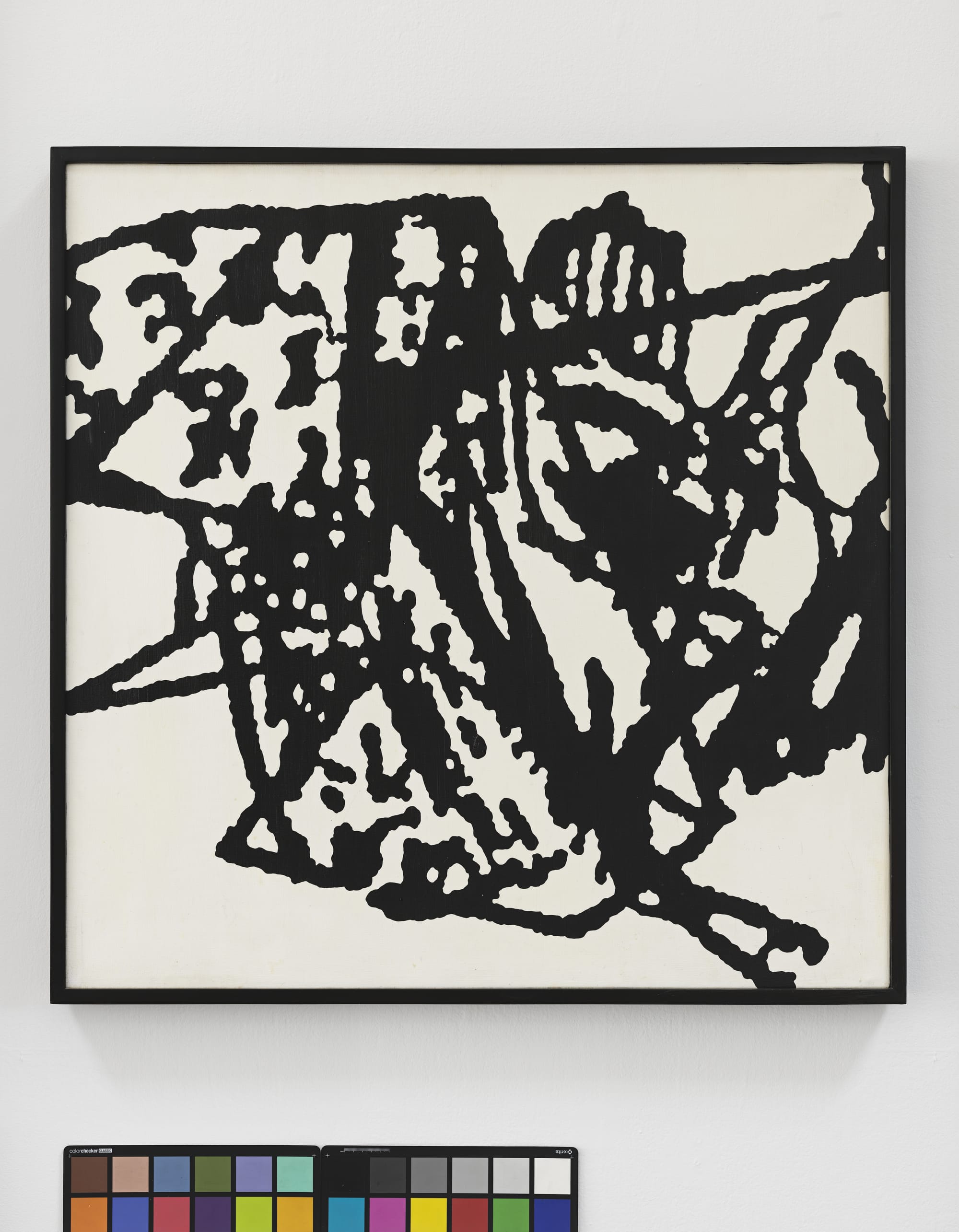
PETER NAGY, Four Cancer Logos, 1989, woodcut, 111.7 x 111.7 cm, edition 27 of 30 (left); and Quadrillion, 1987, acrylic on canvas, 91.4 x 91.4 x 5 cm (right). Courtesy the artist and Magenta Plains, New York.
Nature Morte in New York closed up shop in 1988 after a seven-year run, partly due to a lull in the art market and other financial pressures. Peter focused on his own art. His first trip to India was in 1992. He was absolutely spellbound; it was a transformative moment, setting things in motion. He relocated permanently to New Delhi in 1997 and never looked back.
Reinventing Nature Morte in India was always a part of the dream, I suppose, and Peter’s expertise, experience, and knowledge of a New York-style gallery model was surely exciting for a younger generation of South Asian artists. Peter was a cultural architect at heart, an astute and savvy bridge builder on a global scale. Early on he championed the works of Subodh Gupta, Jitish Kallat, and photographer Dayanita Singh, among many others, all of whom went on to sustain highly successful careers, reaching a wider international audience.
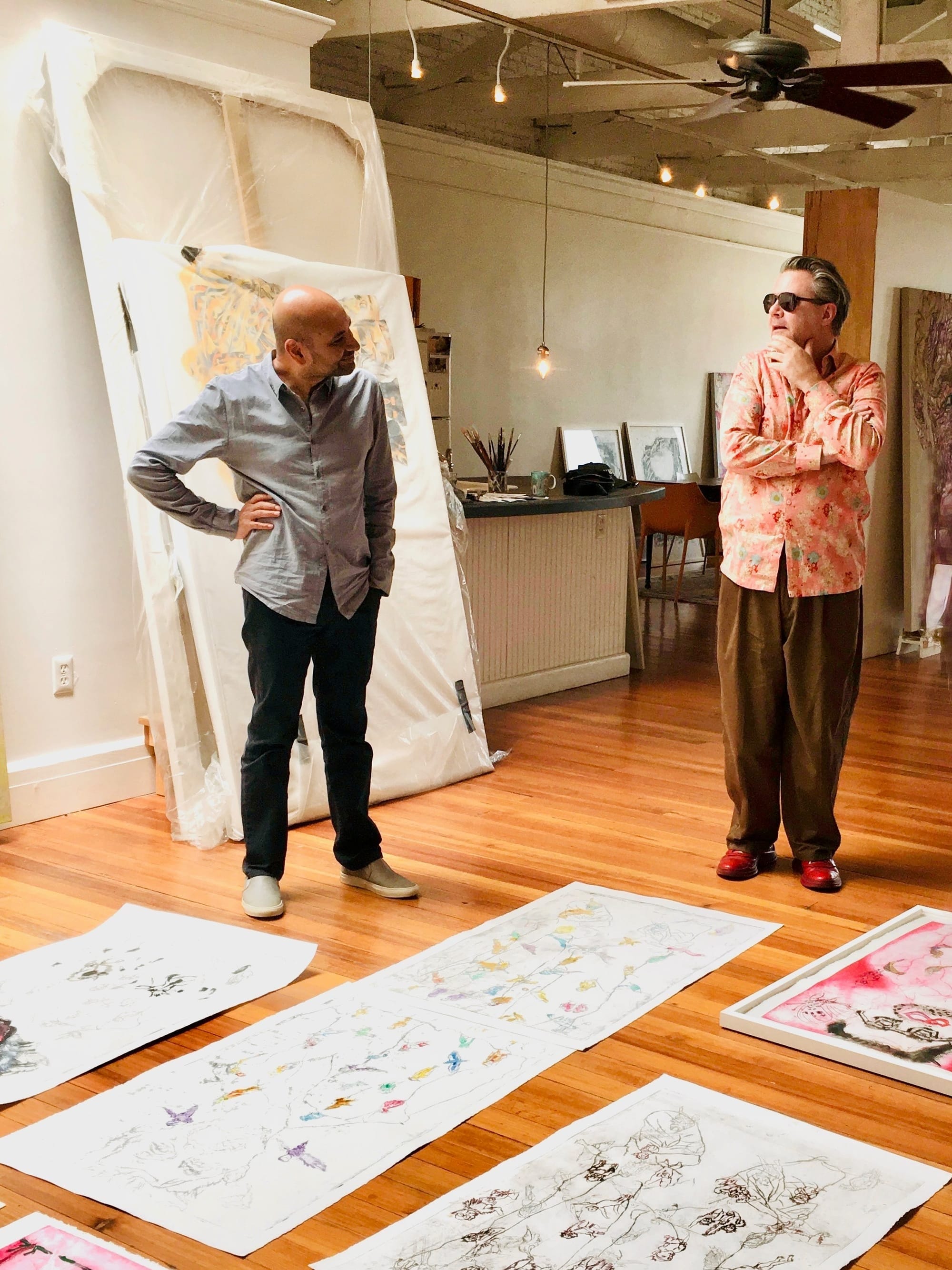
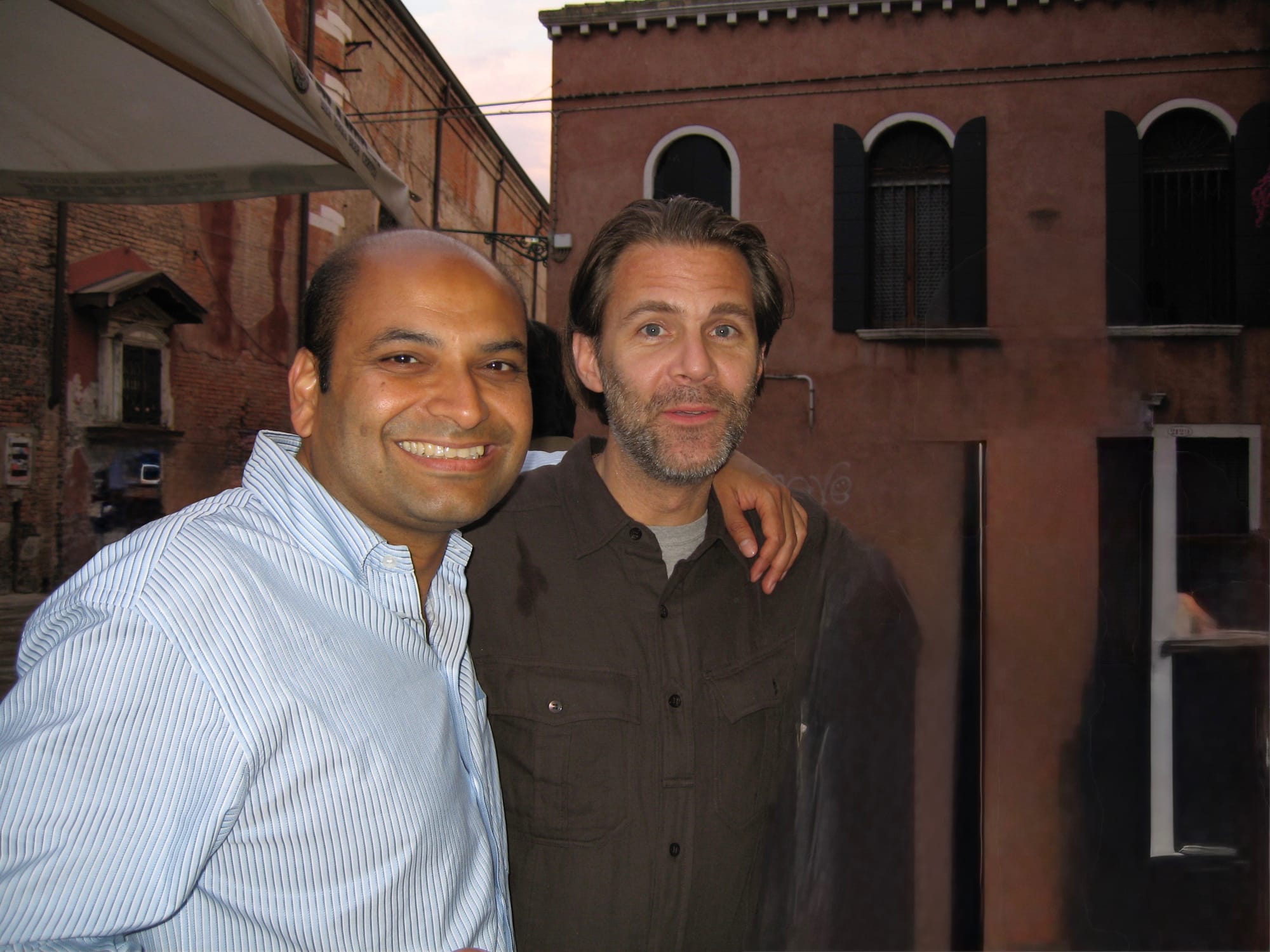
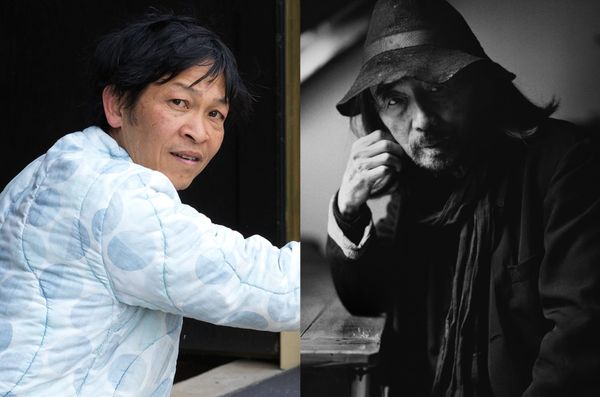
(Left to right) Portrait of ARANI BOSE and PETER NAGY at an artist’s studio. Photo by and courtesy Marina Thomas; and portrait of ARANI BOSE and PETER NAGY in Venice. Photo by and courtesy Bose Pacia.
An instrumental early business partner who helped pave the way was Arani Bose, whose gallery Bose Pacia had set up shop in SoHo in New York. Bose partnered and financed Nature Morte in New Delhi. “Peter injected the raw edge and beating pulse of contemporary art happening in India,” Bose reflected, “into the serious, established, and staid art infrastructure of SoHo toward the end of the 20th century. Each summer for several years, Peter would pack his suitcases with art from promising artists in India, intermingled with his always very fashionable clothing. He would then hang beautiful and seemingly urgent shows in our gallery at Broadway, near Prince Street, opening New Yorkers’ minds to the little known, subversive acts of art happening all over the subcontinent. We opened the first permanent home of Nature Morte at A1 Neeti Bagh in South Delhi. With this intervention, we began to introduce a bit of the boring professionalism or protocol and standardized infrastructure necessary to grow a stable, reliable art market in India. Peter was uniquely positioned to cross-pollinate the art worlds at two ends of the globe. Why did people listen and heed his words? Because of his intellect, his honesty, his wit, and his biting, incisive prose. With his personality and his pen, he helped to define a generation of artists from the subcontinent.”
Pivotal to the early success of the gallery was the representation of Subodh Gupta. Peter first met the artist in New York in 1997. “When Peter and I met again in India, he remembered everything from that first meeting,” Gupta recalled. “We became close friends and worked together for 29 years. Peter loved art. He was always talking about art and artists, it was his life. That passion was something very special. He created a great family around him, and we shared so much laughter and fun. I learned so much from his stories and our conversations. Those moments together will always stay with me. At a time when there was little space in India for experimental art, he supported young artists making very different kinds of work. He was fearless and honest. No one gave me as much freedom to show my work in my own way. Peter opened his new gallery spaces with my solo shows, a gesture of trust I will always treasure. His loss is immense for art in India and, for me, it is also the loss of a dear friend with whom I shared so much of my life.”
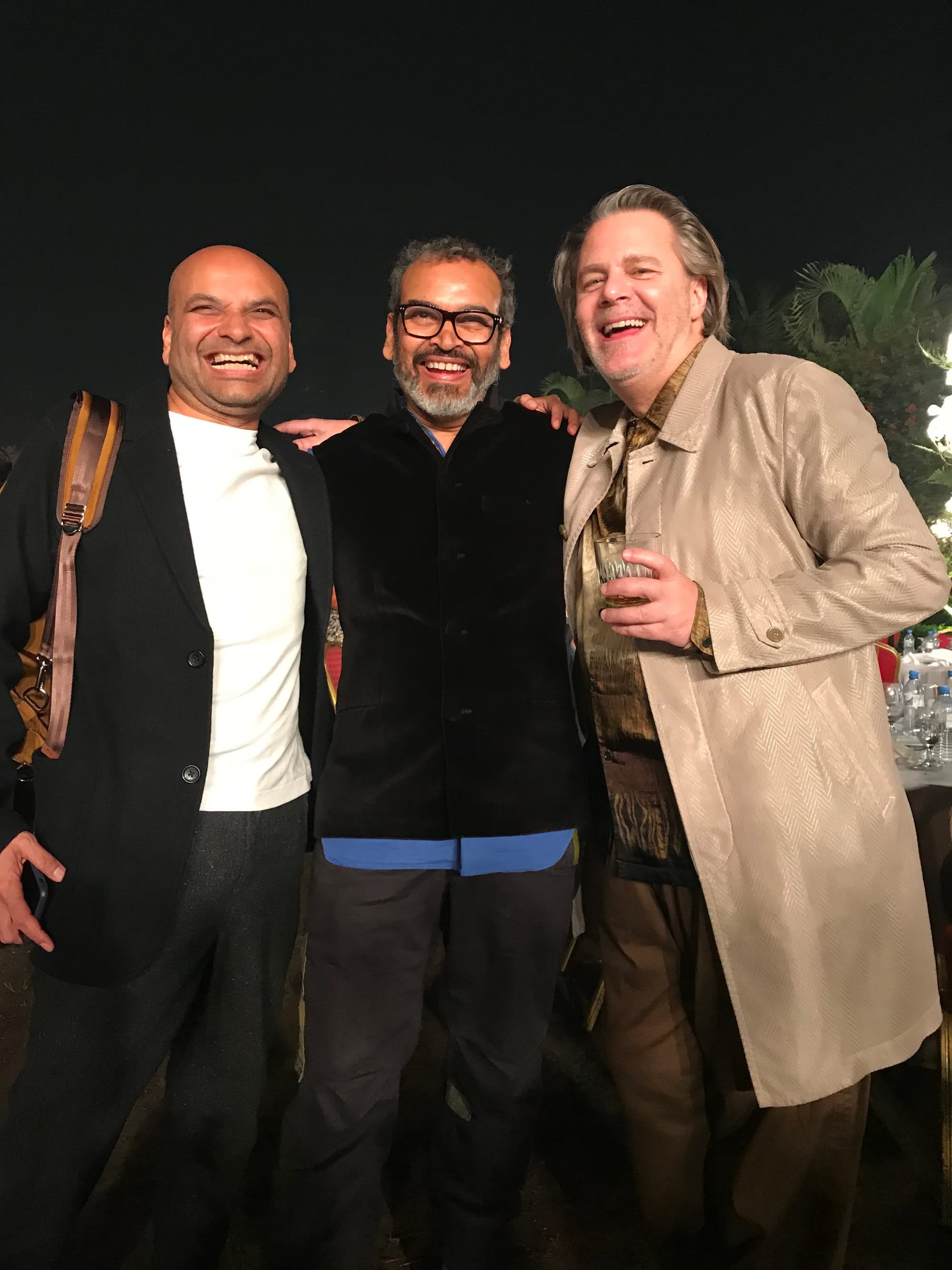
Portrait of (left to right) ARANI BOSE, SUBODH GUPTA, and PETER NAGY (left); and portrait of PETER NAGY with BHARTI KHER (right). Courtesy Subodh Gupta.
While some were certainly skeptical of his tandem ambitions—that of a serious practicing artist versus gallerist and curator—Peter never flinched. Creativity and commerce were never an issue. He saw the whole enterprise as completely symbiotic. However, the art and artists, without question, always came first.
Artist Jitish Kallat remembers meeting Peter at his solo debut in Mumbai in 1997. “He wrote an essay for the catalog of my first New York solo show in 1999, and I fondly recall his flair for writing about art. His writing had a wonderful lucidity, an almost stream-of-consciousness quality, and a radical honesty of tone. While installing shows together we would occasionally disagree, with Peter often wanting to include more works in an exhibition than I had imagined. Yet I would often come around to see what he had in mind and how he brought things together. I remember him being almost euphoric when he curated the first Sculpture Park in Jaipur. I think the artist in Peter was always present in the way he approached curating.”
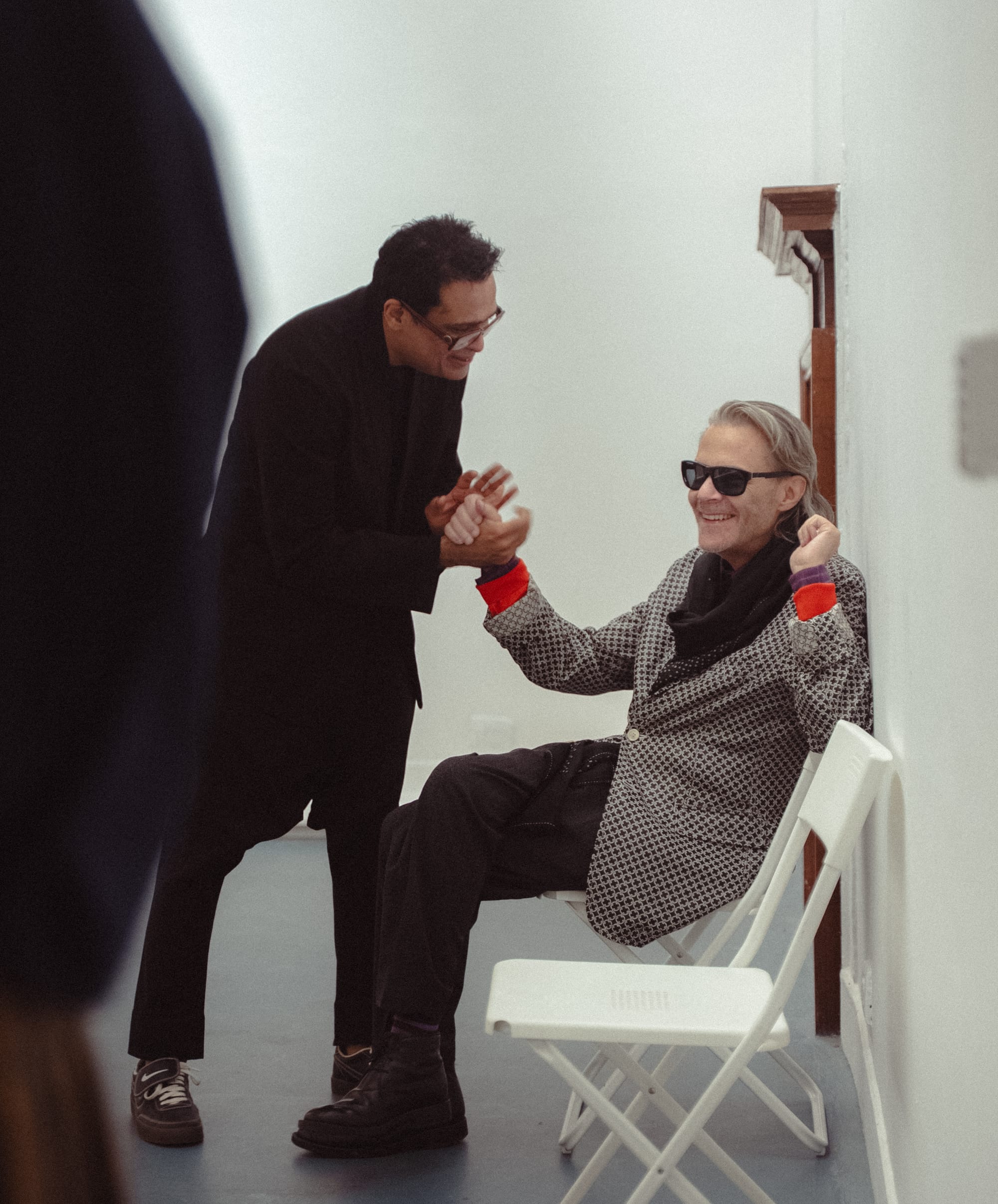
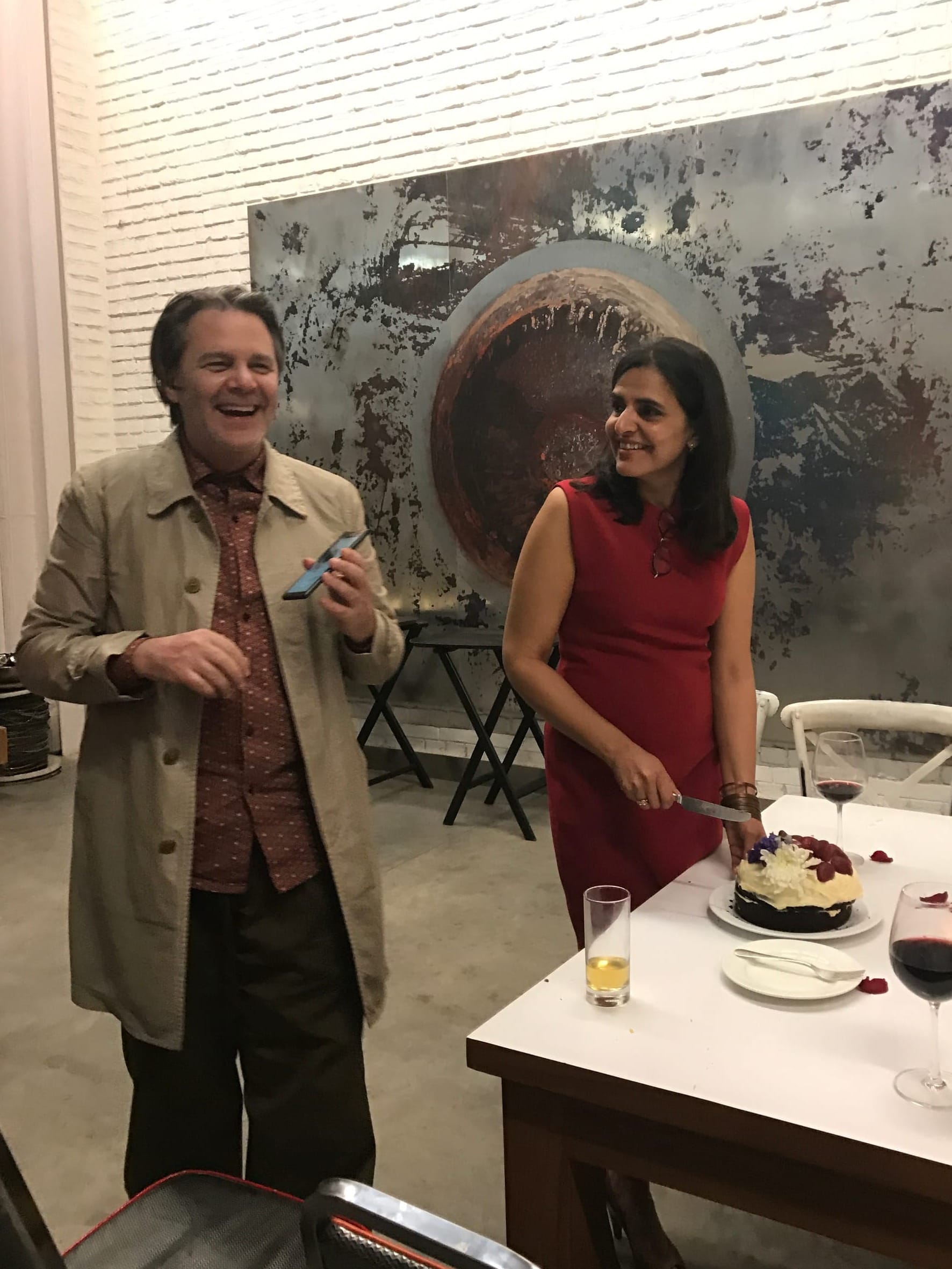
I introduced British artist Richard Long to Peter for his Sculpture Park project in 2018. Long fondly remembers Peter and the monumental work River of Stones he had commissioned him to create for the Madhavendra Palace. “Because the courtyard entrance was quite narrow we ended up having my stones brought in on bicycle rickshaws. Peter was very smart and had a big personality. He was an artist himself, so we got along very well. He was a very authentic and charismatic man. I will always remember him.”
Peter and I had a number of opportunities to work together in the late 1980s when I introduced him to my father, Carl Solway, who had a gallery and was interested in financing and publishing editions with young artists. I had a big hand in this at the time. The artist Joel Otterson, who frequently exhibited in those early New York days of Nature Morte, remarked, “Peter was a unique human. He was a conduit that connected people with life-changing effects. ‘Curiosity will keep us young,’ Peter would say. He said this when we were only in our early 20s.”
He is survived by his brother Paul Nagy as well as his longtime partner, Timmy Martin. In keeping with his wishes the galleries in New Delhi and its Mumbai outpost will continue under the supervision of senior director and business partner for the last 13 years, Aparajita Jain. A traditional Hindu cremation took place on October 14. India was Peter’s spiritual home (though I can almost hear him cackling—and he could cackle—by my saying so). He loved India and was deeply committed to the life he had created for himself there. Friendships that endure for 40 years or more are nothing if not truly significant. Like so many others, I will miss him.
Arthur Solway is the author of two collections of poetry, Friday Night, Shanghai (2023) and Siddhartha On Fire (2023), the latter of which received the 2024 San Francisco Book Festival Prize in Poetry. He presently lives in Santa Cruz, California.