News
Robert Thurman, 1941–2026
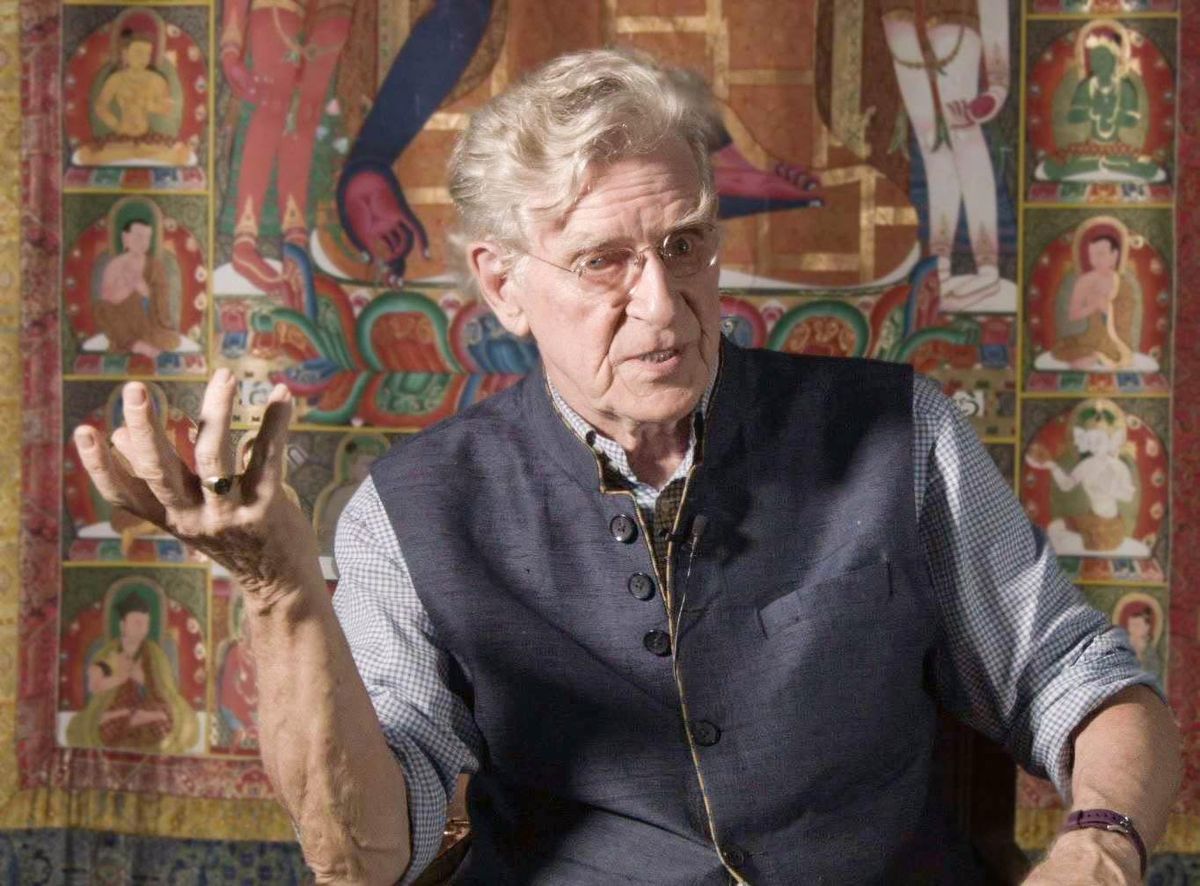
When Robert (Bob) Alexander Farrar Thurman died on June 16, aged 84, the world lost a seminal architect of Tibet’s modern culture and imagination.
Much will be written about Thurman the scholar: the first Westerner ordained as a Tibetan Buddhist monk in the Tibetan tradition, the renowned Columbia University professor, the prolific translator and author, the indefatigable advocate for Tibet, and the longtime friend and student of the 14th Dalai Lama. For generations of Americans, he became the public face of Tibetan Buddhism, helping transform what was once a largely unknown custom into a significant force in contemporary intellectual and spiritual life.
Yet scholarship alone does not explain his influence. What Thurman understood, perhaps before many others, was that Tibetan culture could not survive as an artifact stripped of its silk brocade and mounted for display. It would endure only if it remained alive, adaptive, and creative. His contribution was not only introducing Tibetan philosophy to Western audiences; it was also helping create the conditions in which Tibetan culture could continue to evolve in exile, within the diaspora and its minority population in the Western world.
Nowhere was this vision more evident than at the Tibet House US, an institution he co-founded in New York in 1987, tucked away on West 15th Street in Manhattan. Under Thurman’s stewardship, the Tibet House became more than a repository of endangered traditions. It became a meeting ground: part cultural center, part salon, part sanctuary. Scholars mingled with artists, philanthropists with monks, museum curators with political activists. Ancient texts shared space with contemporary art. The atmosphere was more familial than institutional, animated by Thurman’s conviction that culture flourishes through relationships.
Visitors arriving at the Tibet House might encounter a symposium on Buddhist philosophy, a gathering of contemporary artists, a fundraising dinner, or simply Bob himself holding forth on everything from neuroscience to Nagarjuna. A family Lhasa Apso wandered the halls. Friends came and went. Adventurers dropped off artifacts. Tourists breezed through the gift shop. The boundary between public institution and private home felt deliberately porous. The informality was not accidental: Thurman believed that preserving culture required community.
His commitment to Tibetan culture was equally a family undertaking. His wife, Nena von Schlebrügge Thurman, was not just a partner but also a co-creator of the world that formed around the Tibet House. Together, the couple cultivated a rare environment of intellectual curiosity, hospitality, and cultural stewardship. Their children—Ganden, Dechen, Mipam, and Uma—and Taya, Thurman’s eldest daughter from his first marriage to Christophe de Menil, grew up within that ecosystem, each carrying elements of its values into their own lives and work. Through them, and through a wide-reaching network of students, artists, scholars, and practitioners, Thurman’s influence continues to radiate outward.
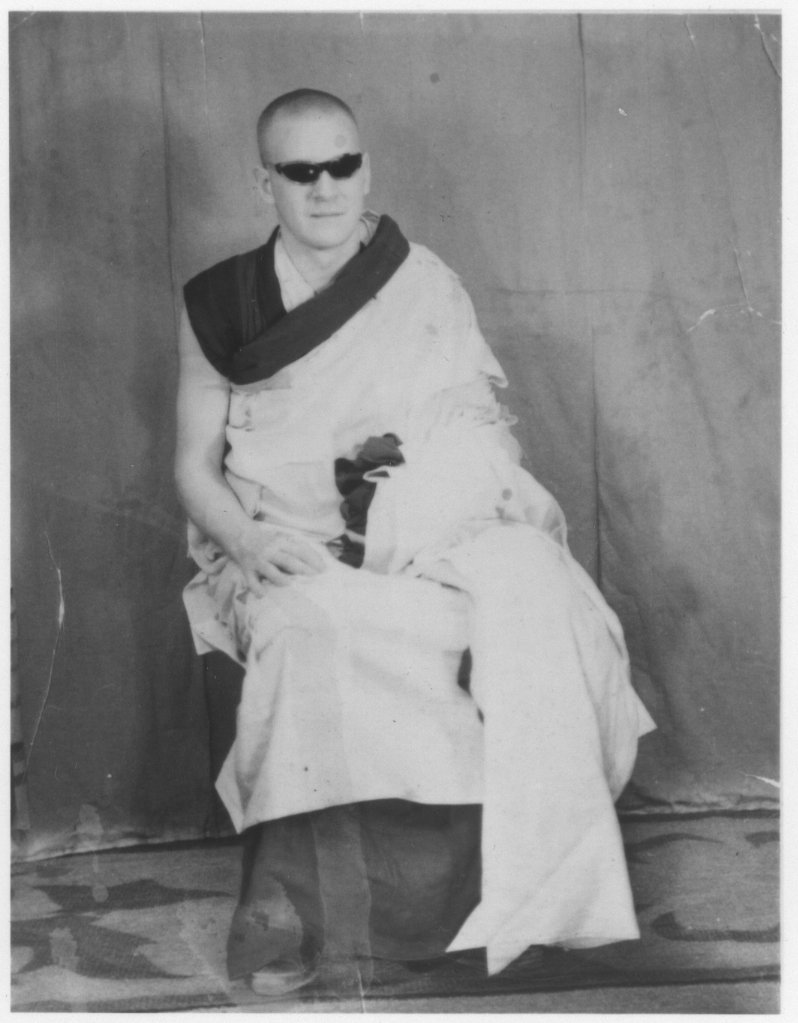
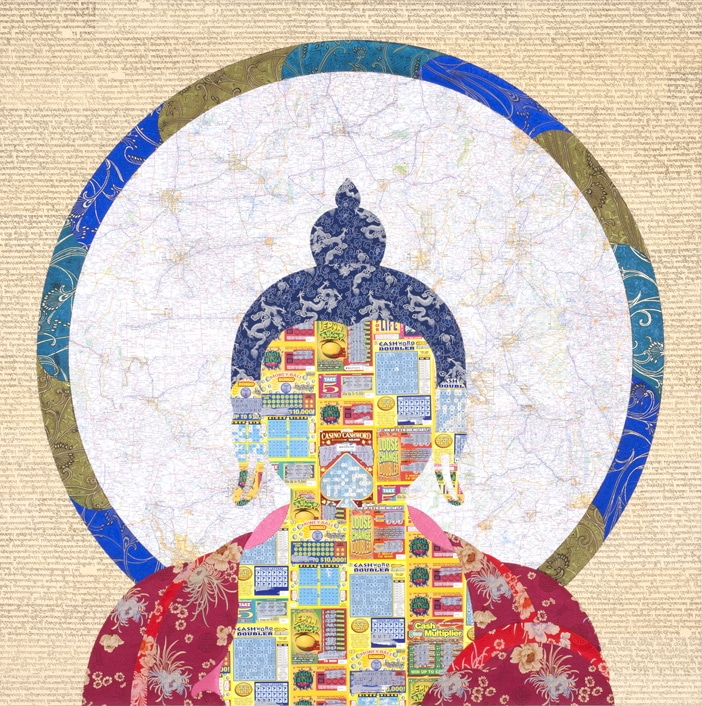
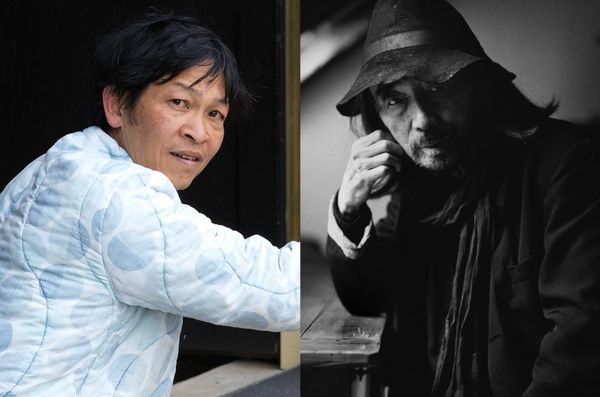
Portrait of ROBERT THURMAN as a Buddhist monk, ordained by the 14TH DALAI LAMA in 1964. Copyright and courtesy Robert Thurman (left); and TENZING RIGDOL, Instant Buddha, exhibited in “Tibetan Contemporary Art” at the Tibet House US, New York, 2011. Courtesy the Tibet House US (right).
If the Tibet House served as a cultural crossroads, contemporary art was among its most lively conversations. For much of the 20th century, Tibetan art was understood in the West primarily as a historical or religious category. Thurman helped expand that perception. He championed artists who engaged Tibetan traditions while refusing to be confined by them. He recognized that exile generates not only loss but also new forms of expression.
Among those he encouraged were Tenzing Rigdol and Tsherin Sherpa, artists whose work has redefined contemporary Tibetan visual culture for international audiences. Their art addresses displacement, memory, identity, and transformation while remaining deeply informed by Tibetan intellectual and aesthetic traditions. Thurman saw in their work a continuation of the very dynamism that had always characterized Tibetan civilization. Preservation, he often suggested, was not enough. Culture survives through reinvention.
His advocacy extended beyond artists themselves. He consistently urged collectors, curators, museums, and philanthropists to recognize contemporary Tibetan artists as participants in global artistic discourse rather than merely custodians of heritage. He helped shift attention from what Tibetan culture had been to what it was becoming. He welcomed newcomers like me to join the conversation!
There were other important relationships along the way. At gatherings in New York, Thurman could often be found in conversation with the great Tibetologist E. Gene Smith, whose efforts to preserve Tibetan literary traditions paralleled Thurman’s commitment to sustaining living culture. The mutual respect between the two men was unmistakable. Each understood the other’s role in safeguarding a civilization under threat.
Likewise, Thurman’s connection with collector and museum co-founder Donald Rubin reflected an ongoing dialogue between philanthropy, appetite for collection, and public culture. Their exchanges—sometimes playful, sometimes pointed—helped shape institutions and initiatives that expanded public engagement with Himalayan art and concepts. Rubin often challenged Thurman; Thurman usually responded with characteristic wit, energy, and an inexhaustible stream of ideas. To every friendly provocation, he always gave a memorable and amusing rejoinder. Everyone smiled or scoffed and followed the path their ideas created.
Perhaps no relationship better revealed his character than his lifelong friendship with the Dalai Lama. Public appearances by the two often carried an unmistakable sense of play. Their conversations moved effortlessly between philosophy and laughter. Affection and intellectual rigor co-existed. Watching them together, one glimpsed a quality increasingly rare in public life: the ability to approach profound subjects without solemnity.
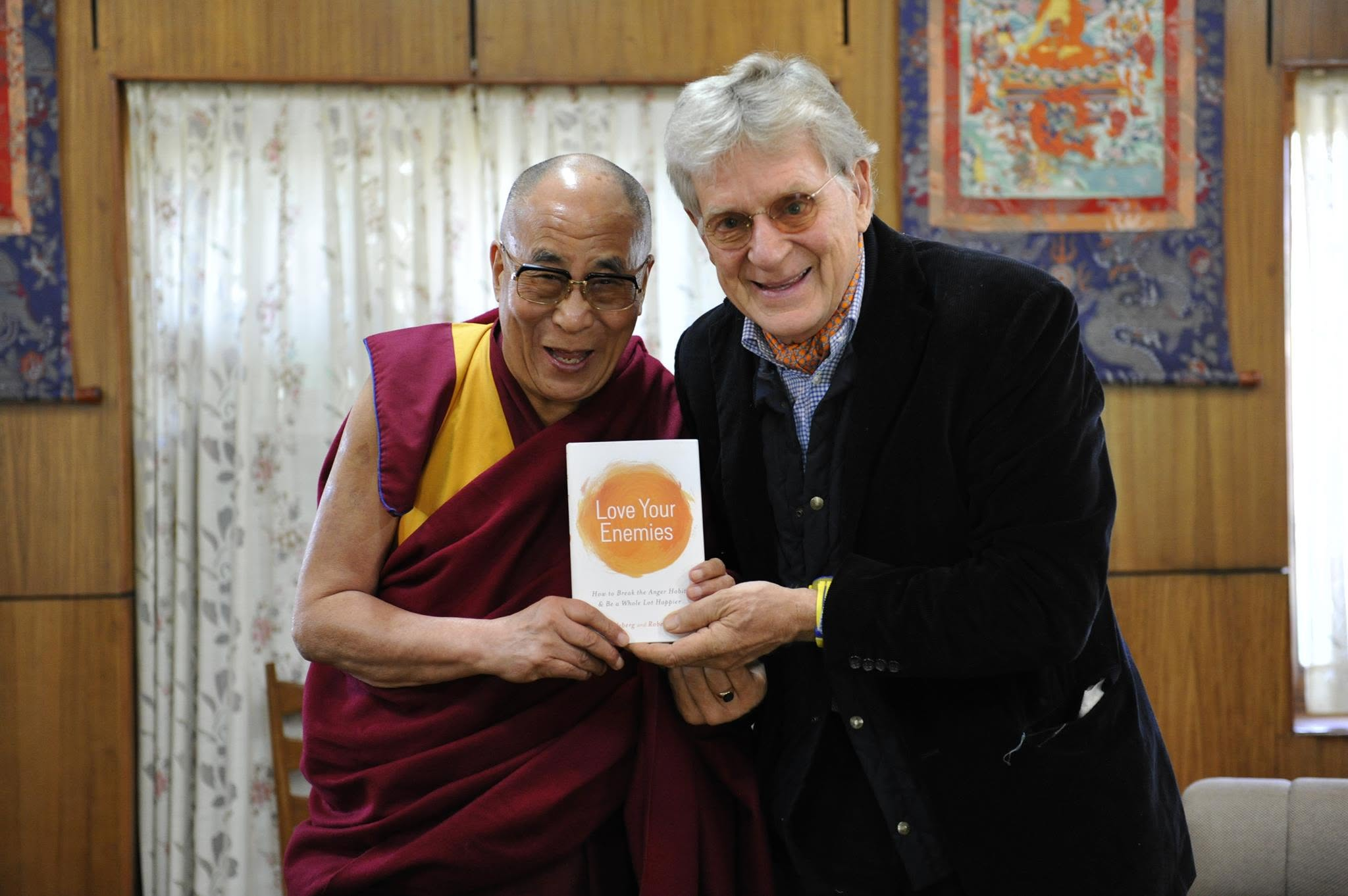
For all his intellectual authority, Thurman never carried himself with the weight of a grand scholar. What many people remember instead was a distinctive lightness. There was something twinkling about him, an irrepressible curiosity coupled with an almost childlike delight in the world as it presented itself. He met different ideas, people, and experiences with the openness of a perpetual beginner. Beneath the formidable erudition was a spaciousness of spirit, a capacity for welcome. Whether speaking with world leaders, renowned artists, longtime students, or newcomers finding their way into the orbit of the Tibet House, he extended the same generosity of attention. For those entering a field in which Thurman loomed so large, that generosity could be transformative. His presence made room for others.
Thurman frequently described Tibet as one of humanity’s great civilizational achievements. Yet unlike many preservationists, he was never interested in nostalgia. His gaze remained fixed on the future. He believed artists, scholars, translators, and cultural innovators would determine whether Tibetan culture remained relevant in the centuries ahead. In many ways, that future has already arrived.
Today, Tibetan Buddhism has entered mainstream intellectual life. Tibetan art occupies galleries, museums, and biennials across the globe. A new generation of artists, scholars, and cultural leaders continues work that Thurman helped make possible. The institutions he built endure, but perhaps more importantly, so does the ecosystem of relationships he nurtured. That may be his most lasting achievement.
Beyond his books, translations, lectures, and accolades, Thurman leaves behind a living community bound together by curiosity, compassion, and cultural responsibility. He understood that traditions survive not through icons and murals alone but through people willing to carry them forward. The task now belongs to those he inspired.
The world will always need generous scholars. It will always need bridge builders. It will always need individuals capable of translating one civilization to another without diminishing either. Bob spent a lifetime doing precisely that. The torch, as he would undoubtedly remind us, is now in many hands.
Rachel Perera Weingeist is a New York-based curator, writer, and fundraiser working at the intersection of contemporary art, philanthropy, and cultural exchange. From 2006 to 2014, she served as senior advisor to Donald Rubin, helping advance initiatives in Himalayan and Cuban art and culture. Her work focuses on developing programs and partnerships that connect cultures, disciplines, and communities.