Market
“Turning the Frown Upside-Down”: Art Taipei 2026
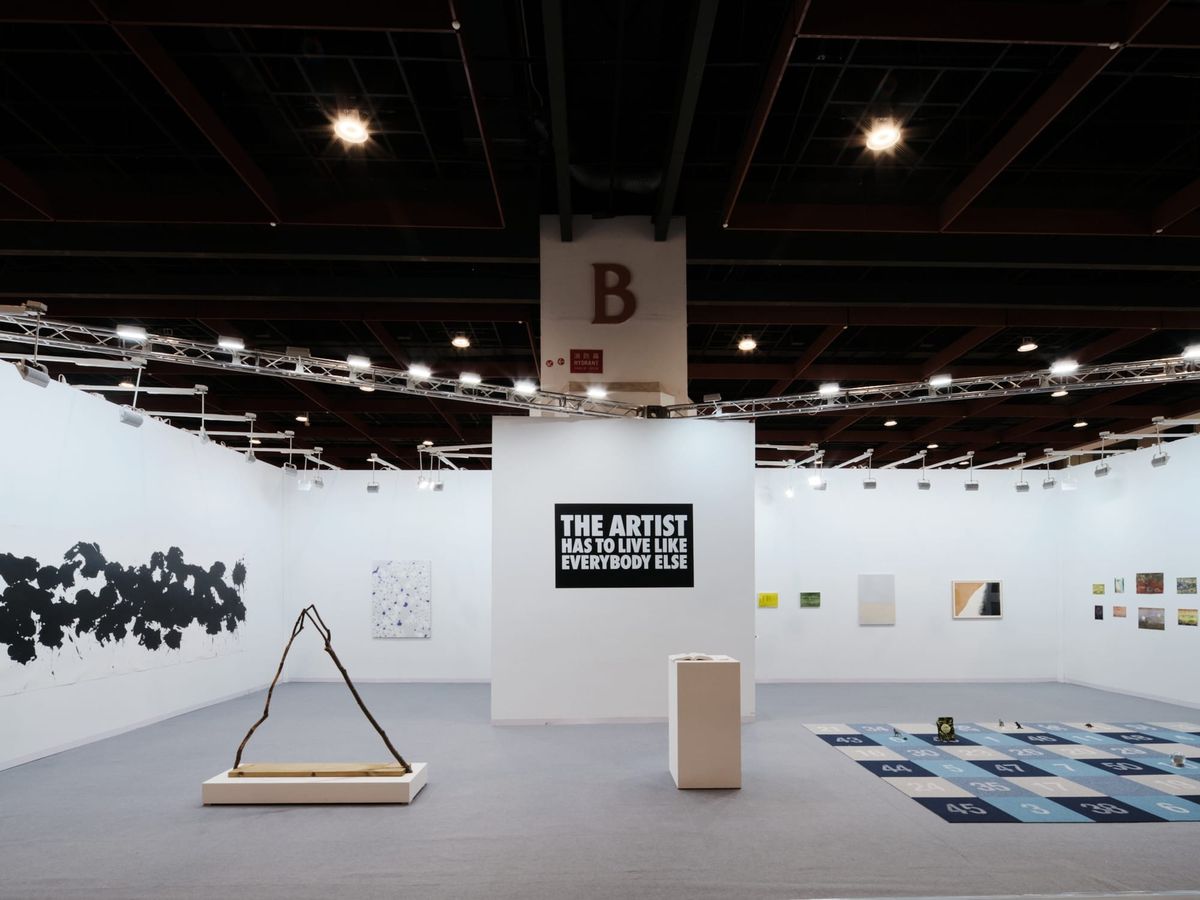
At the center of a spacious booth at Art Taipei 2026, a black banner declared in white capitals: “THE ARTIST HAS TO LIVE LIKE EVERYBODY ELSE.” The work, by the late New Zealand-born artist Billy Apple (1935–2021), was presented by Tokyo-based non-profit Goya Curtain in “Curated Japan,” a special section that brought together 12 Japanese galleries and initiatives alongside Taipei’s artist-run ss space space. Curated by Jeffrey Ian Rosen of Tokyo-based MISAKO & ROSEN, the presentation ranged from the canonical to the contemporary: a painting by Nakanishi Natsuyuki (1935–2016); a large monochrome mural by 94-year-old Shinohara Ushio, known for action paintings punched with paint-soaked boxing gloves; and deadpan interventions by London-based artist Alexei Izmaylov, surreptitiously fitted to sockets at booth corners. Near the aisle, COBRA’s The Game of Life 50 invited fairgoers to toss dice onto a numbered floor mat, each square marking a threshold in an artist’s career.
The section’s title, “Turning the Frown Upside-Down,” traced the rise of artist-initiated hybrid spaces in Japan after the 2008 financial crisis, a counter-strategy against a market increasingly dominated by mega-galleries. Rosen’s examples included Lavender Opener Chair, founded in 2020 in shared quarters with Tohmei Diner, and XYZ Collective, formed in 2011 by artists COBRA and Soshiro Matsubara and editor Madoka Hattori. Nakanishi, a co-founder of the avant-garde Hi-Red Center in the 1960s, served as a historical anchor. I had seen Rosen at Art Jakarta less than a month earlier; after Art Taipei, he was due back to Japan for Art Week Tokyo and Art Collaboration Kyoto. The self-determination he celebrates in the artist-run platforms he convened in Art Taipei found an echo in his own efforts to work differently within—not necessarily against—an unrelenting global fair circuit.
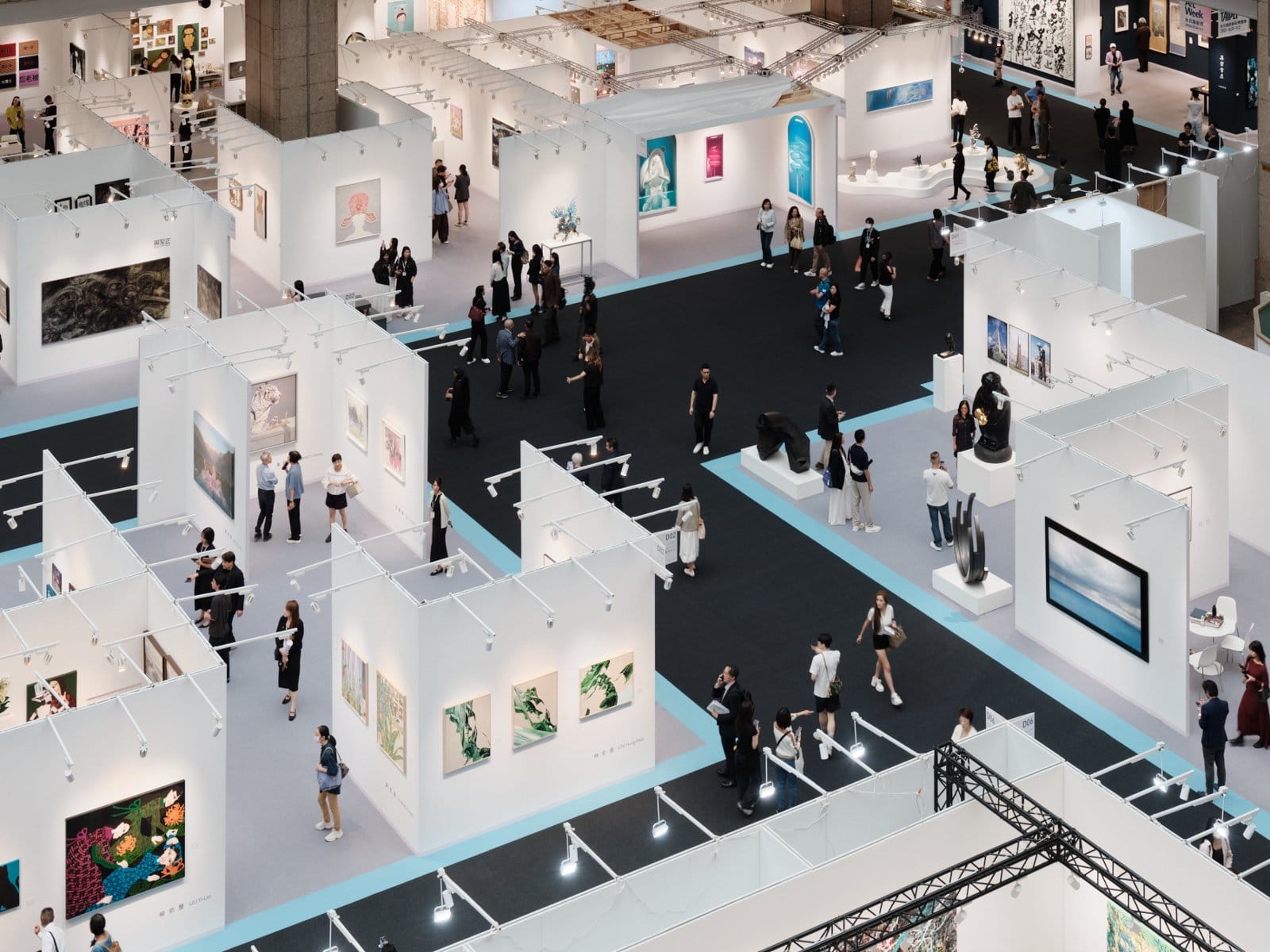
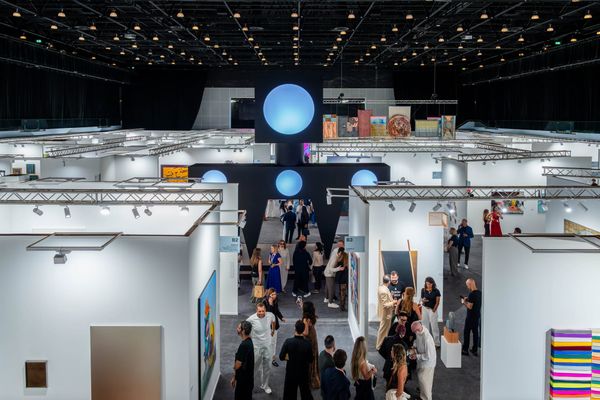
Art Taipei’s 33rd edition assembled 127 galleries, 66 from Taiwan and 61 from abroad, the highest overseas share in recent years. On the floor, offerings veered between two poles: classical, ink-inflected painting and pop-saturated, cartoon-adjacent work. The more rewarding presentations walked the line between the academic and contemporary. At the booth of Asia Art Center, a stalwart of the Taipei art scene, Dong Shaw-hwei’s multi-panel The Loquat Blooming in Courtyard (2012–21) combined flattened silhouettes and shifting vantage points, merging still life with landscape in understated olive tones. Nearby, Hong Kong artist Tobe Kiu Sin Kan’s Tangent/Rove (2025) balanced her signature cobalt blue with crisp dusk hues. The gallery brought sculptures by Taiwanese titans Ju Ming and Li Chen, and debuted works by French sculptor Bernar Venet, whose first solo show in Taiwan is currently on view at Asia Art Center.
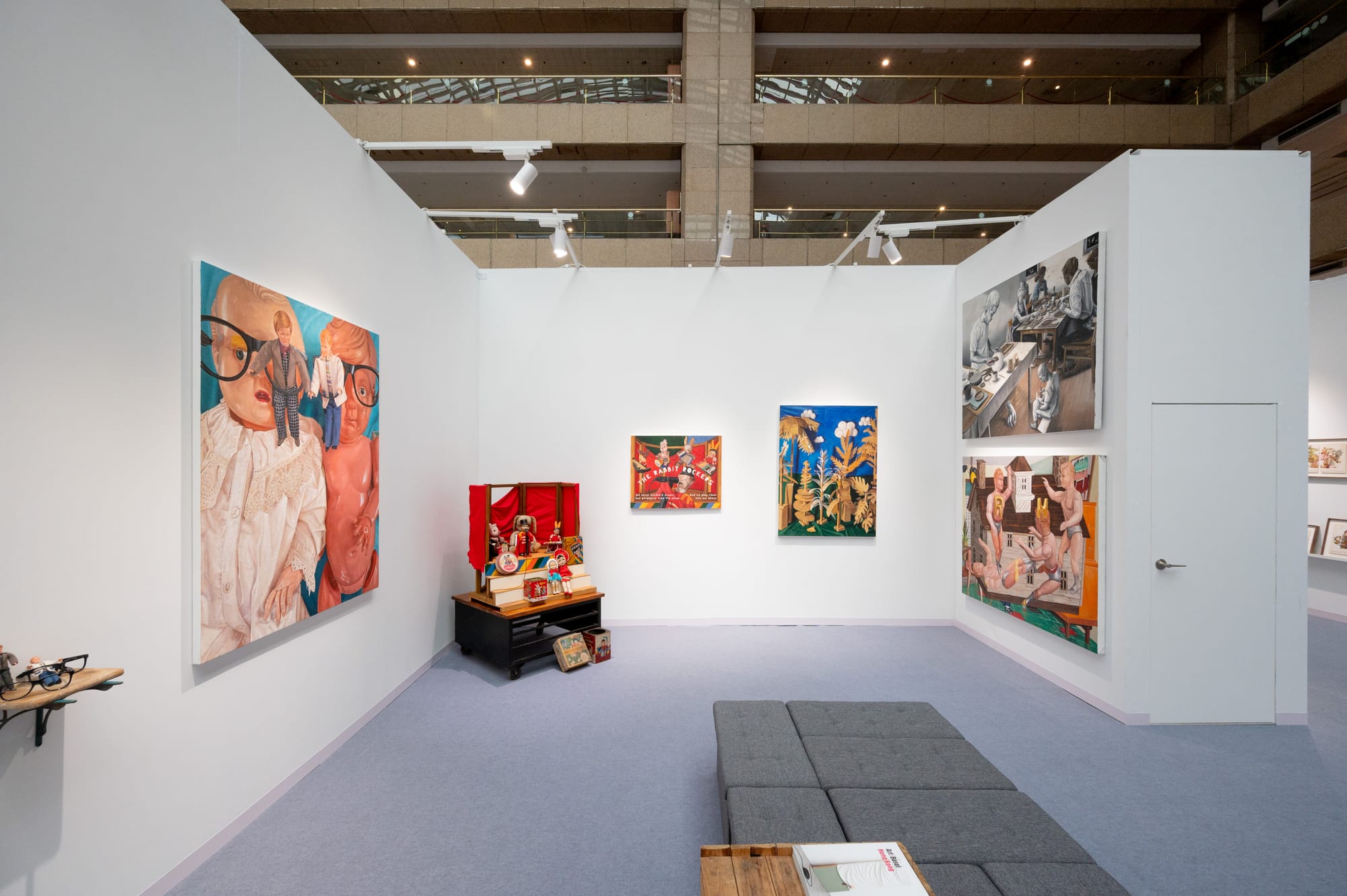
Across the aisle, the joint booth of Tina Keng Gallery and TKG+ dispensed with regional or chronological groupings. Canvases staggered along the wall joined disparate horizon lines into a shared meditation on body, landscape, and historical memory. Another standout was Yiri Arts, a gallery that grew out of a botanical lifestyle and retail business, now with outposts in Taipei, Jakarta, and soon Guangzhou. Its quasi-retrospective presentation for Taiwan-born midcareer artist Shih Yung-Chun treated the booth as a theatrical diorama: salvaged tea caddies, mooncake tins, and childhood toys—nostalgic fixtures of the Asian household—anchored a multidisciplinary conceptual practice spanning painting, video, and installation.
Returning to Art Taipei after several years, Kaikai Kiki Gallery staged an immersive installation by Shoko Nakazawa. Its candy-colored kaiju, sculpted and daubed in part on-site, drew children and adults into impromptu exchanges with the artist. Across the hall, Perrotin signaled its commitment to the Taipei scene with an expansive, multi-section booth. Highlights included sculptures by Takashi Murakami, glass constellations by Jean-Michel Othoniel, and bronzes by Lynn Chadwick, a staple among Taiwan’s modern sculpture collectors. One section was devoted to new works by Chinese painter Chen Fei, whose practice has turned increasingly inward since his 2025 solo exhibition “Father and Child” at Tokyo’s Watari Museum of Contemporary Art. The display was backed by patterned wallpaper that, on closer inspection, transpired to be stylized studies of his infant daughter’s stool, scrupulously photographed day after day throughout a precarious first year of digestive complications.
In an adjoining alcove, four luminous compositions by the Iranian painter Mehdi Ghadyanloo depicted playground apparatuses, vacant slides, and carousels bathed in surreal light. Like COBRA’s game mat in “Curated Japan” and Shih’s haunted vintage toys, Ghadyanloo’s playgrounds perhaps treat play not as escapist diversion but as a kind of psychic strategy. In a market that relentlessly tests our stamina, play emerges as a disciplined way of surviving.
Michele Chan is managing editor at ArtAsiaPacific.