Market
Changing Seasons: Tokyo Gendai 2026
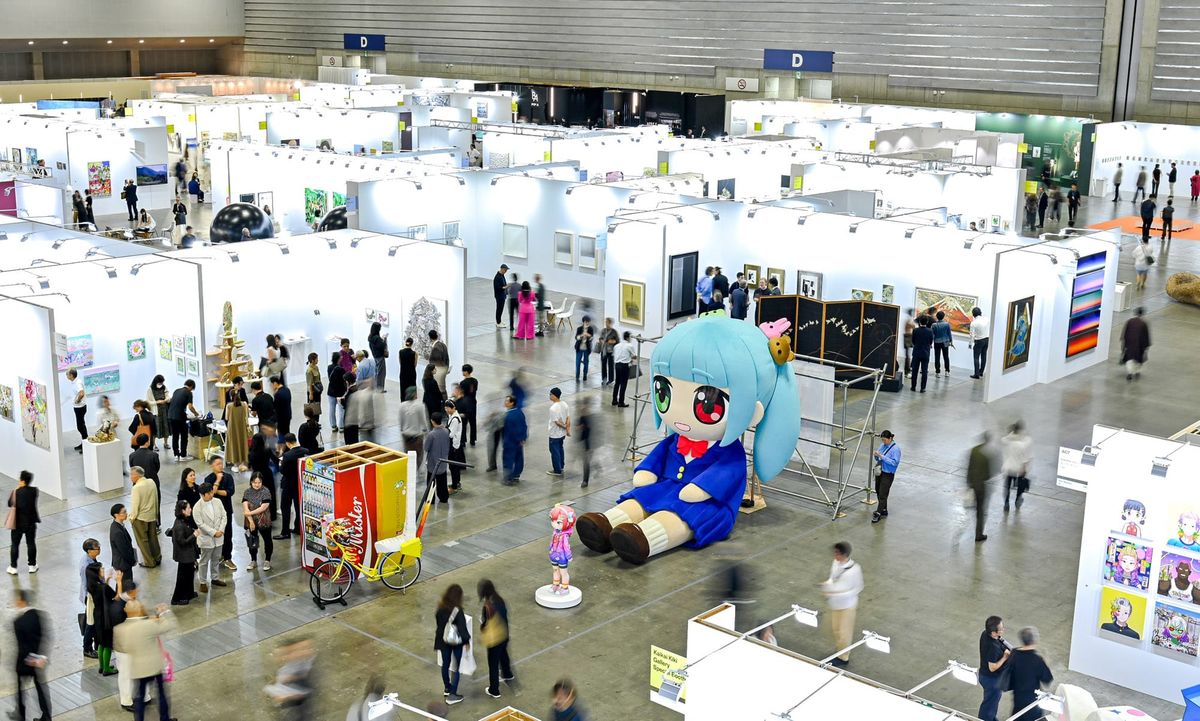
Just a week after the conjoined frenzy of Kiaf and Frieze in Seoul, artgoers from the world over trickled into Japan for Tokyo Gendai, which ran September 11–13 at Pacifico Yokohama. The fair, now in its fourth edition, gathered 69 galleries—a slightly higher number than in 2025—with a near-symmetry between regional and overseas participants. Speaking with ArtAsiaPacific, fair director Eri Takane emphasized that “Tokyo Gendai has always sat at the intersection of Japanese and international voices, and that balance is central to what makes the fair special.”
This year’s edition was divided into five key sectors: the main Galleries section; Hana (“Flower”), dedicated to emerging talents or midcareer artists; Eda (“Branch”), highlighting established or historically significant names; Tane (“Seed”), returning after a two-year absence, featuring NFTs, animation, film, VR, and other tech-driven projects; and the brand-new Miki (“Trunk”), which focused on paper-based works and printed matter, especially photography.
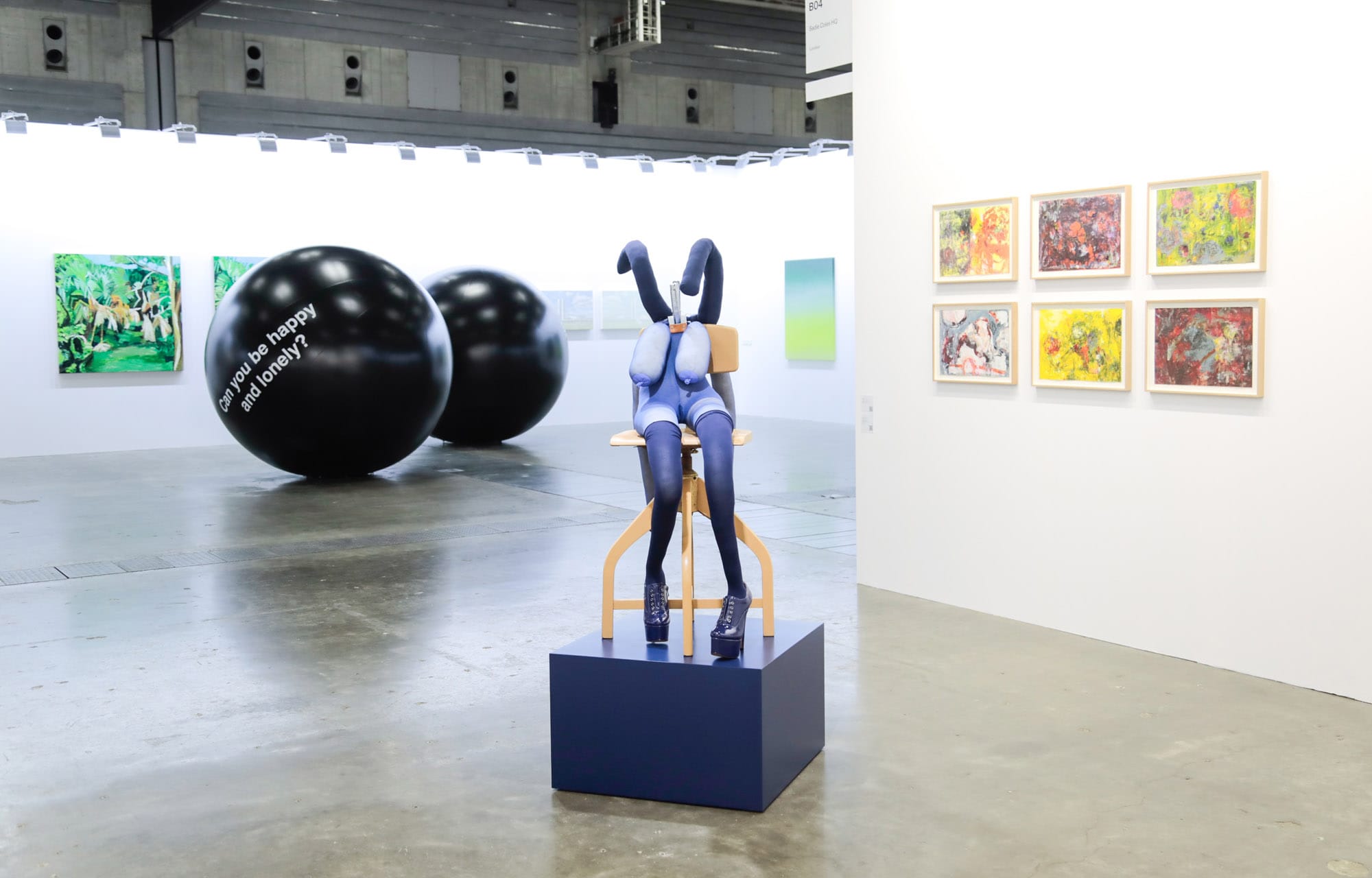
Several international heavyweights returned. Sadie Coles HQ, a participant since the fair’s inception, garnered attention with British artist Sarah Lucas’s Blue Bunny (2025), a provocative sculpture of a headless, nude figure made with stuffed nylon stockings, slumped over a chair, bulging breasts exposed. At once bawdy and vulnerable, the work contrasted with the nearby Diffraction (2026), a large-scale painting by rising Japanese painter Yu Nishimura, known for his introspective, dreamlike portraits and landscapes. Pace, whose Tokyo space survived the mega-gallery’s downsizing in global operations in June and its sweeping staff and roster cuts, returned with a solo presentation of new works by Lauren Quin. The American artist’s vibrant canvases drew swarms of collectors, with most pieces selling within the first day.
Notably, a handful of galleries sat out this year’s edition: BANK and ShanghART Gallery, both of whom are headquartered in Shanghai; Almine Rech, which is rooted in Europe; and Tokyo’s SCAI The Bathhouse. Still, the fair featured some first-timers: Dubai-based Dom Art Gallery presented tableaux by Russian artist Kirill Makarov, and JD Malat Gallery paired Masayoshi Nojo’s ethereal, silvery landscape paintings with Santiago Parra’s inky abstractions. Jean-David Malat, founder of JD Malat Gallery, told AAP: “Tokyo Gendai was a very positive experience for us. [W]e were pleased to achieve sales for both artists during the fair—in particular, we saw a very strong response to Nojo’s work, which confirmed my feeling that collectors are increasingly interested in discovering and supporting Japanese artists.” Malat added that he enjoyed the smaller scale—a sentiment echoed by many international participants who had just wrapped up their booths at Kiaf and Frieze, suggesting a fatigue from overwhelmingly expansive fair formats.
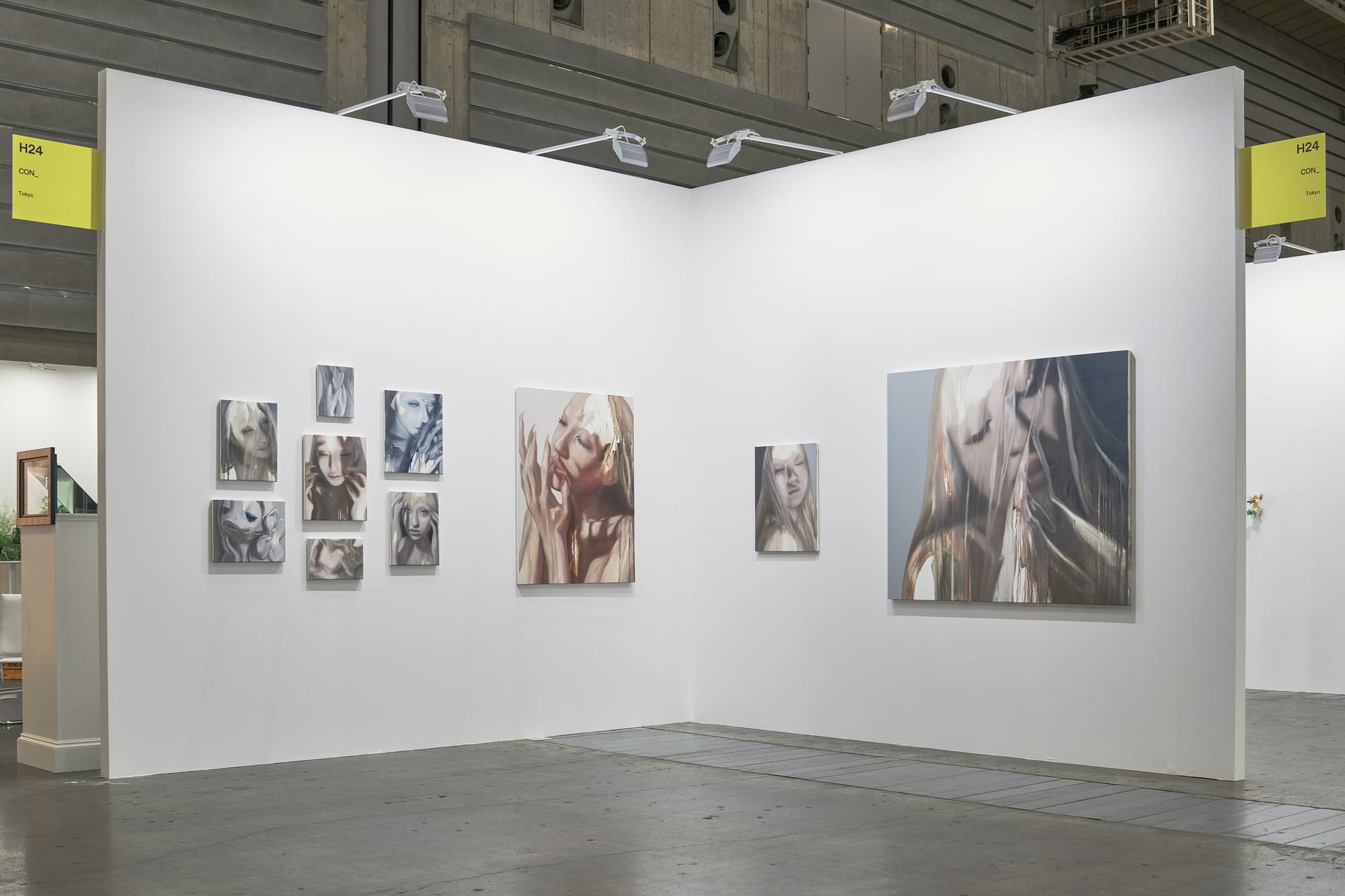
Alongside their peers from abroad, Japanese galleries undergirded the fair with compelling presentations. Among the Tokyo-based returnees were CON_, A Lighthouse called Kanata, NANZUKA, Taka Ishii Gallery, TARO NASU, and KOTARO NUKAGA. The latter sold more than 20 works during the VIP preview and pre-sales, including two of Keita Morimoto’s canvases capturing the nocturnal urban loneliness of Tokyo, each priced between USD 40,000 and 60,000. Meanwhile, CON_, an experimental gallery founded in 2022, devoted its booth to figurative paintings by Yukino Yamanaka; more than five were sold to private collections, each for under USD 10,000. Throughout the fair, modest price tiers and a marked focus on younger artists gave new buyers a lower-risk entry point.
In the inaugural Miki (“Trunk”) sector, first-time participant BANGKOK CITYCITY GALLERY mounted a quietly captivating booth with photographic works by five Thai visual artists. One of the highlights was a mini-series by Apichatpong Weerasethakul, combining ink drawings with images of ancient sites and artifacts in Sri Lanka, where the acclaimed Thai filmmaker is currently producing his next feature, Jenjira’s Magnificent Dream (2027). Elsewhere, in the Tane (“Seed”) program, a trio of Taipei-based galleries—Chi-Wen, Double Square Gallery, and Project Fulfill Art Space—made their debut at Tokyo Gendai with the support of Taiwan’s Ministry of Culture, showcasing video works by FAMEME, Tsui Kuang-Yu, and Zhang Xu Zhan, respectively.
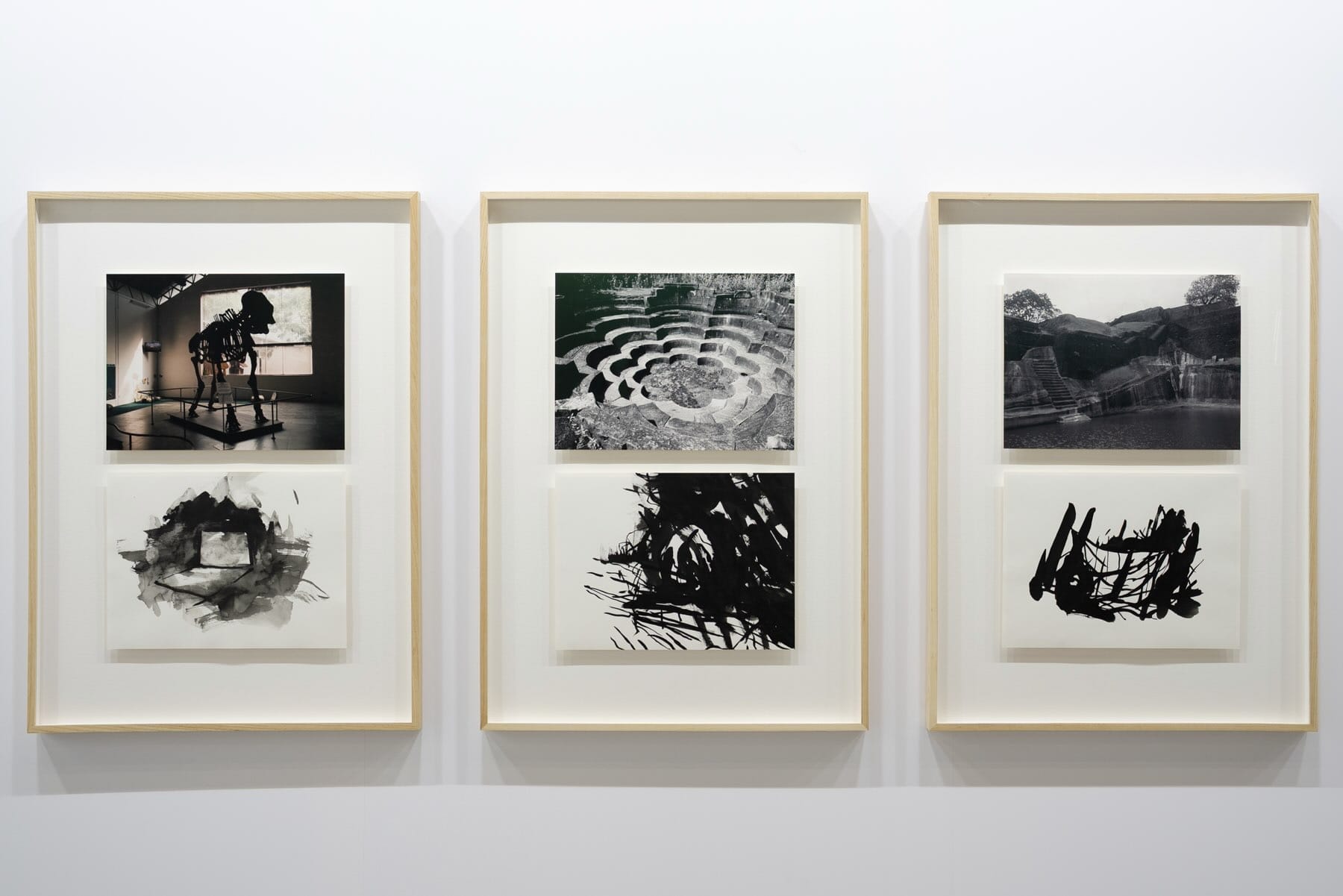
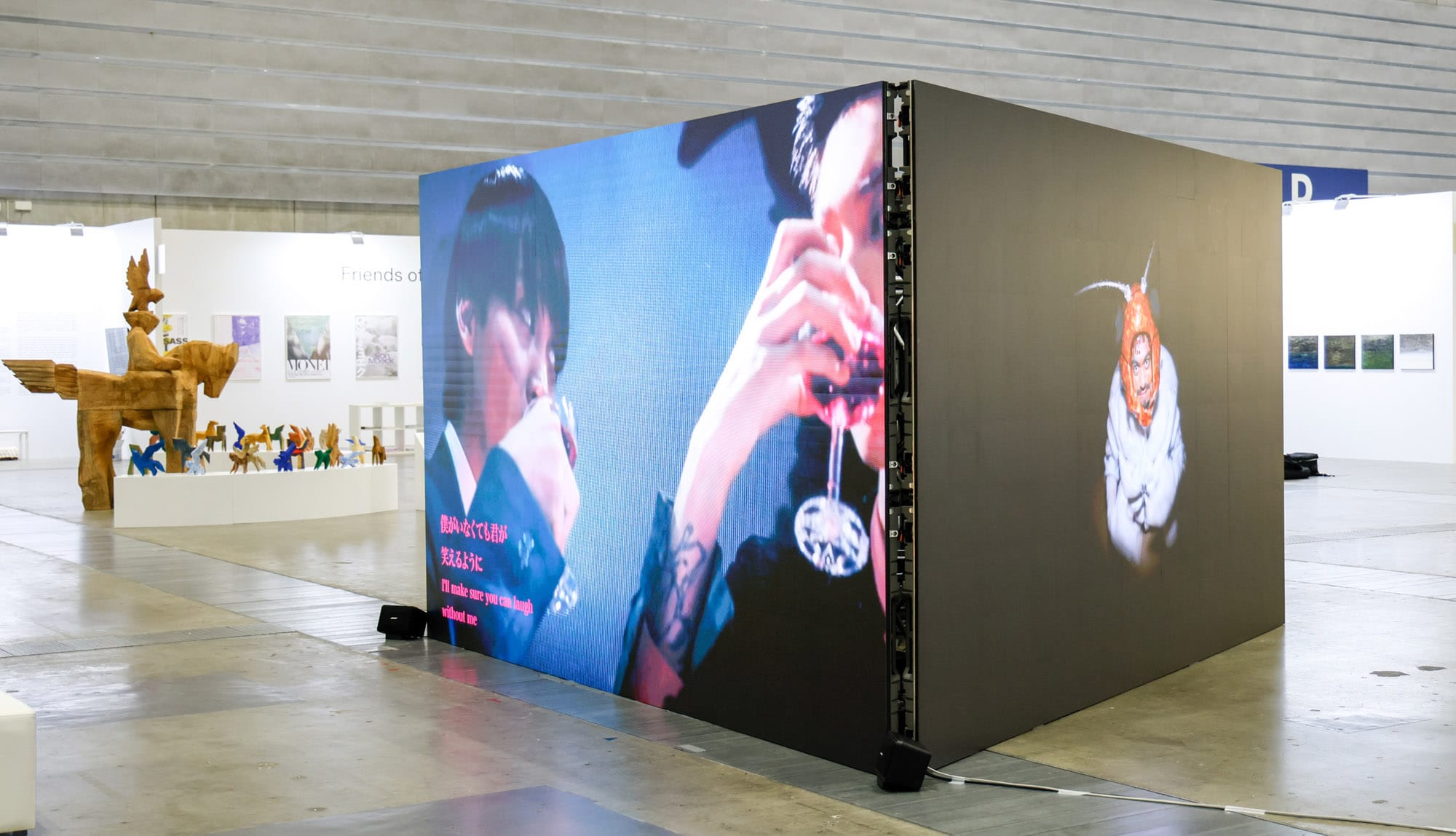
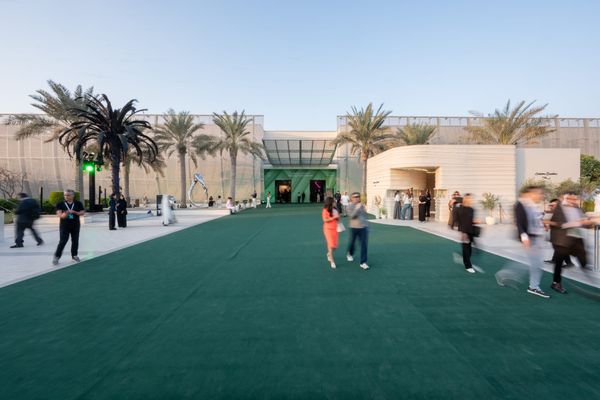
Installation view of APICHATPONG WEERASETHAKUL’s Elephas, Before Light, Lotus Pond and Sigiriya, and Rainwater Still, all 2026, photographs, ink on paper; wood frames with museum acrylic, 28 x 38 cm, 28 x 38 cm; 84 x 60 x 4 cm each, at BANGKOK CITYCITY GALLERY’s booth, Tokyo Gendai 2026. Courtesy the artist and BANGKOK CITYCITY GALLERY, Bangkok (left); and installation view of Tokyo Gendai at Pacifico Yokohama, 2026. Courtesy Tokyo Gendai (right).
Japan has managed to stay afloat amid tenuous economic conditions, even defying the global decline in 2024 with a two-percent increase in sales and upholding its position as the second-largest market in Asia. According to the latest Art Basel & UBS report, this growth slowed down by one percent in 2025—a dip most likely tied to rising fuel and freight costs and a chronically weak yen. Nonetheless, the Japanese market is holding steady with its vigorous institutional infrastructure, a new generation of younger, high-net-worth individuals joining the domestic collector base, and the sustained engagement of foreign dealers.
Since its launch in 2023, Tokyo Gendai has demonstrated an adaptability to ongoing market recalibrations at home and worldwide: last year, the fair opted for a fall slot, dovetailing with its Korean counterparts while attracting more attendees from the US and Europe who, as organizers explained, are often deterred by Japan’s hot and humid summer season. The strategic shifts haven’t stopped there: at the 2026 preview, co-founder Magnus Renfrew revealed that the fair is saying goodbye to Pacifico Yokohama and moving next year to Ariake GYM-EX, a former 2020 Olympic arena converted into an exhibition hall. The more centrally located venue comes with new dates—November 4–7, 2027—timed to coincide with Art Week Tokyo. The move signals an effort to cultivate an internally coordinated program and position Japan as a singular destination within the East Asian art circuit. November in Tokyo is, as Takane told AAP, “a moment of extraordinary cultural energy.”
Annette Meier is an editorial assistant at ArtAsiaPacific.