Market
Land and Kinship: Art Jakarta 2026
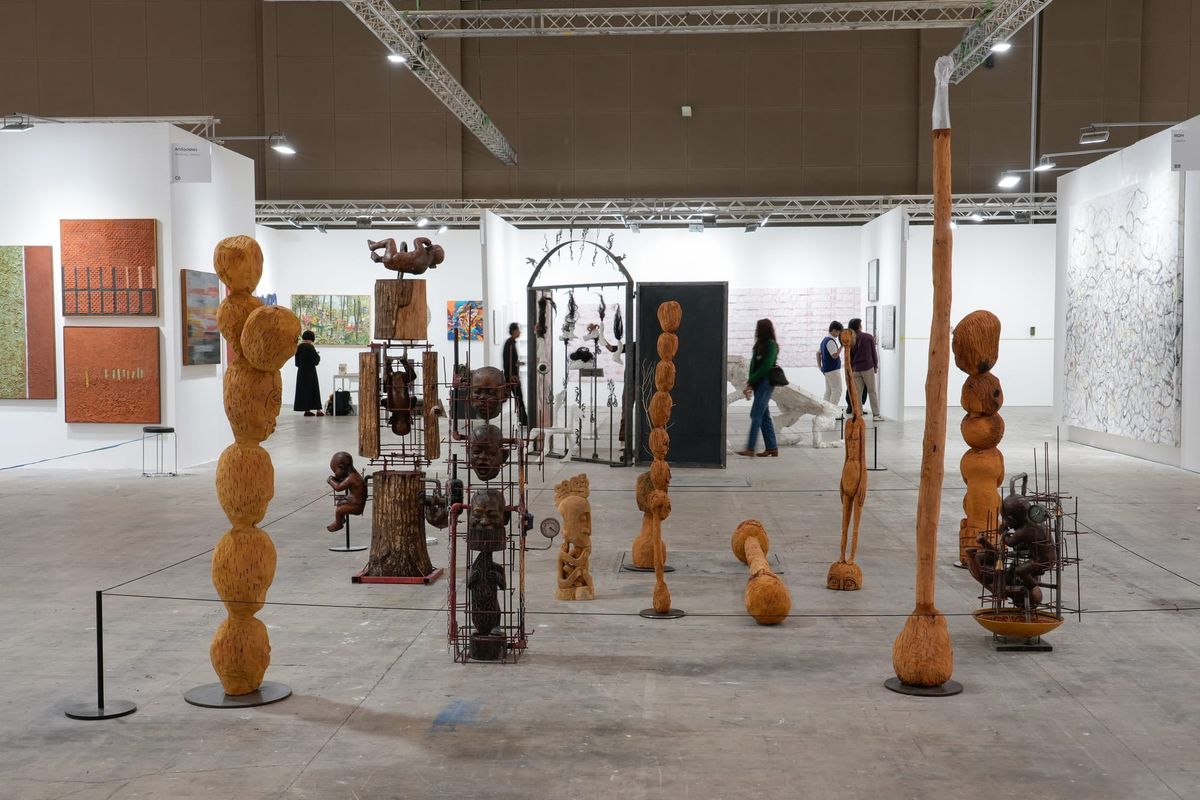
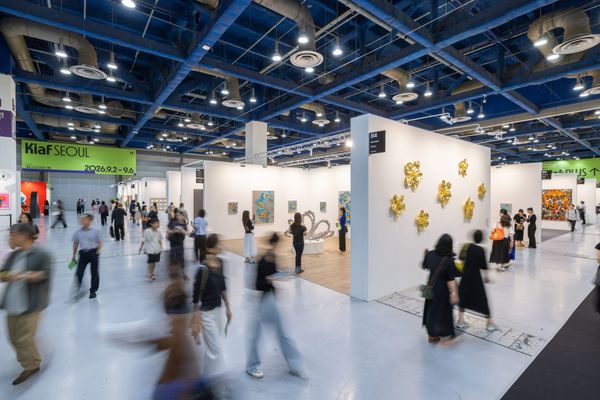
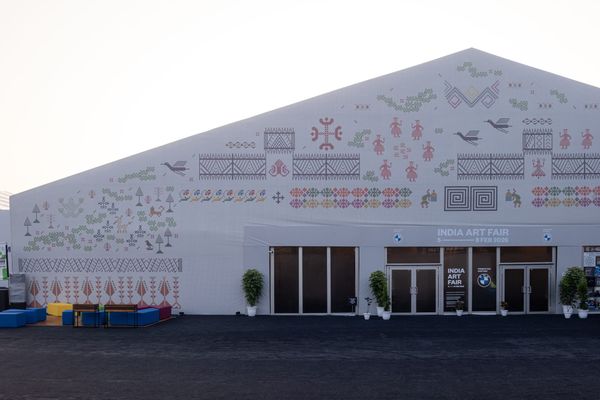
Art Jakarta’s 16th edition, held October 2–4 at JIExpo Kemayoran, drew a record 41,646 visitors, up from approximately 38,000 last year. The roster held steady at 75, but international participation dipped from 35 galleries to 33, the first decline since the fair resumed after the pandemic in 2022. With more than half the exhibitors Indonesian, and state-supported sections drawing in regional initiatives from across the archipelago, there was a strong collective and collaborative ethos. Booths and aisles were bustling and packed, and galleries framed results as resilient, reporting healthy sales despite a difficult economic climate.
Indonesian galleries contributed robust presentations in “Spot,” the sector for oversized installations, where themes of land and kinship lent a political register beyond the spectacle of scale. ROH paired Albertho Wanma’s The Nature Womb (Karwar Series) (2024), which draws on the ancestral statues of Papua’s Biak people, with Budi Santoso’s Mother Trees (2026)—totemic forms whose stacked heads and raised fists suggest solidarity. SAL Project mounted Angki Purbandono’s Berbunga-bunga: Tribute to Red Cross Movement in South Papua (2026), a towering bamboo cross honoring the Marind, Yei, Awyu, and Muyu communities who erect wooden crosses to protest plantations and food estates. ara contemporary presented Nguyễn Phương Linh’s Pulse 1 and Pulse 2 (both 2026), PVC sheets printed with digital images that evoke flesh and landscape, related to her presentation in the Uzbekistan Pavilion at the Venice Biennale.
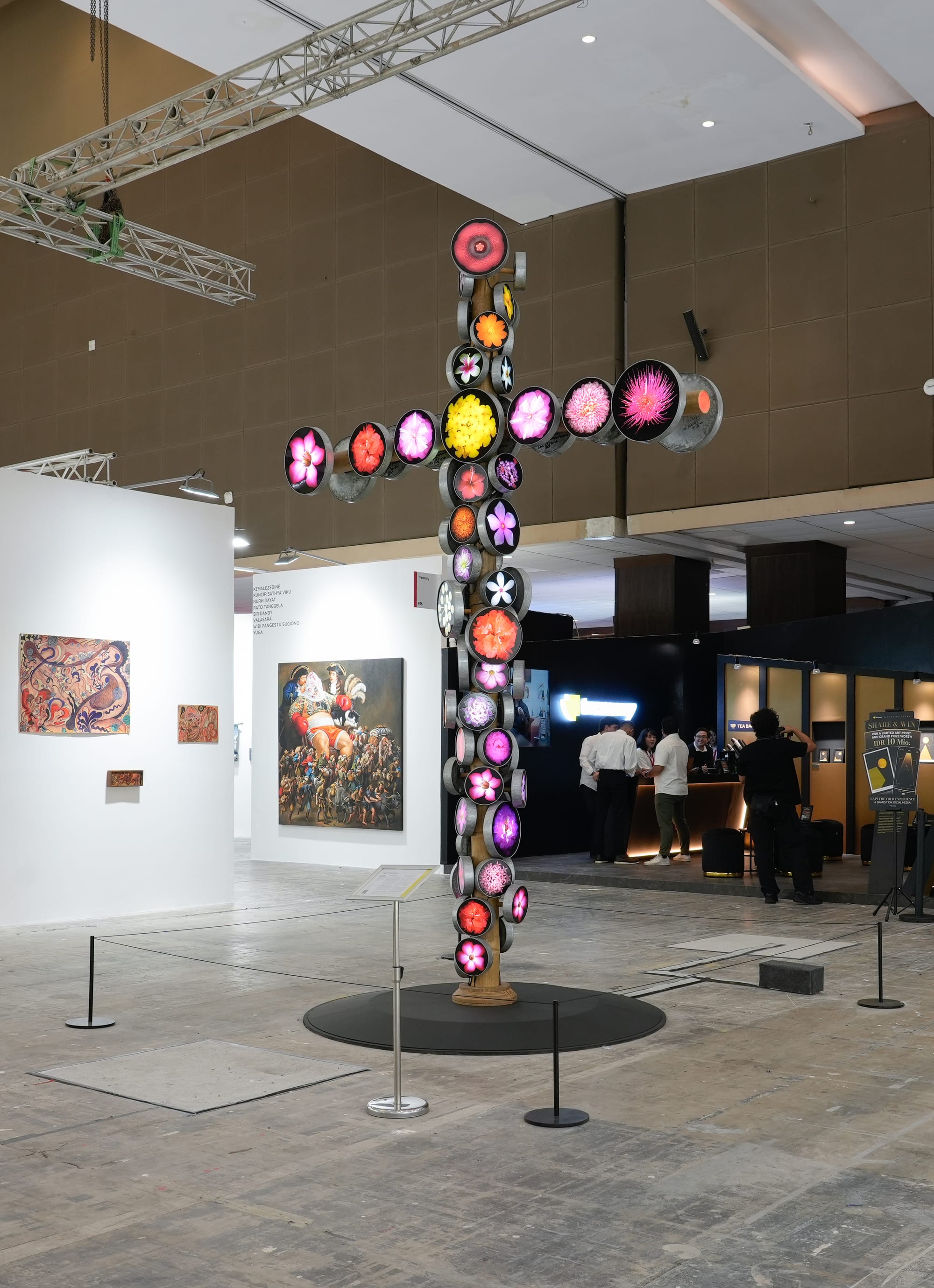
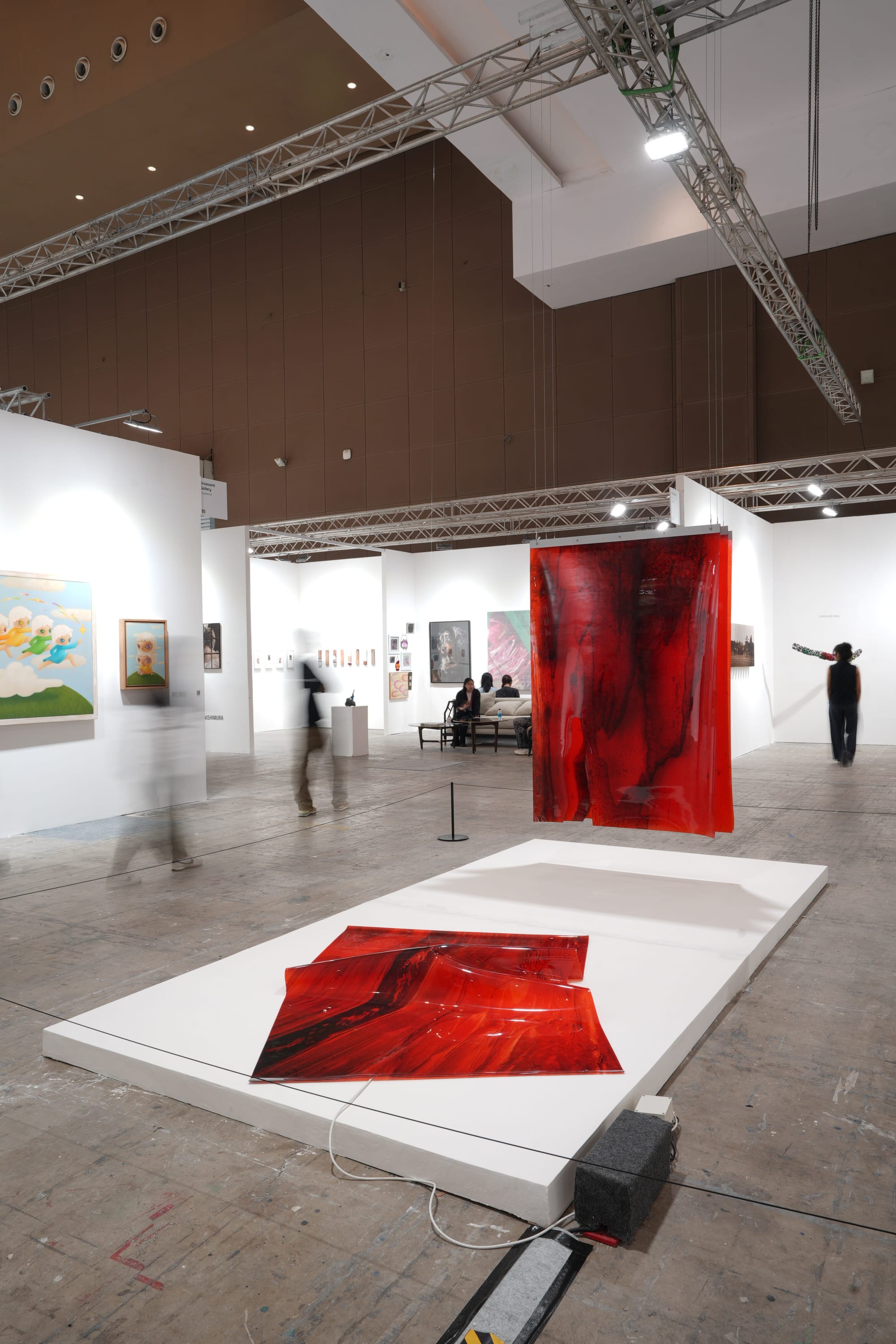
Installation views of ANGKI PURBANDONO’s Berbunga-bunga: Tribute to Red Cross Movement in South Papua, 2026, presented by SAL Project (left); and NGUYỄN PHƯƠNG LINH’s Pulse 1 and Pulse 2, 2026, presented by ara contemporary (right) at the “Spot” sector at Art Jakarta 2026. Courtesy Art Jakarta.
At the booths, accessible prices offered multiple entry points for collectors. ara brought 21 artists, with prices ranging from USD 300 for S. Urubingwaru’s small oils to USD 17,000 for Nazif Lopulissa’s nearly three-meter Drinking Seawater (2023). Sullivan+Strumpf offered a selection of Wisnu Auri’s mixed-media vignettes at USD 1,100–1420 alongside Dawn Ng’s Tender Eruptions (2026), priced at USD 58,000. Gajah Gallery’s 18-artist booth spanned generations, pairing Mangu Putra’s hyperrealist Stage (2025) with his son Jemana Murti’s 3D-printed reworkings of Balinese motifs.
Dealers described a market anchored by domestic buyers. Citra Rudianto, sales associate at Gajah Gallery, said the fair “brought together a mix of existing clients and new collectors, with the majority of interest coming from Indonesia” and collectors from “Singapore, the Philippines, alongside expats based in the region.” For the gallery, “the value of participating in Art Jakarta lies in seeing the immediate response to [their] artists’s work, and building greater visibility for them. These platforms play an important role in building recognition for their work within regional and international art communities.”
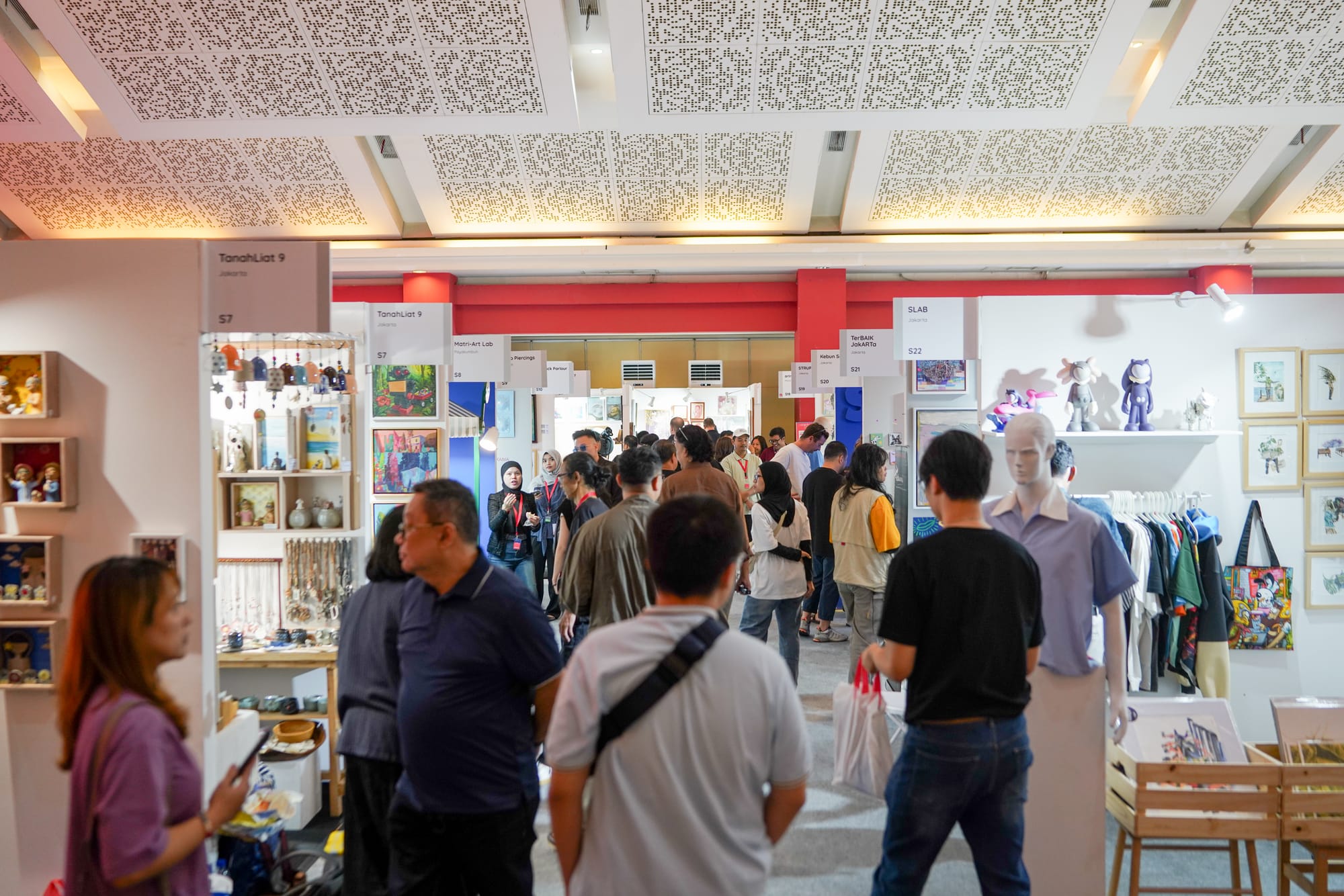
ISA Art Gallery reported good results, “with works by Sinta Tantra and Jumaadi, among other artists in [their] stable, finding buyers.” Deborah Iskandar, president director of the gallery, observed: “The fair also provided an opportunity to connect with new collectors. While the majority of our buyers were from Indonesia, we saw strong interest from collectors in Korea, Singapore, and Malaysia, reflecting a broader regional engagement with our presentation.”
Nineteen first-time exhibitors joined, among them Seoul’s BHAK, Kyoto’s YUMEKOUBOU, Tokyo’s Misako & Rosen, and Hong Kong’s PHD Group. Their arrival replenished a roster that lost Kaikai Kiki Gallery, Tina Keng Gallery, and Manila’s The Drawing Room.
Meanwhile, government-funded sections broadened participation. “Korea Focus,” supported by South Korea’s culture ministry, expanded from 12 to 14 young galleries. The new “AJ Scope,” backed by Indonesia’s Ministry of Culture, brought six independent art market initiatives from across the country to Jakarta. Together, these efforts positioned the fair as a collaborative platform seeking to deepen engagement both at home and abroad.
Michele Chan is managing editor at ArtAsiaPacific.