Sponsored
Between Sound and Light: Yoshikatsu Ikeuchi’s “Liminal”

Yoshikatsu Ikeuchi
Liminal
Kyoto City KYOCERA Museum of Art
October 13–25, 2026
Rather than staging a dialogue in which painting and sound mutually illuminate each other, Japanese artist Yoshikatsu Ikeuchi’s “Liminal,” which ran at the Kyoto City KYOCERA Museum of Art this October, was built around what cannot be exchanged between them, the irreducible differences that persist when one form of expression attempts to become another.
Ikeuchi was born in Kyoto and grew up in a household where painting and composing were routine parts of daily life. He began releasing his own compositions online while still in high school. His practice has since become a sustained investigation of how expression changes shape when it moves between forms.
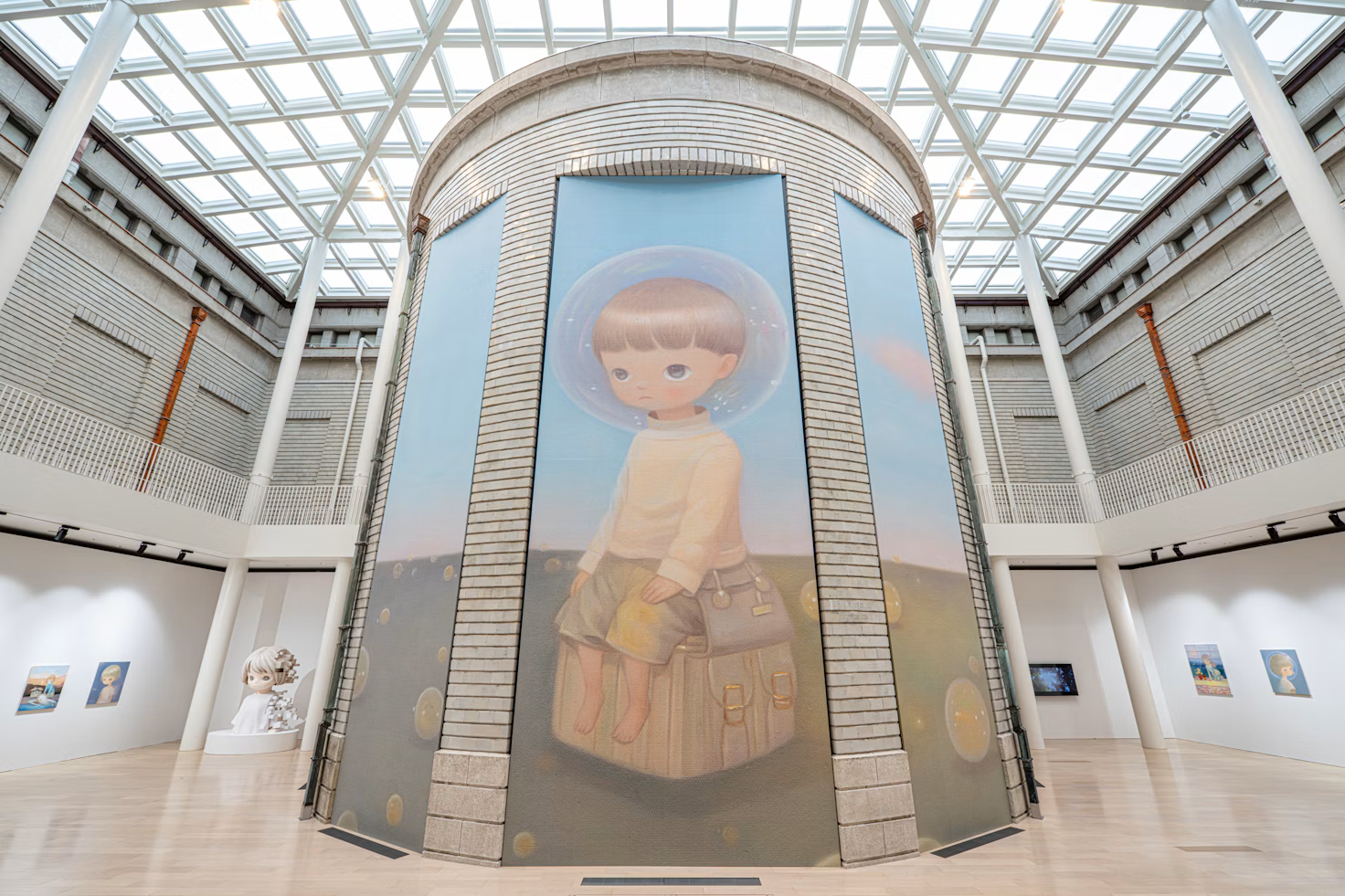
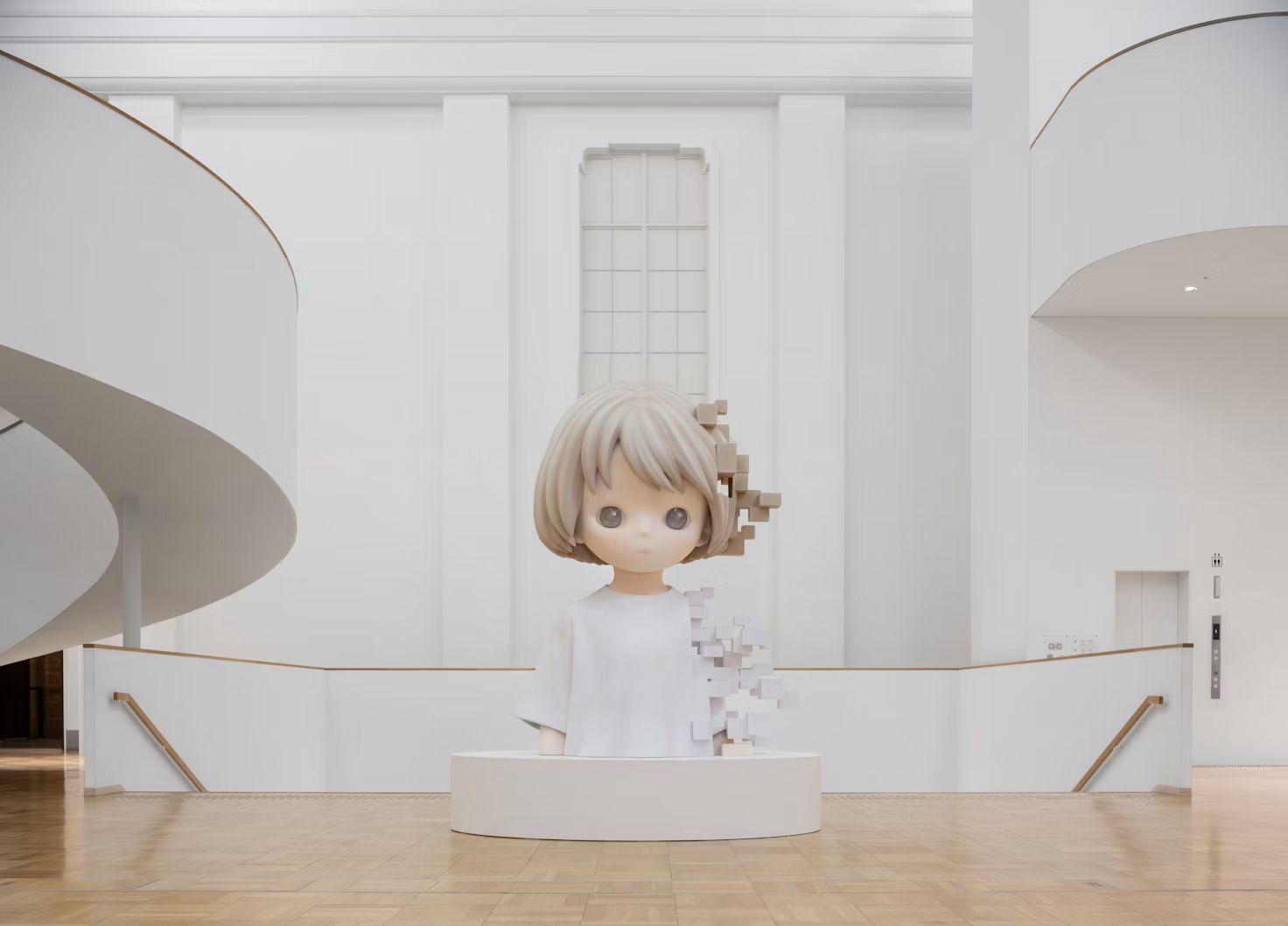
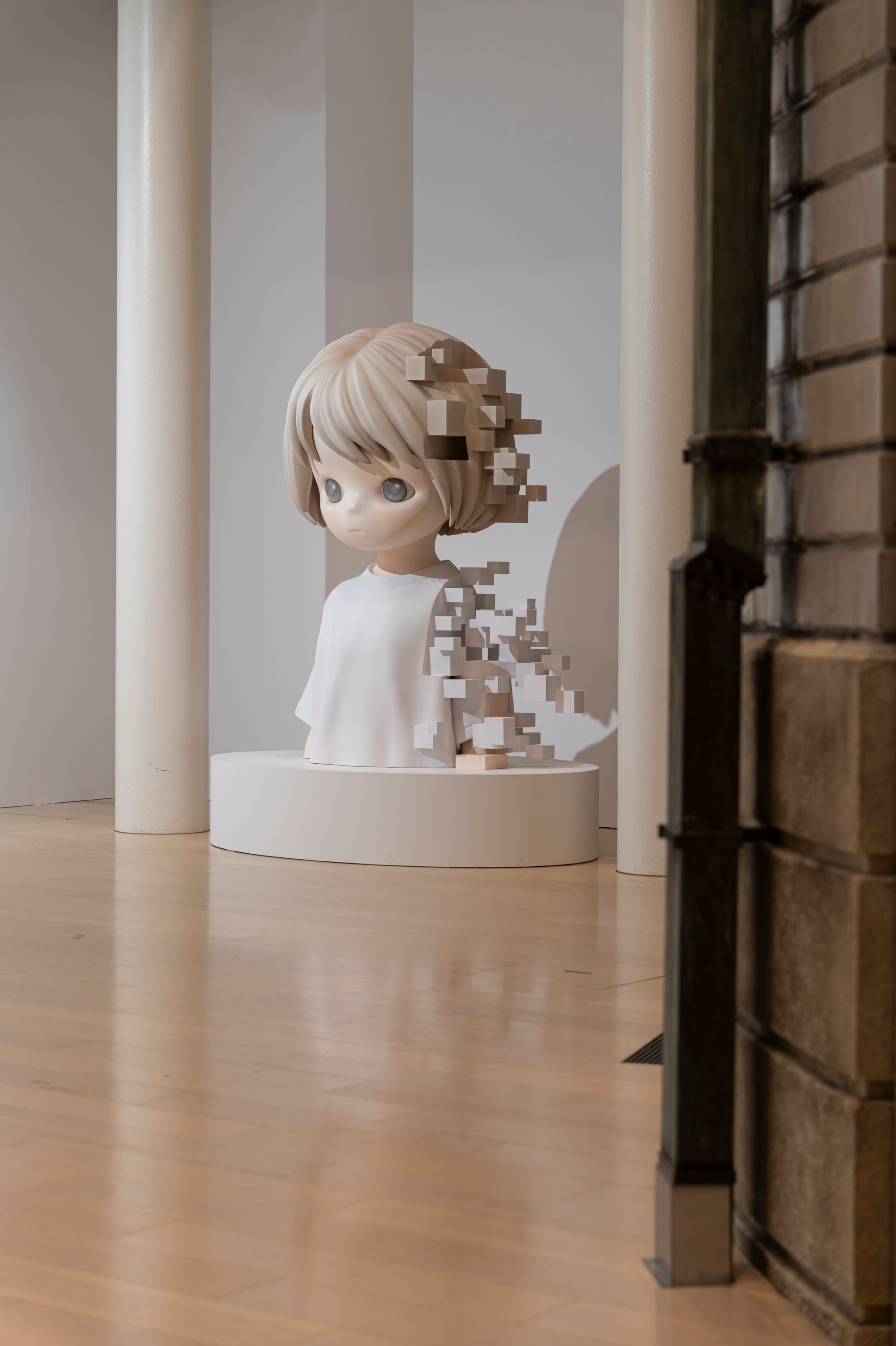
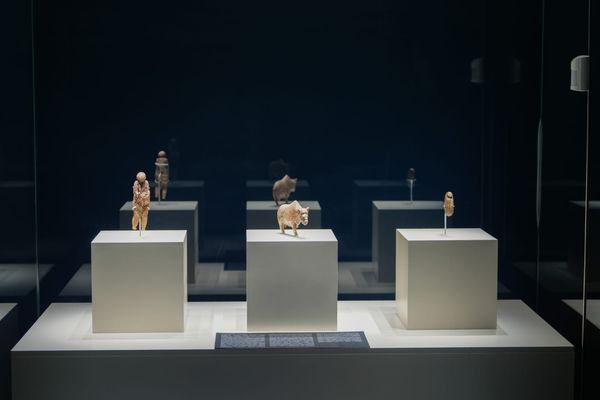
Installation view of YOSHIKATSU IKEUCHI’s “Liminal” at Kyoto City KYOCERA Museum of Art, 2026. Courtesy Kyoto City KYOCERA Museum of Art.
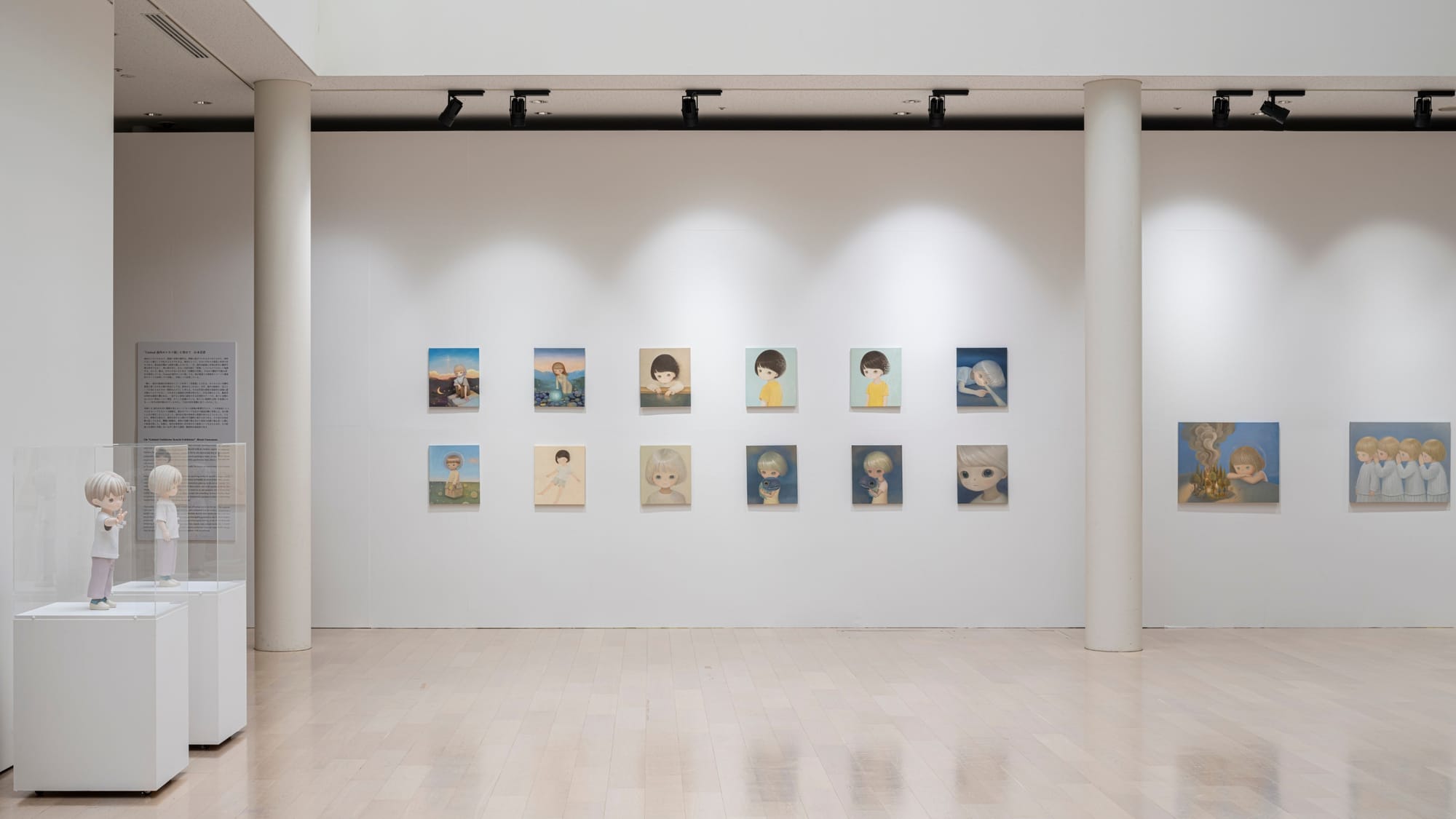
Between Forms
“Liminal” brought together 23 oil paintings, drawings, three sculptures, and a sound installation, displayed in a museum space with a glass ceiling 14 metres overhead. Natural light shifted across the works through the day, and with no fixed route through the space, each visitor’s experience depended on where they stood, what they encountered first, and what time they arrived.
The sound installation 47, 61, 73, (2026) was what most visitors encountered first. Three organic tones emanated from an unseen source above the entrance, cycling at intervals of 47, 61, and 73 seconds respectively. Since the three numbers share no common factors, their relationship at any given moment is determined entirely by where they happen to be in their independent cycles. Full convergence occurs only once every 58 hours. The piece doesn’t so much repeat as continuously rearrange itself, which turns duration, how long you spend in the space and which path you take through it, into part of the compositional material.
Soft Worlds
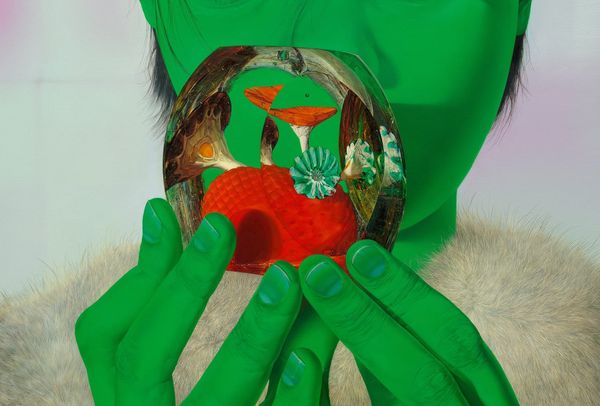
Pale and layered, inhabited by solitary figures and strange creatures rendered in a flattened graphic style reminiscent of animation, Ikeuchi’s paintings activate recognizable cultural associations, childhood, innocence, the pastoral. Yet, they are also distorted just enough to stop those associations from settling. Outlines do not quite align. Expressions are hard to read. Bodies are mid-transformation.
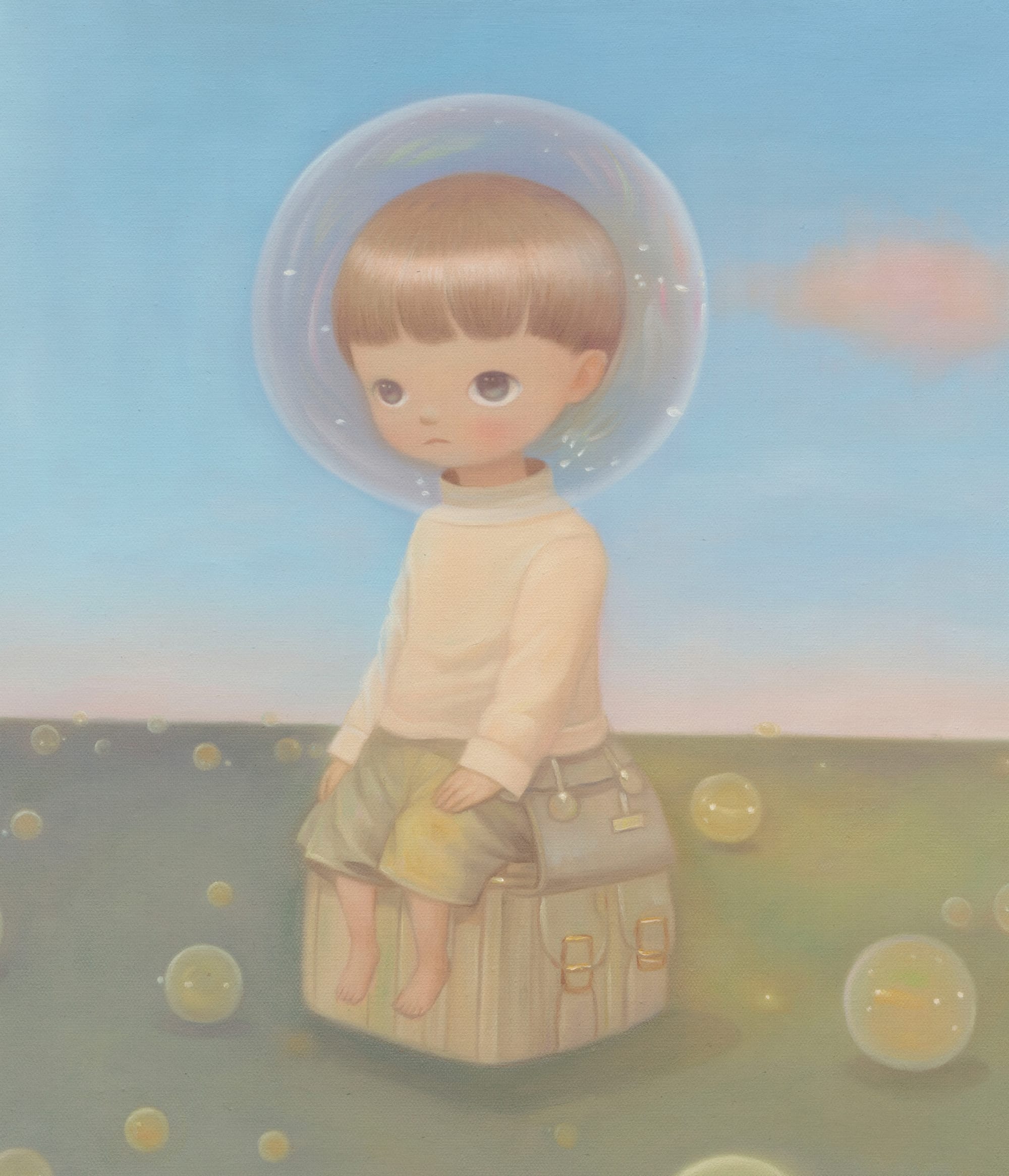
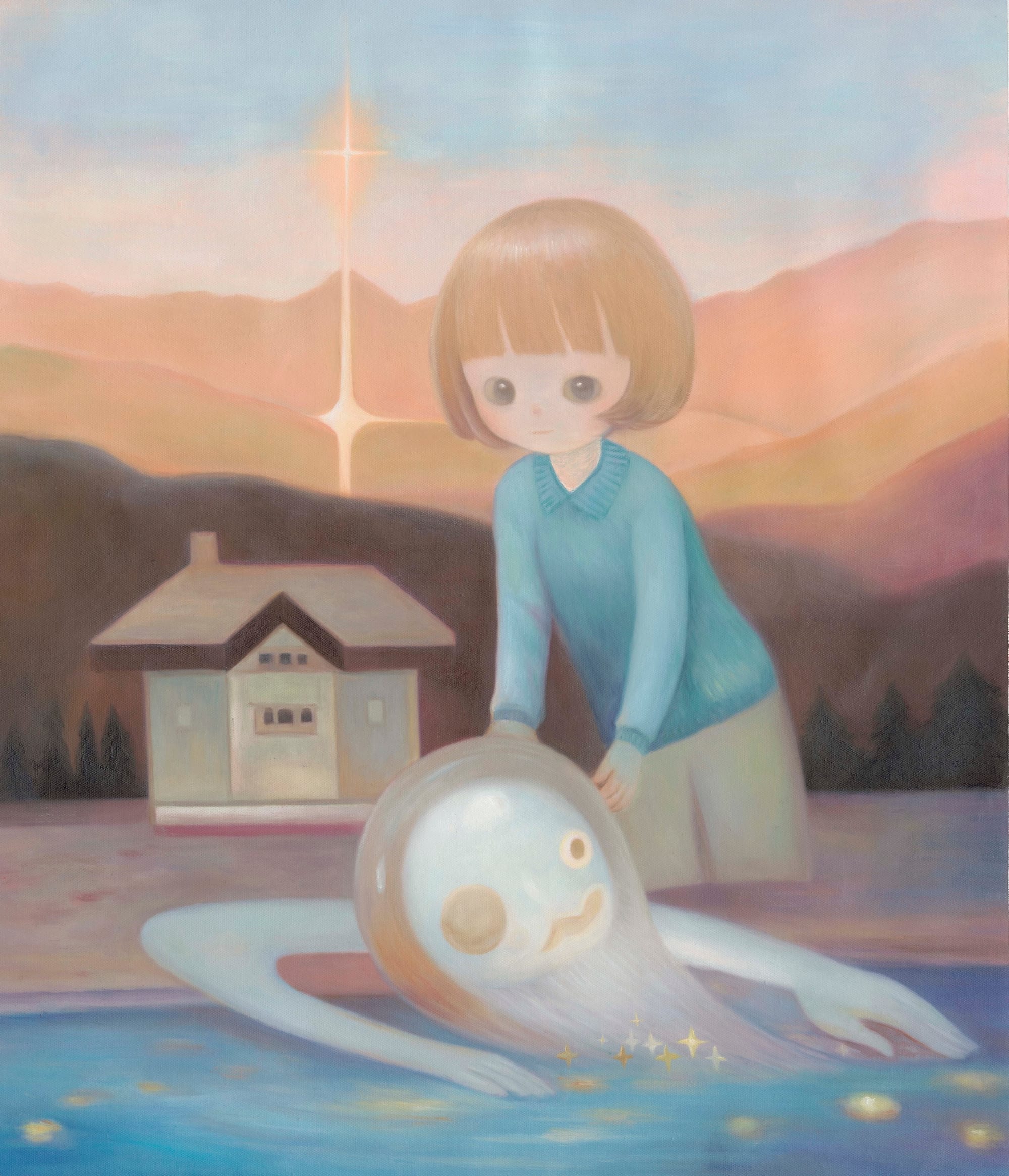
Remnant of Light (2026) depicts a child seated on a wooden crate in a pale meadow, the childʼs head enclosed in a translucent sphere, like a soap bubble or a diverʼs helmet, that slightly distorts the features within. The expression, insofar as it registers, suggests a kind of distracted indifference. Scattered across the grass are smaller spheres, identical in form to the one around the childʼs head, lying loose across the meadow, unattached to anyone. It is unclear whether they have been shed or were never inhabited. While the repetition of spheres creates a visual rhyme between the figures and the surrounding landscape, the role played by these translucent forms shifts from instance to instance, resisting any reduction to a single, fixed interpretation. Another work, Unbecoming Self (2026), features a girl pulling a creature from a body of water, a solitary house and forested hills behind her. The background evokes the tonal warmth of illustrated children’s fiction while the creature, with its blunt simplicity, generates a sense of unease.
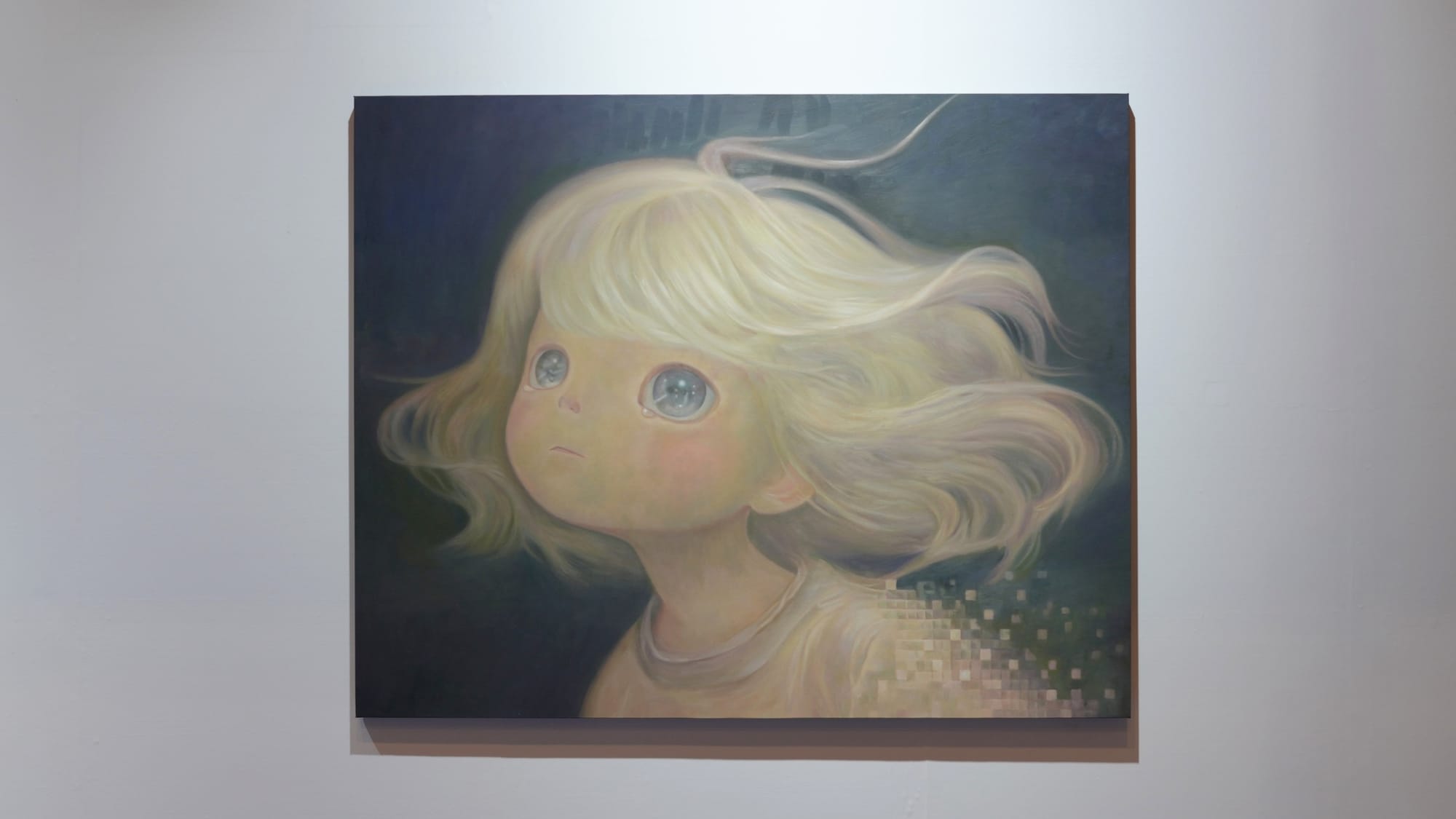
Modest in scale and quiet in sensibility, Elusive (2026) depicts a girl looking outward against a soft blue ground. Her eyes hold tears, gathered but not yet falling. She gazes directly out of the canvas, placing the viewer in the position of someone being looked at. The expression in her brows and the set of her mouth is level, not grief-configured, as if she is observing. In reading such an expression as “sadness,” Ikeuchi suggests, something is also lost, the particular quality of a gaze, a complicated, layered emotional charge, and an atmosphere that the word cannot fully hold.
About the artist
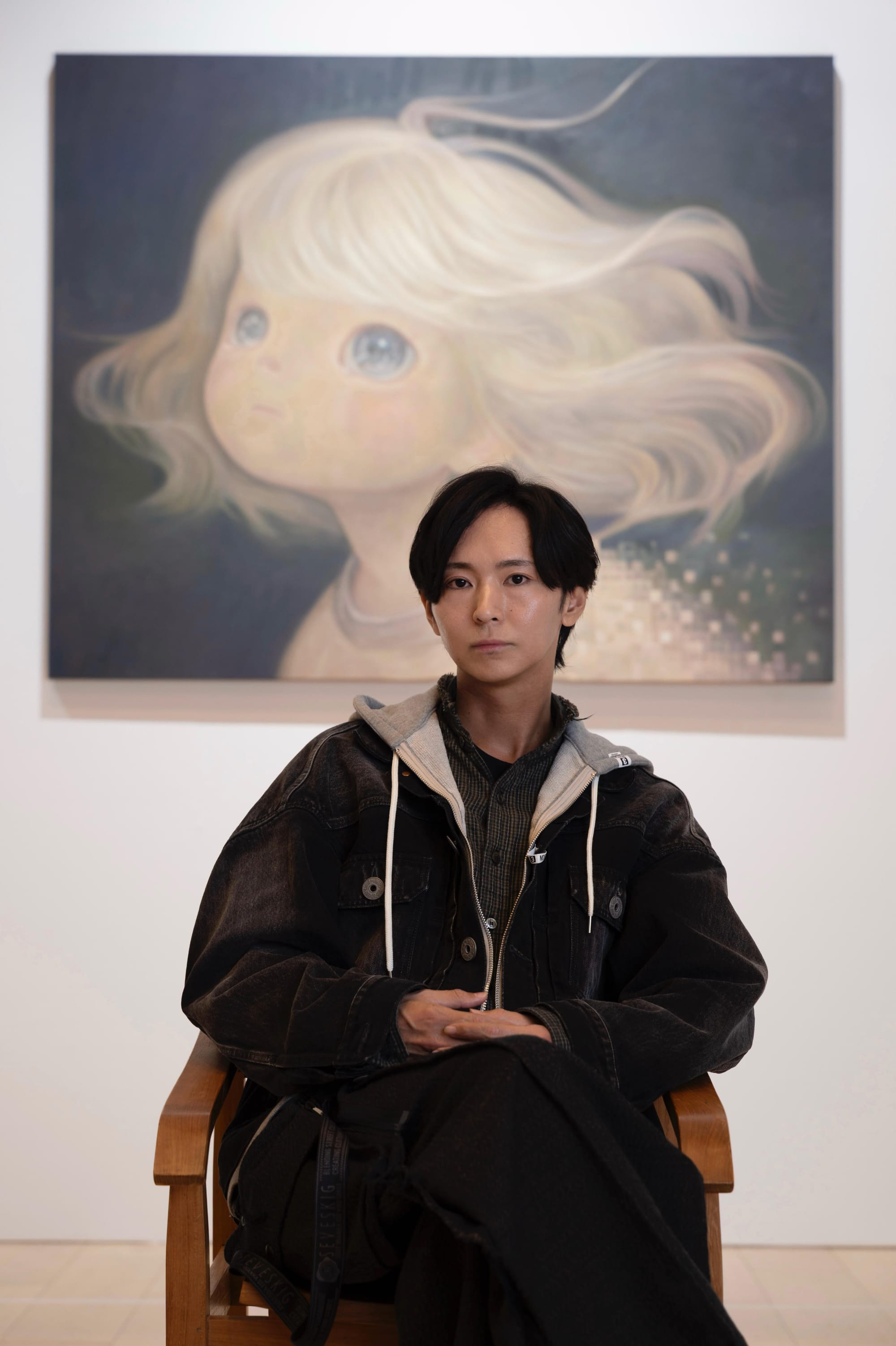
Based in Tokyo and born in Kyoto, Ikeuchi is an artist and composer whose practice moves between sound, installation, and painting. In 2016, he scored Lee Sang-il’s psychologically dense film Rage (Ikari), working under Ryuichi Sakamoto’s musical direction.
Ikeuchi was recently appointed Honorary Cultural Ambassador for Kyoto Prefecture by the Governor, a role centered on sharing the prefecture’s creative culture internationally. His recent solo exhibitions include “MUSORY” at the Kyoto National Museum (November 2025) and “Liminal” at the Kyoto City KYOCERA Museum of Art (October 2026). “Liminal” was presented as an initiative to spotlight new forms of culture emerging from Kyoto; the exhibition drew 12,826 visitors over its 12 opening days.
In addition, a collaboration between Yoshikatsu Ikeuchi and BE@RBRICK was announced at “Liminal,” with pre-orders opening during the exhibition run. A collaboration with wine glass brand RIEDEL was also unveiled at the exhibition. Products will go on sale in 2027 at RIEDEL stores and through its online shop.