News
Venice Biennale Jury Bars Israel and Russia from Official Prizes
The international jury of the 61st Venice Biennale announced on April 23 that it will not consider the Israeli and Russian pavilions for this year’s official prizes, including the Golden Lion for national participation. The five-member panel, appointed a day earlier, said it would exclude from consideration “countries whose leaders are currently charged with crimes against humanity by the International Criminal Court.”
Although the statement did not name specific states, the criterion applies to Israel and Russia, whose leaders Benjamin Netanyahu and Vladimir Putin are subject to International Criminal Court arrest warrants issued in 2024 and 2023, respectively. The charges relating to Russia concern the alleged unlawful deportation and transfer of Ukrainian children, while those against Israel include the targeting of civilians and the use of starvation as a weapon of war in Gaza.
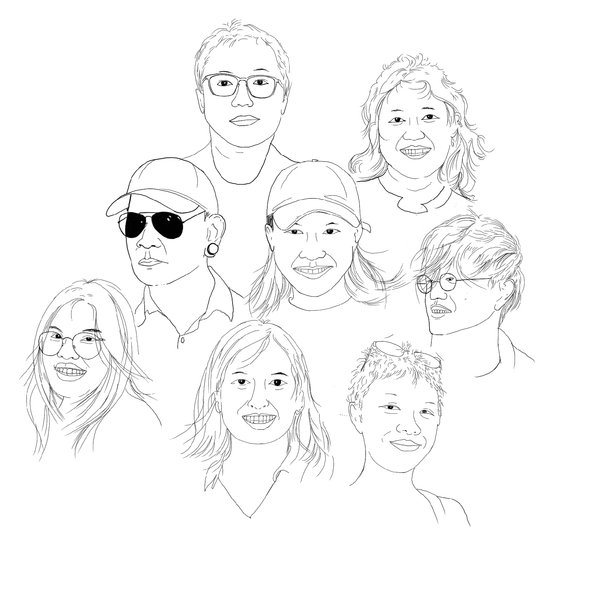
The Biennale’s all-women jury, comprising Solange Farkas, Zoe Butt, Elvira Dyangani Ose, Marta Kuzma, and Giovanna Zapperi, framed its stance as an expression of its “commitment to the defense of human rights.” The move comes amid intensifying criticism of the institution’s willingness to host both pavilions, while stopping short of demanding their removal from the exhibition.
The presence of Russia and Israel at the 2026 edition has been subject to mounting contention. Russia is returning for the first time since its artists withdrew from the 2022 Biennale in protest of the invasion of Ukraine, while Israel is back after its 2024 pavilion remained closed under a pledge by the artist and curators not to open it until a Gaza ceasefire and hostage-release agreement had been secured.
In March, dozens of artists in the central exhibition organized by the late Koyo Kouoh, along with several curatorial advisors she had invited before her death in 2025, signed an open letter urging organizers to bar the Israeli, Russian, and US pavilions. A separate, earlier statement by the Art Not Genocide Alliance, endorsed by almost 200 artists, curators, and art workers, called for the exclusion of Israel and Russia and condemned the ongoing absence of a Palestinian pavilion.
In mid-April, the European Commission sent a formal notice to the Biennale stating its intention to suspend or cancel a EUR 2 million grant (USD 2.3 million) in response to the decision to reopen the Russian pavilion, giving the foundation 30 days to reply. Biennale president Pietrangelo Buttafuoco has continued to insist that the exhibition must remain open to all states recognized by Italy.
By intervening at the level of prize eligibility, the jury has effectively introduced a symbolic sanctions mechanism within the exhibition. The decision underscores the fraught role of artists as de facto cultural diplomats in Venice, where prizes can be read as conferring legitimacy on the states that commission and fund national presentations.
The 61st Venice Biennale opens on May 9.
Michele Chan is managing editor at ArtAsiaPacific.