News
Kazakhstan Presents “Qoñyr: The Archive of Silence” at Venice Biennale
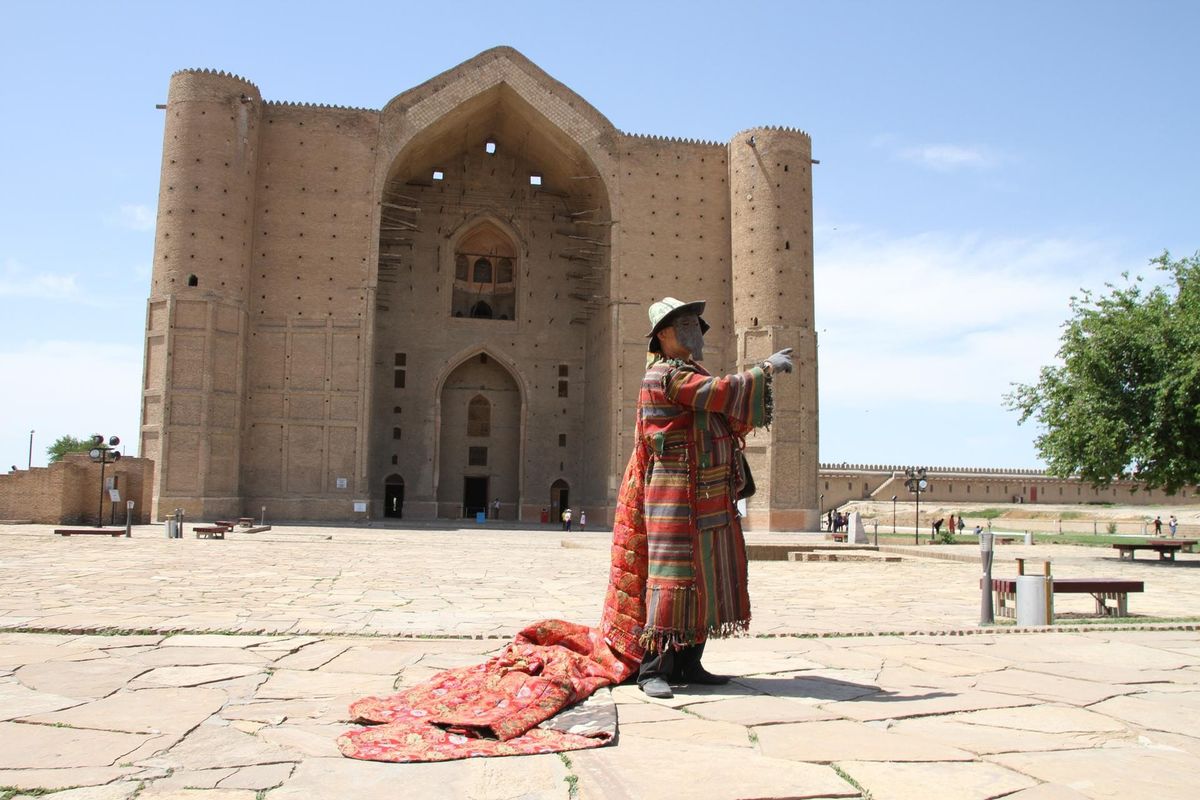
Kazakhstan has released details of its national pavilion at the 61st Venice Biennale. “Qoñyr: The Archive of Silence,” curated by artist-curator Syrlybek Bekbota in response to “In Minor Keys,” the overarching theme of the Biennale Arte 2026 conceived by the late Koyo Kouoh, builds its narrative around “Qoñyr”—a multifaceted Kazakh term denoting a brown hue, a nostalgic sonic register, the scent of earth, and a dense, generative silence.
Bringing together nine artists—Ardak Mukanova, Gulmaral Tattibayeva, Natalya Ligay (ADYR-ASPAN), Anar Aubakir, Äsel Kadyrkhanova, Smail Bayaliyev, Nurbol Nurakhmet, Mansur Smagambetov, and Oralbek Kaboke—the exhibition will unfold as a slow, sensory journey across six interconnected rooms at the Museo Storico Navale, which has hosted Kazakhstan’s pavilion since 2022. It opens with Dübir, a sound installation by ADYR‑ASPAN, whose layered recordings of horse-hoof rhythms evoke the steppe and attune visitors to subtler modes of perception. The presentation then moves into Steppe Architectonics, a courtyard installation by Bayaliyev, and Aitys: The Limits of Translation, a video installation by curator Bekbota that foregrounds the traditional Kazakh musical‑poetic contest as a site of dialogue and critique.
The second hall pairs Smagambetov, whose practice emerged in the late Soviet period, with Kaboke, who returned to Kazakhstan after years abroad, in an installation that traces cultural and personal adaptation. Nearby, Nurakhmet’s As daiyndau tәsіlderi (The Life of a Soviet Home) reconstructs a Soviet domestic interior, while Smagambetov’s Balalyk shaқtyң dybysy (The Life of a Child) reflects on a childhood spent near the Semipalatinsk nuclear test zone.
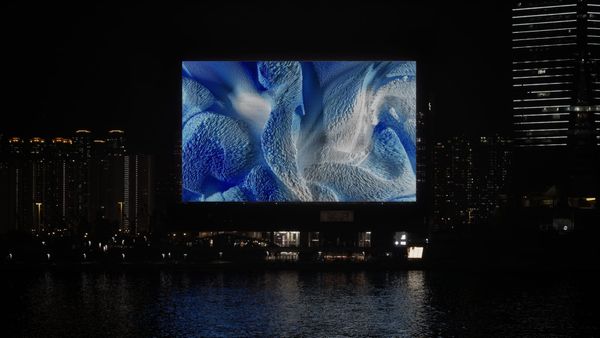
Elsewhere, memory appears as archival gesture: Kadyrkhanova’s Machine incorporates an old typewriter and worn arrest warrants connected via a red thread, while Aubakir’s Matrix of a New Subject reconfigures a family heirloom blanket into an assemblage that stages loss as both material and generational rupture. Culminating in Mukanova’s Qoñyr Aulie: Immersion into the Quiet Depths, a three‑channel video that combines LIDAR scanning of an ancient cave with the voices of nearby villagers, the sequence nods to Äbiken Khasenov’s 20th‑century composition Qoñyr, binding sonic heritage to contemporary imaging.
Bekbota’s concept was chosen through an open call organized by Kazakhstan’s Ministry of Culture and Information, marking the first time a Central Asian country has selected its pavilion curator and artists through a competitive selection process.
Michele Chan is managing editor at ArtAsiaPacific.