News
UNESCO and Lebanon Condemn Israeli Attacks on Heritage Sites
Lebanese authorities and UNESCO have condemned Israeli military attacks on UNESCO-protected heritage sites in the country’s south, including the Chama’ Citadel and Beaufort Castle—two 12th-century Crusader fortresses—as well as the ancient city of Tyre. The strikes came amid Israel’s military campaign against Hezbollah, ongoing since early March.
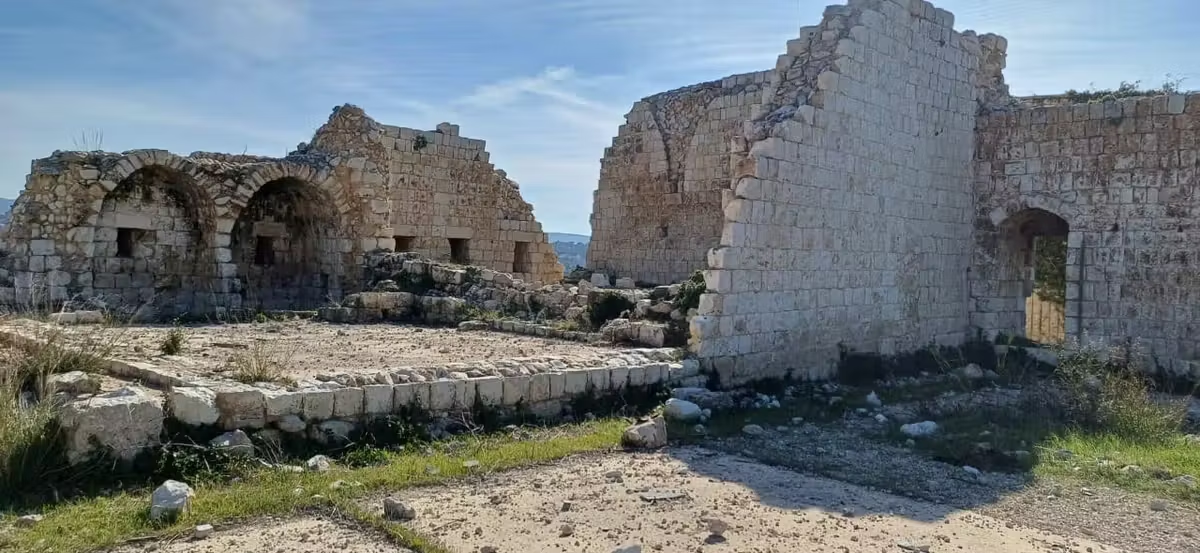
On May 31, despite a ceasefire agreement, Israeli forces seized the Beaufort Castle (known locally as Qal’at al-Shaqif) in Lebanon’s Nabatieh Governorate, following days of airstrikes in the surrounding area. Videos circulating online show soldiers at the fortress, where Israeli and Golani Brigade flags have been raised. Originally built under King Fulk of Jerusalem around 1137, and later expanded and modified by the Ayyubid and Mamluk rulers, the site had previously sustained extensive impairment during Israel’s 1982–2000 occupation of South Lebanon before undergoing restoration.
Further south, the Chama’ Citadel—a stronghold in the Mount Amel region blending Crusader, Ayyubid, and Mamluk military architecture—was severely damaged, with its shrine and minaret demolished on April 13. The castle has repeatedly borne the impact of conflict, having been targeted in 2006 and 2024. Archaeological areas in the nearby city of Tyre have likewise been subjected to bombardment since March.
All three sites are among the 73 Lebanese landmarks granted UNESCO provisional enhanced protection—the highest level of protection of cultural properties under the 1954 Hague Convention—in the past two years. Deliberate attacks against them constitute a serious violation of international law.
Over the past three months, US-Israeli strikes on Iran have caused destruction to multiple cultural heritage sites, including Golestan Palace in Tehran and the Chehel Sotoun Palace and Naqsh-e Jahan Square in Isfahan. Meanwhile, retaliatory Iranian missiles also damaged Israel’s UNESCO-listed White City of Tel Aviv.
On May 28, Lebanon’s prime minister Nawaf Salam wrote on X: “Nothing can justify the ongoing assaults on my regions of Tyre and Nabatieh and the destruction of their historical landmarks, nor the continuous threats targeting our peaceful people there.”
On May 29, UNESCO issued a statement condemning the attacks, expressing concern over the two fortresses and the “further damage and potential looting” of Tyre. The agency pledged to cooperate with local authorities to assess damage and strengthen safeguarding protocols.
Yuqian Fan is an editorial assistant at ArtAsiaPacific.