News
Chua Mia Tee, 1931–2026
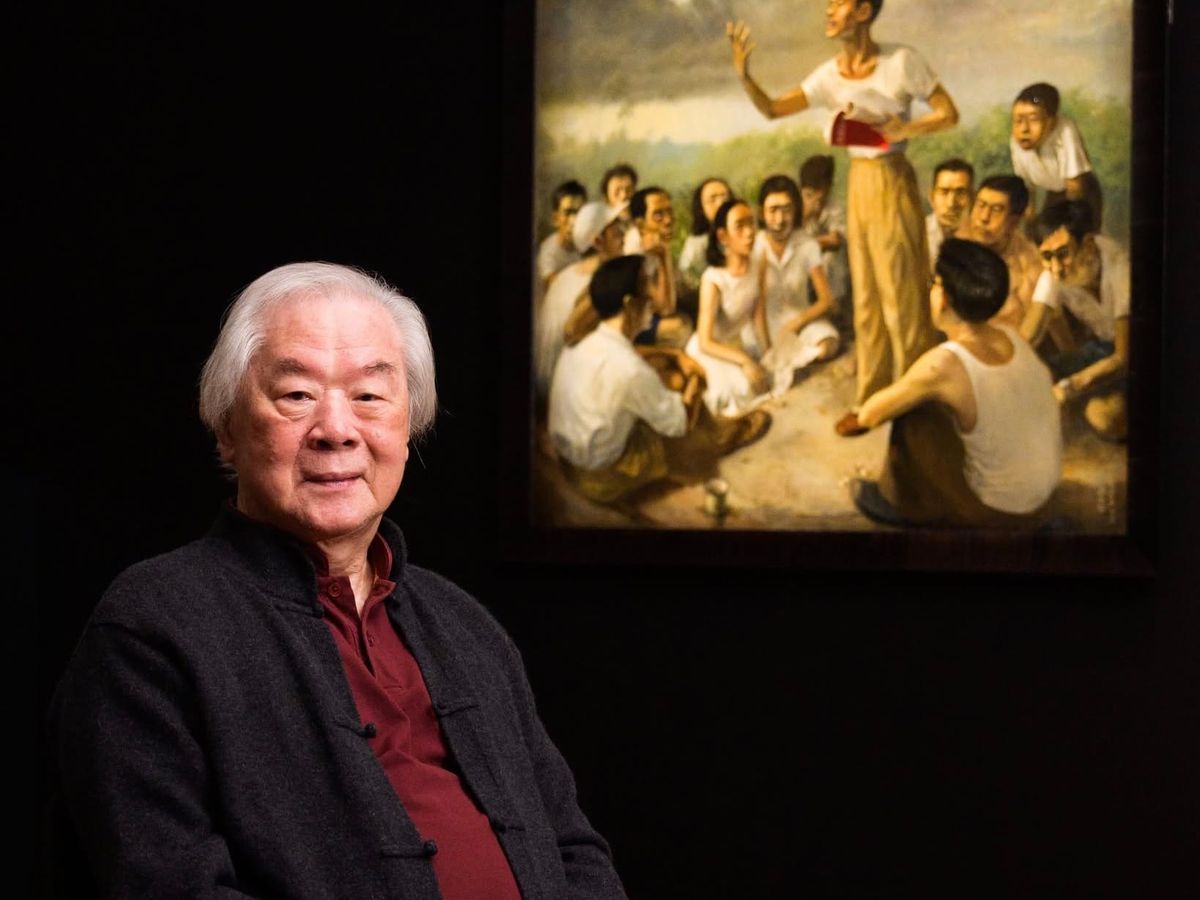
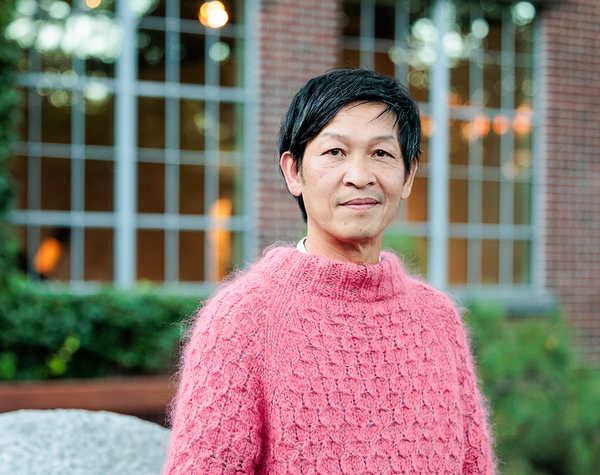
Singaporean artist Chua Mia Tee, whose social realist paintings captured daily life in postcolonial Singapore and Malaya during the 1950s and ’60s, died from pneumonia on July 10, aged 94. His passing was announced by the National Gallery Singapore (NGS).
Born in 1931 in Shantou, southern China, Chua was only six years old when he and his family fled to Singapore to evade the Second Sino-Japanese War (1937–45). During the Japanese occupation (1942–45), they briefly relocated to Indonesia before returning to Singapore in 1945. Chua’s interest in art started early on as he grew up watching his father sketch portraits of his grandparents. Encouraged by his father to pursue art, Chua withdrew from his secondary education at Chung Cheng High School to enroll in the Nanyang Academy of Fine Arts (NAFA), where he trained under pioneering artists such as Lim Hak Tai, Cheong Soo Pieng, Koh Tong Leong, and See Hiang To. After graduating in 1952, he worked as a lecturer at NAFA for two years, then briefly returned to Chung Cheng High School to finish his secondary education. Alongside his painting practice, he ventured into commercial art, working as an illustrator and book designer from the late ’50s onward.
In 1956, amid Singapore’s growing efforts to separate from the Federation of Malaysia, Chua was a founding member of the Equator Art Society alongside fellow artists Lim Yew Kuan, Lai Kui Fang, Ong Kim Seng, and Koeh Sia Yong. The group rejected Western modernist styles, foregrounding social realist depictions of the everyday struggles of the working class.
Chua’s major career breakthrough came in his 40s: following the success of his first-ever solo exhibition in 1974, which was staged at Rising Art Gallery, he decided to become a full-time artist. Among his most iconic tableaux are Epic Poem of Malaya (1955) and National Language Class (1959), which convey nationalistic sentiments and internal anxieties surrounding Singapore’s burgeoning self-governance. Workers in a Canteen (1974), another famous oil on canvas, highlights Jurong Shipyard workers who contributed greatly to the country’s post-independence industrial and economic development. From natural and urban sceneries to commissioned portraits of local officials and politicians, Chua traced the shifting history and identity of Singapore, guided by his lifelong philosophy that “art must be true, virtuous, and beautiful.”
At the age of 84, Chua was awarded the Cultural Medallion in 2015, Singapore’s most prestigious arts accolade. In 2021, NGS held a major retrospective, titled “Chua Mia Tee: Directing the Real,” which gathered more than 50 works made between 1950 through 1980 alongside archival materials and excerpts from Chua’s writings.
In a statement, NGS chief executive officer and director Eugene Tan noted that “Chua Mia Tee’s passing is a profound loss to Singapore’s art community. . . . Through his artistry and dedication, his works offer an enduring portrayal of Singapore’s journey, one that will remain a profound source of inspiration for future generations.”
Joyce Lee is an editorial intern at ArtAsiaPacific.