News
Dozens of Pavilions Close During Strike at 61st Venice Biennale
On May 8, a 24-hour strike organized by the Art Not Genocide Alliance (ANGA) and several Italian cultural activist groups brought significant portions of the 61st Venice Biennale to a standstill, with approximately 27 of the exhibition’s 100 national pavilions closing fully or partially in solidarity with protesters demanding Israel’s exclusion from the event.
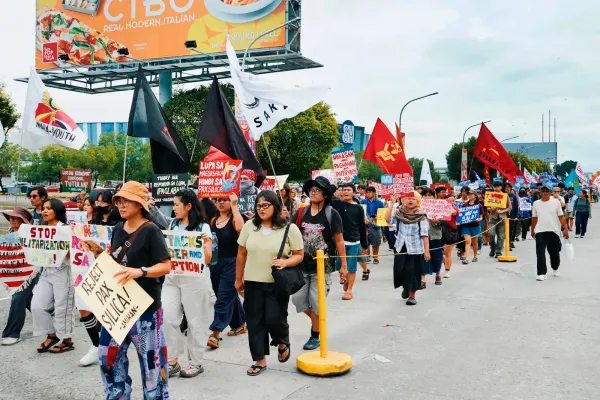
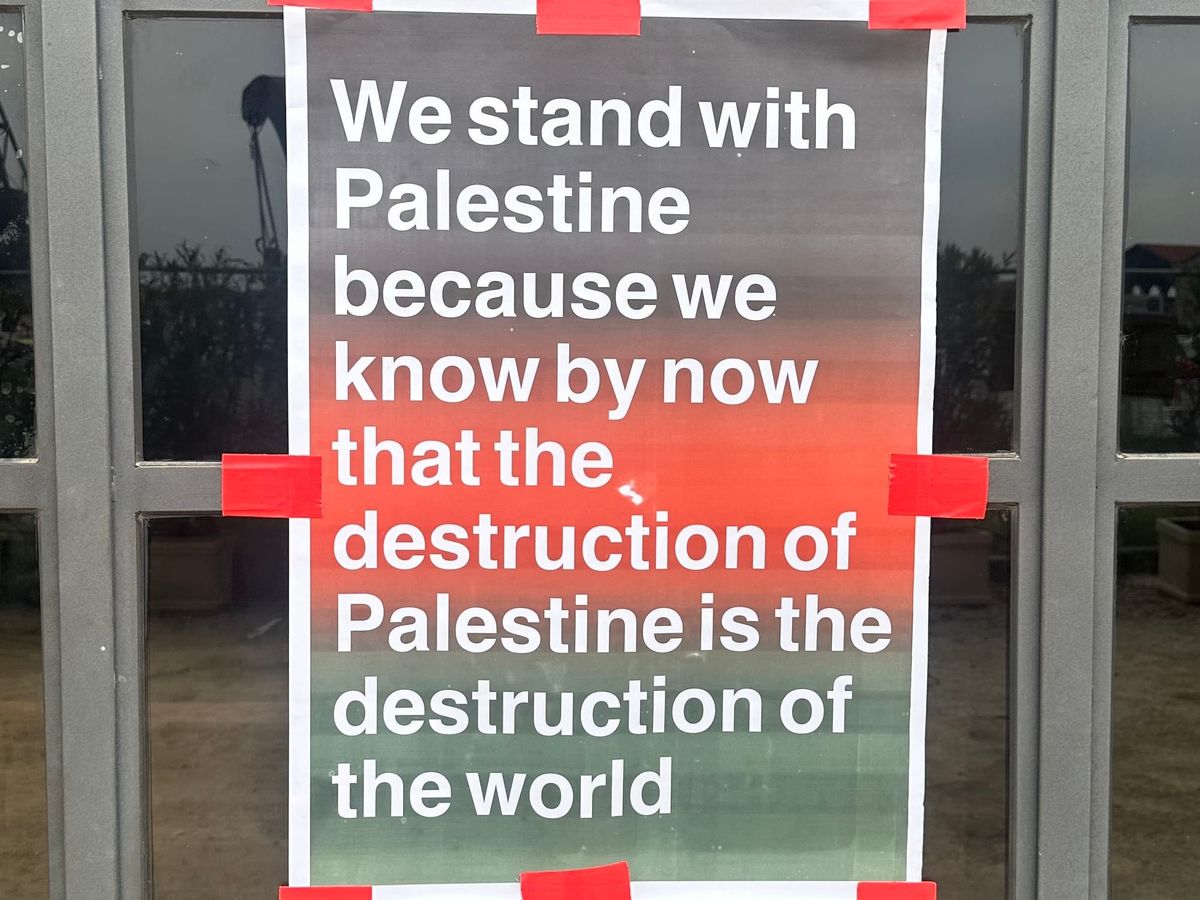
Among those who sealed their pavilions were Austria, Belgium, Cyprus, Ecuador, Egypt, Estonia, Finland, France, Great Britain, Iceland, Japan, Latvia, Lebanon, Luxembourg, the Netherlands, Poland, Portugal, South Korea, Switzerland, Turkey, and Ukraine. Signs plastered along the entrances of some pavilions read “We Stand with Palestine;” a poster at the Austrian pavilion noted that members of its team had chosen to join the strike. Over 3,500 people marched through Venice as part of the action, which ANGA described as the largest protest of its kind in the Biennale’s history. Speakers included Gabrielle Goliath, who is presenting her canceled South Africa Pavilion project at the Chiesa di Sant’Antonin; Mohammed Joha, who is featured in “In Minor Keys”; and Caroline Dumalin, curator of the Belgian pavilion, among others. The coalition organized the strike in conjunction with Italian activist groups Biennalocene, Mi Riconosci?, Sale Docks, and Vogliamo tutt’altro.
The main exhibition, “In Minor Keys,” curated by the late Koyo Kouoh, stayed open through the morning, though a number of artists displaying work in the Arsenale affixed Palestinian flags or solidarity signage to their pieces. By late afternoon, the Arsenale had closed entirely, with riot police stationed outside.
The Israeli pavilion, which had been shuttered throughout the preview period, also remained closed on the day of the strike.
The strike capped a week of escalating protest activity at the Biennale. On May 6, the Russian dissident performance collective Pussy Riot staged a smoke-flare demonstration outside the Russian pavilion as a separate cluster distributed flyers outside the Arsenale reading “Death in Venice. No to the Genocide Pavilion.” Meanwhile, the day before, around 60 artists in “In Minor Keys” gathered outside the Giardini for an action titled Solidarity Drone Chorus.
The protests follow a turbulent lead-up to the Biennale’s opening. The international prize jury—appointed by Kouoh before her death in 2025—announced in late April that it would decline to consider for the Golden Lions any pavilion representing a country whose leader faced International Criminal Court charges. The jury resigned shortly afterward. Italy’s minister of culture Alessandro Giuli separately announced a boycott of the opening ceremony in protest of Russia’s participation, and the European Commission suspended a EUR 2 million (USD 2.3 million) grant to the Biennale Foundation over the same issue.
Russia’s pavilion closed on May 9, the Biennale’s official public opening day.
Louis Lu is an associate editor at ArtAsiaPacific.