News
Protests and Shutdowns Engulf 61st Venice Biennale Opening
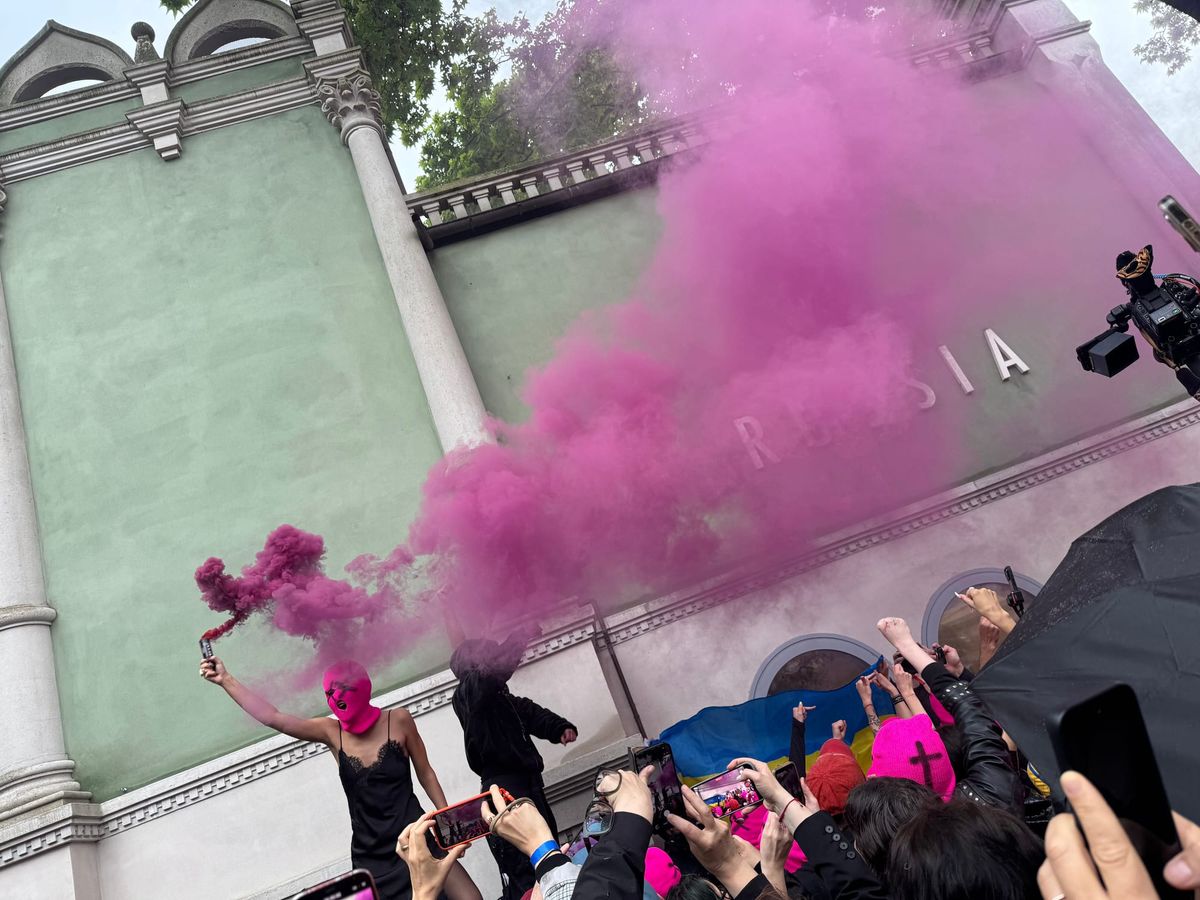
The preview week of the 61st Venice Biennale, which has opened to press and professionals ahead of its public launch on May 9, unfolds amid protests and institutional crisis.
At noon on May 5, approximately 60 artists from the late Koyo Kouoh’s exhibition “In Minor Keys” staged Solidarity Drone Chorus outside the Giardini, vocalizing or broadcasting drone tones while moving toward the Central Pavilion. The sonic occupation draws on Gazan composer Ahmed Muin’s Drone Song (2025) and foregrounds victims of warfare and genocide in Palestine and elsewhere. The intervention continues daily at noon across Venice through May 8.
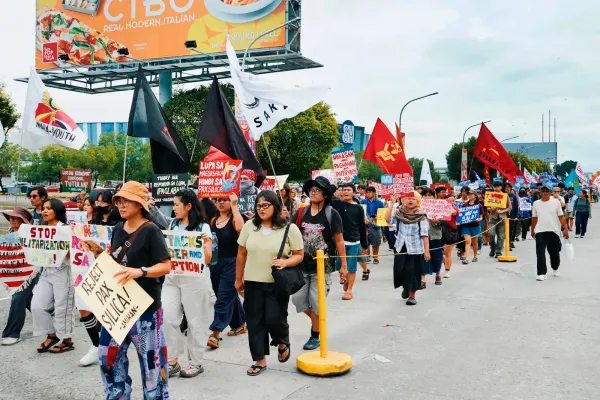
On May 6, protests organized by the Art Not Genocide Alliance (ANGA) outside Israel’s pavilion at the Arsenale led to a security-enforced closure lasting over two hours. Demonstrators distributed flyers declaring “No to the Genocide pavilion” while shouting “shut it down” and “silence is complicity.” ANGA has described the Biennale’s decision to host Israel in the Arsenale—while its permanent site in the Giardini remains closed, reportedly for renovation—as “active institutional support for a state committing genocide.”
On the same day, members of punk collective Pussy Riot and feminist group FEMEN, clad in pink balaclavas, demonstrated outside the Russian pavilion, releasing clouds of pink, blue, and yellow smoke. Nadya Tolokonnikova, co-founder of Pussy Riot, criticized Europe for enabling what she called “Russian propaganda,” arguing the Biennale should instead support artists imprisoned for backing Ukraine. Meanwhile, the Latvia Pavilion featured protest works by Krišs Salmanis bearing the slogan “Death in Venice – Russia go home!”
The protests cap weeks of controversy, including large-scale boycott calls against the Russian, Israeli, and US pavilions. Last month, the European Commission initiated procedures to withdraw EUR two million (USD 2.3 million) in funding over Russia’s participation. On April 22, the Biennale’s five-member jury, presided by Brazilian curator Solange Farkas, had announced it would not consider awards for artists from countries whose leaders face ICC arrest warrants for crimes against humanity—a stipulation targeting Russia and Israel.
The decision reportedly prompted Belu-Simion Fainaru, the artist representing Israel, to file legal warnings accusing the Biennale and Italian authorities of antisemitism and nationality-based discrimination. During a government review, the Biennale’s legal advisers purportedly warned jurors they could face personal liability in any dispute with Fainaru.
The jury abruptly resigned on April 30. In response, the institution scrapped the Golden Lions and transferred prize voting to the public, effectively reopening eligibility to the Russian and Israeli pavilions.
On May 4, Iran withdrew its pavilion without explanation. Russia’s will close on May 9, the Biennale’s official public opening day, after which only exterior video projections will remain on view for the remaining six months of the exhibition’s run.
ANGA, in coalition with Italian trade unions Associazione Difesa Lavoratori and Unione Sindacale di Base, as well as local collective Biennalocene, has announced a 24-hour strike on May 8, beginning with a 4:30 pm rally in Viale Garibaldi.
Michele Chan is managing editor at ArtAsiaPacific.