Issue
Tokyo: “Sofu Teshigahara”
Sofu Teshigahara
Taka Ishii Gallery, Tokyo
The evolution of ikebana (the Japanese art of flower arranging), from its 7th-century application as religious offerings to the secularized decorative practice of the early 20th century, was subtle. Successive schools approached ikebana with unique aesthetic goals while retaining its fundamental expressive elegance.
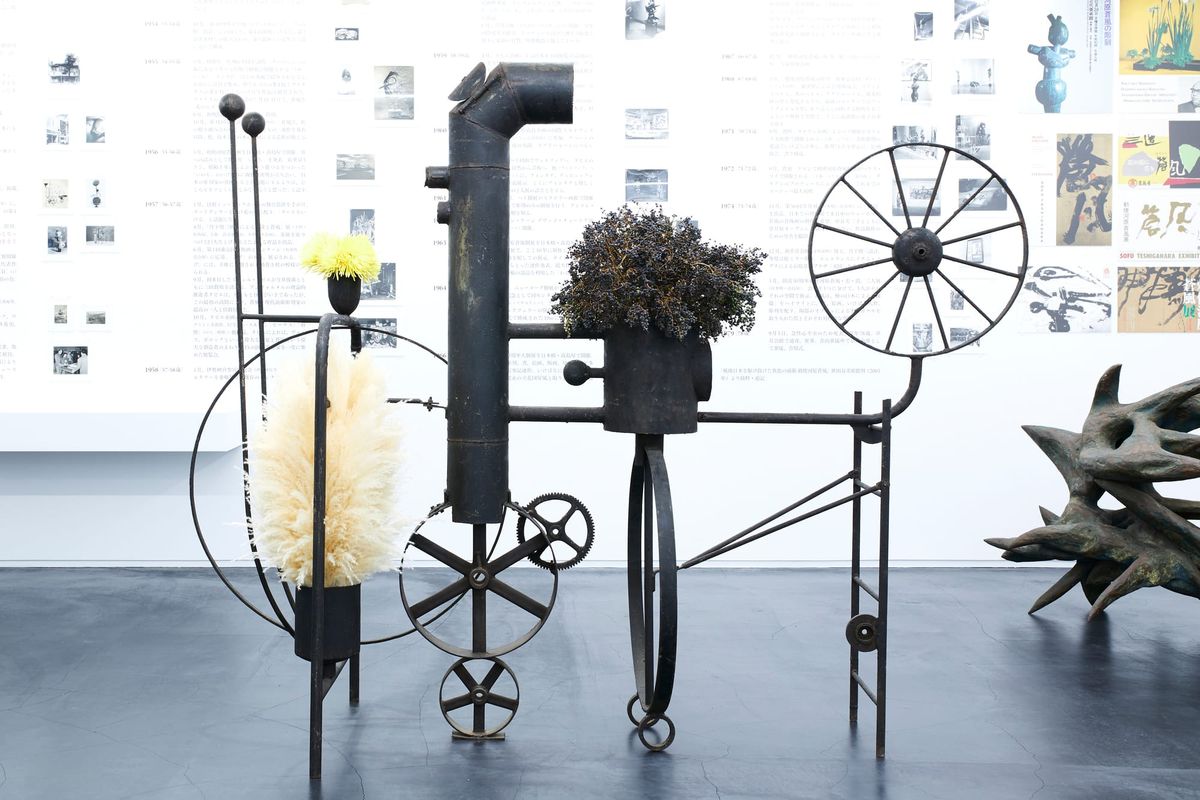
Working as a young ikebana artist in the 1920s, Sofu Teshigahara began to find the practice stale, out of touch with the rapidly modernizing world. Sensing this disconnect, he founded the Sogetsu School in 1927, which expanded the art form beyond the realm of flowers and traditional pottery. Applying constructive materials such as wood, stone, and steel, Teshigahara produced balanced, sculptural compositions, some teeming with botanical elements, others eschewing flora altogether.