Issue
Sumakshi Singh: Thresholds of Memory
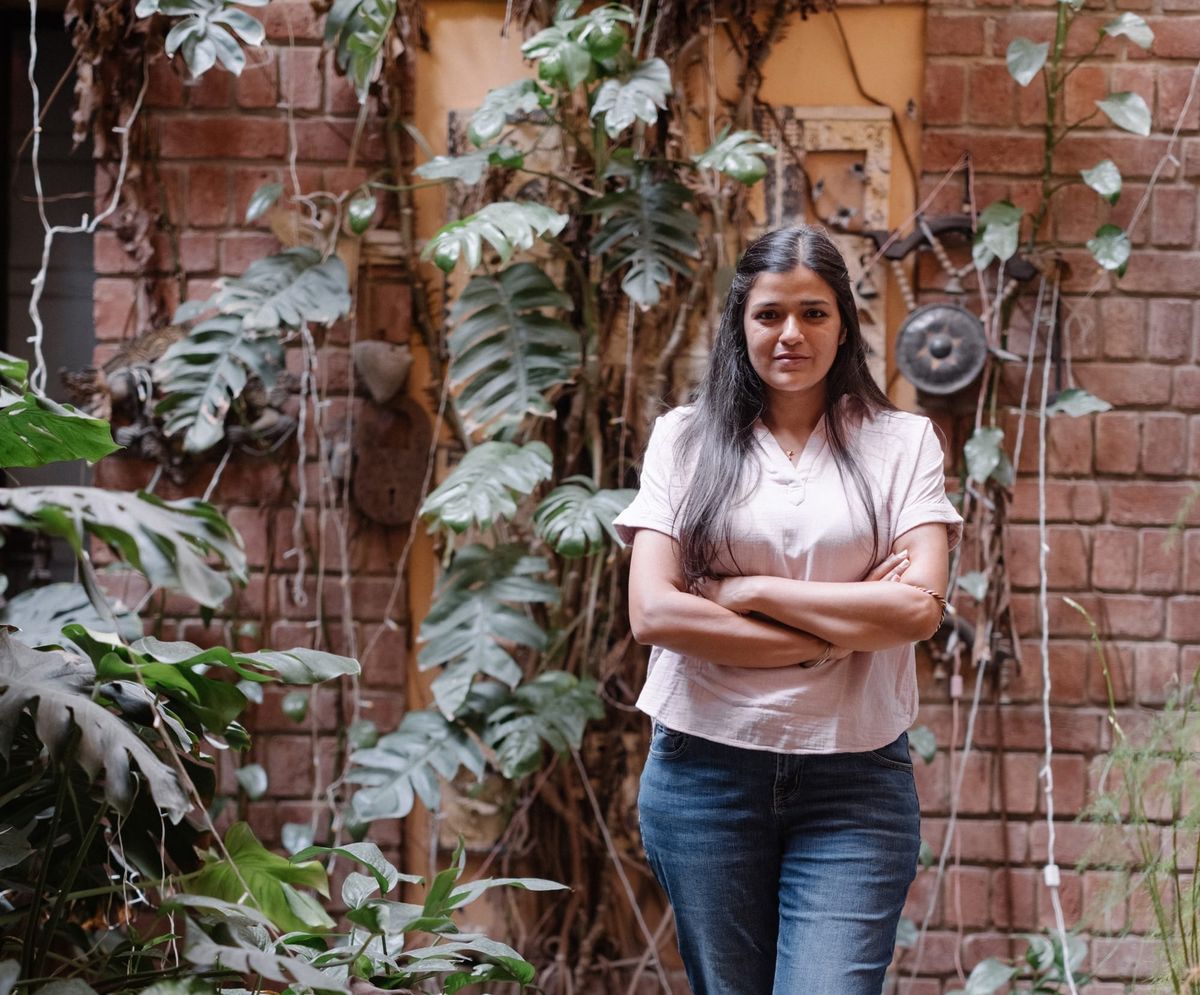
Sumakshi Singh’s work draws upon specters that dwell within both physical and psychological realms. Intimate experiences of memory and kinship are held within her thread installations of architectural and botanical forms, which hover like clouds of breath dissipating in cool night air. She weaves fine cotton, silk, and nylon into veiled environments, where time and space feel fluid.
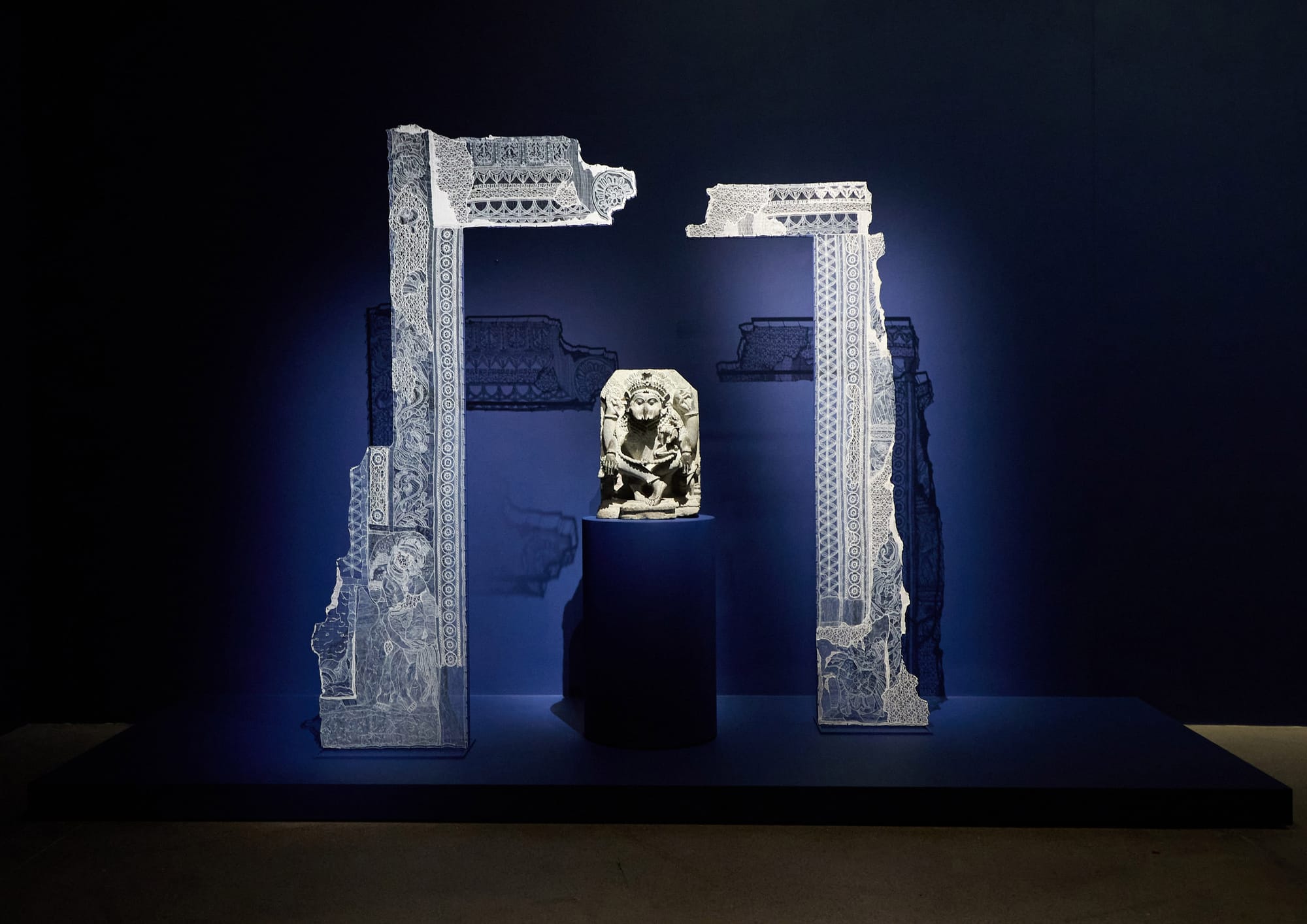
Currently based between Gurugram and New Delhi, Singh has produced various bodies of work over the decades. These range from subtle interventions within the cracks and cavities of gallery architecture to layered silk drawings, in which whispers of prismatic ink and watercolor illustrate natural phenomena as perspectival illusions. Although drawing remains crucial to her process, it is often expanded into the third dimension. Since 2015, she has been working with embroidery techniques passed down from her mother and grandmother to construct her signature sculptural thread installations. They emerged through an impulse to preserve letters from her mother, sent between 2001 and 2003, after Singh had graduated from India’s prestigious Maharaja Sayajirao University of Baroda and while she was completing an MFA at the School of the Art Institute of Chicago, where she eventually held a teaching position. Years later, immersed in the grief of her mother’s passing, Singh began embroidering the letters as a way to reconnect to her mother through slowness, attention, and reparative gesture. “Something in me really needed to hold on to these words,” she shared with me in June during a visit to Sydney to install her new work, Threshold (2026), in the “Avatar: Forms of Vishnu” exhibition at the Art Gallery of New South Wales. Singh experimented with various techniques but felt each one rendered the words too fixed, as though they did not wish to be tied down and craved a more elusive expression. She eventually developed a method of embroidering onto water-soluble fabric that, once dissolved, leaves behind intricate gossamer webs. Finally, her mother’s words had the lightness they yearned for. “By releasing these words, something inside me also was released, and the desire to hold on tightly was let go,” Singh told me, describing a “constant play between attachment and release” in her practice.
Singh subsequently made works depicting dianthuses, seed pods, corals, and other flora suspended in small frames or vitrines. Inspired by flowers and plants grown in her mother’s lush gardens and sometimes pressed between the pages of letters, they represent “skeletal archives of personal memory.” Soon these projects grew in scale and complexity, evolving into bigger installations such as A Blueprint of Before and After (2018), shown most recently at Paris’s Mobilier National in December 2025; and Blueprint (2018), exhibited in Belgrade’s 57th October Salon biennial. Light and shadow breathe life into these topographies of consciousness, where lace ferns, tendrils, and blossoms float like ghosts or inky mirages. Singh’s restrained use of color is intentional. Integrated sparingly, indigo, red, and pink evoke fading blueprints or plans for the unmaking of architecture. More often her works are monochrome black or white—a palette she likens to something muted that lacks the vibrancy of the present, reflecting an interest in how impermanence shapes human experiences of loss and longing.