Issue
One on One: Citra Sasmita on Mangku Muriati
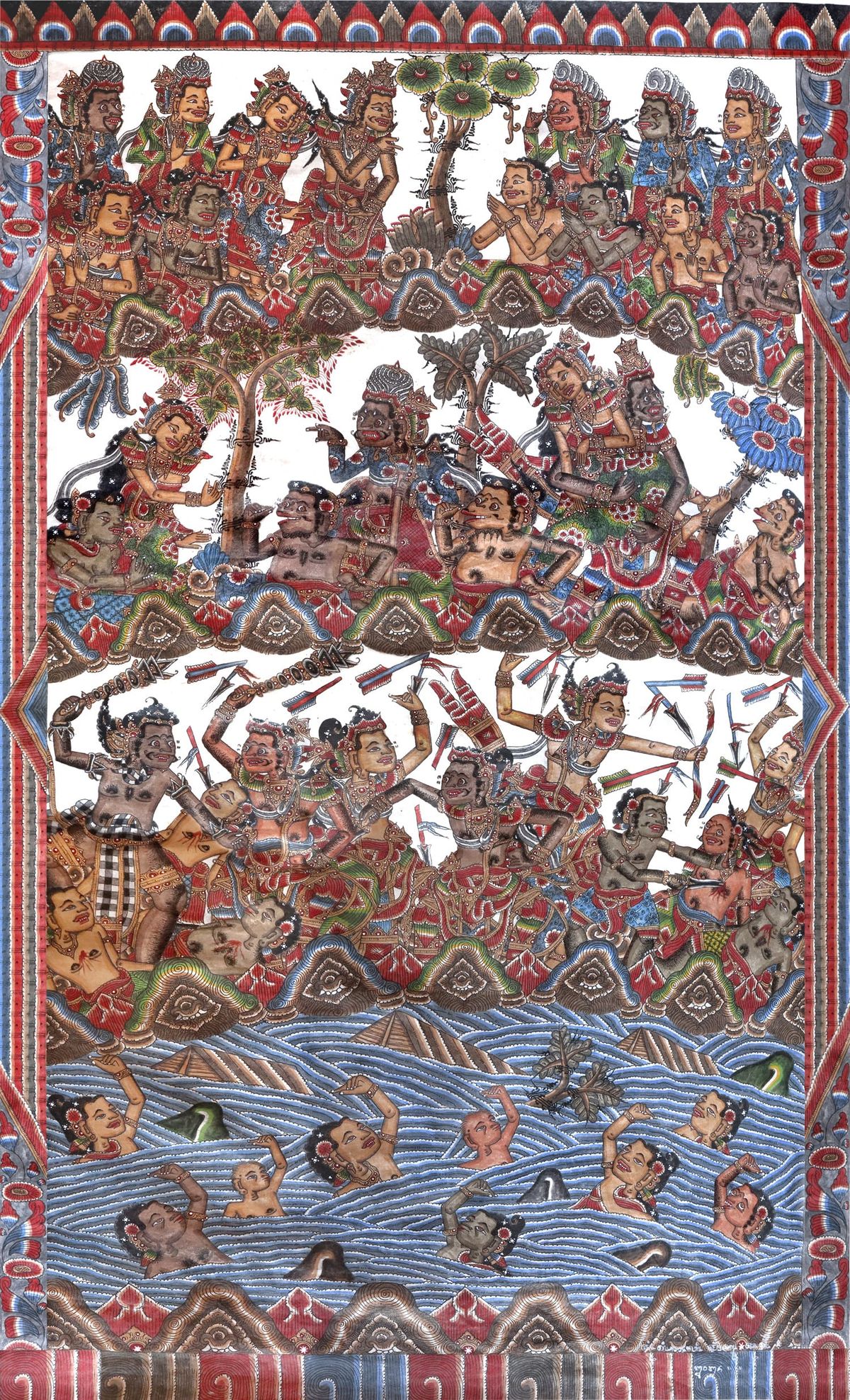
When Margaret Mead and Gregory Bateson traveled to Bali during the 1930s, they filmed a Calonarang performance, a sacred dance believed to purge and ward off misfortune. Almost two decades later, they released the footage in an ethnographic film titled Trance and Dance in Bali (1952), which became an important anthropological and visual record of Balinese spiritual culture. In one scene, a procession of dancers lines the temple courtyard while Rangda—a terrifying female figure—passes by, sweeping a white cloth adorned with rerajahan motifs over them. The dancers soon fall into a trance, forcefully thrusting their keris (daggers) against their chests and necks, yet the blades never break skin. As the dancers sink further into hysteria, their bodies seemingly lose any perception of pain. It is believed that this state allows consciousness and the metaphysical dimension to merge, leading to enlightenment.
I bring this narrative forth as a bridge to understanding our cultural heritage, which cannot be portrayed or explained through rational thought alone. Within Balinese creative practice, tradition serves to connect the embodied memory of a collective space with the unseen realm of spirits and ancestors. Art operates within a system of knowledge passed down through generations via rituals that bear ancient philosophies. These customs, which continue to be observed today, have shaped the way I see art: one’s eyes are a portal to the soul, channeling the energy of a particular work, evoking a profound sense of awe or spiritual ecstasy. This visceral phenomenon, known as Kalangwan, emphasizes a union between the artist and the divine. In this light, artmaking centers on achieving the dissolution of the ego.