Current Issue
Liu Wei: Bare Life, Bare Love
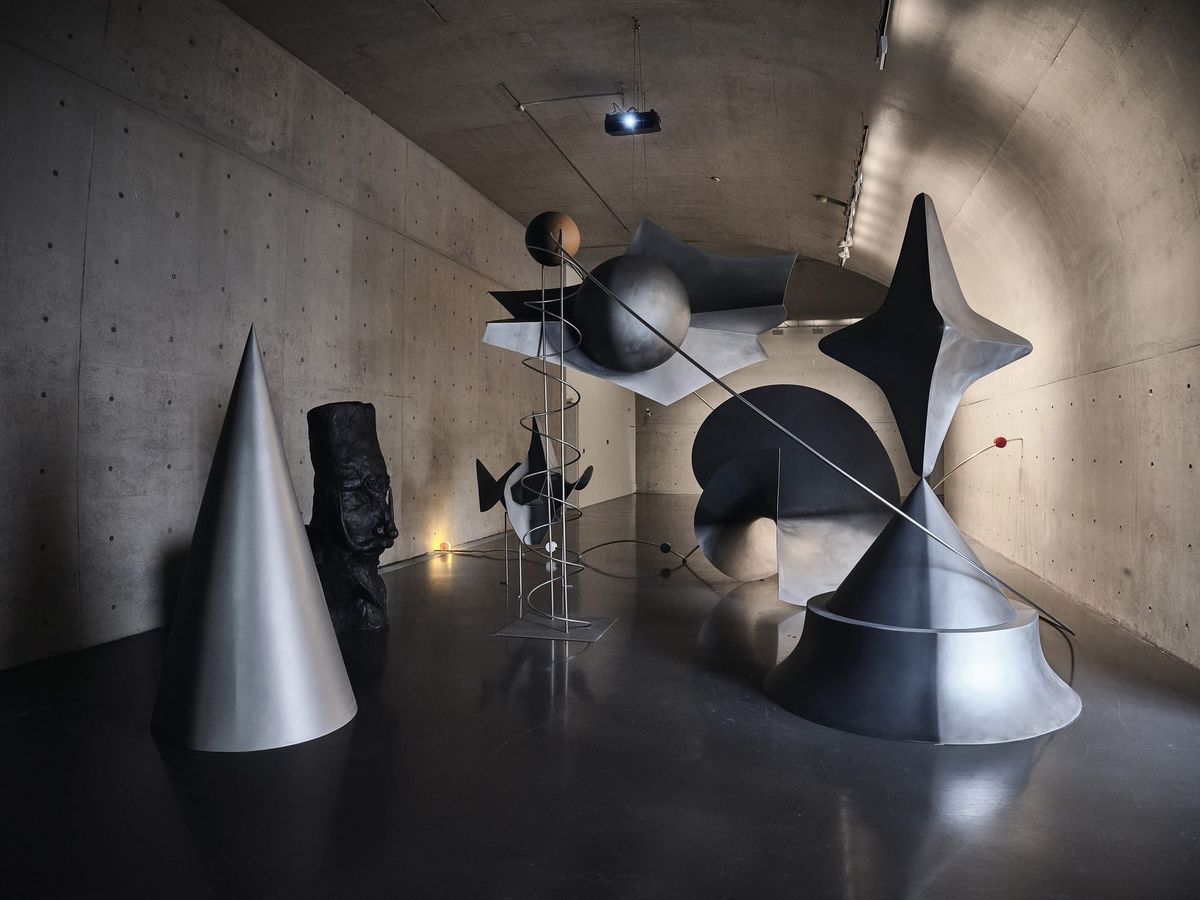
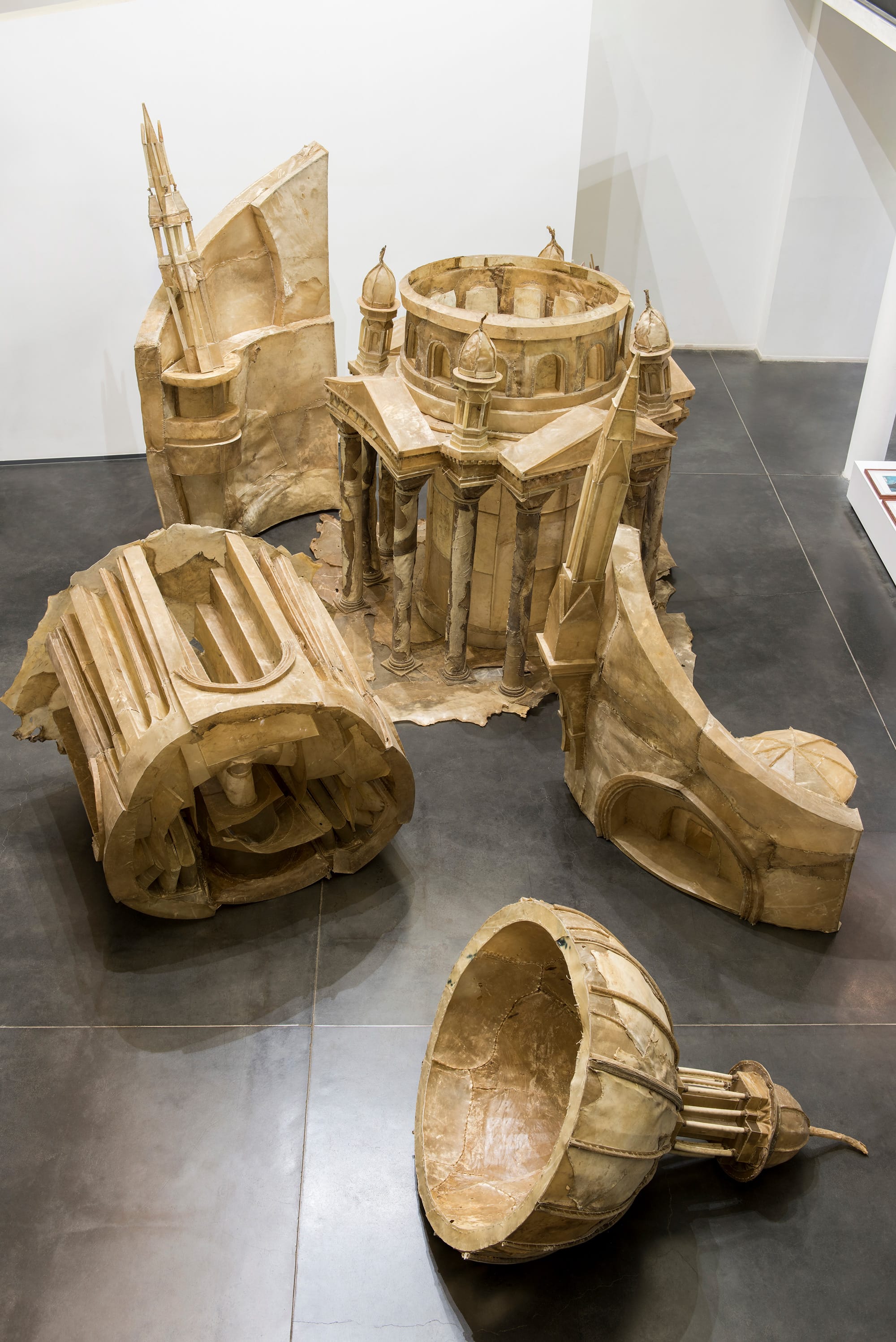
In two conjoined chambers of Liu Wei’s cavernous workspace on the outskirts of Beijing sit four sculptures, midway through fabrication, destined for the Fifth Avenue façade niches of The Metropolitan Museum of Art in New York. Their nascent rawness—rough-hewn edges, plaster surfaces, forms partially shielded by scaffolding—lends them a gestating tension at once vulnerable and charged. Around them, assistants tend torches against metal, others wield spatulas on ladders, and a photographer moves silently through the hustle, documenting work in progress for The Met’s archive. Liu Wei stands before a propped-up maquette, deep in thought. Suddenly he snaps out of it, turns and says zouba (“let’s go”), and whisks me off on a tour through his vast enterprise.
Trotting after him, I do my best to keep pace—in stride, in language (my Mandarin is conversational, not native), and in thought. The objects that occupy the vaulted halls read like a condensed survey of the 54-year-old artist’s illustrious practice—one of the most materially voracious, visually commanding, yet cognitively resistant bodies of work being made today. We pass towering bricolages of wood and mirrors; ethereal cement spheres balanced on steel frames; sheets of ox hide nailed taut against boards. The works are hieratic, immutable, and resolutely mute, emanating a physiognomic force that forecloses legibility. The artist is as oblique as his art, his remarks often pitched at an oracular remove—he speaks of reality that “doesn’t feel real,”1 of truth as “abstract in itself,”2 and of the conviction that “you can’t really create anything” because “everything already exists.”3
At one point he stops, abruptly, in front of large plaster fragments strewn on the floor. Ting hao kan de (“looks quite nice”), I hear him murmur. “The molds for The Met sculptures. The team just took them down,” he explains, then repeats, to himself, ting hao kan de. He takes some snapshots and lapses into a reverie, head bowed, one hand resting atop his head. It is here that I begin to notice Liu Wei’s gaze on his work—a countenance I go on to register, without yet placing its precise quality, for the rest of my visit. Something in his regard stays with me over the following month as I work through his sprawling, contrarian, shapeshifting oeuvre.
Bare Life
There is a class of looking so clinical it flirts with contempt, and Liu Wei began his career with something of this vantage. Born in Beijing in 1972 as the Cultural Revolution was drawing to a close, he witnessed the 1989 Tiananmen Square crackdown at 17; ten years later, his breakthrough video Hard to Restrain (1999), made for the radical underground exhibition “Post-Sense Sensibility: Alien Bodies and Delusion,” was a four-minute silent study of abjection: naked bodies rolling and writhing across a confined space reminiscent of the bottom of a well. Pi Li recalls countless human bodies “resembling worms and rats crawling and squirming,”4 while Wu Meichun, co-curator of the now-historicized show, writes that the work draws an analogy between humans and wild animals, adding that “their movements followed by a spotlight . . . give the spectator the impression of looking down on the scene from high above; his vision that of a god or a voyeur.”5
Some years later, Liu Wei would remark: “The presence and appearance of the human is always so full of beauty.”6 And yet his second major work featuring the human figure is, if anything, even more degrading, flippant to the point of mockery. His infamous It Looks Like a Landscape (2004), a photographic montage shown at that year’s Shanghai Biennale after his initial proposal for a technically ambitious installation was rejected, transforms naked, hairy buttocks into supple mountain peaks in the mannered style of traditional Chinese ink landscapes—pubic hair standing in for vegetation, insects settling on skin become terrain.