Issue
Ho Tzu Nyen: After Commemoration
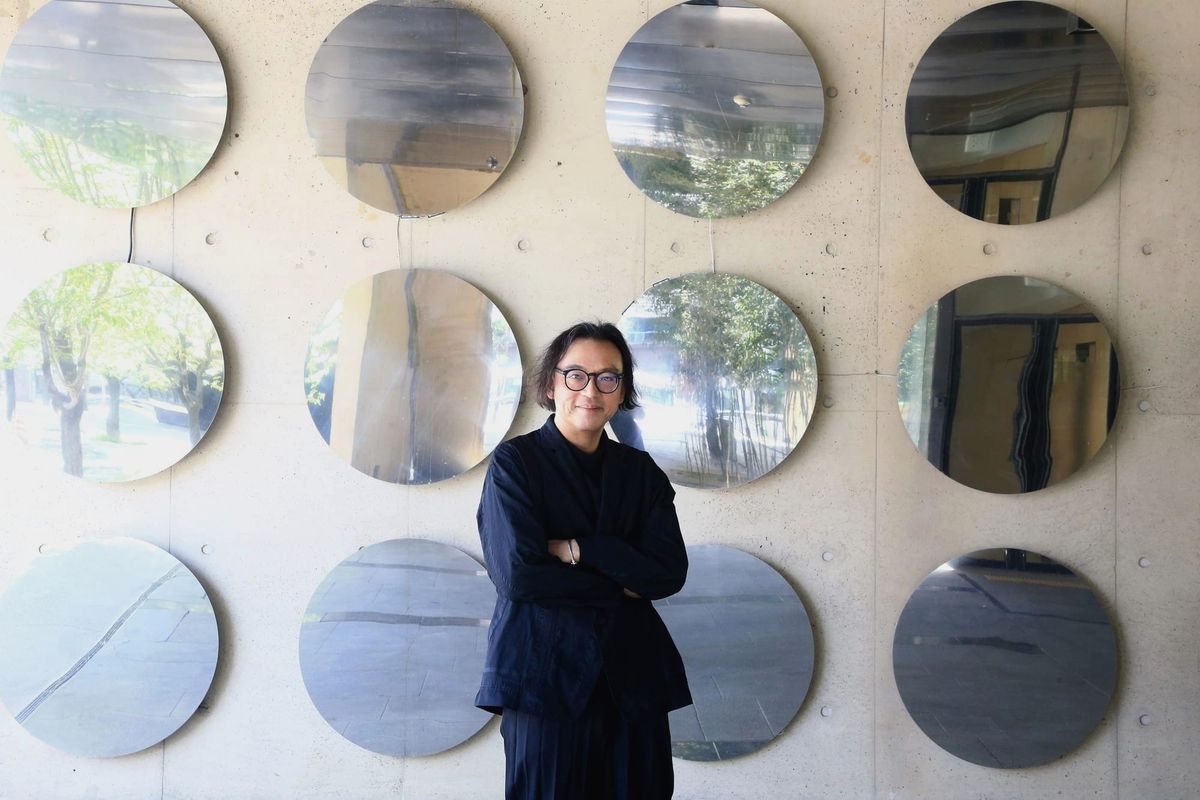
History rarely unfolds as a clean sequence of events. It loops, stalls, folds one moment into the next, and reappears under different names. It is assembled after the fact, from documents, images, and songs—spirals of myths and archival residues. What we call the past is often a composite: facts braided with ideology, memory shaped by the needs of the present. For the better part of two decades, Ho Tzu Nyen has been preoccupied with time, history, and the archive, mining period cinema, colonial lithographs, wartime philosophy, and folkloric demons to expose how a region, a trauma, or a life gets narrated, and how easily that narration unravels.
In May 1980, citizens of Gwangju rose up against Chun Doo-hwan’s military regime; the army responded with paratroopers and live fire, killing hundreds over 10 days. The brutal suppression and the long aftermath of mourning and reckoning eventually turned the massacre into a founding narrative of South Korean democracy. Established in 1995, the Gwangju Biennale took up that legacy directly, conceived in part to honor the city’s uprising and carry its democratic spirit forward. When Ho was named artistic director of this year’s edition—the first artist, rather than professional curator, to take up the role—the appointment raised a question: how might an artistic sensibility attuned to duration, recurrence, and dissolution engage with a biennale so tightly bound to a single unresolved moment?
We spoke by video just before the opening of the Venice Biennale, which Ho had opted to miss this time around. It could be a case of biennale fatigue, the exhaustion produced by a calendar in which a major international exhibition seems to launch somewhere every few weeks. Yet Gwangju, with its dispersed venues and standing as one of Asia’s oldest biennales, has long held a particular pull for him. To take on this biennale is to inherit the weight of May 1980, and to decide what an exhibition can responsibly do with it.
Ho doesn’t seem bothered by the perceived gulf between making art and organizing exhibitions. The scope of responsibility and the volume of communication are, he concedes, undeniably different, but he insists on treating the two roles as though they were one. “Fundamentally there’s only one way I am able to function,” he told me, adding that he is not even certain if this mode is specific to being an artist—it is simply the only one available to him. “If they chose an artist, then they should get an artist, I suppose.” The remark does not feel like a boast; it registers as a description of method. His practice has always been grounded in the assemblage of existing materials, from regional folkloric motifs such as Malayan weretigers and the biography of a Southeast Asian spy to an archive of Hong Kong film clips. For Ho, to work is to bring things, people, and histories into relation.