Issue
Haneyl Choi: The Body as Sculptural Field
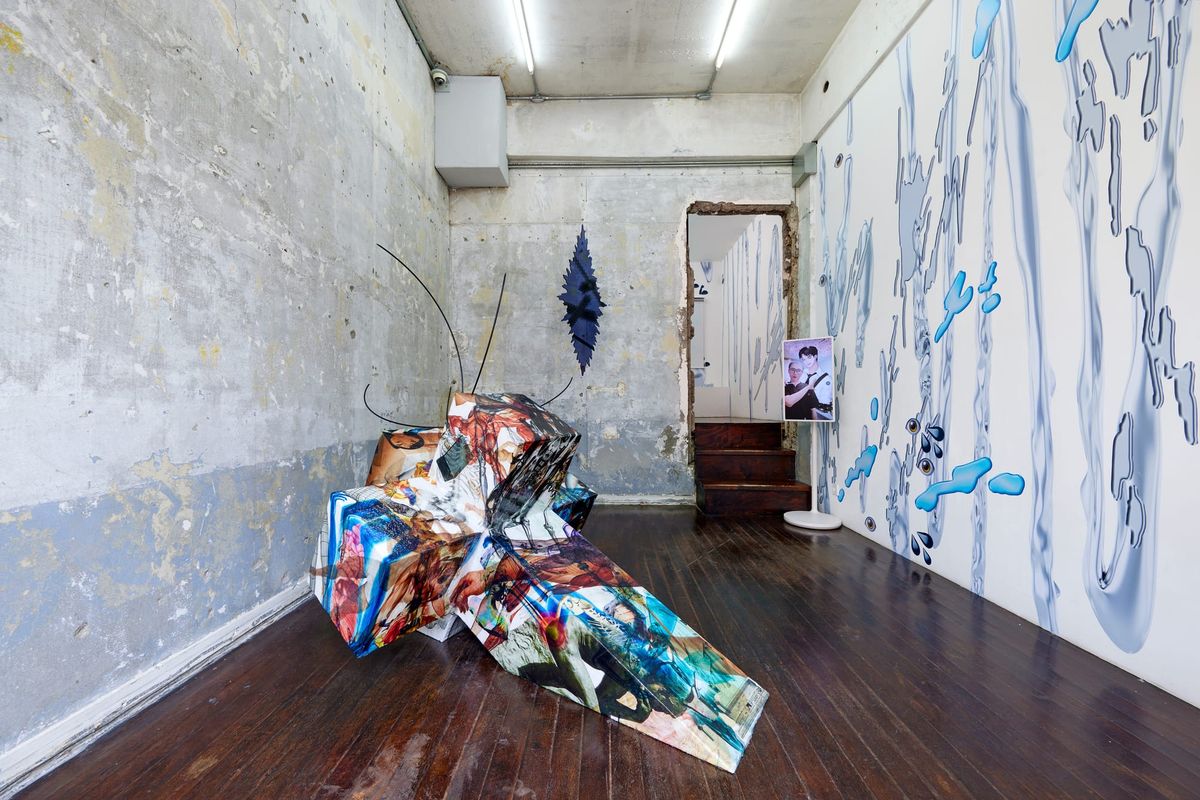
It was in January 2022 that I first met Haneyl Choi in a virtual conversation, at a time when Hong Kong was still under strict Covid-19 quarantine measures and a studio visit in Yongsan, near the queer-friendly neighborhood of Itaewon-dong in Seoul, remained out of reach. We spoke for about an hour over caffeinated drinks—an iced Americano on his side of the screen, a hot matcha on mine—about the possibility of commissioning a large-scale sculptural installation for my debut curatorial project at the nonprofit institution Para Site in Hong Kong, “Fanatic Heart” (2022), a group presentation examining the political potential of celebrity culture through the prism of fandom. Since then, I have continued to follow Choi’s practice closely as he expanded his presence across the region, appearing in major biennales and international gallery shows. His trajectory is best understood by first revisiting the solo exhibitions he mounted between 2018 and 2022, which laid the conceptual and formal foundation for his practice, before contemplating the decisive shift that emerged from 2023 onward, following a turning point in his personal life that altered the direction of his work.
Choi’s early sculptural practice probes control, desire, social conditioning, and self-perception through abstracted and hybrid forms, tracing tensions between the individual and the social, the interior and the exterior. Treating the body as a medium in flux, shaped by competing impulses, attachments, and constraints, he uses synthetic materials and readymade objects to create fragmented anatomies and porous structures that expose the psychological and social forces reorganizing subjectivity. At the beginning of his career, Choi’s work was more visibly anchored in queer representation and identity politics. Reconsidering his solo exhibitions between 2018 and 2022, one witnesses a conceptual evolution from queer-national critique toward growing confidence in sculpture as a language of ambiguity and relations. For instance, “Traitor’s Patriotism” (2018) at Commonwealth and Council, Los Angeles, framed the folding screen as a charged site that interweaves domestic space, national identity, and queer belonging, while “Siamese” (2020) at P21, Seoul, shifted emphasis toward hybridity and doubling, allowing the body to become less a fixed entity than a field of entanglement. By “Bulky” (2021), held at ARARIO MUSEUM, Seoul, Choi had sharpened his engagement with queer masculinity and the politics of self-fashioning, using the logic of “bulking up” to connect aspiration and performance.
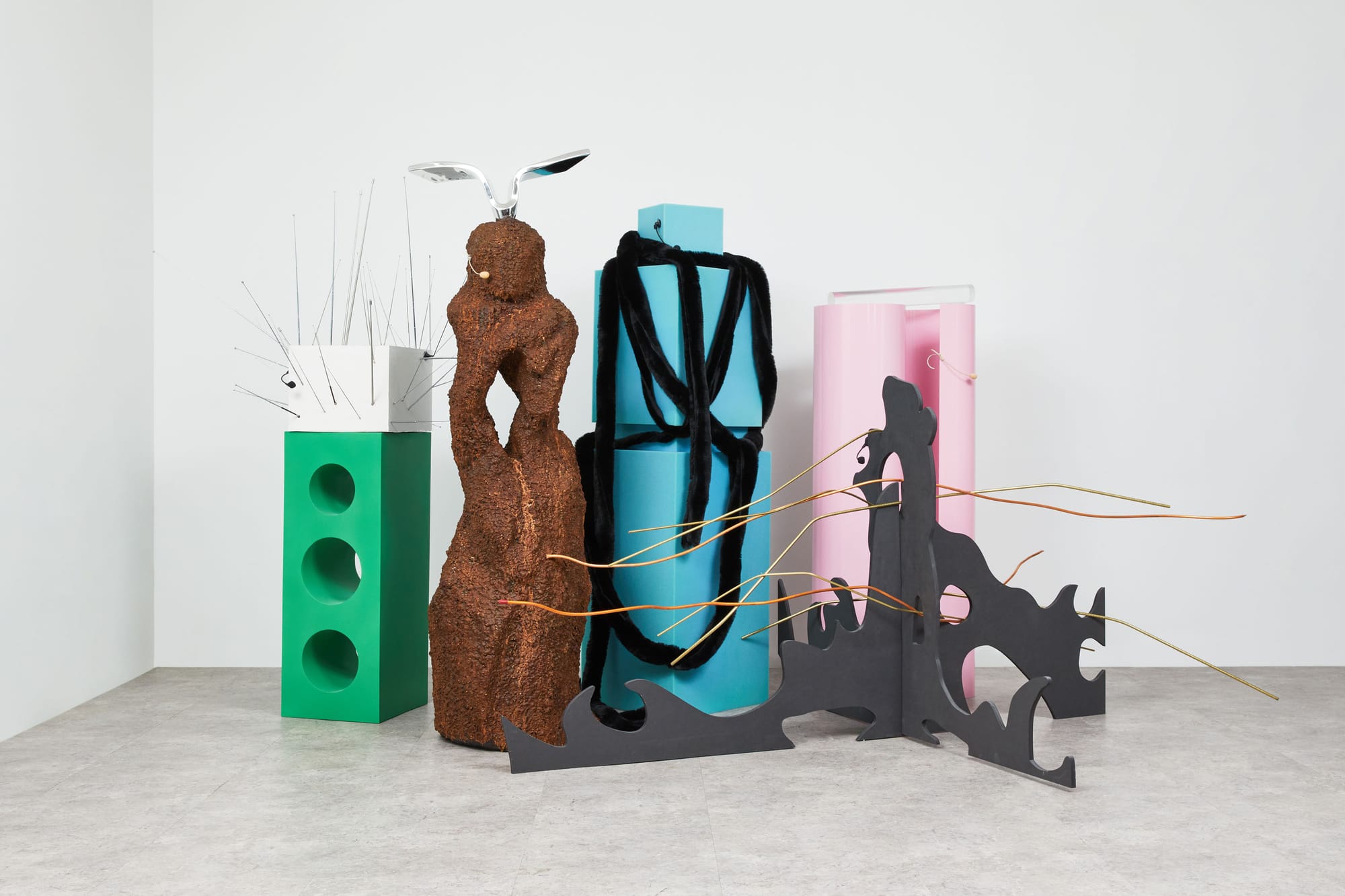
In 2022, “Manner” at P21 in Seoul featured FRP or 3D-printed male figures, disembodied limbs, readymade go-kart and skateboard sculptures, folding screen works, and other hybrid objects comprising industrial materials including silicon, resin, plexiglass, and steel, among others. The full-body mannequins’ exaggerated musculature, bulging veins, and arching or self-assured stances push masculinity toward caricature, strain, and performance. Choi does not simply critique masculinity; he debunks its choreography. Rather than treating physical deformation and aberrant gestures as grotesque spectacle, Choi gives them glossy, carefully fabricated surfaces that make them look self-contained and oddly disciplined. The works resist any easy opposition between idealized form and corporeal failure, instead revealing “normality” itself as a constructed aesthetic regime. The skateboard and go-kart works operate along the same logic of staging, taking objects associated with action or movement and rendering them static, polished, and performative. In doing so, Choi subtly undermines the fantasy of mastery that underwrites both machinic mobility and physical autonomy.